
How the Gut-Brain Axis Affects Your Mood
The gut-brain axis is a complex, two-way communication network linking your digestive system and your central nervous system through nerves, hormones, and immune signals. While marketing claims often overstate how easily we can manipulate this system, rigorous evidence shows that the gut microbiome heavily influences inflammation and neurotransmitter production. These biological mechanisms, in turn, directly affect human emotional regulation, anxiety levels, and stress resilience.
Introduction to the Second Brain
For centuries, medical science operated under a framework of mind-body dualism, treating mental health entirely as a phenomenon of the brain. If a person suffered from depression, anxiety, or chronic stress, scientists and physicians looked almost exclusively to the skull for answers. Today, an expanding field of interdisciplinary research has fundamentally reshaped our understanding of human emotion, demonstrating that mental health does not start and end in the brain. It is inextricably linked to the physiological state of the gastrointestinal tract 12.
Your gastrointestinal tract is lined with approximately 100 million nerve cells. This extensive, web-like neural network is known as the enteric nervous system (ENS) 334. The ENS is so complex and operates with such a high degree of autonomy that neurobiologists frequently refer to it as the body's "second brain" 335. While it does not generate conscious thought, the ENS meticulously manages the incredibly complicated processes of digestion, nutrient absorption, and waste elimination, often acting entirely independently of the central nervous system (CNS) 4.
However, the gut and the central nervous system are never truly isolated. They are engaged in a constant, lifelong physiological dialogue. This bidirectional superhighway is known as the gut-brain axis (GBA) 67. When you experience a "gut feeling" about a complex decision, or feel "gut-wrenching" sorrow, you are experiencing the real-time physical manifestations of this intricate communication network 38.
Crucially, the conversation between the gut and the brain is not limited to human anatomy. The human digestive tract is home to roughly 37 trillion microbial cells, including thousands of distinct bacterial species, viruses, fungi, and archaea, collectively weighing up to two kilograms 310. This ecosystem, known as the gut microbiome, has evolved alongside humanity, acting as an active and vital participant in the gut-brain dialogue. The microbes inside us feed on our dietary intake and, in return, manufacture a vast array of chemicals, hormones, and immune mediators that travel throughout the body and directly dictate how the brain functions 2611.
The Anatomy of Gut-Brain Communication
To understand how dietary choices can influence your anxiety levels, it is necessary to examine the physical and chemical infrastructure of the gut-brain axis. The brain influences gut function through neural and hormonal pathways, while the gut and its resident microbes communicate back to the brain using these same methods, alongside an arsenal of immune signals and bacterial byproducts 1.
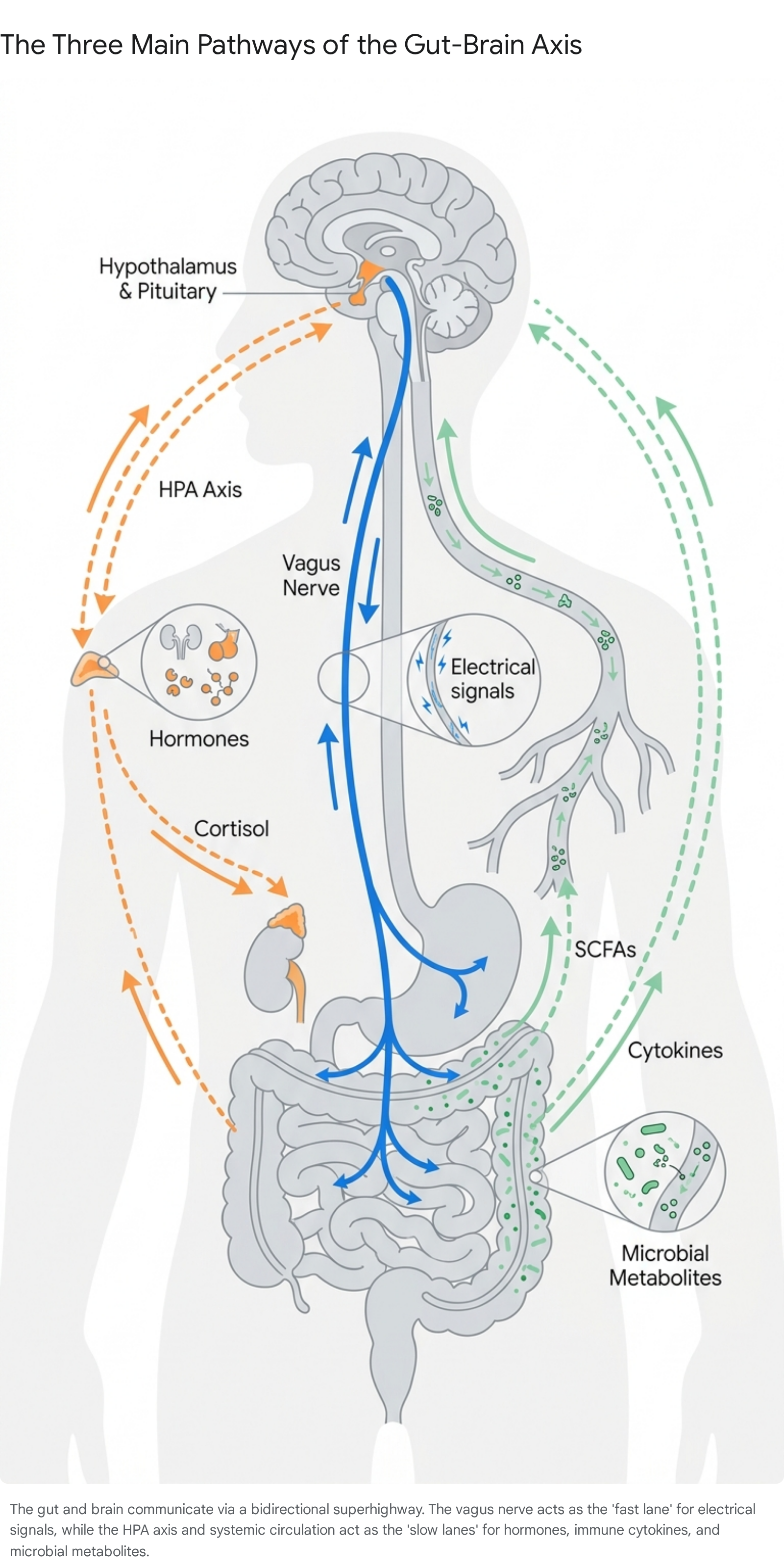
Scientists generally categorize this bidirectional communication into a few primary "highways" of varying speeds and systemic impacts.
The Fast Lane: Neural Pathways and Vagal Tone
The most direct physical connection between your gut and your brain is the vagus nerve. The vagus nerve is the longest cranial nerve in the human body, wandering from the brainstem all the way down into the abdomen, innervating the heart, lungs, and the entire digestive tract along the way 34. It serves as the primary component of the parasympathetic nervous system, which controls the body's unconscious "rest and digest" functions 39.
Crucially, the vagus nerve is not a one-way street originating from the brain. In fact, approximately 80% to 90% of the nerve fibers in the vagus nerve are afferent, meaning they carry sensory information from the gut up to the brain 710. It acts as a biological surveillance system. When the stomach is distended from a large meal, or when gut bacteria produce specific metabolites, sensory neurons in the nodose ganglia detect this activity and fire electrical signals up the vagus nerve to the brainstem almost instantly 110.
In a landmark 2026 study, researchers mapped how the body registers nutritional deficits, confirming that this neural pathway operates incredibly fast. The study demonstrated that when the body runs short on protein, the gut detects the deficit first and signals the brain via the vagus nerve to prompt immediate foraging behavior, while a secondary hormonal pathway follows more slowly via the bloodstream 11.
The vagus nerve is also deeply involved in managing systemic inflammation through a mechanism called the cholinergic anti-inflammatory pathway 912. When vagal endings in the gut detect inflammatory cytokines, they relay this distress signal to the brainstem. The brain responds by sending signals back down the efferent motor fibers of the vagus nerve, releasing acetylcholine 1213. This neurotransmitter binds to specific receptors on macrophages and other immune cells, commanding them to halt the production of inflammation 13. Because unchecked inflammation is closely linked to depression and anxiety, the functional health of the vagus nerve - often measured as "vagal tone" through heart rate variability - is a strong physiological predictor of stress resilience 914.
The Slow Lane: Hormonal Signaling and the HPA Axis
If the vagus nerve acts as a high-speed fiber-optic cable, the endocrine system is the systemic postal service. It takes a little longer to deliver its messages, but its physiological effects are profound and widespread.
The primary hormonal pathway involved in the gut-brain axis is the hypothalamic-pituitary-adrenal (HPA) axis, which orchestrates the body's biological response to stress 715. When the brain perceives a threat - whether it is a physical danger or psychological pressure - the hypothalamus releases corticotropin-releasing hormone (CRH) 1215. This biochemical signal tells the pituitary gland to release adrenocorticotropic hormone (ACTH), which finally commands the adrenal glands to flood the bloodstream with cortisol, the body's primary stress hormone 121315.
Cortisol has dramatic and immediate effects on the gastrointestinal tract. It slows down digestion to conserve energy for the "fight or flight" response, alters the motility of the intestines, and can even change the permeability of the gut mucosal lining 1416.
Furthermore, emerging research indicates that the gut microbiome and cortisol share a synchronized circadian rhythm. Gut microbes operate on a 24-hour oscillation that shifts with food timing, light exposure, and stress 17. When we experience chronic stress or disrupted sleep, this microbial timing system breaks down. The resulting imbalance leads to a vicious cycle of cortisol instability, blunted morning peaks, elevated evening cortisol, and heightened baseline anxiety 917.
The Immune System and Neuroinflammation
The gastrointestinal tract is the largest immune organ in the human body, housing roughly 70% of the body's entire immune cell population 1819. Because the gut is constantly exposed to the outside world via the food and liquids we consume, the immune system must continuously make critical decisions: whether to tolerate benign food particles or aggressively attack invading pathogens 1520.
When the gut microbiome falls into a state of imbalance - a condition clinically known as dysbiosis - harmful bacteria can proliferate and overwhelm beneficial species. These pathogenic bacteria produce toxic structural byproducts like lipopolysaccharides (LPS) 24. If the gut lining becomes overly permeable, a state frequently referred to as "leaky gut," LPS and other inflammatory toxins escape the intestinal lumen and enter the systemic bloodstream 1624.
This breach triggers the immune system to launch a defensive response, releasing pro-inflammatory cytokines such as interleukin-6 (IL-6), interleukin-1 beta (IL-1β), and tumor necrosis factor-alpha (TNF-alpha) 610. These circulating cytokines can travel through the blood, cross the blood-brain barrier, and trigger neuroinflammation. Chronic neuroinflammation is now recognized by psychiatric researchers as a primary biological driver of major depressive disorder, cognitive decline, and generalized anxiety 242122.
Microbial Messengers: SCFAs and Neuromodulators
Finally, the trillions of microbes in your gut communicate with your brain by synthesizing their own distinct chemicals. When beneficial gut bacteria ferment dietary fiber - the complex, indigestible carbohydrates found in fruits, vegetables, and whole grains - they produce short-chain fatty acids (SCFAs) 152324. The three primary SCFAs are butyrate, acetate, and propionate 1523.
SCFAs are highly beneficial molecules. They serve as the primary energy source for the epithelial cells lining the colon, keeping the gut barrier strong and actively preventing the leaky gut phenomenon 1122. Butyrate, in particular, exerts potent anti-inflammatory effects and can cross the blood-brain barrier to promote neuroplasticity, which is the brain's ability to adapt, learn, and form new synaptic connections 102225.
Beyond fatty acids, gut microbes also directly produce or stimulate the endogenous production of vital neurotransmitters. Specific strains of Bifidobacterium and Lactobacillus, for instance, are known to synthesize gamma-aminobutyric acid (GABA), an inhibitory neurotransmitter that promotes relaxation 31526. Other microbes are involved in the synthesis of dopamine and acetylcholine 31527.
| Communication Pathway | Primary Messengers | Transmission Speed | Primary Function in the Gut-Brain Axis |
|---|---|---|---|
| Neural (Vagus Nerve) | Electrical impulses, Acetylcholine | Almost instantaneous | Controls digestion speed, signals fullness, regulates rapid anti-inflammatory reflex. |
| Endocrine (HPA Axis) | Cortisol, GLP-1, Ghrelin | Minutes to hours | Manages systemic stress response, hunger, and circadian rhythms. |
| Immunological | Cytokines (IL-1, IL-6, TNF-alpha) | Hours to days | Fights pathogens; chronic activation leads to systemic and neuroinflammation. |
| Microbial Metabolites | Short-chain fatty acids (butyrate) | Hours to days | Maintains gut barrier integrity, lowers inflammation, influences brain gene expression. |
The Mechanics of Stress: Butterflies and Nausea
You do not need a medical degree to understand the gut-brain axis; you only need to think back to a moment of intense, acute pressure. Have you ever felt "butterflies" in your stomach before a major public presentation, a first date, or a high-stakes exam? Or perhaps you have noticed that periods of intense anxiety send you running to the bathroom? These visceral, physical sensations are the gut-brain axis functioning exactly as evolution designed it 3428.
The evocative phrase "butterflies in the stomach" first appeared in literature over a century ago, but the biology behind it is now thoroughly mapped by neuroscientists 29. When your brain perceives a stressful or thrilling event, the sensory cortex processes the threat and signals the limbic system, which serves as the brain's emotional processing center 2829.
The limbic system subsequently activates the HPA axis and the sympathetic nervous system, initiating the body's ancient fight-or-flight survival response 428. Because your body is rapidly preparing to either fight a physical threat or run away, it instantly diverts biological resources away from non-essential functions like digestion 4.
Blood flow is dramatically shifted away from the stomach and intestinal organs and redirected to the brain and skeletal muscles 4. This sudden drop in localized blood flow and oxygen in the gut is detected by sensory nerves, creating the fluttery, slightly nauseating sensation we recognize as butterflies 328.
Chronic Stress and Functional Gastrointestinal Disorders
While acute stress causes temporary discomfort, chronic emotional stress exerts a significant, long-term impact on gut health. Elevated cortisol levels associated with chronic stress alter the gut environment, actively reducing microbial diversity and suppressing beneficial bacteria like Lactobacillus while promoting the expansion of harmful microbes such as Clostridium 16.
Simultaneously, stress heavily alters gut motility. The normal, rhythmic contractions that move food through the intestines can either speed up dramatically, resulting in stress-induced diarrhea, or slow down significantly, causing severe constipation 430. Furthermore, acute stress increases stomach acid production, which can cause heartburn, and makes the brain hyper-vigilant and overly responsive to normal pain signals coming from the gut 48.
For people dealing with functional gastrointestinal conditions like Irritable Bowel Syndrome (IBS), this bidirectional feedback loop can become debilitating. The brain's stress response triggers gut pain and abnormal bowel movements, and the resulting physical discomfort from the gut sends constant distress signals back up the vagus nerve to the brain, further elevating baseline anxiety 4830.
The Serotonin Myth: Does Gut Serotonin Make You Happy?
If you have spent any time researching mental health, nutrition, or wellness on the internet, you have almost certainly encountered a fascinating and frequently repeated statistic: up to 95% of the body's serotonin is produced in the gut 34.
Serotonin is arguably the most famous neurotransmitter, widely recognized by the public as the "happy chemical." Deficiencies in serotonin have long been blamed as the primary root cause of clinical depression, and the most common pharmacological treatments - Selective Serotonin Reuptake Inhibitors (SSRIs) - are specifically designed to increase serotonin availability in the brain 263531. Therefore, it seems entirely logical to conclude that if the gut manufactures almost all of your serotonin, a healthy gut must directly pump happiness into your brain.
Unfortunately, this is a physiological myth based on a fundamental misunderstanding of human anatomy.
The Blood-Brain Barrier Dilemma
While it is entirely true that specialized enterochromaffin cells lining the wall of the gut manufacture more than 90% of the body's total serotonin, peripheral gut-derived serotonin cannot cross the blood-brain barrier 353137.
The blood-brain barrier is a highly selective, semi-permeable border of endothelial cells that protects the delicate environment of the brain from circulating toxins, pathogens, and fluctuating hormone levels in the blood. Because serotonin is a structurally large and bulky molecule, it is physically locked out of the brain if it is produced in the periphery of the body 337. The serotonin utilized by your central nervous system to regulate mood, sleep, and memory must be manufactured entirely inside the brain, synthesized by the brain's own dedicated neurons 331.
If gut serotonin cannot reach the brain, what is its actual purpose? In the digestive tract, peripheral serotonin acts locally as a crucial hormone and signaling molecule. It regulates peristalsis, controls digestive secretions, modulates the local inflammatory response, and manages glucose and lipid homeostasis 3353137.
The Tryptophan Steal and the Kynurenine Pathway
Does this physical barrier mean the gut has no impact on brain serotonin levels? No. The gut microbiome profoundly influences central brain chemistry, but it does so through complex backchannels rather than direct serotonin delivery.
The most important mechanism involves tryptophan, an essential amino acid found in protein-rich foods. Unlike fully formed serotonin, tryptophan can successfully cross the blood-brain barrier 537. Once inside the central nervous system, brain neurons convert the circulating tryptophan into serotonin 3531.
However, gut bacteria heavily influence exactly how much tryptophan survives digestion to make it to the brain. Certain gut microbes consume dietary tryptophan for their own metabolic purposes, reducing the amount available to the host. More importantly, when the gut is in a state of inflammation and dysbiosis, the body's immune system activates an alternative metabolic route known as the kynurenine pathway 35.
Instead of allowing circulating tryptophan to be converted into serotonin, the inflamed body chemically shunts the tryptophan into producing kynurenine. Elevated kynurenine levels are highly associated with increased neuroinflammation, decreased brain serotonin availability, and the clinical onset of major depressive disorder 35. Therefore, while the gut does not directly supply the brain with serotonin, a healthy, low-inflammation microbiome ensures that the brain receives the necessary raw materials to manufacture its own.
The Microbiome's Role in Depression and Anxiety
The realization that gut inflammation fundamentally alters brain chemistry has sparked a quiet revolution in psychiatric research. Scientists are no longer just looking at isolated neurotransmitter imbalances; they are increasingly examining the entire ecology of the human microbiome.
Dysbiosis and Mood Disorders
Numerous large-scale studies have consistently found that individuals suffering from major depressive disorder (MDD), generalized anxiety, and bipolar disorder exhibit significantly different gut microbiomes compared to healthy control populations 22526. Patients with severe depression frequently suffer from a marked lack of microbial diversity - their internal ecosystem resembles a barren monoculture crop rather than a thriving, resilient rainforest 26.
Specific microbial families have been closely linked to distinct emotional states. For example, some population studies suggest that an increased presence of commensal bacteria in the Bacteroides genus is linked to improved anxiety scores, while an overabundance of certain pro-inflammatory pathogens is highly associated with depressive-like symptoms and mood instability 263233. Reduced levels of Faecalibacterium, a known butyrate-producing microbe, have been specifically noted in patients with bipolar disorder, correlating heavily with poor sleep and higher anxiety 226.
The evidence for a causal link - rather than mere correlation - is increasingly compelling. In a fascinating 2023 animal study, researchers took fecal matter from human patients diagnosed with major depressive disorder and transplanted it into the gastrointestinal tracts of healthy, germ-free mice. Remarkably, the mice that received the microbiome from depressed humans soon began exhibiting depressive and anxious behaviors, including giving up much more quickly during standardized behavioral stress tests 232. Germ-free mice that received fecal transplants from healthy humans did not exhibit these psychological impairments 2.
Systemic Inflammation as a Psychiatric Driver
The unifying biological theory connecting the gut environment to mental illness is systemic inflammation. Modern Western lifestyles - which are generally characterized by high chronic stress, poor sleep architecture, sedentary behavior, and diets heavy in ultra-processed foods - naturally promote a state of chronic, low-grade inflammation 3435.
When the gut microbiome is starved of complex dietary fiber, it simply stops producing protective short-chain fatty acids. Consequently, the gut lining weakens, local immune cells go on the offensive, and inflammatory cytokines flood the systemic bloodstream 162432. These cytokines eventually breach the blood-brain barrier, triggering neuroinflammation. This neuroinflammatory state actively suppresses neuroplasticity and severely alters dopamine and serotonin signaling pathways 101434. In this specific physiological context, depression is not viewed merely as a psychological condition; it is the brain's adaptive behavioral response to systemic physiological distress.
Nutritional Psychiatry: Can You Eat for a Better Mood?
If a distressed, inflamed microbiome can drive mood disorders, can we treat mental illness by healing the gut? This specific question forms the foundation of nutritional psychiatry, a rapidly emerging clinical field that utilizes targeted dietary interventions to prevent and manage mental illness 213637.
Historically, mainstream psychiatry has relied almost exclusively on psychotherapy and pharmaceutical interventions, which can be life-saving but often leave a substantial portion of patients with only partial symptom relief or complete treatment resistance 4438. By the mid-2020s, major clinical guidelines for mood disorders began officially recognizing baseline nutrition as a critical, non-negotiable component of comprehensive psychiatric care 2137.
The Speed of Microbiome Adaptation
One of the most remarkable and therapeutically useful aspects of the gut microbiome is its sheer adaptability. While attempting to change your brain chemistry with a traditional antidepressant medication can take weeks or months to show clinical results, the gut microbiome shifts incredibly rapidly in response to dietary inputs.
Controlled human studies have repeatedly shown that altering your dietary intake can fundamentally change both the taxonomic and functional composition of the gut microbiome within 24 to 72 hours 394041. If an individual switches from a low-fiber, high-sugar diet to a diet rich in vegetables, legumes, and fermented foods, the specific bacteria that feed on those complex compounds will multiply rapidly. Conversely, the microbes that thrive on refined sugar and saturated fats will quickly begin to die off 40.
However, clinical experts caution that while the microscopic bacterial populations change in a matter of days, the downstream physiological effects on mood, neurotransmitter production, and emotional regulation are infinitely more complex and typically take several weeks to visibly surface 4041.
Traditional and Protective Dietary Patterns
Nutritional psychiatrists rarely prescribe highly restrictive fad diets for mental health. Instead, the strongest and most consistent clinical evidence points to traditional, whole-food dietary patterns that are naturally rich in diverse dietary fiber, polyphenols, and healthy fats 213649.
| Dietary Pattern | Key Components | Impact on Gut-Brain Axis & Mental Health |
|---|---|---|
| Mediterranean Diet | Olive oil, whole grains, leafy greens, fatty fish, nuts, legumes. | Extensively researched. High in Omega-3s and fiber. Strongly associated with reduced systemic inflammation, lower rates of depression, and protection against cognitive decline 212636. |
| Traditional African Diet | Millet, maize, sorghum, beans, leafy greens, fermented beverages. | Promotes massive microbial diversity. Swapping a Western diet for an African heritage diet drastically reduced pro-inflammatory biomarkers in just two weeks 204243. |
| Nordic Diet | Oats, barley, root vegetables, berries, fish. | High in fermentable whole grains. Shown to significantly increase beneficial probiotics, improve gut barrier function, and correlate with reduced anxiety and stress scores 2444. |
| Traditional Japanese Diet | Fish, mushrooms, seaweed, soy (miso, tofu), green tea, rice. | High in flavonoids and fermented soy. Large longitudinal studies associate adherence to this diet with fewer depressive symptoms, lower impulsivity, and better sleep quality 454647. |
| Standard Western Diet | Ultra-processed foods, refined sugars, high saturated fats, low fiber. | Induces microbial dysbiosis, gut permeability, and elevated pro-inflammatory cytokines. Strongly correlated with increased rates of clinical depression and mood instability 353748. |
A landmark study published in the journal Nature Medicine vividly demonstrated the power of traditional eating patterns on systemic immunity and the gut. Researchers working in Tanzania conducted a randomized controlled trial involving 77 healthy men, swapping those who regularly ate a modern, processed Western diet to a traditional rural African heritage diet, and vice versa. Within just two weeks, the men switched to the Western diet experienced a rapid collapse in microbial diversity, impaired immune function, and a significant spike in pro-inflammatory markers linked to non-communicable diseases 354349.
Conversely, the individuals who switched from the Western diet to the traditional fiber-rich diet - and specifically those who consumed Mbege, a traditional fermented banana beverage - saw a rapid increase in beneficial saccharolytic fermentation, higher butyrate production, and a dramatic, measurable reduction in systemic inflammation 354243.
Similar robust findings support the traditional Japanese diet. A comprehensive epidemiological study tracking over 1,700 Japanese adults over three years found that those who adhered closely to a traditional dietary pattern - rich in fish, mushrooms, seaweed, and fermented soy products like miso - experienced significantly fewer depressive symptoms compared to those consuming modernized diets 454650. The naturally occurring flavonoids in miso, combined with a high intake of complex carbohydrates from rice, are believed to actively promote brain function and reduce both psychological impulsivity and depressiveness 4751.
Psychobiotics: Fact, Fiction, and the Clinical Evidence
With the mainstream discovery of the gut-brain axis came a massive commercial opportunity. If bacteria actively dictate our mood and manage our stress response, can we simply swallow a capsule full of "happy microbes" to cure mental illness?
In 2013, psychiatric researchers officially coined the term psychobiotics to describe "live organisms that, when ingested in adequate amounts, produce a health benefit in patients suffering from psychiatric illness" 526162. Today, the global probiotics market is a multi-billion dollar industry, with supplements routinely claiming to cure everything from severe depression and anxiety to chronic obesity 5354.
However, microbiome scientists repeatedly warn that commercial marketing hype has vastly outpaced the actual clinical reality 5455.
Promising Clinical Findings
The scientific consensus on the efficacy of psychobiotics is mixed but remains cautiously optimistic. A comprehensive 2025 meta-analysis published in Nutrition Reviews rigorously examined 23 randomized controlled trials involving over 1,400 patients with clinical psychiatric diagnoses. The researchers found that up to eight weeks of targeted probiotic use showed a substantial, statistically significant reduction in depression symptoms, and a moderate reduction in anxiety symptoms, when compared to a placebo 56.
Specific, thoroughly studied bacterial strains, such as Lactobacillus helveticus Rosell-52 and Bifidobacterium longum Rosell-175, have shown genuine promise in reducing psychological distress, supporting healthy mood balance, and regulating cortisol levels in both animal models and human clinical trials 5357. A 2023 pilot study published in JAMA Psychiatry similarly found that supplementing standard antidepressant treatments with a specific 14-strain probiotic blend yielded greater improvements in depression and anxiety scores over an eight-week period compared to antidepressants alone 58.
Debunking Commercial Marketing Myths
Despite these promising findings, many other high-quality clinical studies have failed to find any significant mood benefits from probiotics 5960. A recent systematic review from Singapore General Hospital noted that general probiotic supplementation often has only "modest effects" on depression and frequently fails to meaningfully alter the overall composition of the gut microbiota in the long term 44.
To safely navigate the crowded psychobiotic landscape, consumers and clinicians must separate physiological reality from aggressive commercial marketing.
| Common Psychobiotic Claim | The Clinical Reality |
|---|---|
| Probiotics permanently fix the gut. | False. Most commercial probiotic strains are transient. They visit the gut, interact with the immune system, produce beneficial compounds, and generally leave via the stool within days or weeks. Benefits often fade when supplementation stops 71. |
| Any probiotic will improve your mood. | False. Probiotics are not one-size-fits-all. Bacterial strains are highly specific in their functions. A strain that successfully treats diarrhea will not necessarily reduce neuroinflammation or alleviate anxiety 7161. |
| Probiotics can replace antidepressants. | False. Leading researchers state explicitly that psychobiotics are highly unlikely to replace pharmaceutical antidepressants for patients suffering from severe, acute forms of major depressive disorder. They are most effective as adjunctive therapies 5262. |
| A probiotic pill is better than healthy food. | False. You cannot out-supplement a highly processed diet. If the gut environment is starved of fiber, introducing a billion probiotic bacteria is ineffective. Dietary diversity remains the most scientifically validated method to build a robust microbiome 1163. |
While psychobiotics represent a fascinating and potentially highly effective frontier in adjunctive psychiatric care, they are not a standalone cure. They work best in tandem with standard treatments and a diet capable of physically supporting microbial life.
Bottom line
The gut-brain axis is a profound, bidirectional communication network that physically and chemically bridges our digestion, immunity, and emotional state. While it is a biological myth that the serotonin produced in your gut travels directly to your brain to make you happy, a healthy microbiome actively limits systemic inflammation and produces vital metabolites that protect against depression and anxiety. Though the commercial hype surrounding psychobiotic supplements often outpaces the clinical evidence, adopting a diverse, high-fiber, traditional diet is a scientifically proven, highly effective strategy to support your microbial ecosystem - and by extension, your lifelong mental health.