
Clinical Efficacy of Hydrogen Water in 2026
Introduction and Historical Context
Molecular hydrogen (H2) has transitioned from an obscure component of physiological literature into a highly scrutinized therapeutic agent and widespread commercial wellness product. Hydrogen-rich water, which consists of regular H2O infused with dissolved molecular hydrogen gas under pressure or through electrochemical generation, serves as the primary delivery mechanism for this intervention 122. The physiological and clinical interest in molecular hydrogen rests on its unique properties as the smallest and lightest molecule, which allows it to rapidly diffuse across cellular membranes, the blood-brain barrier, and into subcellular compartments such as the mitochondria and the nucleus 3456.
The historical trajectory of hydrogen as a biological agent spans several centuries, though its modern clinical application is relatively recent. In 1520, Philippus Aureolus Paracelsus inadvertently discovered a flammable gas while reacting metals with acids, a substance later named "hydrogen" in 1783 by French chemists 8. Its early medical use was limited to diagnostic procedures; for instance, in 1888, Dr. Nicholas Senn utilized hydrogen gas insufflation to locate intestinal perforations, capitalizing on the gas's non-toxic nature 710.
The therapeutic paradigm shift began in Japan in 1931 with the study of electrolyzed reduced water (ERW) 11. By the 1950s, ERW gained popularity under the colloquial name "synnohl liquid," and in 1965, the Japanese Ministry of Health and Welfare (now the MHLW) formally approved ERW generators as medical devices for the treatment of gastrointestinal symptoms 1112. For decades, the specific active agent within ERW remained debated, with various hypotheses attributing benefits to alkaline pH, micro-clustering, or negative oxidation-reduction potential (ORP) 128910.
The definitive turning point in hydrogen medicine occurred in 2007, when a foundational study published in Nature Medicine by Shigeo Ohta and colleagues at Nippon Medical School demonstrated that molecular hydrogen acts as a selective antioxidant 11121813. This research established that H2 specifically neutralizes highly toxic hydroxyl radicals without disrupting beneficial reactive oxygen species required for cellular signaling 1118. By 2026, the scientific literature surrounding molecular hydrogen has expanded to include over 2,000 peer-reviewed publications and more than 100 human clinical trials 42014. Researchers have investigated hydrogen water across a spectrum of health domains, including cardiovascular disease, metabolic syndrome, exercise physiology, oncology, and neurodegeneration 151617.
Biological Mechanisms of Action
Selective Reactive Oxygen Species Scavenging
The most established mechanism of molecular hydrogen is its capacity to act as a selective antioxidant. Cellular metabolism, particularly the generation of adenosine triphosphate (ATP) in the mitochondria, produces reactive oxygen species (ROS) and reactive nitrogen species (RNS) as natural byproducts 11. While some ROS, such as hydrogen peroxide (H2O2) and nitric oxide (NO), play indispensable roles in immune defense, vasodilation, and intracellular signal transduction, the overproduction of highly reactive radicals like the hydroxyl radical (OH-) and peroxynitrite (ONOO-) causes severe oxidative stress 31118. This oxidative stress leads to lipid peroxidation, protein denaturation, and DNA damage, which are primary drivers of chronic disease and aging 111818.
Unlike broad-spectrum pharmacological antioxidants, which can indiscriminately neutralize all ROS and potentially blunt essential cellular signaling or exercise adaptations, molecular hydrogen selectively targets only the most cytotoxic radicals 34518. Because of its nonpolar nature and exceptionally small size, H2 rapidly and passively diffuses into the mitochondrial matrix and nuclear compartments where hydroxyl radicals are generated, converting them into harmless water (H2O) 356. This selective action preserves the physiological redox signaling pathways while eliminating the pathological oxidative burden.
Modulation of the Nrf2 Signaling Pathway
Beyond direct radical scavenging, molecular hydrogen upregulates the body's endogenous antioxidant defense systems. Evidence demonstrates that H2 activates the Keap1-Nrf2-ARE (Nuclear factor erythroid 2-related factor 2 / Antioxidant Response Element) signaling pathway 311181920. Under conditions of oxidative stress, H2 promotes the dissociation of Nrf2 from its repressor protein Keap1, allowing Nrf2 to translocate into the nucleus 1119.
Once in the nucleus, Nrf2 binds to the antioxidant response element, initiating the transcription of cytoprotective genes and endogenous antioxidant enzymes, including superoxide dismutase (SOD), catalase (CAT), glutathione S-transferase (GST), and heme oxygenase-1 (HO-1) 1116192021.
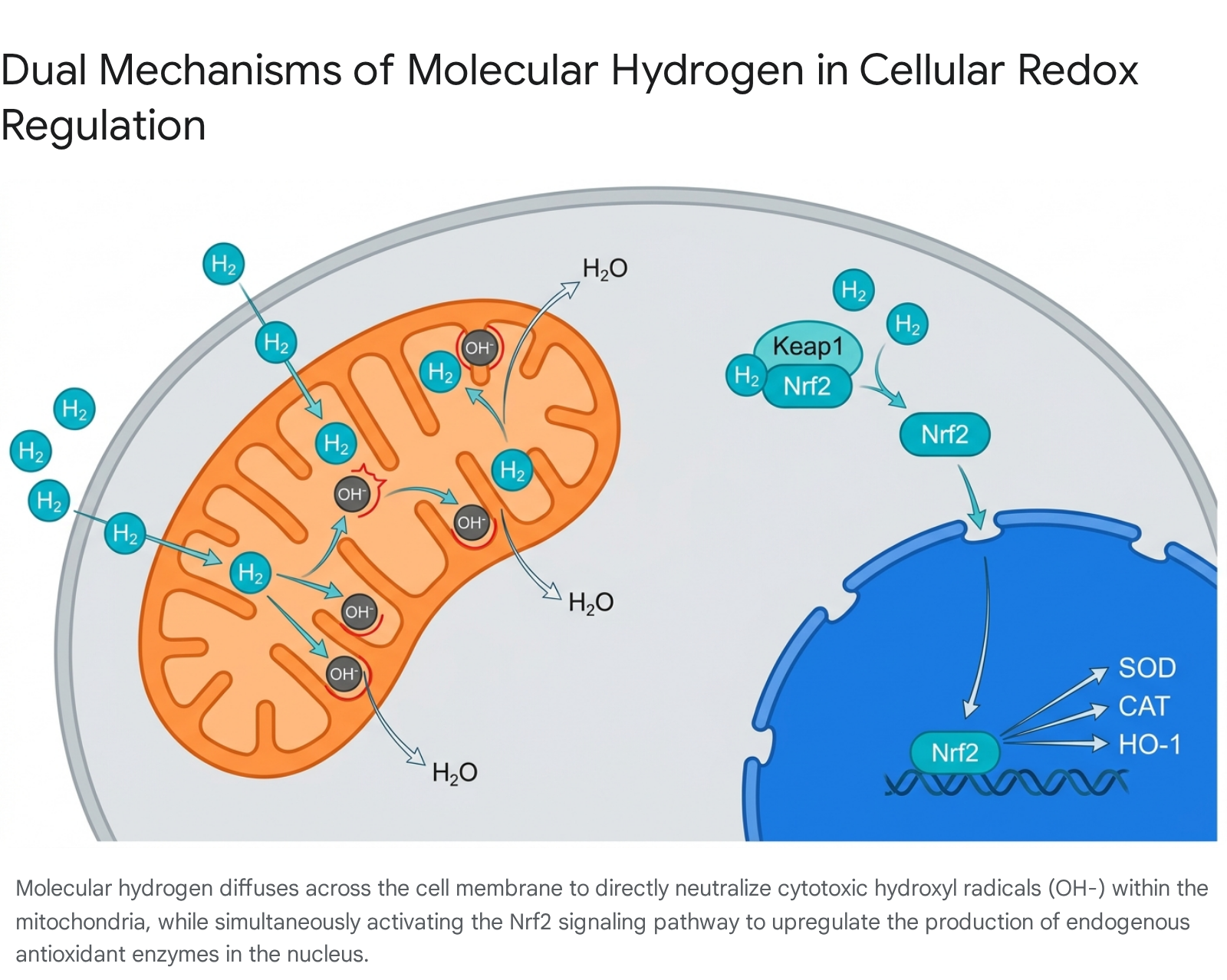
This indirect antioxidant effect suggests that hydrogen acts as a strategic redox adaptogen, equipping cells to maintain long-term redox homeostasis long after the molecular hydrogen has been cleared from the body 61617. Interestingly, a 2026 study on hydrogen-rich water supplementation in exercise models suggested that H2 might also suppress ROS accumulation at such an early stage that it reduces the biological necessity for Nrf2-dependent compensatory mechanisms, indicating highly flexible and context-dependent biological activity 6.
Attenuation of Inflammatory Cytokines
Inflammation and oxidative stress are inextricably linked in a self-perpetuating cycle; ROS overproduction exacerbates inflammation, and inflammatory cells release further ROS, causing secondary oxidative stress 22. Molecular hydrogen interrupts this crosstalk by modulating key inflammatory signaling cascades. Specifically, H2 has been shown to inhibit the NF-κB (Nuclear Factor kappa-light-chain-enhancer of activated B cells) pathway and downregulate the NLRP3 inflammasome 26202122.
By keeping transcription factors like NF-κB relatively inactive, hydrogen water suppresses the expression and release of pro-inflammatory cytokines, notably interleukin-1 beta (IL-1β), interleukin-6 (IL-6), tumor necrosis factor-alpha (TNF-α), and C-reactive protein (CRP) 417202122. Furthermore, research highlights that hydrogen modulates microglial polarization, shifting these neurological immune cells from a pro-inflammatory M1 phenotype to an anti-inflammatory M2 phenotype via the TLR4/NF-κB signaling pathway 20. This anti-inflammatory mechanism underpins much of the clinical research investigating hydrogen therapy for conditions characterized by chronic, low-grade inflammation, such as metabolic syndrome, rheumatoid arthritis, and delayed-onset muscle soreness 172324.
Mitochondrial Function and Cellular Homeostasis
Impaired energy metabolism and mitochondrial dysfunction are central to aging, chronic pain, and metabolic disorders 17. Hydrogen water appears to support mitochondrial health by mitigating mitochondrial oxidative stress and potentially modulating the mitochondrial electron transport chain 17. H2 is hypothesized to alleviate the reduction in ATP generation caused by mitochondrial damage by forming a hydrogen ion gradient independent of the normal transport chain mechanics 17.
By protecting mitochondrial integrity, H2 preserves the efficiency of cellular ATP production and prevents the premature initiation of programmed cell death (apoptosis) 31125. Furthermore, H2 influences the complex crosstalk between the regulatory mechanisms of autophagy and apoptosis, modulating secondary cellular pathways involving MAPKs, p53, and the PI3K/AKT/mTOR signaling axes 321.
Clinical Evidence Across Major Health Domains
By 2026, the volume of clinical evidence evaluating molecular hydrogen has matured. A 2024 systematic review published in the International Journal of Molecular Sciences analyzed 25 human clinical trials, concluding that hydrogen-rich water exhibits consistent, positive, and dose-dependent effects on oxidative stress reduction and anti-inflammatory pathways 4151626. However, researchers emphasize a crucial caveat: while statistical significance is frequently achieved in biomarker modulation, the clinical magnitude of these changes varies widely depending on the specific target pathology 72735.
Metabolic Syndrome and Glycemic Control
Metabolic syndrome is a multifaceted disorder characterized by a cluster of risk factors, including visceral obesity, insulin resistance, dyslipidemia, and hypertension. Its pathophysiology is deeply intertwined with redox dysregulation and chronic inflammation 243628. Hydrogen water has been heavily investigated as an adjunctive intervention for this prevalent condition.
A landmark 24-week, double-blind, placebo-controlled trial published in Diabetes, Metabolic Syndrome and Obesity evaluated 60 patients with metabolic syndrome who consumed high-concentration hydrogen-rich water (providing more than 5.5 mmol H2 per day) 2024362829. The intervention group demonstrated significant reductions in fasting blood glucose levels, serum hemoglobin A1c (HbA1c), and total cholesterol compared to the placebo group 242829. Furthermore, participants exhibited improved biomarkers of inflammation and a trend toward reduction in body mass index (BMI) and waist-to-hip ratio 2428.
Another long-term clinical study, conducted over six months in adults aged 70 and over, examined the daily consumption of 0.5 liters of high-concentration hydrogen water (approximately 15 ppm). The researchers reported positive associations with molecular and phenotypic biomarkers of aging, including favorable changes in body composition, lipid metabolism, sleep quality scores, and a relative increase in telomere length compared to the control group 420. Other clinical studies corroborate these metabolic findings, noting improvements in insulin sensitivity and a reduction in hepatic fat accumulation in patients with non-alcoholic fatty liver disease (NAFLD) 16303141.
Lipid Profiles and Cardiovascular Risk
While early studies generated widespread optimism regarding hydrogen water's ability to correct systemic dyslipidemia, recent large-scale meta-analyses provide a much more calibrated perspective on its direct cardiovascular impact.
A comprehensive 2026 systematic review and meta-analysis published in Diabetology & Metabolic Syndrome analyzed 13 randomized controlled trials encompassing 757 overweight or obese adults with associated metabolic disorders 273532. The analysis was specifically designed to separate statistical significance from clinically meaningful cardiovascular risk reduction.
| Lipid Marker | Mean Reduction (mg/dL) | Statistical Significance | Clinical Assessment |
|---|---|---|---|
| Total Cholesterol (TC) | -6.71 | High (P < 0.001) | Modest |
| Triglycerides (TG) | -4.21 | None (P = 0.54) | Not Meaningful |
| LDL Cholesterol (LDL-C) | -3.21 | Moderate (P = 0.043) | Modest |
| HDL Cholesterol (HDL-C) | -1.16 | Moderate (P = 0.003) | Minimal Change |
Data indicates a notable 6.71 mg/dL decline in total cholesterol and a 3.21 mg/dL decline in LDL cholesterol. The researchers found that while hydrogen-rich water supplementation produced statistically measurable reductions in these specific lipid markers, the effects were universally assessed as clinically modest 3532. These specific reductions fall well below the therapeutic thresholds considered meaningful for primary cardiovascular disease management, meaning that hydrogen water cannot replace pharmaceutical lipid-lowering therapies such as statins 3532.
Consequently, current scientific consensus indicates that hydrogen water should not be utilized as a standalone treatment for severe dyslipidemia 35. Instead, its true cardioprotective benefits likely stem from secondary vascular mechanisms. A separate 2024 PRISMA-compliant meta-analysis highlighted that HRW consumption improves endothelial function (specifically the reactive hyperemia index), reduces arterial stiffness via decreased pulse wave velocity, and mitigates the oxidation of LDL cholesterol, which is more directly linked to atherosclerosis than gross lipid counts 313334.
Exercise Performance and Musculoskeletal Recovery
Sports science and physical rehabilitation are among the most consistently supported application areas for molecular hydrogen. Intense physical exercise drives an exponential increase in oxygen consumption, resulting in the acute generation of reactive oxygen and nitrogen species, which precipitate muscle fatigue, structural damage, and inflammation 1823.
A comprehensive review published in 2024 confirmed that pre-exercise and post-exercise consumption of HRW modulates redox homeostasis, enhancing athletic performance across several parameters 1835. Clinical trials demonstrate that hydrogen water accelerates the clearance of blood lactate and mitigates the elevation of muscle damage markers, such as creatine kinase (CK), following intense exertion 1736. By scavenging hydroxyl radicals and peroxynitrite within the muscle tissue, H2 limits lipid peroxidation and preserves mitochondrial efficiency without blunting the beneficial inflammatory responses required for muscle adaptation 171836.
Athletes utilizing HRW exhibit reduced perceived exertion, lower muscle soreness, improved ventilatory efficiency, and better preservation of anaerobic power output, specifically documented in improved countermovement jump height and sprint times 17183537. Furthermore, studies utilizing flow cytometry testing on healthy adults consuming hydrogen water found complex shifts in immune cell frequencies, including a decrease in CD14+ cells, indicating broad immune modulation post-exercise 1623. The capacity of HRW to prevent the premature depletion of endogenous cellular antioxidant pools - such as preserving cellular reduced glutathione (GSH) and vitamin E levels - makes it a viable ergogenic aid, particularly for reducing the recovery interval between intensive training sessions 636.
Oncology Support and Radiation Therapy Mitigation
Hydrogen therapy is increasingly utilized as a complementary intervention in oncology, specifically to mitigate the collateral tissue damage induced by radiation and chemotherapy regimens. Radiation therapy exerts its tumoricidal effects primarily by generating massive localized bursts of hydroxyl radicals; however, this oxidative stress inevitably spills over into adjacent healthy tissues, causing severe fatigue, dermatitis, and organ toxicity 725.
In a clinical trial involving 49 patients receiving radiotherapy for liver cancer, the daily consumption of hydrogen-rich water over six weeks significantly reduced systemic oxidative stress markers 1425. These patients reported dramatically improved quality-of-life scores during their treatment, experiencing reductions in nausea, fatigue, and hair loss compared to patients drinking standard water 125. Crucially, the consumption of hydrogen water did not impair the targeted anti-tumor efficacy of the radiation treatment 125.
Additionally, animal models evaluating radiation-induced heart disease demonstrated that both hydrogen gas inhalation and HRW consumption significantly protected myocardial tissue from radiation damage equivalent to human cancer treatment doses 7. While not a direct cancer treatment itself, H2 holds distinct promise as a radioprotective and chemoprotective adjunct, with some studies showing it may even enhance the efficacy of drugs like 5-fluorouracil (5-FU) in shrinking tumor size 116.
Renal, Hepatic, and Neurological Function
Oxidative stress is a primary driver of renal and hepatic tissue degradation. In the context of liver health, several trials have noted that HRW consumption reduces circulating levels of liver enzymes, specifically alanine aminotransferase (ALT) and aspartate aminotransferase (AST), in clinical populations 41530. Studies on non-alcoholic fatty liver disease (NAFLD) indicate that hydrogen therapy may inhibit hepatic fat accumulation and modulate aberrant cellular signaling, leading to improved lipid processing in the liver, with one study showing measurable reductions in liver fat without significant changes in overall body weight 163137.
In nephrology, acute kidney injury (AKI) frequently arises from ischemia-reperfusion events or toxin exposure. While large-scale human cardiovascular outcome trials like MERCURI-2 currently focus on pharmaceutical agents such as SGLT2 inhibitors (e.g., dapagliflozin and empagliflozin) rather than hydrogen 3839, preclinical models show that molecular hydrogen can rescue renal function. In rats subjected to mercury-induced acute kidney injury, hydrogen-enriched water preserved proximal tubule sodium reabsorption, decreased renal cortex lipid peroxidation, and reduced tissue edema by neutralizing localized free radical damage 50. Furthermore, preliminary human trials show that electrolyzed HRW improves overall renal function and noticeably reduces systemic fatigue in patients undergoing chronic hemodialysis 1816.
Neurologically, hydrogen water has demonstrated potential in mitigating cognitive impairment. Studies in sleep-deprived animal models indicate that H2 prevents neuronal damage and cognitive dysfunction by activating the Nrf2/HO-1 signaling cascade in the hippocampus 20. In human populations, a 2026 randomized controlled trial tested hydrogen administration in 66 participants with sleep and mood disorders, finding that a seven-day intervention led to significantly longer sleep duration, less nighttime awakening, and improved depression scores 7. Moreover, pilot studies in Japanese patients with Parkinson's disease demonstrated that regular hydrogen therapy improved clinical scores when used alongside standard levodopa treatment, indicating meaningful neuroprotective applications 4052.
Regulatory Status and International Frameworks
The global regulation of molecular hydrogen water remains fragmented, occupying an overlapping and sometimes contradictory space between food safety standards, functional beverage guidelines, and medical device regulations 41. Because molecular hydrogen is naturally produced in the human gut - where intestinal flora can generate liters of hydrogen gas daily following the fermentation of fiber-rich foods - regulatory bodies generally view exogenous hydrogen administration as having a very high baseline safety profile 10.
Global Regulatory Classifications
Different global jurisdictions have adopted varying approaches to the classification, certification, and standardization of hydrogen water products.
| Region / Regulatory Body | Primary Classification | Key Directives and Operational Frameworks |
|---|---|---|
| United States (FDA) | Food Additive (GRAS) | Acknowledged via GRAS Notice No. 520 (2014) for use in beverages up to 2.14% by volume. Systems must meet NSF/ANSI 42 and 61 standards 1041424344. |
| European Union (EFSA) | Food Additive | 2026 EFSA Scientific Opinion confirmed hydrogen gas as a safe food additive for processing and packaging across all demographic groups 5758. |
| Japan (MHLW) | Medical Device / Food | Electrolyzed Reduced Water (ERW) generators have been approved as home-managed medical devices since 1965 11128. |
| South Korea (MFDS) | Functional Beverage / Device | 2026 guidelines mandate therapeutic concentration tiers (1.0 - 1.4 ppm for general wellness) and strict semi-annual certification testing 4145. |
| China (NMPA) | Class II Medical Device | Approved hydrogen-oxygen inhalation devices for clinical use in 2020; integrated into care protocols in over 1,400 Chinese hospitals by 2025 5246. |
Distinction Between Safety and Efficacy Approvals
A pervasive issue in the commercial marketing of hydrogen water involves the conflation of safety classifications with efficacy endorsements 114247. In the United States, molecular hydrogen is the subject of a "Generally Recognized As Safe" (GRAS) notice by the FDA 104347. This notice acknowledges that hydrogen gas dissolved in water is non-toxic, non-carcinogenic, and chemically stable for consumption 42. However, GRAS status strictly pertains to safety under specified conditions; it is not an FDA approval for any health claims, dietary supplement efficacy, or disease treatment 2424762.
Similarly, while the Japanese Ministry of Health, Labour and Welfare (MHLW) approves water ionizers as home-managed medical devices, this approval is explicitly restricted to the improvement of mild gastrointestinal symptoms, such as chronic diarrhea, abnormal fermentation, and indigestion 1112. Regulatory agencies worldwide explicitly forbid manufacturers from claiming that hydrogen water cures, treats, or prevents severe diseases without undergoing rigorous premarket review and large-scale Phase III clinical trials, an evidentiary threshold that the hydrogen water industry has not yet crossed for most claims 21142.
Dosage, Delivery Technologies, and Device Standards
The clinical efficacy of hydrogen water is intrinsically linked to the concentration of dissolved gas and the purity of the delivery mechanism 463.
Concentration Thresholds and Efficacy
Research indicates that the therapeutic benefits of molecular hydrogen are fundamentally dose-dependent 4. Across the 2026 clinical landscape, the minimum effective threshold to trigger measurable biomarker changes is generally recognized as 1.0 parts per million (PPM), equivalent to 1,000 parts per billion (PPB) 4.
Many clinical trials utilize concentrations ranging from 1.0 PPM to 3.0 PPM, with some specialized metabolic studies using high-concentration water exceeding 5.0 PPM 42429. Comparative studies consistently demonstrate that concentrations below the 1.0 PPM threshold - which is common in inexpensive consumer devices - yield weaker, statistically insignificant, or entirely absent physiological effects 4. The Japan Molecular Hydrogen Association (JMHA) established a minimum concentration threshold of 0.08 ppm just to use the label "hydrogen water," but heavily recommends a minimum of 0.8 ppm for any therapeutic relevance 41.
Manufacturing Mechanisms and Purity
Consumers and clinical settings rely on three primary methodologies to generate hydrogen-rich water, each with distinct advantages and functional limitations 11241.
| Delivery Mechanism | Method of Action | Advantages and Limitations |
|---|---|---|
| SPE/PEM Electrolysis Devices | Solid Polymer Electrolyte / Proton Exchange Membrane systems pass electrical current through water, isolating hydrogen gas and dissolving it into the liquid. | Highly reusable and avoids toxic byproducts. However, high initial cost is required, and generic models often fail to reach therapeutic 1.0 PPM thresholds or safely expel ozone and chlorine 41264. |
| Magnesium Effervescent Tablets | Tablets containing elemental magnesium react violently with water to rapidly produce hydrogen gas (Mg + 2H2O → Mg(OH)2 + H2). | Achieves very high H2 concentrations (up to 5-7 PPM) rapidly. However, this introduces a high dietary magnesium load, which requires medical consultation for patients with impaired renal clearance 31364748. |
| Pre-packaged Aluminum Pouches | Water is pre-infused with gas under high pressure at a facility and sealed in specialized packaging. | Offers convenient, immediate consumption and precise dosing. However, H2 easily diffuses through plastic or glass, requiring expensive aluminum packaging, creating environmental waste and shelf-life limits 212. |
Methodological Limitations and Industry Influence
Despite a proliferation of positive findings across various health domains, the scientific consensus regarding molecular hydrogen requires an objective evaluation of the literature's methodological constraints.
Sample Sizes and Trial Durations
The vast majority of human clinical trials evaluating molecular hydrogen are limited by small sample sizes - frequently enrolling between 20 and 60 participants - and short durations, typically spanning 4 to 24 weeks 472022. While these pilot and phase II trials are sufficient to demonstrate physiological target engagement (i.e., proving that H2 alters biomarker concentrations at a cellular level), they are generally underpowered to detect definitive changes in long-term clinical endpoints, such as overall mortality, myocardial infarction incidence, or long-term neurodegenerative disease progression 4950.
Additionally, the hydrogen research landscape suffers from significant heterogeneity in study design. Trials utilize varying delivery methods (gas inhalation, hydrogen-infused saline injections, oral hydrogen water), diverse dosing schedules, and vastly different hydrogen concentrations, rendering direct comparisons and definitive clinical guidelines challenging for practitioners 20172022.
Conflicts of Interest in Hydrogen Research
The rapid translation of molecular hydrogen from an experimental concept to a lucrative consumer wellness industry has generated notable financial conflicts of interest within the research community 102936515270. Several prominent researchers who author key systematic reviews and clinical trials possess direct or indirect ties to the commercial hydrogen sector.
For instance, foundational researchers and frequent study authors - such as Tyler W. LeBaron of the Molecular Hydrogen Institute - routinely disclose receiving speaking fees, consulting fees, and travel grants related to the promotion of molecular hydrogen therapies 102936515253. Other frequent co-authors hold direct employment or commercial interests in companies manufacturing hydrogen-generating tablets and devices, such as Drink HRW and Natural Wellness Now Health Products Inc. 365152. While these relationships are generally disclosed in accordance with academic publishing standards, and the underlying biochemistry of H2 is independently verified by global institutions, the heavy presence of industry funding in clinical trial design necessitates a rigorous, independent peer-review process to ensure the unbiased interpretation of effect sizes 5170.
Safety Profile, Side Effects, and Contraindications
One of the most remarkable aspects of molecular hydrogen therapy is its exceptionally benign safety profile 101664. Because hydrogen is biologically inert to stable molecules and lacks the chemical reactivity to interfere with metabolic enzymes or pharmaceutical drug receptors, it avoids the systemic toxicity associated with traditional pharmacological interventions 56254.
Documented Adverse Events
A comprehensive 2023 systematic review analyzing 81 distinct clinical trials found zero serious adverse events directly attributable to the administration of molecular hydrogen 73. The FDA's GRAS designation and the European Food Safety Authority's rigorous safety assessments corroborate that human consumption of dissolved hydrogen gas poses no long-term health risks, even across exposures far exceeding those used therapeutically 1042575873.
Minor, transient side effects have been reported in a very small fraction of users (approximately 0.2% to 10%, depending on the study population) 146473. These predominantly involve mild gastrointestinal adjustments, such as temporary bloating, loose stools, heartburn, or an increase in bowel movement frequency 1462647374. These symptoms generally occur during the first few days of use and are frequently attributed to the gut microbiome adapting to the presence of exogenous hydrogen gas, or simply an overall increase in daily fluid volume intake 146473. Health experts also note that drinking excessive amounts of any water, hydrogen-infused or otherwise, carries a risk of hyponatremia (the dangerous dilution of blood sodium levels), though this is a general hydration risk rather than a specific hydrogen toxicity 1.
Theoretical Contraindications and Drug Interactions
There are currently no known or documented negative drug interactions with molecular hydrogen 106254. However, clinical researchers note a few theoretical contraindications based on the biological mechanisms of H2 that warrant medical consultation prior to use:
- Small Intestinal Bacterial Overgrowth (SIBO): Hydrogen gas serves as a primary metabolic fuel for certain anaerobic bacteria residing in the human gut, including Bacteroides and Clostridia species. In patients suffering from SIBO or Clostridium difficile infections, introducing exogenous hydrogen via infused water could theoretically promote the over-proliferation of these pathogenic bacteria, exacerbating symptoms of bloating, abdominal pain, and malabsorption 55.
- Immunosuppression and Organ Transplants: Because molecular hydrogen may exhibit complex immune-modulating and immune-stimulating properties, its use could theoretically counteract the effects of immunosuppressive medications (e.g., cyclosporine, corticosteroids). Patients undergoing specialized immunotherapy, managing severe autoimmune flare-ups, or maintaining organ transplants are advised to exercise caution and consult their physicians 55.
- Diabetes and Blood Pressure Medications: While hydrogen water is beneficial for improving insulin sensitivity and vascular health through the reduction of oxidative stress, its synergistic physiological effects could cause unexpected drops in blood glucose or blood pressure when combined with pharmaceuticals 55. Patients on tightly controlled hypoglycemic or anti-hypertensive medications should carefully monitor their levels to prevent medication-induced hypoglycemia or hypotension, adjusting dosages with their physician if necessary 55.
Conclusion
In 2026, the scientific understanding of molecular hydrogen water rests on a solid foundation of validated biological mechanisms and an increasingly robust array of human clinical trials. By acting as a highly selective scavenger of cytotoxic hydroxyl radicals and an upregulator of the endogenous Nrf2 antioxidant pathway, molecular hydrogen offers a unique, systemic approach to managing oxidative stress and chronic inflammation without disrupting essential cellular signaling 3561920.
Clinical evidence strongly supports the use of hydrogen-rich water for enhancing sports recovery, mitigating the side effects of radiation therapy, and improving a variety of inflammatory biomarkers 41825. Furthermore, its safety profile is virtually unmatched in the supplement sector, enjoying GRAS status from the FDA and European food safety endorsements, with zero severe adverse events reported across decades of trials 435773.
However, expectations for hydrogen water must remain carefully calibrated to the data. While the therapy induces statistically significant changes in metabolic and lipid parameters, these improvements are often clinically modest, rendering it insufficient as a replacement for established pharmaceutical interventions in severe diseases 3532. The reliance on small-scale studies and the prevalence of industry funding within the literature underscore the continued need for massive, independent, multi-center trials to solidify precise treatment protocols 76251. Ultimately, for individuals seeking a well-tolerated, low-risk adjunctive therapy for metabolic health, inflammatory management, and physical performance, hydrogen water administered above the 1.0 PPM threshold represents a credible and scientifically substantiated intervention.