
Availability Heuristic and Consumer Risk Assessment
The availability heuristic is a foundational concept in behavioral economics and cognitive psychology that explains how individuals estimate the likelihood of an event based on the ease with which examples of that event can be retrieved from memory. When consumers evaluate risks - whether determining the safety of a novel food product, assessing the necessity of a medical intervention, or weighing the legitimacy of a financial investment - they rarely rely on rigorous statistical probability. Instead, they default to mental shortcuts driven by the vividness, emotional salience, and recent frequency of information retrieval 123. In the modern digital era, this adaptive evolutionary mechanism is increasingly exploited by algorithmic media environments, leading to profound distortions in public health behavior, product safety assessments, and financial security.
Theoretical Mechanisms of the Availability Heuristic
The human brain evolved to conserve cognitive energy by utilizing heuristics - mental shortcuts that bypass complex probabilistic calculations in favor of rapid judgments 4. Formally described in the 1970s by Amos Tversky and Daniel Kahneman, the availability heuristic dictates that if a concept is easily recalled, it is perceived as more important, common, or probable than alternatives that require deliberate cognitive effort to retrieve 13.
Cognitive Efficiency and Emotional Salience
Two primary factors drive the availability heuristic: cognitive efficiency and emotional salience. Individuals naturally tend to minimize the mental effort required to complete routine tasks or evaluate risks 2. Consequently, dramatic, emotionally charged, or highly visual events leave a disproportionately deep impression on memory 45. Experimental research demonstrates that graphical, descriptive, and specific information possesses stronger vividness, making it highly persuasive compared to text-only or purely statistical data 15.
This vividness effect ensures that fear-inducing anomalies are retrieved much faster than mundane, statistically prevalent risks 24. Furthermore, the availability heuristic intersects with the negativity bias; consumers are profoundly influenced by negative information, which triggers stronger cognitive and emotional responses than positive data 35. A single vividly described adverse outcome will often overshadow dozens of positive or neutral data points in the consumer's memory matrix.
Algorithmic Amplification in Digital Environments
The natural vulnerabilities created by the availability heuristic are vastly accelerated by modern digital ecosystems. Social media algorithms are optimized for user engagement, meaning they systematically prioritize content that elicits strong emotional reactions 67. Research indicates that these algorithms heavily favor specific types of information - categorized as PRIME (Prestigious, Ingroup, Moral, and Emotional) 7.
Because engagement-based recommendation systems amplify sensational, controversial, and highly emotional content, they flood users' feeds with extreme edge cases 68. This oversaturation distorts the base-rate frequency of events in a consumer's mind. When a user repeatedly encounters vivid viral videos of a specific product failing or a purported medical injury, the availability heuristic ensures the user will overestimate the prevalence of these events, fundamentally skewing their personal risk assessment 48.
Interaction with Secondary Cognitive Biases
The availability heuristic rarely operates in isolation; it functions synergistically with other cognitive biases to distort reality. For example, the halo effect and authority bias frequently compound availability errors 9. Because information received from individuals perceived as authoritative or prestigious tends to be more memorable, consumers give disproportionate weight to statements made by influencers or leaders 79. If a highly visible personality endorses an unproven health treatment, the vividness of the endorsement and the perceived authority of the source combine to make the treatment seem both safe and effective, regardless of the underlying empirical data 9.
Distortions in General Risk and Physical Safety Perception
The disconnect between actual statistical probability and perceived risk is most apparent when examining fatal hazards. Public fear is routinely directed toward highly publicized, sensational threats rather than the mundane activities that cause the vast majority of injuries and fatalities.
Overestimation of Vivid Environmental Hazards
Data from the National Safety Council and the Florida Museum of Natural History illustrates the extreme variance between objective mortality risks and the public's perception of danger 1011. While humans naturally fear phenomena that feature heavily in cinema and news media, the true statistical probability of these events is infinitesimal compared to routine hazards.
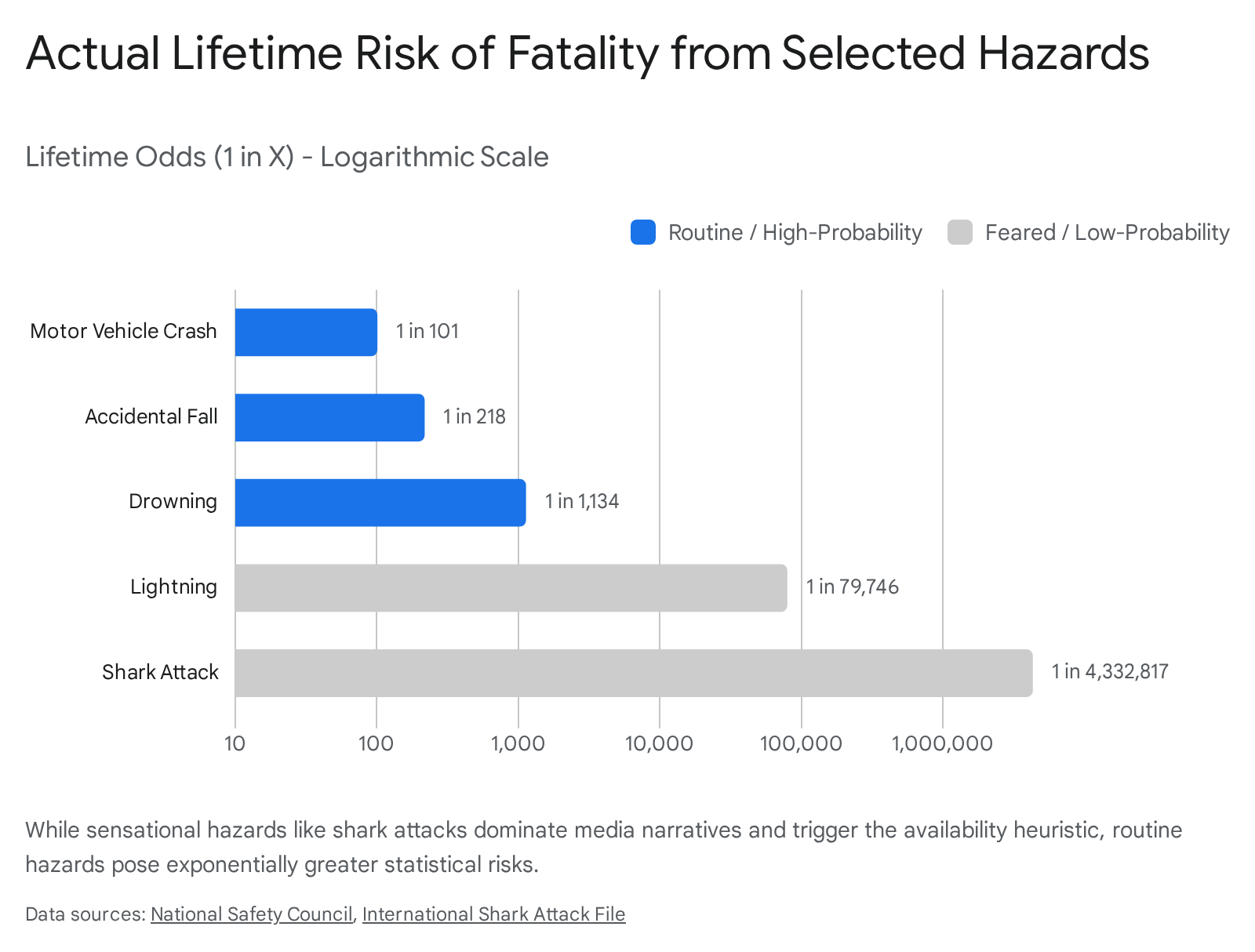
| Cause of Death | Actual Lifetime Odds of Dying (U.S.) | Characteristics Driving Perceived Risk |
|---|---|---|
| Heart Disease | 1 in 6 | Chronic, slow-moving, low media vividness |
| Accidental Fall | 1 in 89 | Routine, highly common, low sensationalism |
| Motor-Vehicle Crash | 1 in 101 | Common, normalized, high actual incidence |
| Accidental Poisoning | 1 in 193 | Often hidden, opioid-related, rising frequency |
| Drowning | 1 in 1,025 | Situational hazard |
| Lightning Strike | 1 in 79,746 | Sudden, unpredictable, visually dramatic |
| Shark Attack | 1 in 3,700,000 to 4,332,817 | Highly sensationalized, cinematic, primal fear |
The fear of shark attacks provides a perfect encapsulation of the availability heuristic. Despite an average of only one shark-related fatality occurring in the U.S. roughly every two years, the visceral, terrifying nature of the threat - amplified by historical media - makes it easily available in human memory 1213. Conversely, motor vehicle fatalities, which claim over 40,000 lives annually in the U.S., are so thoroughly normalized that they fail to trigger the same psychological alarm 1214. Distracted driving linked to cell phone use causes immense casualties, yet consumers routinely engage in this behavior because the cognitive availability of the convenience outweighs the abstract statistical danger 14.
Global risk data reinforces this dichotomy. The World Risk Poll, based on 147,000 interviews across 142 countries, indicates that road-related accidents are consistently identified as the biggest risk to personal safety, cited by 16% of the global adult population 1516. Yet, localized threats that receive heavy media saturation often supersede broad statistical risks. For example, a study of the central Megalopolis in Mexico demonstrated that residents in highly publicized pollution zones perceived air quality risks to be exceptionally high and frequent, directly correlating their personal risk assessment with the localized vividness of the threat rather than global averages 17. Similarly, drought risk assessments in Bangladesh showed that perceived risk closely tracked with the vividness of recent local exposure, illustrating that direct experience serves as a powerful anchor for the availability heuristic 18.
Perception of Autonomous Vehicle Safety
The deployment of artificial intelligence in physical domains, such as Autonomous Vehicles (AVs), provides a modern arena for observing the availability heuristic. Public perception of AV safety is highly stratified based on proximity, experience, and media exposure. A comprehensive 2025 survey conducted by UC Berkeley SafeTREC in San Francisco - a city with heavy AV deployment - revealed significant discrepancies in trust among different road users 1920.
While 72.5% of individuals who had ridden as passengers in an AV trusted the technology, this confidence dropped to 51.0% among pedestrians and cyclists, and plummeted to 47.1% among human drivers sharing the road 20. For pedestrians and opposing drivers, an AV represents an unpredictable, novel entity. When AV software malfunctions or high-profile accidents occur, the novelty and severity of the event are heavily publicized, cementing vivid negative associations 1921. Respondents reported that unpredictable human behavior (55.4%) and system or software malfunctions (53.5%) were top concerns 19.
The ease with which consumers recall a news story of a self-driving car malfunction severely depresses the broad acceptance of the technology. This is occurring against a backdrop of rising actual AI incidents. The Stanford AI Index Report noted that documented AI safety incidents surged from 149 in 2023 to 362 in 2025, with hallucinations and factual errors accounting for 38% of incidents 2223. Because AI incidents - ranging from deepfake scams to autonomous vehicle errors - are novel and highly shareable, they receive outsized media attention, further reinforcing the availability bias among consumers who overestimate the daily frequency of these errors 2224.
The Impact on Public Health Decisions
Nowhere is the distortion of risk more consequential than in public health. Consumers regularly face decisions regarding vaccines, medical treatments, and dietary choices. The availability heuristic frequently leads individuals to reject safe, evidence-based interventions in favor of unproven - and occasionally fatal - alternatives.
Vaccine Hesitancy and the Vividness of Adverse Events
Vaccines suffer from a unique psychological penalty: they are administered to healthy individuals to prevent an invisible threat. Because the successful outcome of a vaccine is a non-event (the absence of disease), it provides no vivid memory or emotional salience. Conversely, an adverse reaction to a vaccine - however statistically rare - is a highly visible, emotionally devastating event.
A longitudinal survey conducted by the Annenberg Public Policy Center tracks a concerning decline in the perceived safety of foundational vaccines among U.S. adults over a three-year period 2526.
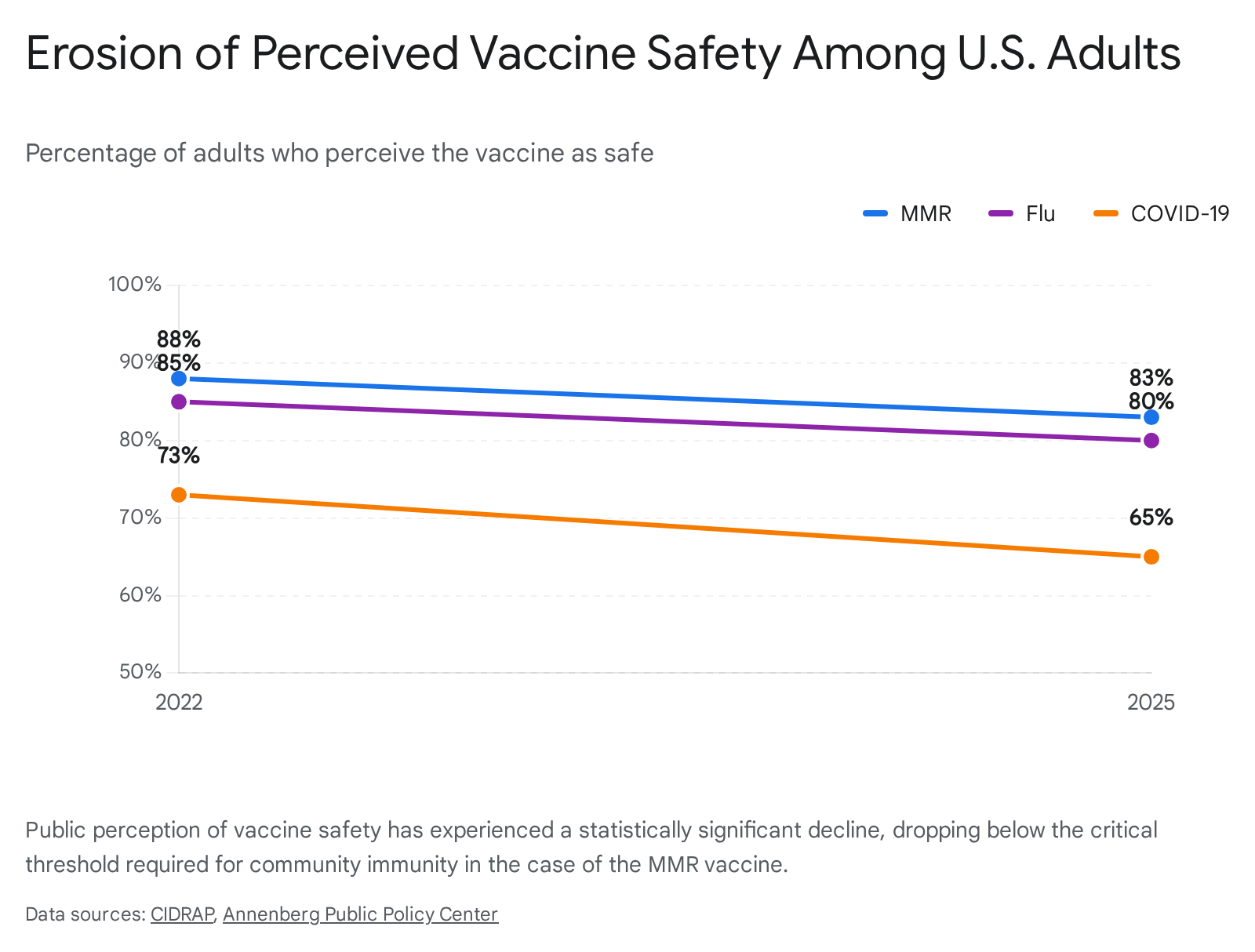
| Vaccine Type | Perceived as Safe (August 2022) | Perceived as Safe (December 2025) | Percentage Point Decline |
|---|---|---|---|
| MMR (Measles, Mumps, Rubella) | 88% | 83% | -5% |
| Influenza (Flu) | 85% | 80% | -5% |
| COVID-19 | 73% | 65% | -8% |
This erosion of trust is tightly linked to the availability of misinformation. The Annenberg data highlights that by mid-2024, 28% of Americans incorrectly believed that COVID-19 vaccines were responsible for thousands of deaths, and 15% believed the vaccines altered human DNA 27. Algorithms elevate sensational claims of vaccine injury, amplifying them until they dominate the media diet of hesitant consumers. When individuals assess the risk of vaccination, their cognitive processing pulls from a reservoir of vivid, horrifying anecdotes rather than clinical trial data. Consequently, the perceived risk of the vaccine artificially eclipses the perceived risk of the virus itself 2829. Research indicates that higher perceived probabilities of contracting a virus and lower perceived vaccine safety are the primary drivers of vaccine hesitancy, confirming that cognitive retrieval outweighs objective epidemiological data 28.
Viral Health Misinformation and the Borax Challenge
The availability heuristic also drives consumers toward dangerous pseudo-medical treatments. Social media platforms have become fertile ground for viral health crazes, characterized by a highly persuasive, testimonial-style visual language that creates an illusion of efficacy 30.
In mid-2023, the "Borax challenge" gained massive traction, accumulating over 34 million views on TikTok. Influencers promoted the ingestion of borax (sodium tetraborate) - a toxic household cleaning agent - as a "natural" cure for arthritis and systemic inflammation 3031. The trend was heavily insulated by conspiratorial narratives claiming that the pharmaceutical industry was suppressing the health benefits of boron 30.
The medical reality of ingesting borax is severe. It is entirely banned in U.S. food products and recognized globally as a reproductive and developmental toxin 3132. Historical data shows that borax poisoning causes acute gastrointestinal distress, kidney failure, seizures, and has resulted in at least 83 documented historical fatalities 3233. Despite these stark medical facts, U.S. poison control centers saw a 450% rise in borax ingestion calls between 2023 and 2026, correlating directly with the viral videos, and resulting in at least one confirmed death in early 2026 3233.
The availability heuristic explains why consumers ingested a known poison. The scientific evidence regarding boron bioavailability is complex and abstract; the visual testimony of a relatable influencer claiming instant pain relief is simple, vivid, and easily retrieved 32. The conspiratorial narrative further short-circuited critical thinking, framing medical warnings as evidence of a cover-up rather than genuine safety guidance 3033. Other similarly dangerous trends driven by heuristic processing include the Benadryl challenge, which caused severe neurological events, and various unverified dietary interventions promoted under the hashtag #WhatIeatinaday 33.
The Role of Emotional Landscapes
The success of health misinformation is partially dependent on the emotional baseline of the population. Gallup's State of the World's Emotional Health report for 2024 indicated that 39% of adults worldwide experienced daily worry and 37% reported stress - figures substantially higher than a decade prior 34. Concurrently, American optimism regarding the future hit a 20-year low in 2025, with healthcare representing the top domestic worry for 61% of respondents by 2026 3536. This heightened state of chronic anxiety primes the public to be more receptive to the availability heuristic. When baseline fear is high, consumers are more likely to seek out rapid, emotionally satisfying solutions - such as viral miracle cures - while simultaneously rejecting complex, statistically nuanced public health directives 3437.
Distortions in Consumer Product Safety
E-commerce has been fundamentally reshaped by social media, creating an environment where impulsive consumption is driven almost entirely by user-generated reviews and viral trends. The "TikTok made me buy it" phenomenon illustrates how the availability heuristic manipulates consumer behavior, often bypassing traditional product safety and quality assessments.
Viral Commerce and Impulsive Purchasing Behavior
The heuristic dictates that consumers will judge a product favorably if they can readily recall positive, vivid imagery associated with it. Graphical, descriptive reviews carry immense weight 35. Brands that achieve viral success enjoy an initial surge in sales because the product becomes psychologically highly available.
For instance, established brands like Maybelline experienced massive stock shortages when products like Sky High Mascara achieved viral status, capitalizing heavily on the availability heuristic driven by short-form video reviews 39. Modern digital-native brands utilize this aggressively; companies like SKIMS drop highly visual, short-form "try-on" clips that rapidly accumulate millions of views, creating a vivid association between the product and aspirational aesthetics 40. The constant visual reinforcement bypasses the consumer's rational evaluation of necessity, triggering impulsive purchasing 3940.
Product Failure and the Negativity Bias
However, the same cognitive mechanism that builds viral brands makes them extraordinarily fragile. If supply chain issues arise or quality drops, the negativity bias takes over. Negative visual cues - such as unboxing videos of damaged goods - disproportionately impact a brand's perception, rapidly overriding initial positive sentiment 35.
A prominent example of this lifecycle is the 2022 "Pink Sauce" controversy. Created by an influencer, the bright pink condiment went viral due to its striking visual appeal 3839. Consumers ordered the product in mass quantities, relying on the availability of the influencer's positive, highly stylized videos. Standard consumer risk assessments regarding food safety were entirely bypassed 39.
When the product shipped, it became evident that the sauce was a disaster of food safety protocol. The formulation included perishable dairy but was shipped via standard mail during summer without refrigeration 3943. Nutritional labels were fabricated, and batches arrived varying in color, texture, and odor, with several consumers reporting food poisoning and suspected botulism 3839.
The rapid downfall of The Pink Sauce demonstrates the volatile nature of heuristic-driven commerce. The initial positive availability was swiftly replaced by an even stronger negative availability: viral videos of rotten, swelling bottles 3943. The product was ultimately halted by the FDA before undergoing a commercial reformulation by a mainstream manufacturer, but the brand struggled to recover its initial, organic hype 3940.
The Double-Edged Sword of Social Proof
Viral product failures underscore a broader risk in modern commerce. Products that are driven purely by novelty and algorithmic visibility often lack the operational longevity to succeed 41. Items built on visual entertainment - such as cosmetic bronzing drops, novelty self-stirring mugs, or culinary anomalies like "cloud eggs" and "healthy coke" (balsamic vinegar and sparkling water) - quickly oversaturate the market before failing 4041. The availability heuristic creates a short-term echo chamber where a product appears indispensable simply because it is ubiquitous on a consumer's timeline, leading to rapid boom-and-bust economic cycles for retailers who fail to build systemic resilience 3941.
Financial Decision-Making and Vulnerability to Fraud
Financial markets have historically been influenced by psychological biases, but the speed of digital information has exacerbated the impact of the availability heuristic on retail investing and consumer finance. When making investment decisions or evaluating the security of personal funds, consumers often rely on prominent, recent anecdotes rather than comprehensive market data.
Cryptocurrency and Bitcoin ATM Scams
The rise of cryptocurrency introduced complex new financial products to a retail demographic largely unequipped to evaluate their technical risks. The rapid, highly publicized fortunes made by early cryptocurrency adopters created a powerful availability bias; the concept of massive returns became easily retrievable in the public consciousness. Unfortunately, this psychological environment is highly exploitable by malicious actors.
Fraudsters have aggressively targeted consumers using Bitcoin ATMs (BTMs). These physical kiosks, often placed in convenience stores and gas stations, allow users to convert cash directly into cryptocurrency 4243. Scammers rely on the availability heuristic by simulating immediate, catastrophic risk to the victim's existing assets. Using government or business impersonation tactics, scammers convince targets that their bank accounts are compromised, or their identities are linked to money laundering 4243.
The fabricated threat is vivid, urgent, and emotionally devastating, triggering panic that overrides logical risk assessment. Victims are instructed to withdraw cash and deposit it into a BTM to "protect" their savings, instantly transferring the funds to the scammer's anonymous crypto wallet 4243.
The financial toll of these heuristic-exploiting scams is staggering.
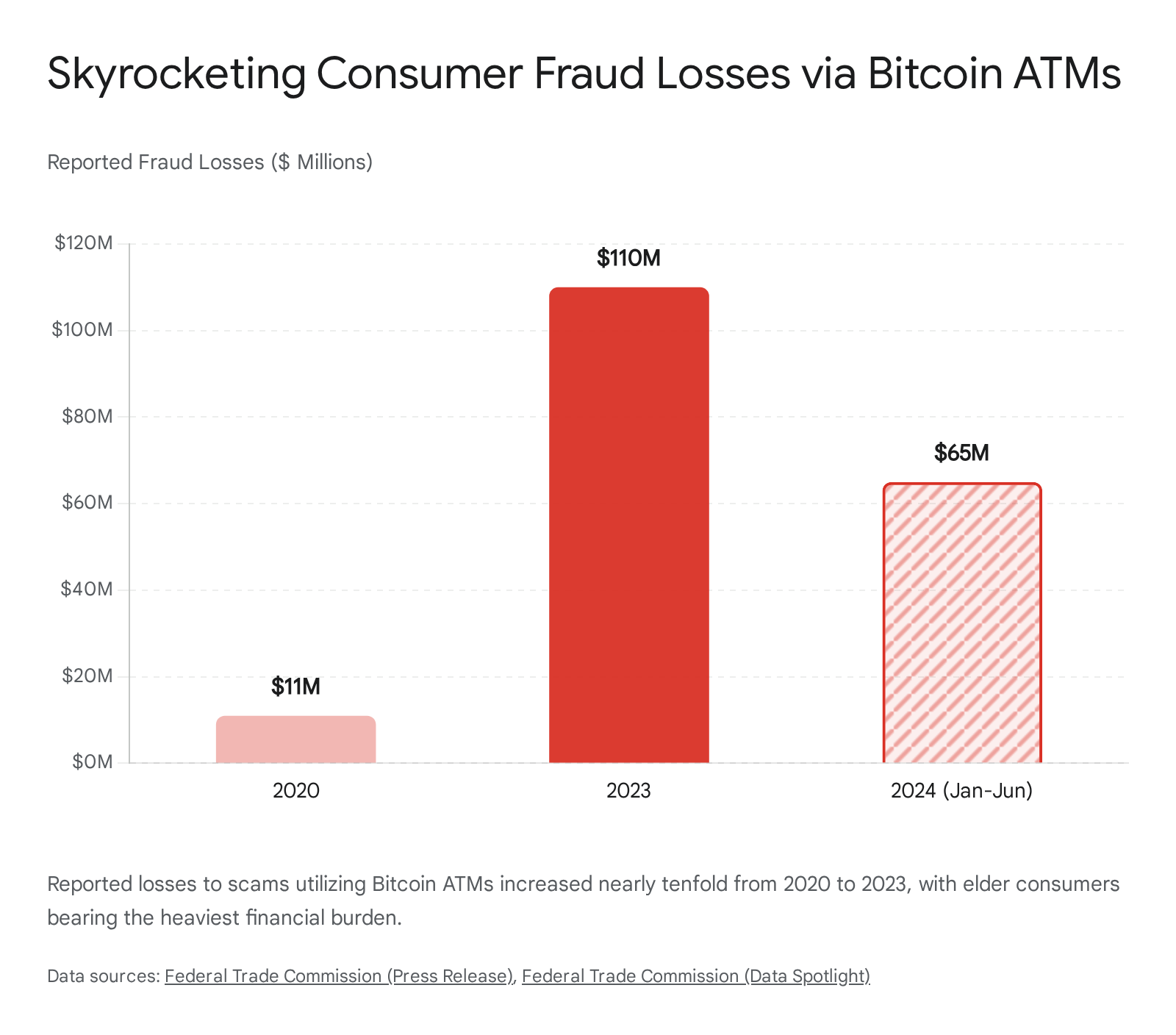
Data from the Federal Trade Commission (FTC) reveals exponential growth in consumer losses tied to Bitcoin ATMs:
| Metric | 2020 | 2023 | H1 2024 (Jan - Jun) |
|---|---|---|---|
| Reported Fraud Losses (BTMs) | ~$11 Million | $110 Million | $65 Million |
| Median Individual Loss | N/A | N/A | $10,000 |
In the first half of 2024 alone, consumers aged 60 and older were more than three times as likely as younger adults to report a loss using a BTM, accounting for 71% of the total dollars lost 43. Older adults may be particularly vulnerable to authority bias and emotional manipulation when faced with vivid, threatening narratives regarding their life savings 943. General fraud statistics further highlight the scope of the problem; the FTC reported that nationwide fraud losses topped $12.5 billion in 2024, representing a 25% increase over the previous year, with investment scams accounting for $5.7 billion of that total 4445.
Institutional Enforcement and Market Irrationality
The broader financial markets are equally susceptible to availability biases. Retail investors frequently exhibit herding behavior, following the crowd based on the most readily available information - often viral social media posts or news headlines - rather than engaging in thorough fundamental analysis 3.
Recognizing the harm caused by social media-driven financial schemes, the U.S. Securities and Exchange Commission (SEC) routinely issues investor alerts warning against stock tips and advance-fee frauds propagated via online group chats 50. When investors suffer massive losses in highly volatile assets, it is often because they overestimated the probability of extreme gains based on the vivid success stories of a few early adopters, while the silent, statistically vast majority of individuals who lose their capital fade into the background 34.
Enforcement data from the SEC highlights the ongoing battle against these heuristic-exploiting schemes. During the fiscal year 2025, the SEC obtained orders for $17.9 billion in monetary relief 4652. Although the total number of standalone enforcement actions dropped to 303 in FY 2025 - largely attributed to transition periods and staffing shifts - the agency maintained a stringent focus on frauds targeting retail investors, particularly Ponzi schemes and offering frauds that rely heavily on charismatic manipulation and the availability heuristic 46525354.
Systemic Informational Risks
The risks posed by the availability heuristic extend beyond individual product or financial choices into the broader systemic consumption of information. For instance, the rapid proliferation of generative AI has created severe risks regarding the authenticity of digital information. A study by Observatório Lupa in Brazil revealed that the dissemination of fake content created with artificial intelligence increased by 308% between 2024 and 2025, with a significant shift toward political and ideological weaponization 47. Because deepfakes are exceptionally vivid and realistic, they perfectly exploit the availability heuristic, making the fabricated events highly memorable and difficult to logically unpack, thereby posing structural risks to democratic processes and consumer trust 4748.
Conclusion
The availability heuristic is a profound vulnerability in the human cognitive architecture. Designed to keep early humans alive by ensuring rapid response to memorable threats, it is fundamentally misaligned with the complexities of the modern consumer landscape. In product safety, it drives the rapid adoption of untested viral commodities while blinding consumers to basic supply-chain and health realities. In medicine, the hyper-salience of rare adverse effects and conspiratorial narratives undermines decades of statistical evidence, driving dangerous behavioral regressions like vaccine hesitancy and the ingestion of toxins. In finance, the heuristic allows fraudsters to bypass rational asset management by simulating urgent, catastrophic threats or the illusion of guaranteed wealth.
Mitigating the damage caused by the availability heuristic requires structural friction. Regulatory bodies, consumer protection agencies, and digital platforms must recognize that simply publishing factual data is insufficient to combat a vivid, emotionally charged lie. Effective interventions must focus on designing informational environments that interrupt impulsive decision-making, elevate the visual prominence of base-rate statistics, and strictly limit the algorithmic amplification of dangerous pseudo-expertise.