
Which Longevity Interventions Have Human Data in 2026
The direct answer to the state of longevity science in 2026 is that the field has decisively transitioned from theoretical lifespan extension to targeted, disease-specific clinical interventions in human subjects. For decades, the industry was characterized by unregulated speculation and extraordinary claims based primarily on animal models. Today, that era is being replaced by rigorous clinical trials driven by biomarker validation, artificial intelligence, and a profound, mechanistic understanding of cellular biology.
A laboratory mouse and a human being share approximately eighty-five percent of their protein-coding genetic sequences. They both possess a beating heart, functioning lungs, and a complex central nervous system. Yet, an everyday reality plagues the longevity science community: a therapeutic intervention capable of extending a mouse's life by twenty-five percent is overwhelmingly likely to fail when administered to a human patient. This stark biological divergence serves as the ultimate bottleneck in geroscience. As the industry matures into 2026, the scientific focus has shifted entirely toward interventions backed by human clinical data - ranging from highly optimized lifestyle protocols and repurposed pharmacological agents to early-stage biotechnology like senolytics and partial cellular reprogramming.
The Mouse-to-Human Translation Failure
The path to extending human health is littered with the remnants of successful mouse studies. Approximately ninety-five percent of treatments that show remarkable promise in murine models fail to achieve clinical application in human trials 1. This staggering failure rate is not a statistical anomaly; it is a profound reflection of the evolutionary and physiological divergence between species.
The physiological and molecular differences are vast and uncompromising. For instance, the immune systems of mice and humans diverge significantly in the types, baseline levels, and responses of circulating proteins and immune cells 1. When a foreign pathogen or experimental drug is introduced, the cascade of immunological responses in a mouse rarely mirrors the human equivalent. This was dramatically highlighted by a seminal ten-year study involving thirty-nine researchers investigating how genes respond to severe trauma, burns, and sepsis. The investigators found that the comparatively uniform gene expression found in human responses to trauma was completely absent in mice; the changes to orthologous genes in the rodent models did not mirror their human targets but were "close to random" 1. This structural mismatch explains why over one hundred and fifty clinical trials of drugs developed in mice intended to block acute sepsis immune responses in humans ultimately failed 1.
Furthermore, murine biology features subtle but critical disparities. Mouse hemoglobin inherently possesses a lower affinity for oxygen than human hemoglobin, which partly dictates the higher metabolic rate of the rodent and fundamentally alters how tissues respond to oxidative stress 1. When investigating age-related diseases like atherosclerosis, obesity, or myocardial ischemia, interventions in mice are highly controlled. Animal models are explicitly designed to minimize variability, utilizing genetically identical subjects kept in perfectly standardized, sterile environments 2. Conversely, human populations exhibit immense pathophysiological heterogeneity. Human patients possess different genetic substrates, varying comorbid diseases, diverse environmental exposures, and distinct lifestyle habits that continuously interact with pharmaceutical interventions 2.
Mortality in humans is often driven by different cellular mechanisms than in laboratory animals. In models of non-reperfused myocardial infarction, for instance, mice frequently experience early mortality due to cardiac rupture - a relatively uncommon cause of death in human patients facing the exact same condition 2. To circumvent these species barriers, scientists have attempted to create "humanized mice" by engrafting human tissues or immune components into the animals. However, this approach is deeply flawed. Humanized mice frequently fail to produce essential blood cells, such as myeloid cells and natural killer cells, preventing the critical cross-talk between organ systems required to accurately predict human drug toxicity and efficacy 1.
The translation failure is further compounded by critical timing mismatches in clinical trial design, particularly in neurodegenerative research. In the context of dementia and tauopathies (disorders linked to Alzheimer's disease and frontotemporal dementia), researchers typically administer preventive experimental drugs to mice before the animals exhibit any clear signs of neurological decline 3. In stark contrast, human clinical trials almost exclusively enroll patients who are already symptomatic and experiencing measurable cognitive deficits 3. Because the treatments that succeed in mice are essentially preventive, they routinely fail to reverse established, cascading pathology in humans 3. Furthermore, researchers have recently identified that basic translational errors in RNA production increase dramatically in mammalian tissue as it ages. A 2025 study demonstrated that genetic stop-codon readthrough errors increase with age by seventy-five percent in mouse muscle tissue and fifty percent in mouse brain tissue, adding layers of variable genetic dysfunction that standard models struggle to account for 5.
Recognizing these compounding limitations, the 2026 longevity landscape prioritizes human clinical data above all else. Researchers and investors are no longer satisfied with curing aging in a rodent; the absolute benchmark for success is verifiable, physiological improvement in human subjects navigating the complexities of real-world environments.
FAQ: Understanding Lifespan vs. Healthspan
The public conversation surrounding longevity frequently conflates two distinct concepts: lifespan and healthspan. Understanding the difference between these two terms is essential for grasping the ultimate objective of modern geroscience.
What is the precise difference between lifespan and healthspan? Lifespan refers strictly to the chronological duration of an individual's life, representing the total number of years from birth to death 45. It is a metric of absolute quantity. Healthspan, conversely, is defined as the period of life spent free from chronic disease, significant illness, or debilitating disability 48. It is a metric of quality. The overarching goal of the longevity industry is best summarized by paraphrasing an adage from President John F. Kennedy: the objective is not merely to add new years to life, but to add new life to those years 4.
Why has this distinction become so critical in 2026? Over the past century, unprecedented advancements in medical science, sanitation, and public health initiatives have significantly increased the global human lifespan. However, this triumph of modern medicine has inadvertently created a new crisis. The increase in absolute lifespan has not been matched by a proportional increase in healthspan. Between the years 2000 and 2019, the global average lifespan rose by 6.6 years, while Healthy Life Expectancy (HALE) only increased by 5.4 years 8. This discrepancy has created an expanding "healthspan-lifespan gap." On average, individuals now spend approximately thirteen percent of their total lives in a state of poor health, chronic disease, or functional disability 8.
In gerontology, this phenomenon is sometimes referred to as the "failure of success" 6. By successfully keeping unhealthy individuals alive longer through advanced pharmaceutical management of symptoms, the overall health and vitality of the aging population actually deteriorates 6. The World Health Organization utilizes the Disability Adjusted Life Year (DALY) to measure this overall burden, combining years of life lost with years lived with disability 8. With the global elderly population expected to reach 2.1 billion by 2050, managing this rising burden of chronic disease is no longer just a medical challenge, but an urgent socioeconomic imperative to ensure healthcare systems remain solvent 5.
What is the geroscience hypothesis? The traditional medical model operates reactively, treating individual diseases - such as heart failure, osteoarthritis, cancer, or dementia - in isolation as they arise. The "geroscience hypothesis" fundamentally challenges this approach. It posits that biological aging itself is the primary, underlying risk factor driving the onset of all chronic, non-communicable diseases 48. By targeting and therapeutically modifying the fundamental biological mechanisms of aging, scientists hypothesize that it is possible to delay the onset of multiple age-related diseases simultaneously 4.
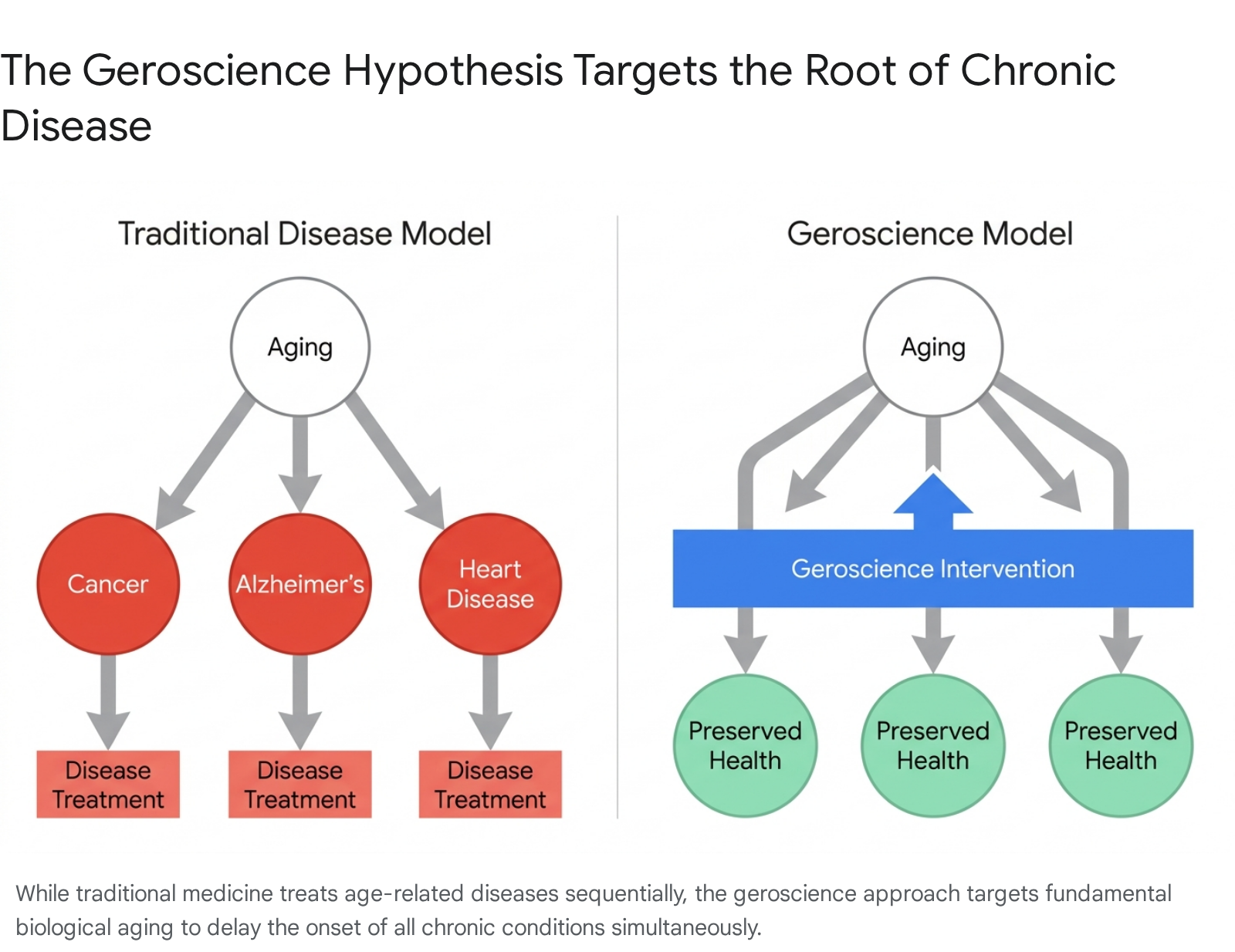
The ultimate clinical goal is the "compression of morbidity," wherein the period of illness and frailty is compressed into a very brief window at the absolute end of a long, highly functional life 56.
FAQ: Measuring Aging and Surrogate Endpoints
To determine if an experimental intervention actually slows human aging, scientists face a logistical nightmare: they cannot afford to wait fifty years for a clinical trial subject to naturally expire. They require immediate, quantifiable biomarkers to track progress.
What exactly is a surrogate endpoint? In clinical research, a true clinical endpoint is a hard outcome, such as a myocardial infarction, the definitive onset of dementia, or all-cause mortality. A surrogate endpoint is a highly validated biological marker intended to substitute for a clinical endpoint. It provides rapid, actionable feedback on whether a therapy is effectively altering the trajectory of a disease or, in this case, the aging process 711.
How do epigenetic aging clocks work? To understand biological age testing, consider the analogy of a car engine. The chronological age of a car is dictated by its manufacturing date - analogous to a human's birth certificate. However, a vehicle driven gently on weekends will possess an engine that is functionally much "younger" than an identical model utilized daily as a city taxi. If a mechanic wants to determine how much longer the engine will survive, reading the odometer and the calendar is insufficient; they must open the hood and measure the physical wear and tear on the pistons, belts, and valves.
Epigenetic aging clocks serve as the mechanic's diagnostic tool for the human genome. They do not sequence or alter the underlying DNA alphabet; rather, they measure chemical modifications - specifically DNA methylation - that accumulate on the DNA molecule over time 712. These chemical methyl groups act as molecular switches, regulating gene expression by turning specific genes on or off in predictable patterns as human tissues degrade 1112. By utilizing complex mathematical algorithms and penalized regression models, statisticians can analyze specific loci on the genome to calculate a functional, biological age that may differ significantly from chronological age 78. "Age acceleration" occurs when a patient's calculated biological age is numerically higher than their calendar age, indicating faster cellular decay 7.
Are all commercial biological age tests accurate? The commercial market for biological age testing in 2026 is fraught with complexity, primarily due to what researchers term the "translational gap" between laboratory promise and clinical reality 9. Not all clocks are created equal. First-generation epigenetic clocks (such as the original Horvath clock) were trained simply to predict chronological age 1510. Consequently, they are excellent at capturing normal aging but poor at identifying the abnormal, pathological aging associated with immediate disease risk 15.
Second-generation clocks, such as PhenoAge and GrimAge, represent a massive leap forward. These models were trained extensively on clinical health endpoints, incorporating blood chemistry variables like glucose levels and inflammatory markers into their creation to accurately predict mortality and healthspans 1510. A more recent iteration, the DunedinPACE algorithm, functions differently: it acts like a speedometer, dynamically measuring the current rate of aging rather than calculating an absolute biological age 111517. A DunedinPACE score of 1.0 indicates average aging, while a score of 0.85 indicates the individual is aging fifteen percent slower than the calendar 17.
Despite these remarkable mathematical advancements, major gerontology institutes caution against relying on a single commercial test. A patient might receive a DNA methylation test indicating a biological age of 44, a blood biomarker algorithm stating they are 33, and a telomere length test reading "average" 17. These conflicting results occur because different tests evaluate fundamentally different layers of aging biology 1718. For example, the GlycanAge test measures IgG glycosylation to assess immune system and inflammatory aging, but it provides no insight into cardiovascular or metabolic organ function 1718. Similarly, telomere length testing - measuring the protective caps on chromosomes - is notoriously variable and offers weak test-retest reliability in commercial settings, rendering it relatively poor for tracking short-term lifestyle changes 17.
Therefore, leading longevity clinics in 2026 rely on longitudinal, multi-modal tracking 919. The most actionable strategy involves establishing a foundation of quarterly clinical blood biomarker panels - which respond rapidly to nutritional and pharmacological interventions - complemented by annual epigenetic testing for deeper, long-term cellular insights 917.
Category 1: Proven Interventions (The Foundation)
Before exploring the bleeding edge of experimental pharmacology, the 2026 scientific consensus unequivocally underscores that behavioral and lifestyle factors remain the most potent, scientifically validated modulators of human longevity. Massive epidemiological datasets confirm that these interventions fundamentally alter biological aging at the cellular level.
Sleep Architecture as the Primary Modulator
While nutrition and exercise dominate the public biohacking discourse, extensive survey data covering the years 2019 to 2025 has established sleep as the supreme behavioral predictor of human longevity 11. In a massive cohort analysis conducted by researchers at Oregon Health & Science University (OHSU), data revealed that insufficient sleep - defined as less than seven hours per night - correlated more strongly with reduced life expectancy than both poor diet and physical inactivity 11.
The biology underlying this association is uncompromising. Missing even a single night of adequate sleep immediately disrupts brain circuitry, impairs the body's immune system surveillance, and alters the metabolic pathways governing glucose regulation 11. High-quality sleep is now viewed by clinicians as the ultimate foundational longevity drug; it underpins emotional resilience and provides the necessary biological downtime for the brain's glymphatic system to clear metabolic waste products accumulated during waking hours 1121.
Exercise Variety and Muscular Strength
The cardiovascular benefits of aerobic exercise are universally acknowledged, but recent longitudinal data adds a critical, nuanced dimension: variety matters just as much as sheer volume. A landmark 2026 study published in BMJ Medicine analyzed health and lifestyle data from more than 111,000 adult men and women over the course of more than thirty years, sourced from the Nurses' Health Study and the Health Professionals Follow-Up Study 12.
The researchers discovered that participants who engaged in the highest variety of exercise types - mixing aerobic activities like walking and cycling with resistance training, lower-intensity stretching, and heavy outdoor work - exhibited a nineteen percent lower risk of premature mortality compared to those who relied on a single type of activity 12. Crucially, this benefit held true across every level of physical activity, meaning exercise variety contributed to extended longevity regardless of the total time participants spent exercising 12.
Furthermore, raw muscular strength has emerged as an independent and vital predictor of lifespan. Retrospective cohort studies encompassing over a million subjects indicate that individuals in the weakest third for muscular strength face a twenty to thirty-five percent higher risk of premature death compared to their strongest peers, a metric that holds true independent of cardiovascular aerobic fitness or body mass index 21. Muscle tissue acts as a vital metabolic sink; every pound of muscle burns substantially more calories than fat, helping to absorb excess circulating glucose and maintain metabolic flexibility 21. Consequently, comprehensive longevity protocols advocate for a minimum of six hours of varied exercise weekly, heavily emphasizing resistance training alongside Zone 2 cardiovascular work 21.
Precision Nutrition and the Mediterranean Diet
Nutrition science has finally shifted away from analyzing individual macronutrients in isolation, moving toward evaluating holistic, long-term dietary patterns. A landmark 2026 prospective cohort study published in Science Advances provided the definitive evidence, analyzing data from over 103,000 participants in the UK Biobank over a decade to calculate absolute lifespan gains across five popular established diets 132425.
The data demonstrated that strict adherence to high-quality diets could add up to three absolute years of life expectancy at age 45, and importantly, these gains occurred completely independent of an individual's inherent genetic predisposition to longevity 1325. The study pitted several indices against each other, including the Alternate Healthy Eating Index (AHEI), the healthful Plant-based Diet Index (hPDI), Dietary Approaches to Stop Hypertension (DASH), the Alternate Mediterranean Diet (AMED), and the Diabetes Risk Reduction Diet (DRRD) 2425.
The data indicates significant gains across the board, but revealed fascinating sex-related differences. The DRRD - which explicitly emphasizes high dietary fiber and a low glycemic index - showed the strongest association with longevity for men, resulting in an estimated 3.0 years of life gained at age 45 1324. For women, the AMED performed best, offering an estimated 2.3 years of extended life expectancy 1324. Conversely, the hPDI was the least effective pattern for both sexes 24.
| Dietary Pattern | Highest Life Expectancy Gain for Men (Years) | Highest Life Expectancy Gain for Women (Years) |
|---|---|---|
| Diabetes Risk Reduction Diet (DRRD) | 3.0 | 2.1 |
| Alternate Mediterranean Diet (AMED) | 2.5 | 2.3 |
The molecular mechanisms explaining why the Mediterranean diet is so extraordinarily effective are finally coming into focus. Research published in 2026 revealed that adherence to the Mediterranean diet elevates circulating levels of specific mitochondrial microproteins, namely humanin and SHMOOSE 14. These microproteins are tiny - under 100 amino acids long - but act as vital molecular messengers that directly connect nutritional intake to cellular function 14. High circulating levels of humanin are linked to improved insulin sensitivity and cardiovascular protection, while SHMOOSE protects brain neurons from amyloid-induced damage 14. By dampening oxidative stress and boosting mitochondrial efficiency, the Mediterranean diet actively repairs cellular damage at the most fundamental level 1415.
Fasting Mimicking Nutrition and Autophagy
For individuals seeking the profound cellular benefits of water fasting without the associated risks and compliance issues, the Fasting Mimicking Diet (FMD) has gained immense clinical validation. Developed over decades by researchers at the USC Leonard Davis School of Gerontology, the FMD is a five-day, plant-based nutritional program high in unsaturated fats but low in overall calories, protein, and carbohydrates 16.
In late 2025 and early 2026, researchers from Cedars-Sinai Medical Center and UT Health San Antonio published the results of a pilot randomized clinical trial that marked a milestone in longevity science 2930. For the first time, researchers directly measured autophagic flux in human peripheral blood mononuclear cells during a dietary intervention 3017. Autophagy is the body's internal recycling system - a process where cells break down and clear out damaged proteins and organelles, utilizing them for energy and renewal 2930. The trial, involving thirty healthy adults, confirmed that the FMD significantly enhanced autophagy while simultaneously improving insulin sensitivity, lowering fasting glucose, and increasing ketone levels 293017.
Furthermore, deep statistical analysis of previous randomized clinical trials evaluating the FMD revealed that participants undergoing just three cycles of the five-day diet (spanning three months) reduced their calculated biological age by an average of 2.5 years 1632. Magnetic resonance imaging confirmed decreases in both abdominal and hepatic (liver) fat, while blood analysis revealed an increased lymphoid-to-myeloid ratio, indicating the profound rejuvenation of the immune system 1632.
Global Demographics: The Cohort Evidence
The cumulative impact of these lifestyle factors is visible on a macroeconomic scale. In 2025, Japan continued its reign with the highest global longevity, boasting an average life expectancy of approximately 85 years 33. Japanese women specifically reached an average life expectancy of 87.13 years, holding the global longevity crown for forty consecutive years 34. This sustained achievement is deeply rooted in daily routines emphasizing low-sodium, high-vegetable intake, lifelong physical activity, and robust community support systems 34.
Similarly, China has seen structural health improvements translate into massive demographic shifts. By 2025, the average life expectancy in China reached 79 years, an increase achieved through a systematic expansion of the medical system during the 14th Five-Year Plan 18. This included ensuring that over ninety percent of residents could access a healthcare facility within fifteen minutes, completing age-friendly home renovations for millions of older individuals, and drastically reducing maternal and infant mortality rates 18. With over 323 million citizens aged 60 and above, China's "silver economy" is projected to reach $4.2 trillion by 2035, turning healthy aging into a primary driver of technological and social innovation 19.
Category 2: Experimental Repurposed Drugs
While lifestyle establishes the baseline, the longevity field relies heavily on repurposing existing, FDA-approved medications to push human healthspan further. Because these drugs possess decades of established human safety data, they offer a vastly accelerated regulatory pathway for testing anti-aging hypotheses in human clinical trials.
Rapamycin: Modulating the mTOR Pathway
Rapamycin (known generically as sirolimus) stands as the single most replicated life-extending pharmacological agent in laboratory history. Originally discovered in the soil of Easter Island and utilized clinically as a powerful immunosuppressant to prevent organ rejection in kidney transplant patients, rapamycin acts by inhibiting the Mechanistic Target of Rapamycin (mTOR) pathway 3738.
The mTOR pathway operates as a master cellular nutrient sensor. When nutrients are abundant, mTOR is active, signaling the cell to prioritize growth, protein synthesis, and cellular replication. When mTOR is inhibited by rapamycin, it tricks the cell into perceiving a state of severe nutrient scarcity. The cell immediately halts growth and initiates autophagy - the aforementioned cellular recycling process that clears out toxic, damaged proteins 3038. Two decades of research from the National Institute on Aging's Interventions Testing Program (ITP) confirmed that rapamycin reliably extends mammalian lifespan by ten to twenty-five percent across diverse genetic strains and sexes 3739.
Translating this massive success to humans requires an entirely different dosing paradigm. Continuous, high-dose rapamycin broadly suppresses immune function and disrupts metabolism 38. However, longevity protocols utilize low, intermittent weekly doses. In 2014, a landmark study by Dr. Joan Mannick demonstrated that this low-dose approach paradoxically enhanced immune function, improving influenza vaccine responses in adults over 65 by up to twenty percent while reducing the proportion of exhausted, dysfunctional immune cells 3840.
To answer the pressing question of sustained human efficacy, the results of the PEARL (Participatory Evaluation of Aging with Rapamycin for Longevity) trial were published in 2025. This 48-week, randomized, double-blind, placebo-controlled trial evaluated 114 healthy older adults taking either 5 mg or 10 mg of compounded rapamycin weekly 2042. The findings were highly nuanced. The trial failed to meet its primary clinical endpoint of reducing visceral fat mass 3740. However, significant secondary benefits emerged that strongly supported the drug's geroprotective potential. Women in the higher 10 mg group demonstrated significant improvements in lean tissue mass and reported marked reductions in physical pain 2042. Additionally, participants taking the 5 mg dose reported significant improvements in emotional well-being and general health assessments 4020.
Crucially, the PEARL trial provided the first long-term evidence that low-dose, intermittent rapamycin is safe and well-tolerated over a full year in healthy, normative-aging adults, with adverse events remaining largely analogous to the placebo group, save for mild gastrointestinal discomfort 3720. While PEARL did not conclusively prove that rapamycin extends absolute human lifespan, it definitively established the safety profile required for the next generation of massive, multi-year clinical investigations into mTOR modulation 384042.
Metformin: AMPK Activation and Metabolic Resilience
Metformin, a safe, inexpensive, and universally prescribed biguanide medication for the management of type 2 diabetes, has captivated gerontologists for decades. Epidemiological cohort data continuously reveals a startling medical paradox: diabetic patients diligently taking metformin frequently outlive healthy, non-diabetic individuals matched for age and weight, while exhibiting lower incidences of cardiovascular disease and certain age-related cancers 214445.
At the molecular level, metformin activates AMPK (AMP-activated protein kinase), an enzyme that essentially mimics the profound physiological benefits of calorie restriction 2146. This activation improves insulin sensitivity, reduces circulating glucose, enhances intercellular communication, and lowers oxidative stress, allowing the drug to theoretically target multiple hallmarks of aging simultaneously 21.
To move beyond retrospective data, the scientific community engineered the Targeting Aging with Metformin (TAME) trial. Designed as a massive, multi-center study involving over 3,000 individuals between the ages of 65 and 79 across 14 research institutions, TAME is engineered to track the incidence and progression of a cluster of age-related conditions - specifically heart disease, cancer, and cognitive decline 2122. By utilizing RNA-Seq transcriptomics, researchers aim to identify a unique biological "fingerprint" for aging, seeking to prove that metformin shifts tissue biology to a younger profile 23. If successful, TAME will provide the historic regulatory proof-of-concept required by the FDA to treat biological aging in the exact same manner we currently treat specific diseases 2223.
However, the 2026 landscape acknowledges important caveats regarding metformin. A pivotal study utilizing diverse species of the C. elegans roundworm (which model immense genetic diversity) demonstrated that genetic variation strictly determines whether metformin has a positive, neutral, or even negative impact on lifespan 22. Furthermore, re-analysis of animal data suggests metformin primarily provides survival benefits only when initiated in the second half of life, underscoring that its geroprotective effects will likely require a highly personalized, precision medicine approach rather than universal, prophylactic distribution to young adults 4522.
GLP-1 Receptor Agonists and Cardiovascular Baselines
While originally engineered and prescribed for glycemic control and profound weight loss, Glucagon-like peptide-1 (GLP-1) receptor agonists - most notably semaglutide - have violently disrupted the longevity space in 2026 4950. Beyond treating obesity, these agents are demonstrating profound, systemic anti-aging effects driven by their ability to drastically attenuate metabolic inflammation.
The SELECT cardiovascular outcomes trial provided the clinical bedrock. By applying the trial's results to a real-world cohort, researchers projected that semaglutide treatment increases life expectancy by 1.9 years in individuals with cardiovascular disease and overweight/obesity, while providing 2.0 additional cardiovascular event-free life-years 24. Subsequent 2026 analysis from the NIH confirmed that while weight loss typically plateaus after twelve to eighteen months, the medication continues to provide durable metabolic benefits, improved blood sugar control, and reduced cardiovascular risk indefinitely, provided patients maintain strict adherence to the therapy 5253.
The most staggering data, however, emerged from biomarker analysis. A landmark 2025 double-blind, placebo-controlled trial analyzed an HIV patient population taking semaglutide utilizing advanced second-generation epigenetic clocks. The researchers from TruDiagnostic discovered that semaglutide reversed biological age (measured by the highly validated GrimAge clock) by an average of 3.1 years, and physically slowed the pace of aging (measured by DunedinPACE) by nearly 9 percent 50. The drug demonstrated organ-specific rejuvenation across the heart, brain, and kidneys, marking the very first time a GLP-1 receptor agonist has shown quantifiable age-reversal effects at the molecular level in human subjects 50.
These advanced therapeutics are deployed alongside vastly improved diagnostic guidelines. In 2026, the American College of Cardiology and the American Heart Association issued landmark updates to cardiovascular risk guidance, elevating Lipoprotein(a) [Lp(a)] screening to a Class 1 recommendation 545556. Lp(a) is an extremely atherogenic, genetically determined fat-carrying particle that is virtually unaffected by diet or exercise 5455. Guidelines now state that every adult must test their Lp(a) levels at least once, with levels at or above 125 nmol/L indicating a forty percent greater risk of plaque-related cardiovascular disease, triggering the need for hyper-aggressive management of all other modifiable risk factors 545625.
Category 3: Early-Stage Biotechnology
While repurposed drugs focus largely on modifying metabolic pathways and enhancing resilience, early-stage biotechnology aims to aggressively and directly reverse accumulated cellular damage. Two dominant, highly experimental paradigms define this bleeding-edge frontier in 2026: senolytics and partial cellular reprogramming.
Senolytics: Clearing the Biological Debris
As human cells endure environmental stress, replication, and DNA damage over a lifetime, a specialized subset enters a state of permanent cellular senescence. These "zombie cells" permanently cease dividing, yet they stubbornly refuse to undergo apoptosis (programmed cell death) 5859. Instead of dying quietly, they linger in tissues, continuously secreting a highly toxic, localized cocktail of inflammatory cytokines, growth factors, and tissue-degrading proteases collectively known as the Senescence-Associated Secretory Phenotype (SASP) 585960. This chronic SASP radiation damages surrounding healthy cells, impairs stem cell function, and acts as a primary driver of age-related pathologies including osteoarthritis, cardiovascular stiffening, and neurodegeneration 5859.
Senolytics represent a completely novel class of pharmacological agents designed to selectively target the anti-apoptotic pathways (SCAPs) that keep these zombie cells alive, essentially inducing apoptosis and clearing the biological debris from the organ 612627. Because senescent cells take weeks or months to accumulate, senolytics are not taken daily; they are administered in highly intermittent "hit-and-run" pulses to minimize toxicity 2865.
The most extensively studied senolytic combination in human trials is Dasatinib (an FDA-approved leukemia drug) and Quercetin (a naturally occurring plant flavonoid), collectively known as D+Q 586126. In the critical realm of neurodegeneration, the SToMP-AD Phase 1 clinical trial evaluated D+Q in a cohort of patients with early-stage symptomatic Alzheimer's disease 662930. The trial successfully confirmed that dasatinib penetrated the central nervous system (detected in cerebrospinal fluid) and safely reduced plasma inflammatory markers directly associated with the SASP 2931.
A parallel Phase 1/2 pilot trial, STAMINA, evaluated the exact same D+Q combination in older adults suffering from mild cognitive impairment (MCI) and slow gait speed 327133. The STAMINA results were highly encouraging: participants exhibited reductions in systemic inflammation, and specifically, the reduction in plasma TNF-alpha (a key SASP marker) significantly correlated with improvements in Montreal Cognitive Assessment (MoCA) scores 293271. While these trials were small and lacked robust placebo controls, they provided the first preliminary signals of actual functional, cognitive benefit from clearing senescent cells in the human brain 603271.
Simultaneously, biotechnology companies are advancing highly specific, single-molecule senolytic agents through the regulatory pipeline. Unity Biotechnology's lead asset, UBX1325 (foselutoclax), is a potent small molecule inhibitor of the BCL-xL survival protein 3435. Administered via direct intravitreal injection, it targets diabetic macular edema (DME), a leading cause of vision loss 34. Complete 36-week data from the Phase 2b ASPIRE trial in 2025 demonstrated that UBX1325 successfully cleared senescent cells in diseased retinal blood vessels, resulting in substantial, durable visual acuity gains (+5.5 ETDRS letters) that were statistically non-inferior to standard, market-leading anti-VEGF therapies 343536.
However, the field continues to grapple with systemic toxicity. Another BCL-2 family inhibitor, ABT-263 (Navitoclax), demonstrated remarkable abilities in a May 2026 Nature Aging study to clear senescent macrophages in the liver and dramatically accelerate topical wound healing in aging subjects 593777. Despite this efficacy, ABT-263 faces massive hurdles in human translation due to severe, dose-limiting side effects, primarily transient thrombocytopenia (dangerous platelet loss), underscoring the delicate therapeutic window of senolytic agents 3777.
Partial Cellular Reprogramming: Resetting the Epigenetic Clock
The most ambitious, mathematically complex, and undeniably high-risk sector of longevity science involves partial epigenetic reprogramming. This regenerative technology relies on the Yamanaka factors (specifically the transcription factors OCT-4, SOX-2, and KLF-4, collectively referred to as OSK) 7879. When fully applied, these factors possess the biological power to revert an adult, fully specialized cell back into a youthful, pluripotent stem cell 79. The monumental challenge lies in achieving "partial" reprogramming: exposing human cells to these powerful factors just long enough to erase the accumulated epigenetic marks of aging, but halting the process before the cell completely forgets its mature identity or mutates into a cancerous tumor (teratoma) 788081.
In 2026, this once-theoretical science officially crossed the regulatory threshold into active human clinical trials. Life Biosciences, leveraging the foundational research of Harvard's David Sinclair, received Investigational New Drug (IND) clearance from the FDA for ER-100 787980. ER-100 is a highly experimental gene therapy utilizing AAV (adeno-associated virus) vectors to deliver the OSK factors directly into the eye 788182. Crucially, the company removed the fourth original Yamanaka factor, MYC, a known oncogene, significantly reducing the cancer risk and accelerating FDA approval 80.
The Phase 1 clinical trial is explicitly targeting severe, age-related optic neuropathies, including open-angle glaucoma and non-arteritic anterior ischemic optic neuropathy (NAION), colloquially known as an "eye stroke" 7879. By specifically targeting the eye - an immune-privileged organ where local delivery is standardized and visual function can be measured with extreme, quantifiable precision - the company is utilizing a clever "Trojan horse strategy" 8081. They are anchoring radical, whole-cell rejuvenation technology to a recognized, localized disease state to satisfy stringent FDA safety frameworks 81.
Concurrently, other biotechnology firms are exploring safer delivery mechanisms to circumvent the permanent DNA changes associated with viral vectors. Turn Biotechnologies is advancing its ERA platform, utilizing transient mRNA technology - similar to the delivery mechanisms revolutionized by COVID-19 vaccines - to deliver reprogramming factors for dermatology (skin rejuvenation) and osteoarthritis, allowing the therapy to be dosed temporarily like a traditional drug 8182. These historic trials mark the very first time humanity will definitively test whether epigenetic software can safely reverse tissue age in a living human patient 787981.
FAQ: The Reality of the "Anti-Aging Pill"
Can I currently take a single pill to stop or reverse aging? The definitive answer is no. As of 2026, no single pharmaceutical agent has been proven to entirely halt or reverse systemic human aging, nor has the FDA recognized or approved any drug explicitly for the broad medical indication of "aging" 5881.
The underlying biology of mammalian aging is wildly complex and multifactorial, driven by distinct, interacting hallmarks such as severe mitochondrial dysfunction, telomere attrition, cellular senescence, and epigenetic alterations 2683. Available interventions target these hallmarks individually; rapamycin targets nutrient sensing pathways, senolytics clear zombie cells, and GLP-1s suppress metabolic inflammation 465058. Because these destructive cellular processes occur simultaneously, the future of clinical longevity medicine will inevitably rely on advanced polypharmacy. This will involve the strategic, personalized combination of different therapeutics administered in highly calibrated, intermittent doses, entirely supported by an optimized, non-negotiable foundation of superior sleep architecture, precision nutrition, and varied physical exertion 3946.
Summary of 2026 Clinical Interventions
The following table categorizes the primary longevity interventions currently supported by or undergoing rigorous human clinical evaluation, detailing their mechanistic targets and evidence levels.
| Intervention Name | Primary Mechanism | Human Evidence Level | Target Outcome |
|---|---|---|---|
| High-Quality Diet (DRRD/AMED) | Oxidative stress reduction; mitochondrial signaling via microproteins (SHMOOSE). | High (Massive, multi-decade longitudinal cohorts). | Extended absolute life expectancy; metabolic regulation. |
| Exercise & Sleep Optimization | Improved metabolic flexibility; neurological repair; immune modulation. | High (Decades of verified physiological data). | Reduced all-cause mortality; delayed physical decline. |
| Semaglutide (GLP-1) | Metabolic regulation; severe systemic inflammation reduction. | Moderate/High (Large RCTs; emerging epigenetic clock data). | Cardiovascular event reduction; robust reversal of biological age markers. |
| Metformin | AMPK activation; mimicking the physiology of calorie restriction. | Moderate (Extensive retrospective data; pending TAME trial). | Reduced mortality in specific disease cohorts; glycemic control. |
| Rapamycin | mTOR pathway inhibition; induction of cellular autophagy. | Low/Moderate (Phase 2 PEARL trial). | Immune modulation; improved lean mass and subjective well-being. |
| Dasatinib + Quercetin (D+Q) | Senolytic; induces apoptosis in senescent cells (SASP reduction). | Low (Phase 1/2 pilot trials: SToMP-AD, STAMINA). | Reduced systemic inflammation; potential cognitive stabilization. |
| UBX1325 (Foselutoclax) | Senolytic; specific BCL-xL inhibitor targeting diseased vasculature. | Moderate (Phase 2b ASPIRE trial). | Durable restoration of visual acuity in diabetic macular edema. |
| OSK Gene Therapy (ER-100) | Partial epigenetic reprogramming (Yamanaka factors without MYC). | Experimental (Phase 1 IND cleared early 2026). | Reversal of epigenetic age; cellular regeneration of optic nerve tissue. |
The Bottom Line
The 2026 longevity landscape is characterized by a highly disciplined, necessary transition away from speculative hype and toward rigorous human clinical data. The historical failure to translate miraculous mouse longevity into functional human therapies has fundamentally forced the scientific community to adopt sophisticated surrogate endpoints and focus exclusively on interventions that prove safety and efficacy in actual patients. While foundational, unglamorous lifestyle factors like strict sleep architecture and precise, varied nutrition remain the most effective and accessible tools for extending human healthspan, clinical pharmacology is advancing at an unprecedented rate. Repurposed drugs like rapamycin and GLP-1 agonists are demonstrating tangible metabolic and epigenetic benefits, while early-stage senolytics and cellular reprogramming trials represent the absolute frontier of regenerative medicine. We are no longer merely mapping the inevitable decline of aging; we are actively, clinically testing the specific cellular mechanisms required to delay, halt, and ultimately reverse it.