
Therapy vs. Life Coaching: What's the Difference
Therapy is a licensed, heavily regulated healthcare profession focused on diagnosing and treating mental health conditions, often by exploring past trauma and emotional wounds to restore baseline functioning. Life coaching is an unregulated, future-oriented partnership designed to help highly functional individuals achieve specific personal, professional, or performance goals through strategic accountability. Ultimately, if you are struggling to manage daily life due to emotional distress, you should seek a therapist; if you are emotionally stable but feel stagnant or want to accelerate your growth, a life coach is the optimal choice.
Understanding the Core Distinctions in Practice and Scope
At first glance, therapy and life coaching share several structural similarities. Both are collaborative, client-driven processes that take place in private, confidential conversations. Both aim to help individuals live more fulfilling lives, overcome internal roadblocks, and improve self-awareness 11. However, professional practice guidelines reveal critical distinctions in how these practitioners approach client support, the frameworks they utilize, and the populations they are ethically permitted to serve.
The American Psychological Association (APA) defines psychotherapy as the informed and intentional application of clinical methods derived from established psychological principles. The purpose is to assist people in modifying their behaviors, cognitions, and emotions in desirable directions 13. In contrast, the International Coaching Federation (ICF) defines coaching as partnering with clients in a thought-provoking and creative process that inspires them to maximize their personal and professional potential 134.
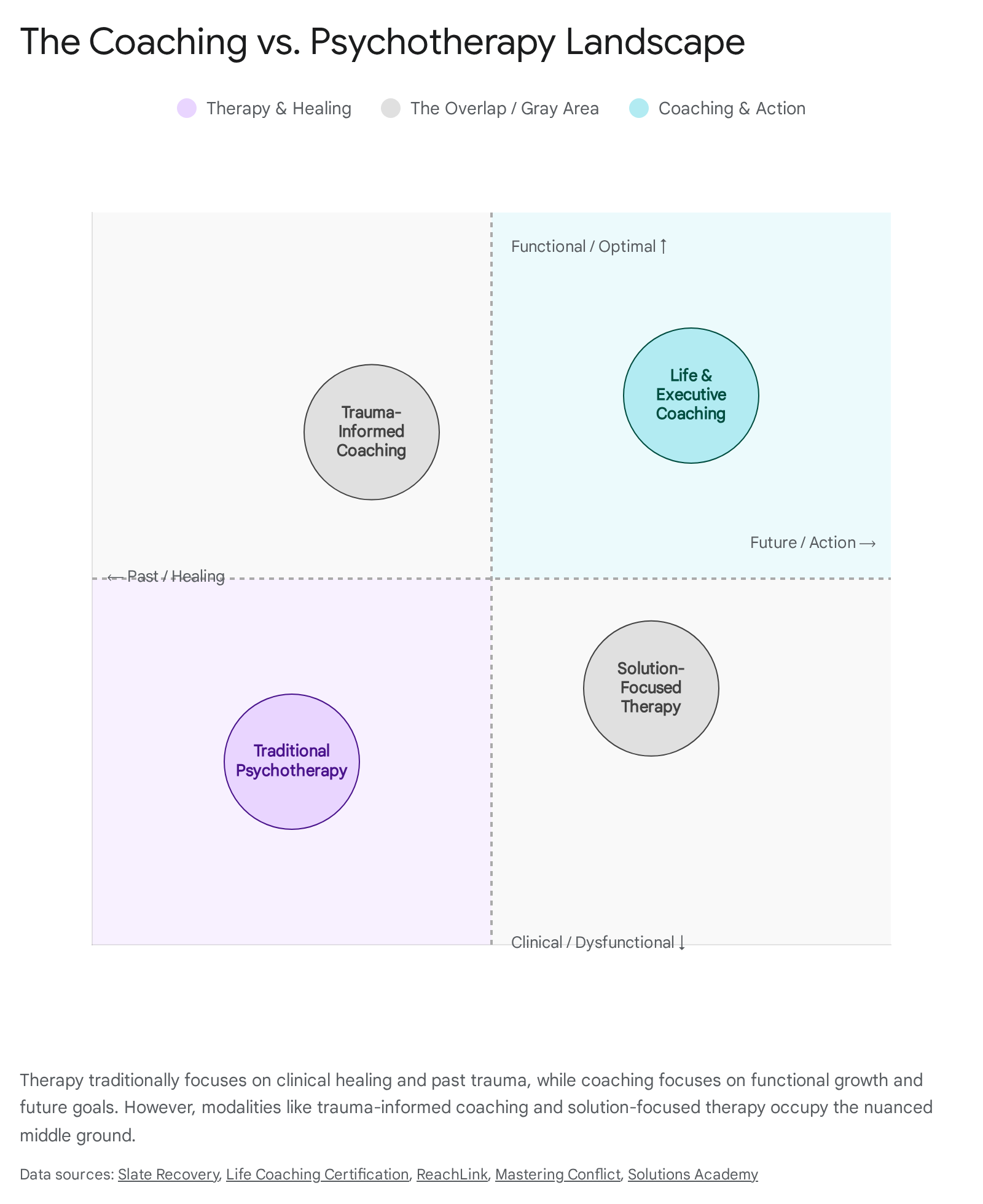
These definitions point to fundamental dividing lines in professional practice, specifically regarding the direction of time they focus on, the baseline psychological functioning of the client, and the philosophical stance of the practitioner.
Healing the Past vs. Building the Future
Therapy frequently requires looking backward to move forward. Therapists are clinically trained to explore past experiences, childhood attachment patterns, and psychological trauma to uncover the root causes of present-day distress 527. Whether utilizing Cognitive Behavioral Therapy (CBT), Eye Movement Desensitization and Reprocessing (EMDR), Dialectical Behavior Therapy (DBT), or psychodynamic approaches, the therapeutic process is inherently reparative 189. It focuses heavily on psychopathology, emotional regulation, and deep psychological healing 13.
Life coaching is strictly forward-focused and developmental. While a coach may briefly acknowledge past events to understand a client's current context, the coaching framework does not dwell on the past or attempt to heal old psychological wounds 4810. Instead, coaching is action-driven 110. A coach helps a client clarify their vision, identify current obstacles - often framed as "limiting beliefs" or "mindset blocks" rather than clinical pathologies - and create a measurable, strategic action plan for the future 5211.
The philosophical stance of the practitioner also differs. Traditional psychotherapy tends to operate on a model of authoritative causality, where the clinician acts as the expert who diagnoses the cause of the dysfunction and applies specific interventions 12. Coaching, as defined by the ICF, lives in the realm of collaborative meaning-making. It operates on the assumption that the client is whole, capable, and already holds the answers, requiring only powerful, open-ended questioning and external accountability to unlock their potential 31213. It should be noted, however, that postmodern therapeutic modalities, such as solution-focused or narrative therapy, also lean toward collaborative co-creation, demonstrating that the boundary between the two fields can sometimes blur in practice 12.
The Critical Threshold of Daily Functioning
Perhaps the most crucial distinction used by practitioners to separate coaching from therapy is the concept of "daily functioning." Daily functioning refers to an individual's ability to manage the basic, fundamental tasks of life, including eating, personal hygiene, maintaining healthy relationships, and fulfilling work or academic responsibilities 13.
Therapists work with individuals whose daily functioning is actively impaired by mental illness, chronic stress, or severe emotional crises. They possess the legal and clinical authority to diagnose conditions using frameworks like the Diagnostic and Statistical Manual of Mental Disorders (DSM-5) and provide medical treatments that are regularly covered by health insurance 132. Therapy is fundamentally designed to take a client from a state of clinical dysfunction to a baseline of healthy, stable functioning 13.
Coaching, conversely, assumes the client already possesses a high level of daily functioning 115. Life coaches and executive coaches do not diagnose or directly treat mental health conditions of any kind, including clinical depression, anxiety disorders, bipolar disorder, substance use disorders, or post-traumatic stress disorder (PTSD) 1415. Instead, they work with psychologically stable individuals who want to move from functional to exceptional 1316.
If a client is in the midst of a clinical crisis, attempting to build a forward-looking coaching strategy on an unstable emotional foundation usually fails, as the underlying clinical patterns will simply resurface in new forms 47. Coaching requires a stable cognitive and emotional baseline so the client has the capacity to execute the strategic steps co-created in the sessions.
The Evolving Landscape of the Coaching Industry
To understand the modern boundary between coaching and therapy, it is necessary to examine how rapidly the coaching profession has evolved. Professional coaching is no longer a fringe wellness pursuit; it has matured into a global catalyst for leadership and personal development, backed by robust economic data and increasingly sophisticated competency frameworks.
Key Findings from the 2025 Global Coaching Study
The sheer scale of the coaching industry has necessitated clearer boundaries between clinical and non-clinical care. According to the 2025 ICF Global Coaching Study, commissioned by the International Coaching Federation and conducted by PricewaterhouseCoopers (PwC), the profession has experienced its strongest period of global growth in history 174. The study, which surveyed over 10,000 participants across 127 countries, revealed that total industry revenue soared to $5.34 billion USD - a 17% increase since 2023 1745.
The global number of active coach practitioners rose to a record 122,974, marking a 15% increase since 2023 and a staggering 62% growth since 2019 4176. Optimism within the industry remains high, with 59% of coaches expecting continued revenue growth driven by an expanding client base and increased session frequency, rather than by raising their hourly rates 45. The global average fee for a coaching session is approximately $234 per hour, with the average U.S. practitioner earning $71,719 annually, though top earners in executive niches frequently exceed $150,000 4.
The data highlights a significant shift toward organizational integration. More than 50% of coaching clients are now employer-sponsored, demonstrating that coaching is increasingly viewed not as a luxury perk, but as a core component of organizational leadership and cultural development 4. This corporate alignment is reflected in practitioner specialization: 54% of coaches globally specialize in leadership and executive coaching 1721. In contrast, lifestyle-oriented niches like health and wellness or general life vision represent smaller segments within the credentialed membership base 21.
Operationally, the modern coach wears multiple hats. The study found that 60% of coaches also offer training, 57% offer consulting, 55% offer facilitation, and 49% provide mentoring services 17. This diversification requires coaching operations and enterprise platforms to maintain highly flexible program designs, tracking outcomes across various engagement formats 17. Furthermore, a generational shift is underway. Gen X practitioners now dominate the field, making up 53% of the profession, while Baby Boomer representation has declined to 35% 1721. Millennial coaches are entering the field with a tendency to diversify their service offerings rather than focusing exclusively on traditional executive coaching 17.
The 2025 Updates to Coaching Core Competencies
As the profession scales, the standards defining what constitutes effective and ethical coaching have deepened. In 2025, the ICF released its first major update to its Core Competencies since 2019 2223. Based on a global job analysis of nearly 3,000 coaches, these updates reflect how the profession has evolved in practice, ethics, and scope, placing heavier demands on a coach's internal awareness and continuous professional development 2223.
While the eight main competencies remain intact, the ICF added five new sub-competencies and revised eleven existing ones to address the complexities of modern, digitally mediated human interaction 22. The updates mandate a heightened level of reflective practice. Competency Two, "Embodies a Coaching Mindset," now explicitly emphasizes coach self-care, well-being (spanning emotional, mental, and physical health), and the necessity of ongoing supervision or mentor coaching to process biases and difficult emotions 2223. Furthermore, cultural humility and bias awareness are now explicitly coded into the framework, requiring coaches to understand how their own internal state and cultural background influence the coaching process 23.
Perhaps the most significant shift for distinguishing coaching from therapy is the expansion of Competency Five, "Maintains Presence." Presence is no longer defined merely as showing up and listening; it now requires somatic awareness, emotional attunement, and the explicit ability to manage strong client emotions in real time without retreating or absorbing the distress 2223. Coaches must demonstrate comfort with uncertainty - sitting with "not knowing" - and utilize silence and reflection as active tools 22.
These sophisticated competencies demonstrate that while coaching does not treat mental illness, it is not a superficial exercise. It frequently touches upon deep areas of identity, values, and self-worth, requiring coaches to maintain rigorous emotional boundaries 2324.
Global Regulation, Licensing, and Consumer Protection
The most significant structural difference between therapy and coaching lies in the regulatory environment. This distinction directly impacts consumer safety, ethical oversight, the legal responsibilities of the practitioner, and the recourse available to clients if harm occurs.
How Psychotherapy Is Regulated Worldwide
Psychotherapy is recognized as a statutory health profession in many parts of the world, though the mechanisms of regulation vary drastically by jurisdiction. In general, to become a licensed therapist, clinical social worker, or psychologist, an individual must complete six to eight years of higher education, usually culminating in a master's or doctoral degree 425. Following their education, they must complete thousands of hours of supervised clinical practice and pass rigorous licensing examinations 22627.
Because therapists wield the power to diagnose and treat vulnerable populations, they operate under strict legal and ethical oversight. The regulatory landscape can be broadly categorized into distinct models:
In the United States and Canada, regulation operates on a federal or provincial/state patchwork system 2728. In the US, practitioners are bound by specific state licensing boards (such as the Board of Behavioral Sciences in California or the Board of Counseling in Virginia) 2678. This rigorous, state-specific framework ensures high standards but creates challenges for portability; a therapist licensed in New York cannot legally provide telehealth psychotherapy to a client located in Texas without holding a license in that state 28.
In Australia, the system is centralized through national statutory regulation. The Australian Health Practitioner Regulation Agency (AHPRA) oversees the profession, and titles such as "Psychologist" and "Occupational Therapist" are legally protected by law. Individuals cannot use these titles unless they meet stringent national training and ongoing professional development standards 279.
The United Kingdom represents a hybrid regulatory environment. While practitioner psychologists are statutorily regulated by the Health and Care Professions Council (HCPC), the titles "counsellor" and "psychotherapist" are surprisingly not legally protected by the government 283233. Instead, the UK relies on highly respected voluntary registers overseen by the Professional Standards Authority (PSA), such as the British Association for Counselling and Psychotherapy (BACP) and the UK Council for Psychotherapy (UKCP) 3233.
In mainland Europe, regulation is a vast, interwoven tapestry 2834. Countries like Germany and Austria have well-established statutory regulation; in fact, Austria and Germany are currently the only countries in the world requiring dedicated academic training for psychotherapy as a primary profession directly out of secondary education 2810. To facilitate mobility and standard setting across the European Union, the European Federation of Psychologists' Associations (EFPA) established the EuroPsy certificate. Accepted across 38 countries, EuroPsy acts as a uniform benchmark of professional competence, allowing consumers to easily identify qualified practitioners, even as it complements rather than replaces national licensing laws 111213.
Conversely, some regions lack robust statutory systems entirely. China, for instance, discontinued its national psychological counselor certification in 2018, leaving an estimated 1.2 million previously certified individuals practicing without ongoing government regulation or protected titles 27.
The Unregulated Nature of Life Coaching
In stark contrast to clinical therapy, the life coaching industry is almost entirely unregulated by statutory law. In most jurisdictions globally, "life coach" is not a legally protected title 7810. Technically and legally, anyone can print a business card, launch a website, and sell their services as a coach without any formal education, clinical training, or licensure 71011.
However, this does not mean the profession operates without standards; it relies heavily on self-regulation. The industry is anchored by massive global credentialing bodies, most notably the ICF, which has established rigorous benchmarks for training. Earning an ICF credential requires a minimum of 60 hours of specific coach training for an Associate Certified Coach (ACC), escalating to over 200 hours for a Master Certified Coach (MCC), alongside hundreds of hours of logged client experience and a passing score on a standardized exam 4. The 2025 ICF Global Coaching Study indicates that 85% of practicing coaches now hold a formal credential, signaling that the market itself is demanding professionalization even in the absence of government mandates 17.
Despite these voluntary standards, the structural absence of legal regulation creates a specific vulnerability for consumers. When a licensed therapist causes harm - through boundary violations, incompetent treatment, or ethical breaches - there are clear mechanisms for accountability, including state board investigations and malpractice lawsuits 1126. When an uncredentialed coach causes harm - such as practicing therapy without a license or mishandling a client's trauma disclosure - the consumer has virtually no recourse beyond a basic breach-of-contract claim, which rarely addresses psychological damage 11. Consumer protection in coaching relies entirely on the individual's ability to thoroughly vet their practitioner.
The Emergence of Coaching Psychology
Bridging the gap between the unregulated coaching industry and regulated psychological practice is the emerging sub-discipline of "Coaching Psychology." Organizations like the British Psychological Society (BPS) have established rigorous standards for Chartered Coaching Psychologists 1415.
Coaching psychologists are highly qualified, regulated psychologists who bring their specialized understanding of human emotion, cognition, and neuroscience to the coaching arena 1441. They apply evidence-based methods - such as cognitive behavioral theories and positive psychology - to enhance learning outcomes, boost performance, and facilitate optimal functioning in individuals and organizations 14. Because they possess deep clinical knowledge, coaching psychologists are uniquely positioned to act as preventative practitioners, identifying and resolving issues like burnout and stress before they escalate into clinical conditions requiring medical intervention 14. Their practice is bound by the same ethical codes and cultural reflexivity required of clinical psychologists, ensuring a higher standard of safety in complex corporate or personal coaching engagements 1541.
Summary of Regulatory Differences
| Feature | Psychotherapy & Clinical Psychology | Professional Life & Executive Coaching |
|---|---|---|
| Legal Status | Statutory health profession (in most developed nations). | Unregulated industry; no legal barriers to entry. |
| Title Protection | Titles like "Psychologist" or "LCSW" are legally protected. | "Life Coach" is not a legally protected title. |
| Education Required | Master's or Doctoral degree (6-8 years of higher education). | No legal requirement; voluntary certifications range from weeks to months. |
| Oversight Body | Government licensing boards or statutory health councils. | Voluntary professional associations (e.g., ICF, EMCC). |
| Consumer Recourse | Formal board complaints, license revocation, malpractice suits. | Very limited; primarily breach-of-contract civil claims. |
[Data synthesized from sources: 2, 4, 17, 21, 24, 73, 77]
Does Life Coaching Actually Work?
While it is firmly established that coaches do not treat mental illness, a growing body of scientific literature indicates that evidence-based coaching can significantly improve mental well-being, sub-clinical anxiety, and depressive symptoms, while driving goal attainment 1617.
Scientific Evidence and Meta-Analyses
The dramatic shortage of licensed therapists globally - exacerbated by rising rates of anxiety and depression since the pandemic - has prompted researchers to explore whether certified coaches can help bridge the mental healthcare gap for sub-clinical populations 16. Evidence suggests they can.
A peer-reviewed 2026 study conducted by Modern Health and published in Administration and Policy in Mental Health provided compelling, clinically validated evidence for the efficacy of technology-enabled coaching in the workplace . The study tracked 266 working adults over three months who engaged primarily with certified professional coaches rather than therapists 18. The researchers found that in as few as two to three sessions, 71.7% of employees with moderate mental health needs improved or recovered from symptoms of depression and anxiety 18. Overall, participants reported a 22.5% reduction in depression scores and a 12% reduction in anxiety 18.
Furthermore, coaching drove measurable gains in transdiagnostic emotional processes. Participants improved their distress tolerance by 4.1%, increased self-compassion by 5.9%, enhanced mindfulness by 2.6%, and reduced perceived stress by 8.4% 18. By strengthening these emotional resilience skills, coaching helped employees navigate daily stressors and reduce burnout risk before symptoms escalated into high-acuity conditions . Among lower-risk users, 96.1% maintained their low symptom levels, underscoring coaching's strength as an early, preventative intervention 18.
Research on coaching extends beyond the corporate workforce. A comprehensive 2026 meta-analysis examining health and life coaching interventions among older adults reviewed 35 randomized controlled trials involving 20,200 participants 19. The analysis found that coaching interventions significantly improved self-management behaviors, quality of life, and self-efficacy, while also driving small but statistically significant reductions in anxiety 19. However, this specific meta-analysis found no significant effects on clinical depression for the older adult demographic, reinforcing the limit of coaching in treating severe psychopathology 19.
Additional meta-analyses highlight the nuances of coaching delivery. Research indicates that the effect size of coaching interventions generally increases with the number of sessions, particularly impacting individual-level outcomes like self-efficacy and goal achievement 17. Interestingly, non-face-to-face coaching (virtual or tele-coaching) has been shown to produce large effect sizes, particularly in cognitive and psychological domains, proving that the modality translates well to digital platforms 17.
Evaluating Coaching Efficacy vs. Clinical Therapy
When comparing the efficacy of coaching to therapy for general well-being, the concept of the "therapeutic alliance" is vital. The therapeutic alliance refers to the trust, collaboration, and bond between the practitioner and the client, which is widely recognized as one of the strongest predictors of successful outcomes in any helping profession 116.
Research indicates that in one-on-one virtual care settings, the therapeutic alliance is just as strong between clients and their coaches as it is between clients and their therapists. In comparative studies, both modalities received an average 4.8 out of 5 therapeutic alliance rating 16. Ninety percent of participants expressed confidence in their coach's ability to help them work on agreed-upon goals 16.
These findings suggest a paradigm shift in behavioral health: therapy is not the only effective, evidence-based intervention for emotional well-being. Adaptive care models that guide individuals to the right level of care - reserving high-cost therapy for severe clinical needs and utilizing coaching for sub-clinical support and resilience building - allow clinical resources to focus where they are needed most 16. Coaching also serves as a highly appealing alternative for individuals who desire mental health support but are deterred by the lingering societal stigma associated with clinical therapy 16.
Navigating the Gray Areas: Trauma and Neurodivergence
While the theoretical boundary between therapy and coaching is clear, human beings are complex. Clients routinely bring emotional baggage, past traumas, and neurodivergent traits into coaching engagements, forcing practitioners to navigate significant gray areas.
What Is Trauma-Informed Coaching?
Because an estimated 64% of U.S. adults report experiencing at least one adverse childhood experience (ACE), life coaches inevitably encounter clients carrying trauma histories 47. This reality has given rise to "trauma-informed coaching," a rapidly growing sub-discipline designed to support clients safely without crossing the boundary into clinical therapy 474849.
The fundamental ethical boundary of this practice is strict: a trauma-informed coach recognizes trauma's influence, but they absolutely do not treat it 4750. Treating trauma requires deep clinical expertise, diagnosis, and specialized interventions (like exposure therapy or EMDR), which belong firmly in the realm of psychotherapy 475120. Trauma-informed coaching, instead, anchors the work in the present and the future 47.
A trauma-informed coach is trained in neurobiology and nervous system regulation 4748. They understand how past adverse experiences influence present behavior, and they are adept at spotting trauma responses in real-time - such as the fight, flight, freeze, or fawn responses, emotional flooding, or dissociation 4749. If a client becomes dysregulated during a session, the coach uses pacing, attunement, and grounding techniques to restore a sense of psychological safety rather than probing into the traumatic memory 47.
Comprehensive frameworks, such as those developed by Ignite Global 360, align trauma-informed practices with ICF core competencies 4953. These frameworks demand cultural responsiveness, clear informed consent, and a deep understanding of post-traumatic growth 4951. By prioritizing safety and resilience, coaches help clients move forward despite their trauma history, avoiding the risk of re-traumatization that can occur when well-meaning but untrained coaches push clients to "overcome mindset blocks" that are actually somatic trauma responses 475354.
APA Guidelines and the Limits of Coaching
The danger of unqualified practitioners attempting to treat trauma cannot be overstated. The American Psychological Association (APA) has issued extensive clinical and professional practice guidelines emphasizing the complexity of trauma 202122.
According to the APA, exposure to trauma increases the risk and severity of a vast array of mental and physical health conditions, including substance abuse, eating disorders, dissociation, suicidal ideation, and cardiovascular and immune disorders 21. Complex trauma - often resulting from chronic, repeated betrayals of trust or childhood abuse - requires highly nuanced, evidence-based interventions like Trauma-Focused Cognitive Behavioral Therapy or Cognitive Processing Therapy 20. The APA guidelines stress that trauma-informed care is an organizational approach requiring continuous specialized education 2122.
Life coaches lack the clinical education to unpack these complex etiologies safely 51. If a coach attempts to use top-down cognitive strategies (e.g., trying to "think positive" or reframe thoughts) on a client experiencing a bottom-up somatic shutdown caused by trauma, it can be highly detrimental and re-traumatizing 4854. Therefore, both ICF guidelines and ethical trauma-informed frameworks explicitly mandate that coaches must maintain a network of mental health professionals and refer clients to licensed therapists when trauma actively prevents the client from functioning 475051.
The Boom in ADHD Coaching
Another prominent gray area is Attention-Deficit/Hyperactivity Disorder (ADHD) coaching. This niche has exploded in popularity, blending traditional life coaching, skills training, and psychoeducation 2324. For adults navigating ADHD, coaching is highly sought after; a survey by ADDitude magazine found it to be the second-most recommended ADHD intervention after exercise, surpassing even medication in patient preference 24.
Unlike a therapist who might focus on the emotional toll, grief, or co-occurring anxiety of living with a neurodivergent brain, an ADHD coach focuses on the pragmatic realities of executive dysfunction 2324. Coaches work collaboratively with clients to build organizational systems, manage impulsivity, improve time blindness, and break down overwhelming projects into actionable steps 24. Research confirms its efficacy: various studies indicate that ADHD coaching improves executive functioning, study skills, social behaviors, and self-esteem across teens, college students, and adults 2325.
Part of the appeal of ADHD coaching is its philosophical approach. While clinical medicine often views ADHD through a "deficit" lens, coaching encourages a "paradox" or strengths-based perspective, helping clients re-evaluate their self-identity in a non-stigmatized fashion 25. This identity work is highly valued by clients, many of whom appreciate working with coaches who have lived experience with neurodivergence 25.
However, the lack of regulation in this space concerns clinical researchers. The World Federation of ADHD warns that the low barriers to entry make it easy for under-trained practitioners to oversell their services to a vulnerable population 24. Survey data reveals that 89% of ADHD coaches have no professional mental health background 24. Given these concerns, best practices increasingly recognize that optimal care for ADHD is multimodal, utilizing coaching as a vital, pragmatic complement to psychiatric medication and clinical therapy 2325.
When Must a Coach Refer a Client to Therapy?
Ethical coaching relies on recognizing the boundaries of the profession. A professional coach must continually monitor the client's baseline functioning and emotional state. If a client exhibits a cluster of clinical signs indicating significant psychological distress, the coach is ethically and professionally bound to pause the engagement and refer the client to a licensed mental health professional 35060.
Under Section 3.18 of the ICF Code of Ethics, and reinforced by the 2025 competency updates, the ability to refer a client to another support professional is a strict credentialing requirement, not merely a suggestion 4760.
Recognizing Clinical Signs and Symptoms
Coaches are trained to watch for patterns involving the duration, frequency, and intensity of negative symptoms. While a single bad day does not necessitate a referral, a cluster of persistent symptoms that interfere with daily functioning requires immediate clinical attention 3. Red flags that demand a therapeutic referral fall into several categories:
Emotional and Psychological Indicators: A primary warning sign is a marked decline in a client's ability to experience pleasure, accompanied by expressions of hopelessness, worthlessness, or despair 6162. The client may become excessively negative, stating that life is awful, nothing matters, or they are unworthy of success 61. Intrusive thoughts are another critical indicator; if a client reports that scary or unpleasant memories keep popping into their mind uncontrollably, or if they disclose hallucinating or hearing voices, they require clinical care 6163. Furthermore, unexplained outbursts of anger, belligerence toward the coach, or extreme mood swings indicate a level of emotional dysregulation that therapy is designed to address 6162.
Behavioral and Physical Indicators: Significant, unexplained changes in daily habits are strong indicators of distress. A coach should refer out if a client exhibits sudden negligence of personal hygiene, severe weight loss or gain, or profound physical exhaustion where they lack the energy to complete basic chores 36162. Sleep disturbances - either severe insomnia, waking in the middle of the night unable to return to sleep, or excessive oversleeping - are classic clinical symptoms of depression or trauma 361. Behaviorally, if a client shows up to a session intoxicated, discloses active substance abuse or addictive behaviors, or withdraws entirely from their social relationships, a referral is mandatory 3506263.
Trauma and Stagnation Indicators: While clients may occasionally mention past hardships, a referral is necessary if an adult client discloses current abuse, reveals unaddressed childhood abuse, or becomes fixated on a past trauma, experiencing persistent flashbacks or dissociative episodes during sessions 5063. If a client shows severe stagnation or regression - repeatedly ruminating on the same painful past event and failing to make progress on their goals despite consistent effort - coaching has reached its limit. The underlying emotional material must be digested in therapy before forward momentum can resume 50546263.
Safety and Emergency Indicators: Immediate, emergency referral and intervention are required if a client exhibits signs of self-harm or expresses suicidal ideation 35063. This includes not just explicit threats of self-harm, but also an unusual fascination with death, alluding that dying would be appropriate for them, talking about going to a "better place," or revealing that they have a specific plan for how they would end their life 61. In these instances, coaches must prioritize client safety, which may involve contacting emergency services, suicide prevention hotlines, or mental health authorities, acting transparently regarding the limits of confidentiality 5063.
Who Should See Which Professional?
Deciding between a therapist and a life coach depends entirely on your current emotional stability, your ultimate goals, and the type of methodology you respond to best. It is not a question of which profession is "better," but which is appropriately equipped for your specific season of life 78.
Indicators That You Need a Therapist
You should seek a licensed therapist or psychologist if your primary goal is healing and stabilization. Therapy is the required choice if: * You are experiencing active symptoms of depression, anxiety, trauma, or emotional dysregulation that make it difficult to manage daily life, maintain relationships, or perform at work 4710. * You need a safe, clinical environment to process deep grief, recover from a toxic relationship, or untangle childhood trauma and behavioral patterns 4715. * You require a formal clinical diagnosis to access psychiatric medication, workplace accommodations, or health insurance reimbursement for your sessions 4264. * You feel entirely overwhelmed and need to understand the "why" behind your emotional pain before you can even think about setting future goals 78.
Indicators That You Need a Life Coach
You should seek a professional life coach or executive coach if you are mentally healthy, functioning well, but feel stagnant or unfulfilled. Coaching is the ideal choice if: * You are navigating a major life transition, seeking career advancement, scaling a business, or wanting to build healthier daily habits 452. * You have a clear objective but lack a strategic roadmap, and you thrive on strict accountability to help you execute your plans 765. * You want to focus on maximizing your potential, improving performance, and developing leadership skills, rather than analyzing past emotional wounds 525. * You prefer a highly structured, time-bound engagement. While therapy is open-ended and can sometimes last for years, a typical coaching engagement is defined upfront, usually lasting three to twelve months, with specific action items assigned to complete between sessions 47646667.
Can You Work With Both Simultaneously?
Therapy and coaching are not mutually exclusive. In fact, they can be highly complementary when timed correctly and managed with clear boundaries 1011. Many high-performing individuals utilize a dual approach during periods of significant transition 811.
For example, a client might see a clinical therapist weekly to process the emotional trauma of a job loss or divorce, while simultaneously meeting with an executive coach bi-weekly to strategize their next career move and build accountability around job searching 411. The therapist provides the reparative space for emotional excavation, while the coach maintains the forward momentum for practical achievement. If you choose a dual approach, it is highly recommended to inform both professionals so they can align their support and ensure their methodologies do not conflict 848. Notably, an ethical practitioner who holds both a therapy license and a coaching certification will strictly separate the roles; they cannot provide coaching to an active therapy client, and vice versa 1168.
How to Vet Your Practitioner
Because consumer protection mechanisms and regulatory oversight vary wildly between the two professions, the burden of vetting the practitioner falls largely on the client 11.
Verifying a Therapist's Credentials
To verify a therapist, you must ensure they are licensed and in good standing with their governing statutory body. * In the United States: You must search your specific state's licensing board database (e.g., the Board of Behavioral Sciences in California or the Department of Health Professions in Virginia). These databases allow you to verify the therapist's license status (e.g., LCSW, LPC, PsyD) and check for any historical disciplinary actions or formal complaints 267869. * In the United Kingdom: Because the titles "counsellor" and "psychotherapist" are not legally protected, verification is vital. You should check the public registers of the Health and Care Professions Council (HCPC) for practitioner psychologists, or voluntary registers accredited by the Professional Standards Authority, such as the British Association for Counselling and Psychotherapy (BACP) or the UK Council for Psychotherapy (UKCP) 323370. * In Australia: Search the Australian Health Practitioner Regulation Agency (AHPRA) public register to ensure the practitioner holds a protected title like "psychologist" and has no restrictive conditions on their practice 92672. * In Europe: Look for the EuroPsy certificate, a pan-European benchmark established by the European Federation of Psychologists' Associations (EFPA) that guarantees a uniform standard of education and ethical training across 38 countries, facilitating cross-border practice 111213.
Verifying a Coach's Certification
Because the life coaching industry is legally unregulated, you must rigorously evaluate the practitioner's voluntary credentials and training. The gold standard in the industry is a credential from the International Coaching Federation (ICF). You can use the ICF's "Credentialed Coach Finder" (CCF) database to verify that a coach holds an active Associate (ACC), Professional (PCC), or Master (MCC) certification 277475.
Before hiring a coach, it is crucial to ask them the following protective questions during an initial consultation: 1. What specific training program did you graduate from, and is it accredited by a major body like the ICF or EMCC? 2. Do you work with a mentor coach or clinical supervisor to maintain your own professional boundaries? 3. How do you distinguish between a coaching issue and a clinical one in your practice? 4. What is your exact protocol for referring a client to therapy if their needs exceed your scope? 1132
An ethical, well-trained professional coach will answer these questions clearly, enthusiastically, and without defensiveness, demonstrating a deep respect for their scope of practice and a commitment to client safety 1132.
Bottom line
Therapy and life coaching serve distinct but equally critical purposes in personal development. Therapy is a regulated, clinical intervention designed to heal past trauma, treat mental illness, and restore daily emotional functioning. Life coaching is an unregulated, strategic partnership designed to help highly functional individuals optimize their performance, build resilience, and achieve future goals. Because life coaching lacks statutory oversight, consumers must rigorously vet coaches for legitimate credentials and ensure that coaching is never used as a substitute for necessary psychiatric or clinical care.