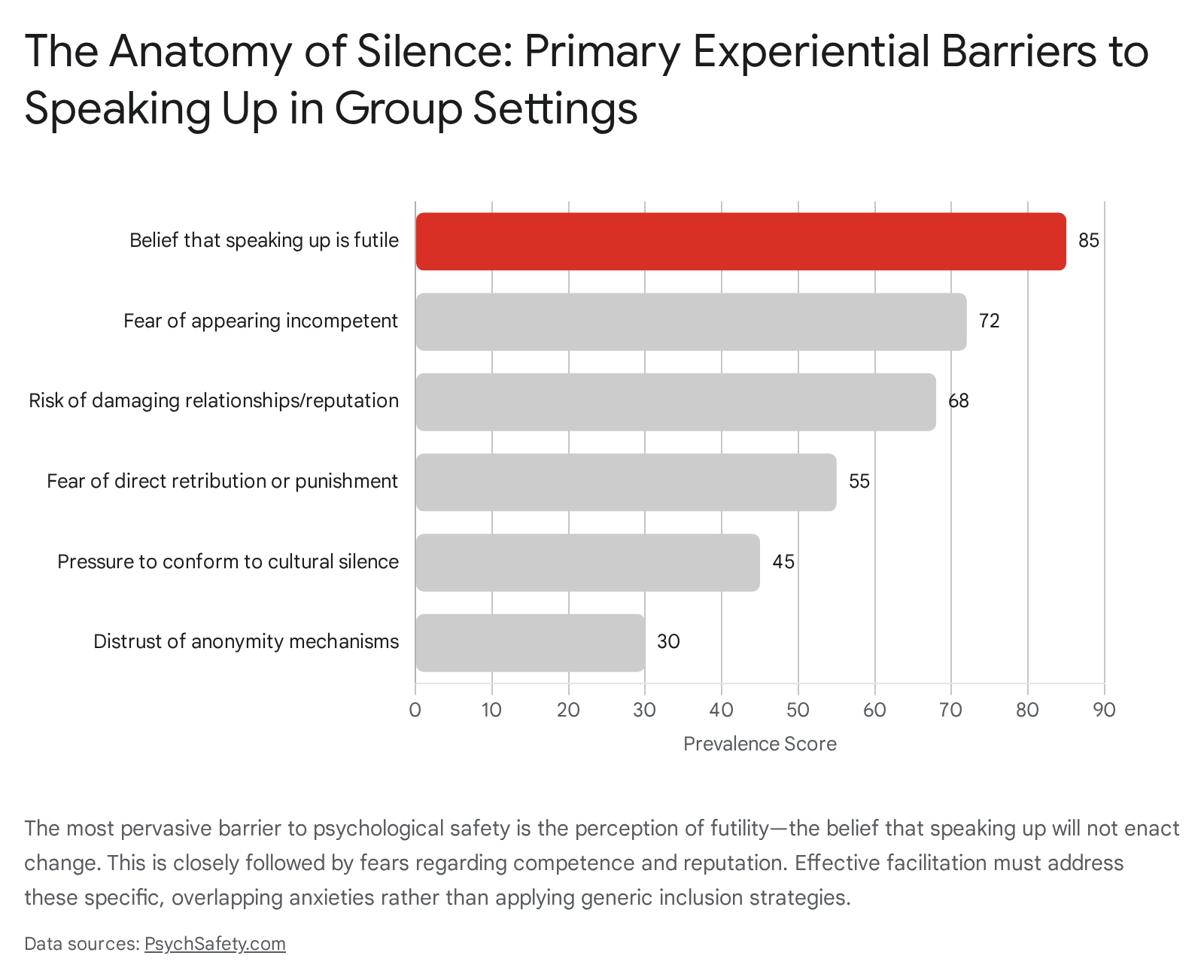
Psychological safety in adult group learning environments
The landscape of adult education and organizational learning has undergone a profound transformation in the post-2020 era. Driven by global disruptions, rapid digitalization, and a heightened awareness of systemic inequities, the concept of psychological safety has moved from the periphery of organizational psychology to the absolute center of pedagogical strategy. Modern adult learning environments - whether they are community-based adult basic education programs, high-stakes medical simulation workshops, or hybrid corporate training sessions - demand more than just the transmission of knowledge. They require the active, collaborative co-construction of knowledge, a process that is inherently fraught with interpersonal risk. To optimize these environments, researchers and practitioners must thoroughly dissect the mechanisms that govern group dynamics. This report provides an exhaustive analysis of psychological safety in group learning environments, anchoring the discussion in foundational theories while aggressively expanding the scope to include cross-cultural dimensions, the complexities of intersectionality, the unique architecture of virtual modalities, and the specific, observable impacts of facilitator interventions.
Foundational Anchors and the Evolution of the Construct
The modern understanding of psychological safety is indelibly linked to the seminal work of Amy Edmondson, who formalized the construct in the late 1990s as a shared belief held by members of a team that the team is safe for interpersonal risk-taking 122. In a psychologically safe environment, learners and professionals feel empowered to express confusion, ask questions, admit mistakes, and raise concerns without the paralyzing fear of humiliation, blame, or retribution 34. Historically, research into this phenomenon emerged from high-stakes environments, such as healthcare and aviation, where silence could result in catastrophic failure 22. Edmondson's early studies in hospital wards revealed a counterintuitive finding: the highest-performing medical teams actually reported more errors than lower-performing teams. Upon deeper empirical investigation, it became evident that these teams were not inherently more prone to failure; rather, their heightened psychological safety permitted the transparency required to report, discuss, and ultimately learn from those errors 26.
In the context of adult education, this translates directly to learning behaviors. The principles of andragogy emphasize that adult learners are self-directed, bring a wealth of prior experience to the classroom, and are highly problem-centered 5. However, the willingness to leverage this experience and engage in self-directed inquiry is heavily mediated by the social context. Current theories of motivation, such as Self-Determination Theory, posit that effective learning requires the satisfaction of three fundamental psychological needs: competence, relatedness, and autonomy 56. Psychological safety serves as the critical environmental precondition that allows these psychological needs to be met, transforming a group of isolated adult learners into a cohesive, knowledge-generating community 67.
Following the global socio-economic shocks of the COVID-19 pandemic, the theoretical application of psychological safety in adult education expanded significantly to incorporate Conservation of Resources theory. This framework dictates that stress results from the loss or threatened loss of material and psychological resources 8. Adult learners, particularly those from marginalized socio-economic backgrounds in adult basic education settings, entered post-2020 classrooms with severely depleted resources, compounded trauma, and heightened vulnerability 89. For instance, individuals with trauma histories reported significantly higher anxiety, depression, and pandemic-related stress, which profoundly undermined their educational goals and vocational confidence 8. In these contexts, psychological safety is not merely a tool for enhancing corporate innovation; it is a fundamental prerequisite for academic retention, cognitive functioning, and emotional recovery, effectively acting as a buffer against attrition 81011. Furthermore, polyvagal theory introduces the concept of the neuroception of psychological safety, suggesting that trauma can dysregulate the autonomic nervous system, keeping adults in a state of hypervigilance where they perceive threats even in objectively safe learning environments 11. Recognizing this biological underpinning is crucial for modern facilitators.
Deconstructing Misconceptions: The Illusion of the "Nice" Workplace
Despite its widespread adoption in adult education and corporate training lexicons, psychological safety is frequently plagued by severe mischaracterizations that undermine its operational efficacy. It is critical to explicitly debunk these misconceptions to accurately cultivate the construct in learning environments.
The most pervasive misconception is that a psychologically safe learning environment is synonymous with a "nice" or overly accommodating workplace where intellectual friction is actively avoided to protect the emotional comfort of the participants 12. Empirical evidence firmly contradicts this framing. Psychological safety is not about the absence of conflict; rather, it is the exact mechanism that enables highly productive, robust intellectual conflict 12. In adult workshops, when participants never argue about priorities, debate conceptual trade-offs, or challenge the curriculum, the environment is likely suffering from profound conflict avoidance driven by quiet fear, rather than enjoying high psychological safety 12. A psychologically safe workshop is often characterized as being deliberately noisy with dissenting ideas, respectful disagreement, and the rapid surfacing of weak signals or bad news 12. The "cynical-conformist" archetype - a participant who outwardly agrees with the group consensus but privately disbelieves that speaking up will lead to any meaningful organizational or educational change - is a primary indicator of a toxic, unsafe learning environment masquerading as a harmonious one 15.
A second major misconception is the belief that fostering psychological safety inherently requires the lowering of performance standards or an uncritical acceptance of substandard work. Research consistently demonstrates that psychological safety and performance standards are orthogonal constructs that, when combined, create what organizational psychologists term the learning zone 21314. In teams where psychological safety is high but performance standards are low, participants enter a comfort zone characterized by complacency and minimal cognitive exertion. Conversely, high standards without psychological safety create an anxiety zone that actively inhibits cognitive function, triggers the biological stress response, and encourages the hiding of errors 614. When facilitators successfully pair high psychological safety with rigorous academic or professional standards, adult learners are pushed into the learning zone. Here, the social cost of trial-and-error is drastically reduced, allowing for iterative failure, rapid feedback absorption, and the development of sophisticated improvisational abilities 1315.
Timothy Clark's framework of psychological safety further elucidates this dynamic by positing "Challenger Safety" as the highest stage of group development. In this stage, adult learners feel secure enough not just to learn and contribute, but to actively question authority figures and disrupt the status quo, which is the ultimate hallmark of rigorous, high-standard adult education 416. While critics correctly note that progression through these stages is rarely linear - teams may simultaneously exhibit high contributor safety but low challenger safety depending on the context - the model remains highly useful for surfacing the distinct, multifaceted nature of interpersonal risk 4.
The Paradigm of Power Distance: Cross-Cultural Dimensions in Adult Education
While the foundational models of psychological safety were largely developed in Western, educated, industrialized, rich, and democratic contexts, adult education is a fundamentally global enterprise 420. Post-2020 empirical research has heavily emphasized the absolute necessity of examining psychological safety through the lens of cross-cultural dimensions. Specifically, this requires focusing on Geert Hofstede's concept of the Power Distance Index, which measures the extent to which less powerful members of organizations and institutions accept and expect that power is distributed unequally 1718.
In geographic regions characterized by high power distance - encompassing vast areas of Asia, the Middle East, Latin America, and Africa - the perception and establishment of psychological safety operate under vastly different socio-cultural constraints 171819. In these contexts, hierarchical structures are widely legitimized and deeply woven into the social fabric. Consequently, an adult learner actively questioning a facilitator, a corporate leader, or an older peer is frequently culturally coded as a sign of profound disrespect and social disruption, rather than an indicator of robust, engaged learning 1720. Research indicates that in high power distance cultures, individuals experience a pronounced and deeply ingrained "fear of authority," which directly mediates and stifles upward communication, peer feedback seeking, and broad knowledge sharing 20.
For instance, studies examining clinical and academic settings in India and Jordan reveal that centralized decision-making and rigid social hierarchies heavily compromise trust and psychological safety. These structures create environments where learners wait passively for explicit directives rather than taking the interpersonal risk of proposing innovative solutions or reporting near-miss safety events 18. Similarly, in Latin America, historical legacies of rigid institutional hierarchy, coupled with severe public safety crises and socio-political violence in various jurisdictions, have conditioned many adult learners to utilize silence as a primary survival and coping mechanism 1021. When these learners enter a formal educational setting or a corporate workshop, this deeply ingrained reflex of silence acts as a formidable, invisible barrier to collaborative problem-solving. However, research in these regions also reveals powerful adaptations; for example, independent investigative journalism collaboratives in Latin America have engineered highly structured psychological and legal safety protocols to mitigate these extreme external pressures, demonstrating that high-risk environments can generate sophisticated safety mechanisms when collaboration is vital 22.
In the African context, approaches to psychological safety often blend modern organizational theory with indigenous philosophies. For example, the San people of Southern Africa historically utilized communal decision-making and oral storytelling to pass essential life skills across generations without relying on formal, rigid authority structures, offering a profound historical precedent for non-hierarchical adult learning 27. Contemporary studies of rural community-based medical education in Africa and Japan highlight the efficacy of near-peer learning architectures. By substituting ultimate authority figures with slightly more advanced peers, educators successfully flatten the instructional hierarchy, thereby reducing power distance anxiety and radically increasing the psychological safety required for self-regulated clinical learning 23. Broader initiatives, such as the Africa Virtual Interprofessional Education (AFRI-VIPE) program, demonstrate that cross-border, problem-based learning can foster safety and connection even amid vast cultural and temporal differences 24.
Conversely, in low power distance regions such as Northern Europe (including Scandinavia and the Netherlands), lateral power relationships and egalitarian decision-making are cultural norms 2019. Adult learning environments in these regions naturally foster lower barriers to psychological safety. Cultural practices like the Swedish fika - regular, informal gatherings that intentionally break down hierarchical boundaries between managers and employees - intrinsically promote the open dialogue and generalized trust required for Edmondson's model to flourish without significant friction 20. Students from low power distance countries consistently report higher levels of school belongingness and social adjustment compared to their peers from highly hierarchical societies, highlighting the powerful baseline advantage provided by egalitarian cultural norms 19.
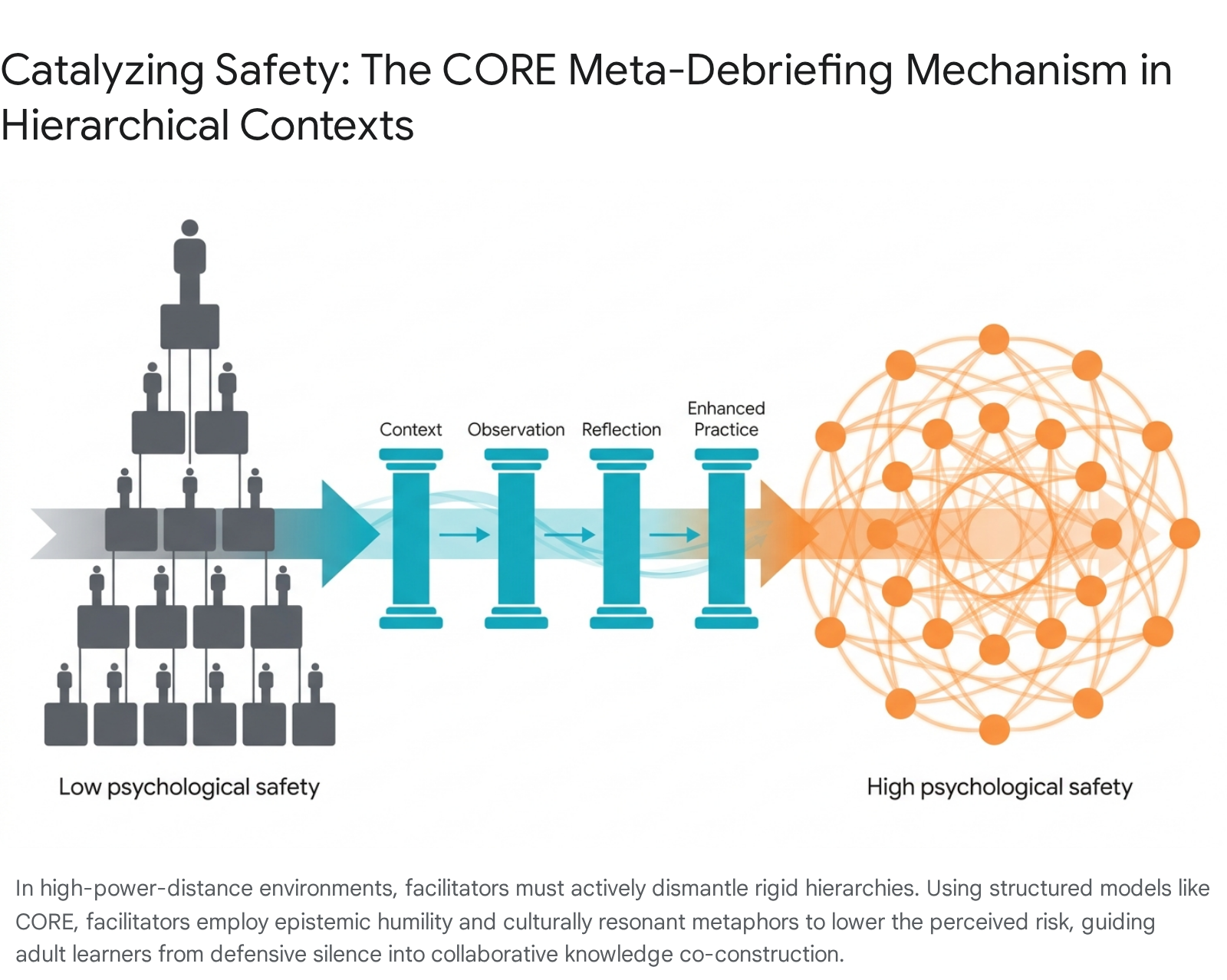
To bridge these profound cultural divides, adult educators operating in multinational or highly diverse environments must employ cultural intelligence not merely as a static leader trait, but as an active, structural design principle 17. In regions like the Middle East, such as within the context of Saudi Arabia's Vision 2030 corporate integration, successful facilitators are adapting to high power distance by engineering "trust-by-design" 17. Rather than attempting to instantly dismantle centuries-old cultural hierarchies - an approach that can induce extreme anxiety, cognitive load, and resistance - facilitators utilize highly structured, predictable cadences and codified communication channels to build safety incrementally. Similarly, by creating culturally resonant meta-debriefing models (utilizing local metaphors and structured circular inquiry), educators in Latin America have successfully normalized critical reflection and emotional safety without forcing participants to explicitly violate ingrained cultural norms regarding authority and face-saving 21.
Digital Frontiers: Virtual and Hybrid Learning Modalities vs. Traditional Environments
The abrupt, pandemic-induced pivot to virtual and hybrid learning modalities forced a critical re-evaluation of how psychological safety is cultivated when physical proximity and shared physical environments are eliminated 25. The empirical research generated from 2020 to 2025 highlights a highly complex dichotomy: digital environments possess the capacity to both uniquely threaten and uniquely enhance psychological safety for adult learners, dependent entirely on instructional design 2633.
In traditional in-person workshops, psychological safety is heavily reliant on continuous, subconscious micro-affirmations. Facilitators and peers establish trust through eye contact, affirmative nodding, open body language, and shared physical proximity 215. In hybrid and fully virtual environments, these critical interpersonal cues are either severely degraded or entirely absent. This lack of visibility can exacerbate feelings of isolation and weaken the rapid feedback loops necessary for initial trust formation 2. Research into interdisciplinary online student teams demonstrates that without intentional pedagogical design, virtual learners are highly susceptible to "absent presence," divided attention, and a profound reluctance to share unpolished ideas 27. In a virtual room, interactions can feel highly transactional, and the awareness that digital spaces are easily recorded or monitored significantly heightens the perceived risk of speaking up 2627. Furthermore, the digital divide remains a massive structural stressor; in regions like Latin America and the Caribbean, severe disparities in internet access and digital literacy during remote learning phases fundamentally excluded millions of learners, thereby destroying the foundational psychological safety derived simply from basic access and structural equity 28.
However, when engineered correctly, digital platforms offer novel, powerful mechanisms for enhancing psychological safety that traditional environments lack. The most significant of these is temporal separation - the asynchronous nature of digital communication, which acts as a powerful psychological buffer 26. Asynchrony allows adult learners, particularly introverts, non-native speakers, or those from high power distance backgrounds, the necessary time to process complex information, formulate articulate responses, and mitigate the immediate emotional threat of real-time, face-to-face confrontation 2627.
Moreover, digital anonymity and structured interaction tools - such as polling software, collaborative virtual whiteboards, and asynchronous discussion forums - can drastically flatten traditional hierarchies. By democratizing the conversational floor, these tools allow learners to take low-stakes interpersonal risks, answering questions or sharing radical ideas without the immediate fear of public embarrassment or immediate verbal pushback from dominant voices 16. Studies on Massive Open Online Courses reveal that when facilitators intentionally intervene to weave participant contributions together, model dialogic behavior, and enforce structured prompts, online discourse can transcend simple information exchange 27. In these optimized virtual settings, participants move toward profound knowledge co-construction and enhanced social presence, proving that digital learning can be deeply collaborative 2527. Effective virtual leadership and facilitation, therefore, rests far less on charismatic physical visibility and far more on the meticulous establishment of predictable cadence, fair-process norms, clear availability, and the intelligent moderation of digital tools 172536.
Power Dynamics and Learner Intersectionality: The Architecture of Risk
While geographical culture and digital mediums shape the broader parameters of the learning environment, the internal power dynamics of any specific workshop are intimately tied to the individual identities of the learners within it. A nuanced, accurate understanding of psychological safety requires moving beyond homogenous views of adult learners and integrating the framework of intersectionality, a concept first articulated by legal scholar Kimberlé Crenshaw 3738.
Intersectionality posits that social identities - such as race, gender, socio-economic class, sexual orientation, age, and neurodiversity - do not operate independently of one another. Instead, they overlap and intersect to create complex, compounding systems of societal advantage or systemic oppression 372930. In adult learning environments, a participant's willingness to take an interpersonal risk is not a static personality trait; it is a continuous calculation weighed against their specific, intersectional position within the broader societal and organizational hierarchy 3041.
For example, extensive research highlights that women of color operating in STEM fields or corporate training environments experience an exceptionally high rate of isolation, systemic discrimination, and what researchers term an "emotional tax" 37. This tax is a persistent, draining state of hypervigilance against potential acts of bias, microaggressions, or invalidation 3742. When adult learners are locked in a state of hypervigilance, their autonomic nervous systems remain in a heightened state of alertness. From a polyvagal perspective, they suffer from a dysregulated neuroception of safety, perceiving deep systemic threat even in objectively benign workshop environments 11. This physiological state inherently shuts down the prefrontal cortex, heavily restricting the cognitive flexibility, working memory, and emotional openness required for creative problem-solving and knowledge co-construction 11.
Similarly, the mainstream adult education literature has historically overlooked neurodivergent learners - adults navigating conditions such as ADHD, autism spectrum disorder, or dyslexia 31. For these adults, generic, surface-level "inclusion" efforts frequently fail to generate true psychological safety. Standard facilitator expectations regarding sustained direct eye contact, rapid verbal processing during brainstorming, or the flawless interpretation of subtle body language can inadvertently create deeply unsafe, highly exclusionary environments for neurodivergent individuals 1531. True psychological safety requires moving beyond intersectionality that focuses only on gender and race, expanding to include neurodiversity, age, and invisible disabilities 2931.
Within corporate training or medical simulation workshops, strict organizational hierarchies act as the ultimate, most pervasive barrier to psychological safety 64432. When direct supervisors and subordinates occupy the exact same learning space, power dynamics almost universally compel subordinates to defer to authority. Junior staff rightfully fear that exposing a knowledge gap or challenging a flawed assumption will trigger punitive performance reviews, label them as troublemakers, or permanently damage their career trajectory 443233. In healthcare settings, these rigid hierarchies and punitive cultures perpetuate a cycle of silence, where junior staff feel too vulnerable to voice critical, potentially life-saving patient safety concerns, directly leading to preventable medical errors 6.
Intersectionality acts as a catalyst for dismantling these barriers only when facilitators actively acknowledge and purposefully design for these complexities. By recognizing that psychological safety is entirely subjective and does not feel the same for everyone, facilitators can move far beyond ineffective colorblind or status-blind approaches 15. Interventions that explicitly validate diverse communication modalities, provide strictly equitable airtime, and deconstruct standard hierarchical expectations are essential for unlocking the human potential housed within intersectional identities 153847.
Mechanisms of Facilitation: Empirical Interventions and Effects
Because psychological safety is highly susceptible to contextual shifts and power dynamics, the responsibility for establishing and maintaining it rests disproportionately on the facilitator, instructor, or organizational leader 3435. Recent literature from 2020 to 2025 provides a wealth of empirical data demonstrating how specific, deliberate facilitator behaviors act as high-leverage interventions. These behaviors predictably and measurably influence learner risk-taking, transformational learning, and collaborative output.
The following table categorizes these core interventions, mapping them directly to their empirical effects observed in recent adult education, medical simulation, and organizational psychology research.
Table 1: Empirical Effects of Facilitator Interventions on Learner Dynamics
| Facilitator Intervention Category | Specific Behavioral Mechanisms | Empirical Effects on Learner Risk-Taking & Knowledge Co-Construction | Source Evidence |
|---|---|---|---|
| Vulnerability Modeling & Epistemic Humility | Facilitator explicitly admits past mistakes, identifies as a continuous learner, demonstrates transparency, and actively seeks upward feedback. | Catalyst for Risk-Taking: Dramatically reduces the perceived cost of failure. Healthcare teams with leaders modeling these traits see error-reporting rates increase by up to 47%, as learners feel secure discussing near-misses rather than hiding them. | 2636 |
| Near-Peer Learning Architectures | Delegating instructional leadership to slightly more advanced peers rather than ultimate authority figures; effectively flattening the instructional hierarchy in the room. | Catalyst for Co-Construction: Drives intrinsic motivation and identified regulation. Radically reduces hierarchy-induced anxiety, increasing active participation, collaborative dialogue, and self-regulated learning in both clinical and rural academic settings. | 623 |
| Structured Meta-Debriefing (e.g., CORE Model) | Utilizing structured, predictable phases (Context, Observation, Reflection, Enhanced practice) combined with culturally resonant metaphors to normalize intense emotional responses. | Catalyst for Reflection: Moves groups past defensive posturing. Enables adult learners in high power distance cultures (e.g., Latin America) to engage in circular inquiry and strategic questioning without violating local cultural norms of respect. | 21 |
| Anonymized & Asynchronous Digital Prompts | Deploying low-risk digital tools (e.g., anonymous polling, threaded forums) and providing structured, asynchronous time for response formulation. | Barrier Mitigation: Bypasses "absent presence" in virtual teams. Mitigates the "emotional tax" for marginalized groups by democratizing airtime, leading to a higher volume of diverse ideas and significantly deeper interdisciplinary problem-solving. | 162627 |
| Boundary Spanning & "Equity Pauses" | Purposefully connecting siloed subgroups within a workshop and instituting mandatory pauses in decision-making to evaluate discussions through an inclusivity lens. | Catalyst for Co-Construction: Breaks down strict disciplinary or hierarchical silos. Ensures that minority perspectives are integrated into the final knowledge output, directly and systematically combatting the cynical-conformist archetype. | 6 |
Diagnosing the Environment: Observable Behavioral Indicators
To effectively deploy the interventions outlined above, facilitators must be capable of accurately and continuously diagnosing the current state of psychological safety within their workshops. Because true psychological safety is an internal, shared psychological state, it cannot be reliably measured by merely observing whether participants are smiling, polite, or compliant. Indeed, excessive politeness is often a mask for fear. Instead, safety must be assessed through specific, observable behavioral indicators - tangible actions that either demonstrate a willingness to absorb interpersonal risk or a desperate attempt to avoid it 61215. Tracking these leading behavioral indicators is far more effective than relying on lagging engagement surveys 12.
The following structured comparison table contrasts the observable behaviors of adult learners operating in highly psychologically safe environments versus those struggling in toxic, low-safety environments.
Table 2: Observable Behavioral Indicators of High vs. Low Psychological Safety
| Domain of Interaction | Indicators of High Psychological Safety (The "Learning Zone") | Indicators of Low Psychological Safety (The "Anxiety/Apathy Zone") |
|---|---|---|
| Reaction to Errors & Failure | Proactive Disclosure: Participants voluntarily bring up their own mistakes, near-misses, or knowledge gaps, offering them as case studies for collective group learning 26. | Concealment & Defensiveness: Errors are aggressively hidden, blamed on external factors or other departments, or flatly denied. A culture of "naming and shaming" prevails 612. |
| Nature of Intellectual Conflict | Challenger Safety: Learners openly question the facilitator's baseline assumptions, robustly debate standard practices, and propose radical alternatives without apologizing for the friction 4. | Cynical Conformity: Polite, immediate agreement with the facilitator or the most senior members in the room. Dissenting opinions are only expressed privately in back-channels or after the workshop 1215. |
| Communication Modalities | Diverse & Asynchronous Engagement: High utilization of varied communication forms (verbal, text chat, anonymous polls). Silence is comfortable, reflective, and generative 1516. | Domination & Withdrawal: A select few dominant voices monopolize the airtime. Silence from the majority is tense, stemming directly from a belief that speaking up is futile or highly dangerous 1532. |
| Feedback Dynamics | Bi-Directional Feedback: Subordinates and learners actively request actionable feedback from peers and instructors, and feel comfortable offering upward feedback to leaders without prompting 1251. | Unidirectional Criticism: Feedback flows strictly downward through the hierarchy. Learners react to constructive criticism with high anxiety, defensiveness, or immediate disengagement 51. |
| Knowledge Co-Construction | Iterative Brainstorming: Participants eagerly build upon half-formed ideas ("Yes, and..."). Conversations feature active listening, humor, and a high degree of personal vulnerability 1536. | Siloed Contributions: Individuals present highly polished, defensive arguments designed to prove competence rather than explore ideas. Collaboration is heavily transactional 15. |
Conclusion
Psychological safety in adult group learning is neither a soft skill nor a modern luxury; it is the fundamental, non-negotiable architectural requirement for high-level cognitive functioning, behavioral change, and collaborative innovation. As this analysis demonstrates, the transition from a traditional, hierarchical learning environment to a psychologically safe, co-constructive space requires profound intentionality and theoretical rigor.
Facilitators and organizational leaders must definitively discard the misconception that safety equates to lowered standards, superficial niceness, or conflict avoidance. Instead, they must recognize that true safety demands rigorous, often uncomfortable intellectual engagement. By deeply understanding the immense pressures exerted by cross-cultural power distances, aggressively mitigating the compounding vulnerabilities associated with intersectionality and systemic bias, and strategically leveraging the unique affordances of digital and hybrid platforms, educators can construct genuinely safe learning containers. Through the deliberate, evidence-based application of epistemic humility, structured meta-debriefing, and highly equitable facilitation techniques, the pervasive barriers of fear, perceived futility, and institutional silence can be systematically dismantled. Doing so unlocks the full, transformative, and generative potential of the adult learning collective.