
How Your Immune System Responds to a Vaccine
When you receive a vaccine, a harmless fragment or genetic blueprint of a pathogen is introduced to your body, tricking your immune system into believing it has been infected. This initial exposure triggers a highly coordinated biological defense sequence where specialized white blood cells learn to recognize the invader, produce targeted antibodies, and create long-lasting memory cells. If you ever encounter the actual virus or bacteria in the future, these memory cells will instantly recognize the threat and neutralize it before it can cause severe illness.
The First 48 Hours: The Innate Immune Response
The immediate aftermath of a vaccination is often accompanied by mild physical discomfort. Within the first 24 to 48 hours, it is entirely normal to experience a sore arm, redness at the injection site, fatigue, mild irritability, or a low-grade fever 122. While these symptoms might mimic the onset of a mild illness, they are actually signs of a robust biological process and are not caused by the disease itself 3.
A vaccine cannot cause the disease it is designed to prevent because it does not contain an intact, infectious pathogen capable of replicating wildly 34. Instead, the side effects you feel are the result of your body's innate immune system leaping into action. When the needle breaches the skin, it introduces the vaccine's active ingredient - an antigen, which is the scientific term for any substance the body recognizes as a foreign invader 56.
Almost instantly, your innate immune system detects this foreign material. White blood cells called macrophages and neutrophils rush to the injection site 78. These cells are the immune system's first responders. They physically engulf the vaccine ingredients and begin secreting chemical messengers called cytokines 78. Cytokines act as biological emergency flares, signaling other immune cells to migrate to the area. This sudden rush of cells, fluid, and increased blood flow causes localized inflammation, resulting in the characteristic sore arm, redness, and swelling 1225.
Why Your Arm Aches and Fevers Spike
Cytokines do not just stay in your arm; they travel through your bloodstream and eventually reach the brain, where they interact with the hypothalamus to temporarily reset your body's internal thermostat, causing a fever 12. A fever is a deliberate and ancient defense mechanism. Many pathogens are temperature-sensitive and cannot survive or replicate efficiently in higher heat 2. Furthermore, an elevated body temperature accelerates the metabolic activity of your own immune cells, allowing them to work faster and more aggressively 2.
For most common childhood and adult vaccines, these symptoms are temporary and typically resolve without medical intervention within two to three days 2911. However, the timing and intensity of these side effects can vary significantly depending on the specific vaccine administered and the individual's unique biological makeup.
| Vaccine Type | Common Early Side Effects | Typical Timeline & Frequency |
|---|---|---|
| DTaP (Diphtheria, Tetanus, Pertussis) | Pain, swelling, and redness at the injection site; mild fever; drowsiness or fretfulness. | Local reactions occur in 25% to 45% of children within 24 to 48 hours. A fever occurs in 7% to 26% of recipients. Notably, a large, harmless swelling of the arm or leg can follow the 4th or 5th dose in about 5% of children, resolving in 3 to 7 days 212. |
| Hib (Haemophilus influenzae type b) | Mild fever, local redness. | Varies by brand. ActHIB fevers occur 2 days post-vaccination in ~2% of recipients. Hiberix fevers peak at 4 days in 14-19% of recipients. PedvaxHIB fevers occur within 6-48 hours in 1-18% of recipients 1. |
| Influenza (Inactivated Flu Shot) | Soreness, redness, muscle aches, headache, low-grade fever. | Symptoms usually peak within 6 to 8 hours and occur in about 10% to 18% of recipients, primarily resolving within 48 hours 912. |
| MMR / Varicella (Live Attenuated) | Fever, mild rash, swollen glands in cheeks or neck. | Because these contain live (but weakened) viruses that replicate slowly, delayed reactions are common. Fevers or mild rashes may not appear until 1 to 4 weeks after the injection 2912. |
If an individual experiences a fever, common over-the-counter medications like acetaminophen or ibuprofen can be used to manage the discomfort 1212. There is a persistent myth that using acetaminophen might deplete the body's glutathione levels to a dangerous degree or interfere with the vaccine's efficacy, but medical research confirms that standard doses of these medications do not deplete glutathione enough to cause harm or ruin the immune response 1. The only exception is the varicella (chickenpox) vaccine, where aspirin should be strictly avoided for six weeks due to the rare risk of Reye's syndrome 12.
The Intelligence Gatherers: Antigen Processing and Presentation
The innate immune system is fast, but it is entirely generic; it attacks all foreign invaders using the exact same blunt-force methods. To build lasting immunity, the body must activate its adaptive immune system, which is highly specific and capable of remembering distinct pathogens for decades. The critical bridge between these two systems relies on a complex biological mechanism called "antigen presentation" 1011.
Macrophages and dendritic cells serve as the immune system's intelligence gatherers, formally known as Antigen-Presenting Cells (APCs) 512. Once they engulf the vaccine's antigens at the injection site, they do not just destroy them. Instead, they use enzymes to digest the foreign proteins into much smaller fragments, known as peptide epitopes 7810.
Once they have acquired these fragments, the APCs pack up and leave the muscle tissue. They travel through the lymphatic vessels to the nearest lymph nodes 5813. This migration is the reason why you might sometimes feel swollen, tender glands in your armpit or neck a few days after receiving a vaccination; your lymph nodes are physically expanding as immune cells flood into them to review the newly acquired intelligence 589.
The Two Pathways of Immune Display: MHC Class I vs. Class II
Inside the lymph nodes, APCs push the digested antigen fragments to their outer cellular membrane, displaying them like a trophy on the surface of the cell. They do this using specialized molecular "display cases" called Major Histocompatibility Complex (MHC) molecules 71011.
The exact nature of the MHC display is incredibly important because it dictates how the rest of the immune system will react. There are two distinct pathways for antigen presentation:
1. The Exogenous Pathway (MHC Class II) When an antigen-presenting cell engulfs a foreign protein from the outside environment - such as the inactivated viruses in a traditional flu shot or the bacterial toxins in a tetanus shot - it processes that antigen in an acidic compartment called an endosome 101114. The resulting fragments are loaded onto MHC Class II molecules 14. MHC Class II molecules are exclusively found on specialized immune cells like dendritic cells, macrophages, and B-cells 1115. When an MHC Class II molecule displays an antigen, it is sending a specific message to the immune system: "I have found a dangerous invader outside our cells. We need to produce antibodies to neutralize it." This pathway primarily activates CD4+ Helper T-cells 1015.
2. The Endogenous Pathway (MHC Class I) Conversely, when a cell produces a foreign protein internally, it utilizes the MHC Class I pathway 101114. MHC Class I molecules are present on almost all nucleated cells in the human body, not just immune cells 1015. If a cell is infected by a live virus, or if it has taken up the instructions from an mRNA or viral vector vaccine, it begins manufacturing the viral protein within its own cytoplasm 816. The cell's internal garbage disposal system, the proteasome, degrades some of these proteins into fragments 81115. A specialized transporter called TAP moves these fragments into the endoplasmic reticulum, where they are loaded onto MHC Class I molecules and pushed to the cell surface 1015. When an MHC Class I molecule displays an antigen, it sends a much more urgent message: "I have been compromised from the inside. Destroy me before the virus can spread." This pathway activates CD8+ Cytotoxic (Killer) T-cells 101516.
| Feature | MHC Class I Pathway | MHC Class II Pathway |
|---|---|---|
| Source of Antigen | Endogenous (intracellular proteins synthesized inside the cell) 1014. | Exogenous (extracellular proteins engulfed from the outside) 1014. |
| Processing Location | Cytosol, degraded by proteasomes 1415. | Endosomes and phagosomes, degraded by acidic proteases 1415. |
| Cellular Expression | Found on almost all nucleated cells in the body 1015. | Found exclusively on professional Antigen-Presenting Cells (dendritic cells, macrophages, B-cells) 1115. |
| Target Immune Cell | CD8+ Cytotoxic T-cells (Killer T-cells) 1015. | CD4+ Helper T-cells 1015. |
| Primary Immune Goal | To identify and destroy compromised, infected, or cancerous host cells 111516. | To coordinate the immune response and stimulate B-cells to produce antibodies 1115. |
Understanding these two pathways is essential because modern vaccinology strives to activate both. A vaccine that only activates the MHC Class II pathway will create a strong wall of antibodies, but if a virus manages to slip past those antibodies and enter a cell, the body needs the MHC Class I pathway to deploy Killer T-cells to clean up the infection 81117.
The Adaptive Immune Response: Assembling the Specific Army
Once the Antigen-Presenting Cells are situated in the lymph nodes, displaying their MHC-bound trophies, they begin interfacing with the adaptive immune system's heavy artillery: T-cells and B-cells 57.
Your body maintains a massive, highly diverse library of millions of naive T-cells and B-cells. They are considered "naive" because they have never encountered their specific target. Each of these cells features a unique, randomly generated receptor on its surface 4518. They circulate endlessly through the blood and lymphatic systems, waiting for the one specific antigen that perfectly fits their receptor, much like a key fitting into a highly complex biological lock 518.
When a naive T-cell or B-cell bumps into an Antigen-Presenting Cell and realizes that its unique receptor matches the displayed vaccine antigen, it becomes activated 57. This activation is the turning point of the immune response, kicking off a process known as clonal expansion, where the activated cell begins dividing and multiplying exponentially to create an army specifically tailored to fight the vaccinated disease 1319.
T-Cells: The Commanders and Assassins
T-cells, which mature in the thymus gland, are the cellular backbone of the adaptive immune response 523. They are generally divided into two main categories based on the specific proteins they express on their surface: CD4 and CD8 23.
Helper T-cells (CD4+) When a naive CD4+ T-cell binds to an antigen presented on an MHC Class II molecule, it transforms into a Helper T-cell 1023. Helper T-cells do not kill pathogens directly. Instead, they are the tactical commanders of the immune system. Once activated, they secrete massive amounts of specific cytokines, such as interleukin-2 (IL-2) and interferon-gamma (IFN-gamma) 72320. These chemical signals instruct B-cells to start manufacturing antibodies, encourage macrophages to become more aggressive, and help sustain the multiplication of Killer T-cells 5723. Without Helper T-cells, the entire adaptive immune response would collapse.
Cytotoxic T-cells (CD8+) When a naive CD8+ T-cell binds to an antigen presented on an MHC Class I molecule, it transforms into a Cytotoxic, or Killer, T-cell 1023. Unlike Helper T-cells, Killer T-cells are cellular assassins. Their job is to patrol the body, scanning the MHC Class I molecules of regular tissue cells 10. If they find a cell displaying the viral antigen (indicating that the cell is infected and manufacturing the virus), the Killer T-cell locks onto it. It then releases lethal proteins called perforin, which punches holes in the infected cell's membrane, and granzymes, which enter the cell and trigger programmed cell death (apoptosis) 23. This ruthless efficiency stops a virus from using the body's cells as replication factories 51723.
B-Cells: The Antibody Factories
While T-cells are experts at handling intracellular threats (pathogens hiding inside cells), B-cells are responsible for hunting down extracellular threats (pathogens floating freely in the blood and bodily fluids) 23. B-cells mature in the bone marrow and feature specialized B-cell receptors (BCRs) that allow them to bind directly to free-floating antigens, without necessarily needing an Antigen-Presenting Cell 51823.
However, binding to an antigen is usually not enough to fully activate a B-cell. To prevent the immune system from accidentally attacking the body's own tissues, most B-cells require a secondary "confirmation code" from a Helper T-cell before they deploy 131823.
Once a B-cell receives both signals, it undergoes a dramatic transformation into a Plasma B-cell 51823. Plasma cells are essentially biological manufacturing plants. They ramp up their internal machinery to pump out thousands of Y-shaped proteins called antibodies every single second 5.
These antibodies flood into the bloodstream and tissues. Because they were custom-built to match the vaccine's antigen, they seek out and bind tightly to the specific pathogen 45. This binding process, called neutralization, coats the virus or bacteria, preventing it from chemically docking with and entering human cells 521. Furthermore, the tail end of the Y-shaped antibody acts as a bright flag, signaling passing macrophages and neutrophils to easily identify and devour the neutralized pathogen 57.
As the immune response progresses, B-cells undergo a process called affinity maturation. Through rapid genetic mutation and selection, the immune system fine-tunes the antibodies, producing new generations that bind to the target antigen with increasingly higher affinity and precision 182227. The cytokines secreted by Helper T-cells also instruct the B-cells to undergo "class switching," altering the type of antibody they produce 723. For example, they might switch from producing generic IgM antibodies to highly specific IgG antibodies (which circulate in the blood) or IgA antibodies (which protect mucosal surfaces like the respiratory tract) 78.
The Chronological Timeline: From Injection to Peak Immunity
Immunity is not a singular event; it is a meticulously choreographed multi-step biological timeline. The exact timing can vary depending on the individual's age, baseline health, and the specific vaccine type, but the physiological response generally follows a predictable and sequential path. Understanding this timeline explains why vaccines do not provide immediate protection and why it takes several weeks to be considered "fully vaccinated" 4.
Days 0 to 3: The Innate Phase and Local Activation Immediately following the injection, the vaccine material is present in the muscle tissue. Macrophages and neutrophils flood the area, engulfing the antigen 78. This is the period of highest inflammation. Cytokine levels spike, leading to the common side effects of localized pain, redness, swelling, and systemic responses like fatigue or low-grade fever 122. During this window, the body has no specific protection against the pathogen; it is merely reacting to the presence of foreign material 4.
Days 4 to 7: The Expansion Phase By this time, the Antigen-Presenting Cells have migrated from the injection site to the draining lymph nodes (often the axillary nodes in the armpit) 58. The innate side effects usually begin to subside as the systemic inflammation cools down 211. Inside the lymph nodes, naive T-cells and B-cells that match the antigen are activated and begin to multiply exponentially in a process called clonal expansion 1319. Germinal centers - specialized microenvironments within the lymph nodes - form to facilitate B-cell activation and antibody isotype switching 8. Blood tests at this stage show the very first detectable rise in circulating anti-spike or target-specific antibodies, marking the beginning of humoral immunity 1921.
Days 10 to 14: The Peak Cellular and Adaptive Response The adaptive immune response reaches its zenith around the two-week mark. Studies monitoring cellular immune responses, such as those evaluating COVID-19 immunizations, show that the frequency of cytokine-producing CD4+ T-cells and activated CD8+ T-cells peaks at day 14 post-vaccination 1920. Simultaneously, neutralizing antibody titers surge significantly 21. Because the immune army has now reached its maximum operational capacity, an individual is generally considered adequately protected from the target disease approximately 14 days after receiving a single-dose vaccine (or 14 days after the final dose of a multi-dose series) 2023.
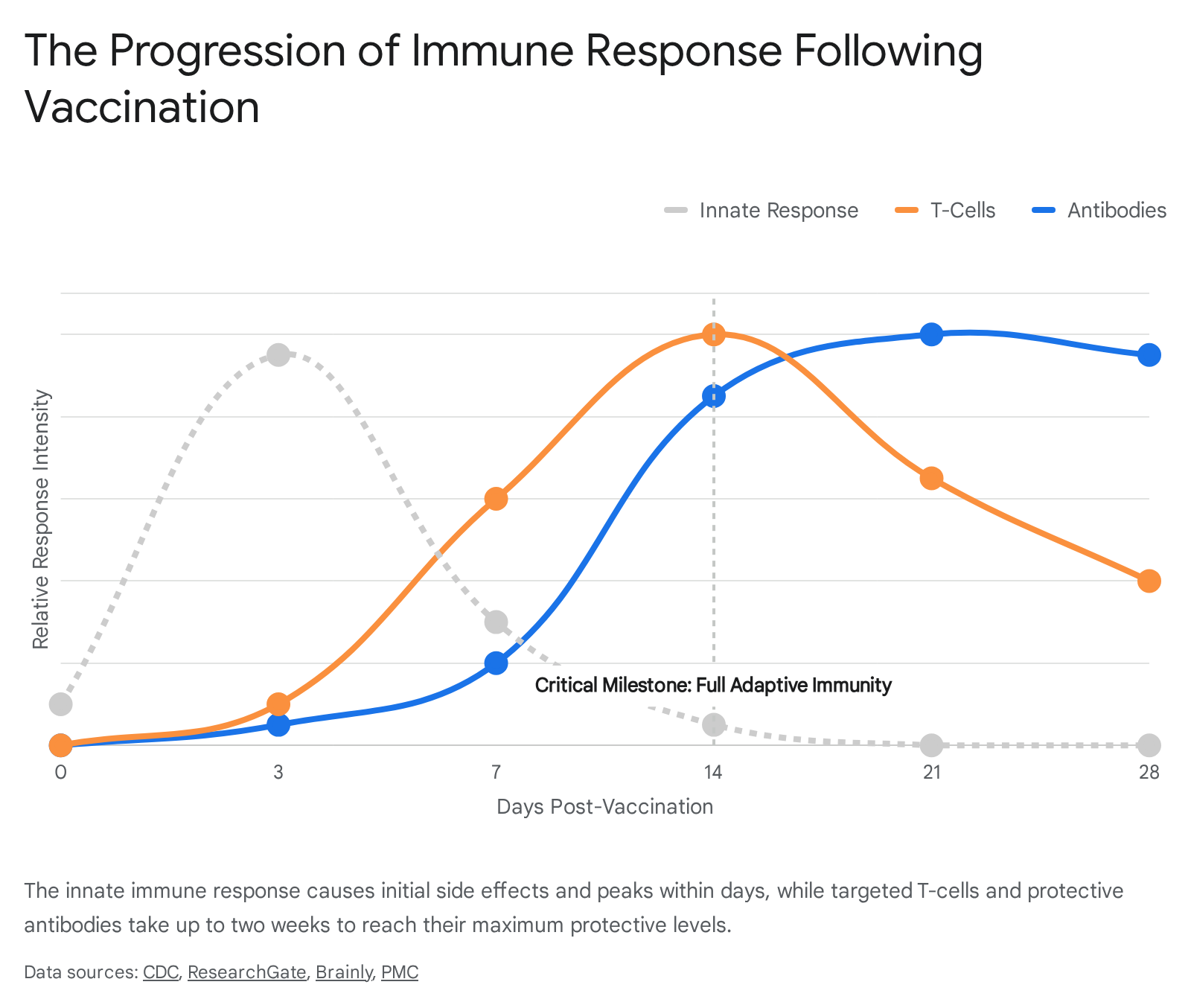
Days 21 to 28+: The Contraction and Memory Phase With the vaccine antigen successfully neutralized and cleared from the body, the massive army of effector T-cells and plasma B-cells is no longer needed. Maintaining billions of active immune cells requires immense metabolic energy, so the body initiates a planned die-off known as the contraction phase 619. The levels of circulating regulatory T-cells (Tregs), which help dampen the immune response, return to normal 20. However, a crucial subset of these highly trained cells avoids programmed cell death. They transform into long-lived memory cells, retreating to the lymph nodes and bone marrow to stand guard for years or even decades 18192430.
How Different Vaccine Technologies Train the Immune System
Historically, all vaccines worked by delivering the antigen directly to the body from an external source. However, modern scientific breakthroughs - accelerated significantly during the COVID-19 pandemic - have introduced novel methods of antigen delivery. While the end result (activation of B-cells and T-cells) is the same, the method of presentation fundamentally alters the nuance and breadth of the immune response 4825.
Traditional Vaccines (Live Attenuated, Inactivated, and Subunit)
For decades, vaccines relied on growing massive quantities of a virus or bacteria in a laboratory and then altering it so it could not cause disease 122526. * Live Attenuated Vaccines (like MMR and Varicella) use a weakened version of the live virus. Because it is live, it can enter cells and replicate very slowly, providing a highly robust immune response that closely mimics a natural infection 45. However, they are generally unsafe for immunocompromised individuals because even a weakened virus can be dangerous to a severely suppressed immune system 9. * Inactivated and Subunit Vaccines (like the Flu shot, Hepatitis B, and Novavax) use pathogens that have been completely killed with heat or chemicals, or they use only purified pieces of the pathogen's protein coat 45627. Because these antigens are floating freely outside the cells, they are engulfed by Antigen-Presenting Cells and processed primarily through the MHC Class II pathway 1015. This produces an excellent antibody response via B-cells and Helper T-cells, but often results in a weaker CD8+ Killer T-cell response, which is why these vaccines frequently require multiple doses or adjuvants (chemicals added to boost the immune response) to achieve lasting immunity 61128.
mRNA Vaccines (Messenger RNA)
mRNA vaccines, such as those developed by Pfizer-BioNTech and Moderna, represent a paradigm shift in vaccinology. Instead of injecting the antigen itself, these vaccines inject fragile, synthetic genetic instructions (mRNA) encased in protective fat bubbles called lipid nanoparticles (LNPs) 8252627.
When the LNP fuses with a muscle cell at the injection site, it releases the mRNA into the cell's cytoplasm 1627. The human cell's own ribosomes read the mRNA blueprint and temporarily manufacture the viral antigen (for example, the SARS-CoV-2 spike protein) 252627. Crucially, the mRNA does not enter the cell's nucleus and cannot alter human DNA; it degrades naturally and rapidly within a few days 122526.
Because the muscle cell is manufacturing the foreign protein internally, it pushes the antigen fragments to its surface using the MHC Class I pathway 816. This tricks the immune system into believing the cell is experiencing a true viral infection, powerfully activating CD8+ Killer T-cells alongside the traditional CD4+ Helper T-cells and antibody-producing B-cells 81625. This dual-pathway activation is why mRNA vaccines induce such remarkably potent and broad immune protection 2526. Furthermore, because mRNA vaccines are manufactured synthetically without the need for live cell cultures, they can be designed and scaled up at unprecedented speeds when a new pathogen emerges 122526.
Viral Vector Vaccines
Viral vector vaccines, like those developed by Johnson & Johnson and AstraZeneca, also deliver genetic instructions, but they use a different delivery vehicle. Scientists hollow out a harmless, unrelated virus (usually an adenovirus that causes mild colds in chimpanzees or humans) and use it as a "Trojan Horse" to deliver DNA encoding the target antigen 82527.
The harmless adenovirus attaches to the human cell and injects the modified DNA into the nucleus. The cell then transcribes this DNA into mRNA, and the process continues just like an mRNA vaccine, using the host's machinery to produce the spike protein 2527. Like mRNA vaccines, this intracellular production heavily triggers both the MHC Class I and MHC Class II pathways, generating broad T-cell and antibody responses 81625. Viral vector vaccines have the distinct advantage of being more stable at standard refrigerator temperatures compared to the ultra-cold storage required for some mRNA vaccines, making them easier to distribute globally 25.
| Vaccine Technology | Mechanism of Action | Antigen Presentation | Key Advantages | Examples |
|---|---|---|---|---|
| Traditional (Inactivated / Subunit) | Injects killed pathogens or purified viral proteins 4627. | Primarily MHC Class II (Exogenous). Strong antibody response 1015. | Proven safety record, standard storage 2526. | Flu shot, Polio, Hepatitis B, Novavax 91227. |
| mRNA | Delivers synthetic mRNA via lipid nanoparticles to instruct cells to build the antigen 82627. | Both MHC Class I & II. Strong antibody AND Killer T-cell response 81625. | Highly adaptable, rapid manufacturing, no live virus risks 122526. | Pfizer-BioNTech, Moderna COVID-19 2527. |
| Viral Vector | Uses a harmless, modified virus to deliver DNA instructions into the host cell 82527. | Both MHC Class I & II. Strong T-cell and antibody response 81625. | Durable single-dose potential, easier cold-chain storage 25. | Johnson & Johnson, AstraZeneca COVID-19 2527. |
Immunological Memory: The Long-Term Guardians
The true goal of any vaccination campaign is not just the immediate, short-term production of antibodies, but the creation of lasting immunological memory 522.
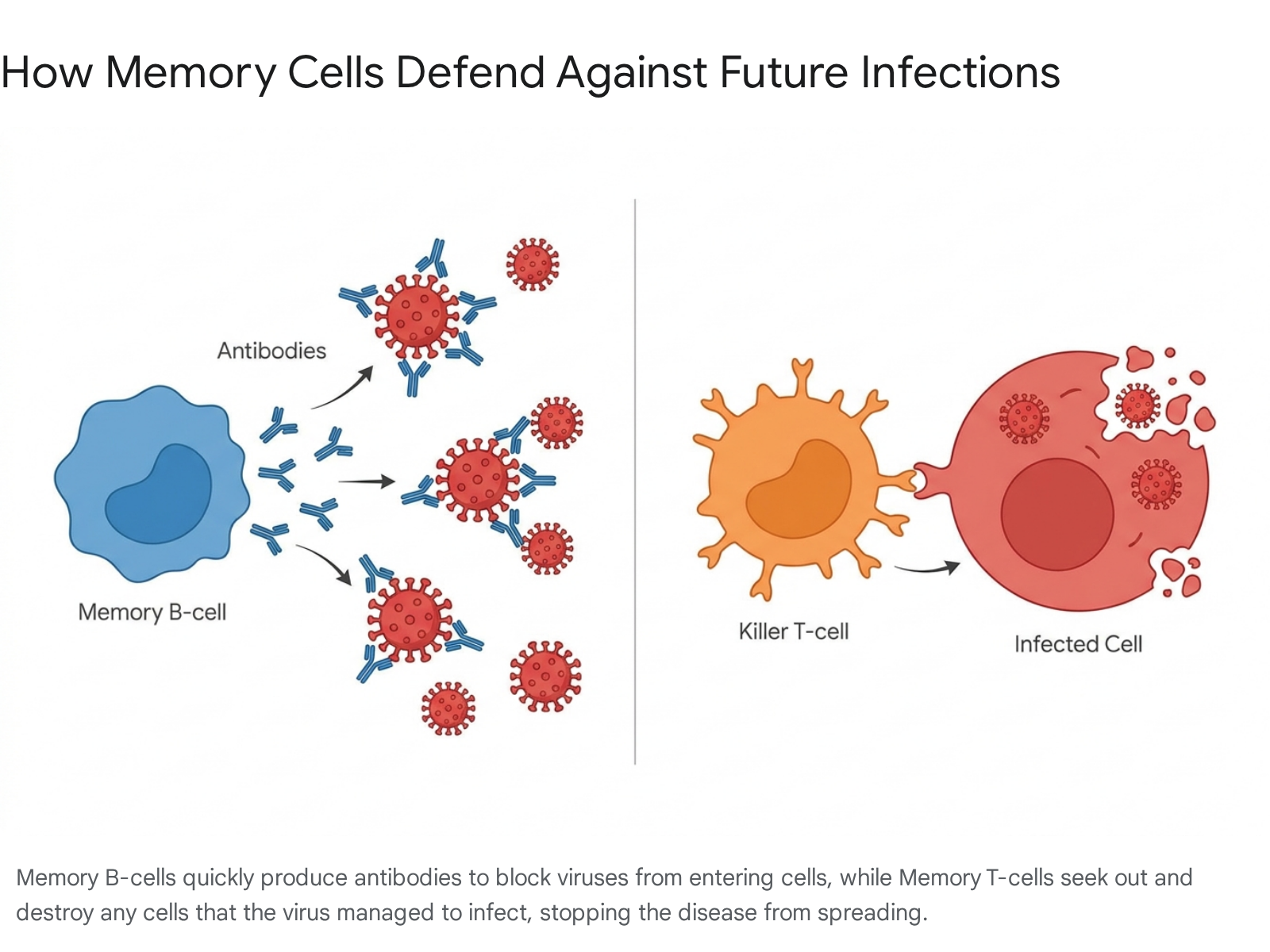
Once the initial "threat" of the vaccine is cleared, the millions of Plasma B-cells and Effector T-cells die off 618. However, a vital fraction of these cells transform into Memory B-cells and Memory T-cells 535. These memory cells possess unique biological properties that fundamentally alter how the body responds to future threats: 1. Longevity: While normal white blood cells live for a few days or weeks, memory cells are extremely durable. They can persist in the bone marrow, lymph nodes, and tissues for decades, sometimes providing an entire lifetime of durable immunity 2435. 2. Rapid Activation: During a primary infection or first vaccination, a naive B-cell takes weeks to ramp up high-affinity antibody production 418. A Memory B-cell, upon recognizing an old enemy, bypasses these preliminary steps. It can differentiate into a plasma cell and pump out massive volumes of specific antibodies within hours or days 182235. 3. High Sensitivity: Memory cells have undergone affinity maturation, meaning their receptors are perfectly tuned to the antigen. They require a much smaller dose of the pathogen to become activated compared to their naive counterparts 35.
When memory cells encounter a pathogen they were vaccinated against, they mobilize so rapidly and aggressively that the virus or bacteria is usually neutralized before it can replicate enough to cause clinical symptoms 4524.
Waning Immunity and the Role of Booster Shots
If memory cells live for decades, a common question arises: why are booster shots required for some diseases, like COVID-19, influenza, or tetanus, but not for others, like polio or measles? The answer lies in the natural waning of circulating antibodies and the evolutionary adaptability of certain pathogens 172236.
First, the sheer volume of circulating antibodies naturally drops over time 2224. Maintaining high levels of antibodies in the blood requires constant metabolic energy; once the perceived threat is gone, the body dials back production 24. If a person is exposed to a pathogen years later, their memory B-cells and T-cells are still present to fight it. However, because the immediate, front-line antibody blockade has diminished, the virus may briefly slip past and establish a mild infection before the memory cells can ramp up emergency production 324.
This dynamic explains why vaccinated individuals can experience mild "breakthrough infections" but rarely suffer severe disease, hospitalization, or death 24. The neutralizing antibodies may have waned enough to allow a runny nose, but the Memory T-cells remain highly effective at seeking out and destroying the virus deep in the lungs and vital organs before it can cause systemic damage 1724.
Second, some viruses, like influenza and SARS-CoV-2, mutate rapidly 172436. When a virus replicates and mutates, the physical shape of its surface proteins - the very antigens the immune system memorized - begins to drift 36. The antibodies your B-cells produced for the original vaccine may no longer fit perfectly onto the mutated virus, rendering them significantly less effective 2436. Studies have shown that while Memory T-cells maintain strong cross-reactivity against highly mutated variants like Omicron, Memory B-cells show reduced binding avidity due to these structural changes 27.
A booster shot is administered to solve these precise problems. It serves two critical purposes: 1. Refilling the Arsenal: A booster re-exposes the immune system to the antigen, stimulating the resting memory B-cells. Within days, they proliferate and generate a massive, fresh wave of circulating antibodies 1124. Clinical data demonstrates that a third dose of an mRNA vaccine can trigger a remarkable nine-fold increase in anti-spike antibody titers within just seven days, drastically restoring protection against both infection and severe illness 21. 2. Updating the Blueprint: When updated boosters are formulated (like annual flu shots or variant-specific COVID-19 boosters), they train the immune system to recognize the latest, mutated versions of the pathogen 1736. This prompts the B-cells to undergo further affinity maturation, ensuring the antibody locks fit perfectly onto the new viral keys 222736.
Separating Fact From Fiction: Addressing Common Vaccine Myths
The immense complexity of the human immune system, combined with the sheer volume of information available online, has given rise to several persistent misconceptions regarding how vaccines interact with human biology. Public health organizations, including the Centers for Disease Control and Prevention (CDC) and the World Health Organization (WHO), continuously monitor data to debunk these myths.
Myth: "Natural immunity is superior to vaccine-induced immunity."
A prevalent argument is that surviving a natural infection provides "better" or more robust immunity than a vaccine. While it is true that surviving a severe natural infection can generate a strong, and sometimes broader, immune response, the biological cost of acquiring that immunity is dangerously high 3729. Natural infection requires you to survive the actual, replicating disease, which actively attacks your cells. This carries severe risks of organ damage, hospitalization, long-term chronic symptoms (like "long COVID"), or death 32437.
The statistics underscore the danger of this approach. For example, gaining natural immunity to measles by contracting the wild virus carries a 1 in 500 risk of death; by contrast, the risk of a severe, life-threatening allergic reaction (anaphylaxis) to the MMR vaccine is less than one in a million 29. Furthermore, studies show that vaccines actually provide more predictable and reliable immunity than natural infections, which can vary wildly depending on how severe the initial illness was 3. In some cases, like the Hib and tetanus vaccines, the immunization actually provides significantly more effective immunity than surviving the natural infection 30. Vaccines provide identical immunological training - producing the exact same memory B and T cells - without forcing the patient to endure the catastrophic risks of the live disease 337.
Myth: "Too many vaccines at once will overload the immune system."
A frequent concern among parents is that administering multiple vaccines to an infant simultaneously will overwhelm their fragile biological defenses 3730. From an immunological standpoint, this is virtually impossible. The human immune system is not a finite bucket that can be easily filled; its cells are constantly replenishing 29. It is designed to handle massive, simultaneous biological threats.
Every single day, from the moment of birth, infants and adults alike are exposed to thousands of foreign bacteria, viruses, fungi, and environmental antigens just by breathing, eating, and touching surfaces 372931. The antigens presented in the entire recommended childhood vaccination schedule are a negligible fraction of what a child encounters naturally on a daily basis 2931. Furthermore, due to incredible advancements in protein purification and recombinant technology, modern vaccines contain far fewer immunologic components than the vaccines administered decades ago, making them highly efficient and precise 2930. Studies have repeatedly demonstrated that immune responses and side effects are no worse when vaccines are given in combination than when they are arbitrarily spaced out 3031. Delaying vaccines simply leaves children vulnerable to preventable, life-threatening diseases for longer periods 3031.
Myth: "Vaccines cause autism."
Perhaps the most persistent and damaging myth is the unfounded claim that vaccines can cause autism spectrum disorder 3731. Extensive, global scientific research spanning decades has thoroughly and conclusively debunked this myth 3731. The original 1998 paper that suggested a link between the MMR vaccine and autism has been fully retracted due to serious methodological flaws, data manipulation, and ethical violations by the author 3731. Since then, numerous large-scale epidemiological studies tracking millions of children across multiple continents have found absolutely no association between vaccines, vaccine ingredients, and autism 3731. The consensus among the world's leading medical experts, the CDC, and the WHO is absolute: vaccines do not cause autism 3731.
Bottom line
When you receive a vaccine, your immune system launches a calculated, multi-stage response that mimics a natural infection without the risk of disease. The innate immune system reacts first, causing temporary inflammation and fever to contain the initial injection while macrophages digest the foreign material. Simultaneously, specialized Antigen-Presenting Cells carry the vaccine's blueprint to the lymph nodes, where targeted T-cells and B-cells are trained to recognize and destroy the specific pathogen. While the initial massive wave of circulating antibodies naturally wanes in the months following a vaccination, the highly sensitive, long-lived memory cells retreat to the bone marrow, offering enduring, rapid-response protection against severe disease for years to come. What remains an area of ongoing scientific study is tracking exactly how rapidly different viruses will mutate to evade these memory cells, which ultimately dictates the future cadence of necessary booster shots.