
How to Handle Dating Rejection, According to Psychology
Recovering from romantic rejection requires treating emotional trauma with the same deliberate care as a physical injury, deploying actionable resilience strategies tailored to one's specific attachment style rather than relying on the suppression of negative affect. By rejecting toxic positivity and shifting from passive rumination to active, self-distanced emotional processing, individuals can break the cycle of despair. Crucially, as digital dating platforms amplify the sheer volume of ambiguous rejection, establishing strict relational boundaries is essential for mitigating emotional exhaustion and preserving long-term mental health.
In an era where a single swipe on a smartphone can initiate a romantic connection, users are simultaneously exposed to an unprecedented, amplified volume of daily rejection, ghosting, and digital fatigue that the human brain never evolved to process.
Why Does Romantic Rejection Trigger a Literal Pain Response in the Brain?
The intense psychological suffering that accompanies romantic rejection is an evolutionary feature rather than a psychological flaw. From a neurobiological and evolutionary standpoint, human beings are profoundly social animals whose historical survival depended absolutely on group inclusion, cooperation, and pair-bonding 1. Because early humans could not survive in isolation, the brain evolved to monitor social standing constantly and to sound a severe alarm when social bonds were threatened. The primal importance of reproduction and communal survival resulted in deeply rooted psychobiological mechanisms that function to bind romantic partners to one another. These bonds are mediated by a complex cocktail of neurotransmitters, including oxytocin, dopamine, and norepinephrine, which generate the intoxicating feelings of love and attachment 12.
When these emotional tethers are severed, the neurological withdrawal is acute. Foundational neuroscience, notably Eisenberger's social pain overlap theory, demonstrates that interpersonal rejection activates the exact same neural circuitry involved in the experience of physical pain 13. Specifically, experiences of romantic rejection stimulate the dorsal anterior cingulate cortex (dACC) and the anterior insula - the regions of the brain responsible for processing the distress of bodily injury 34. Therefore, rejection literally causes a physical ache; it triggers the body's fight-or-flight response, elevates cortisol levels, and induces a state of cognitive deconstruction that mimics the shock of a traumatic physical injury 135. This neurobiological reality necessitates a paradigm shift in how relationship dissolution is treated. Rather than dismissing a breakup as a trivial emotional hurdle, clinical psychology advocates for the application of "emotional first aid." Just as a physical laceration requires cleaning and bandaging to prevent infection, a psychological injury requires immediate, active intervention to prevent the onset of chronic depressive affect, anxiety, and deeply ingrained self-worth deficits 357.
How Is Choice Overload Fueling Digital Dating Fatigue?
While the underlying neurobiology of heartbreak remains constant, the environmental context of modern courtship has drastically altered the frequency, nature, and intensity of interpersonal rejection. The digital dating ecosystem has fundamentally transformed the romantic landscape, exposing users to a paradoxical phenomenon: while dating applications provide unprecedented access to potential partners, they concurrently generate profound dating app fatigue, emotional exhaustion, and clinical burnout 569. The American Psychological Association and related institutional research highlight that chronic dating app usage correlates strongly with deteriorating mental health, specifically linking frequent usage to heightened anxiety, depressive symptoms, and severe body image dissatisfaction 78910.
This deterioration is largely driven by "choice overload." When human beings are faced with vast arrays of multi-attribute profiles, they experience acute cognitive fatigue 1112. The human brain was wired for gradual, deep bonding within small, localized communities, not for evaluating hundreds of potential mates in a rapid, transactional, and gamified format 5. As a result, users overwhelmed by choice feel less motivated to make decisions, experience intense post-decision regret, and struggle to form meaningful connections despite the abundance of options 111213. A 2024 Forbes Health survey revealed that 78% of users - particularly within Generation Z - experience severe "dating app burnout," characterized by emotional numbness, constant feelings of replaceability, and deep isolation 914. Furthermore, these platforms leverage algorithmic variable reward systems similar to slot machines, creating addictive behavioral loops where users swipe compulsively for dopamine hits of validation, only to encounter repeated micro-rejections 515.
This sustained choice overload cultivates a well-documented phenomenon termed the "rejection mind-set." Extensive psychological research indicates that as users are exposed to an endless stream of profiles, their likelihood of accepting a match steadily and significantly declines. Studies reveal that the probability of a user accepting a potential partner drops by an average of 27% from the first profile viewed to the last 1316.
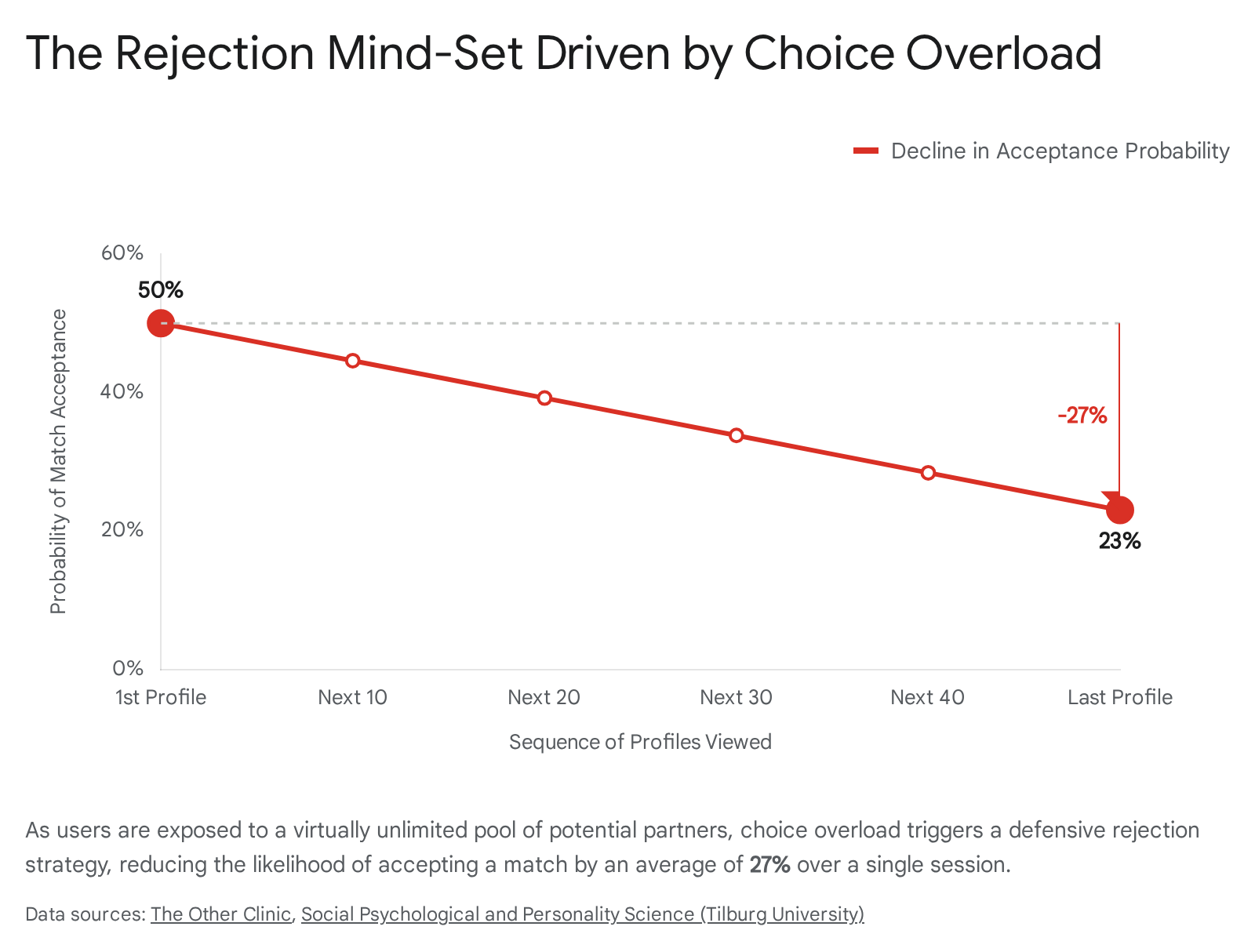
As the swiping session continues, individuals adopt a highly defensive, pessimistic strategy. Overwhelmed by the options and anticipating eventual disappointment, they shift their cognitive focus toward magnifying the perceived flaws in potential matches 13. This hyper-critical approach serves as a protective mechanism against the vulnerability of connection, but it ultimately creates a self-fulfilling prophecy of isolation. The rejection mind-set not only amplifies feelings of dissatisfaction but also leads users to gradually close themselves off from genuine mating opportunities altogether 131617.
What Are the Psychological Impacts of Ghosting, Orbiting, and Breadcrumbing?
The transition to digitally mediated relationships has popularized highly ambiguous forms of relationship dissolution. Behaviors such as ghosting, orbiting, and breadcrumbing represent distinct forms of interpersonal ostracism, each carrying unique and deeply damaging psychological consequences that frequently surpass the pain of explicit, direct rejection 181920.
Ghosting involves the sudden, unilateral cessation of all communication without any prior warning or subsequent explanation 1821. Because it deprives the victim of closure, ghosting prevents the rejected individual from engaging in healthy account-making or cognitive rationalization of the breakup 1820. Research indicates that ghosting inflicts significantly stronger feelings of social exclusion and poses a greater threat to basic psychological needs - including the need for belonging, self-esteem, meaningful existence, and a sense of control - than direct rejection 192022. Victims are left in an agonizing state of uncertainty, often turning inward to blame themselves for the sudden disappearance, which rapidly deteriorates their self-worth and trust in future interpersonal interactions 1823. Studies reveal that almost half of the individuals who experience ghosting report long-term negative impacts on their mental health, including increased symptoms of depression and elevated state paranoia 2123.
Orbiting occurs when an individual ghosts a partner but continues to passively monitor their digital presence by watching stories or occasionally liking posts on social media 181924. This behavior creates a highly toxic environment of intense ambiguity. The victim interprets the residual digital footprint as a sign of lingering romantic interest, wondering if the orbiter intends to return to the relationship 1924. While some initial studies suggest that this mild attention might slightly buffer the immediate shock of total exclusion, the enduring uncertainty ultimately hinders the emotional recovery process, keeping the victim tethered to a phantom relationship 1819.
Breadcrumbing represents an even more manipulative dynamic. It is defined as the act of sending intermittent, flirtatious, or non-committal signals of interest without any genuine intention of pursuing a committed relationship 2425. Grounded heavily in the psychological principle of intermittent reinforcement, breadcrumbing subjects the recipient to a highly addictive cycle of hope and profound disappointment 525. The breadcrumber maintains control and extracts ego-affirming validation while entirely avoiding the vulnerability of intimacy 1924. Consequently, victims of breadcrumbing report significantly higher levels of pervasive loneliness, helplessness, and decreased overall life satisfaction compared to victims of simple ghosting, as the prolonged state of limbo mirrors the psychological dynamics of emotional abuse 192526.
How Long Does It Actually Take to Recover From a Breakup?
When faced with the acute pain of romantic rejection, individuals routinely seek a definitive timeline for their emotional recovery. Pop psychology frequently propagates the myth that recovery takes exactly half the duration of the relationship itself. However, rigorous empirical research paints a much longer, non-linear, and complex picture of post-breakup adaptation.
A comprehensive 2025 longitudinal study encompassing over 300 participants sought to establish a realistic timeline for individuals to fully relinquish their emotional attachment to a former partner. The final results were striking: on average, participants' emotional attachments to their ex-partners were only halfway dissolved after 4.18 years 230. Furthermore, for the typical person, it took up to eight full years for the interpersonal bond to completely and entirely fade away 230.
This extended timeline is fundamentally driven by "emotional imprinting." Love is processed by the brain primarily as a motivational and reward state rather than a simple emotion. Over months and years, a romantic partnership carves deep neural pathways reinforced by routines, shared memories, and the continuous release of bonding neurotransmitters 2. When a breakup occurs, these pathways do not simply vanish. Just as a specific scent or song can instantaneously trigger a vivid memory, minor reminders of an ex-partner awaken these deeply ingrained neural circuits 2. The brain requires substantial, uninterrupted time to structurally disassemble this mental and emotional infrastructure. Therefore, the recovery timeline is not merely about the cessation of sadness; it involves a prolonged existential process wherein the individual must slowly rediscover a clear, confident sense of self that is wholly independent of the former partner 27.
How Do Fixed Personality Beliefs Prolong Recovery?
The duration and severity of post-rejection distress are heavily modulated by an individual's underlying cognitive belief systems regarding their own personality and self-worth. Extensive research conducted at Stanford University demonstrated that romantic rejection poses a tremendous, prolonged threat to the self when individuals hold a "fixed mindset" regarding human personality 27.
Individuals who view their personality traits as static, inherent, and unchangeable tend to interpret romantic rejection as a damning revelation about "who they truly are." To them, a breakup is not a circumstantial mismatch or a failure of compatibility, but absolute, irrefutable proof of a permanent personal deficiency 27. Consequently, individuals with a fixed mindset carry the heavy psychological baggage of rejection far longer, with negative emotional influences persisting and actively sabotaging new relationships for more than five years after the initial event 27. Conversely, those possessing a growth-oriented view of personality process rejection as a painful but isolated historical event. They understand that interpersonal dynamics are fluid and that a single rejection does not define their permanent intrinsic value, allowing for a much faster return to baseline self-esteem and future relational readiness 727.
Is Rebounding After a Breakup Always a Maladaptive Choice?
Traditional counseling, societal norms, and pop culture have long demonized "rebound" relationships, characterizing them universally as maladaptive coping mechanisms designed solely to suppress authentic healing, mask loneliness, or exploit new partners 322834. Modern empirical research, however, firmly challenges this overwhelmingly negative narrative, revealing a more nuanced reality regarding post-breakup dating behavior.
Recent peer-reviewed studies published between 2023 and 2026 reveal that, under the right conditions, entering a new relationship shortly after a significant breakup can actually be highly beneficial for psychological adjustment 322829. A robust study examining over 800 young adults demonstrated that individuals who engaged in a "rebound" relationship exhibited significantly lower psychological distress compared to their peers who chose to remain single 3229.
The primary psychological mechanism responsible for this benefit is the disruption of chronic rumination. Following a breakup, individuals frequently become trapped in a repetitive, obsessive thought loop about their former partner, replaying memories and analyzing mistakes 3229. While rebounding does not magically erase the underlying grief, the novelty, excitement, and cognitive demands of forming a new romantic connection act as a powerful circuit breaker. It interrupts the intrusive thought patterns that keep individuals paralyzed in a state of despair, allowing them to resume healthy day-to-day functioning 3229.
Furthermore, engaging in new relationships provides necessary external validation that counteracts the profound blow to self-esteem inflicted by the previous rejection. Studies confirm that individuals who transition quickly into new relationships report higher self-esteem, possess greater confidence in their own desirability, and are significantly more resolute in their decision to accept the dissolution of the prior relationship 2836. Rebounds have proven particularly effective for individuals possessing anxious attachment styles; transferring the focus of their intense attachment needs to a new, available partner helps sever the unhealthy, lingering psychological tether to the ex-partner 2836.
However, psychological professionals stress the need for calibrated uncertainty regarding rebounds. They are not a universal panacea. If a rebound is initiated purely out of spite - driven by a toxic "winning the breakup" mindset or a desire to incite jealousy - or is used as an emotional crutch to entirely avoid processing the pain of loneliness, it merely masks a psychological void. In such cases, the unprocessed trauma is inevitably transferred to the new relationship, eventually leading to a delayed but severe emotional collapse 34.
What Is the Clinical Difference Between Emotional Processing and Rumination?
A pervasive misconception in the aftermath of a romantic rejection is that any intense, prolonged thought dedicated to the breakup is inherently healing. In reality, clinical psychology draws a strict, critical boundary between productive emotional processing and destructive rumination. Understanding this distinction is vital for applying effective emotional first aid.
Emotional processing is an intentional, constructive, and forward-moving endeavor. It involves purposefully recognizing, validating, and exploring painful emotions to extract lessons, problem-solve, and transition toward acceptance 373839. When an individual is processing a rejection, they approach the memory with curiosity rather than judgment. Even if the emotions encountered are profoundly distressing, the individual leaves the cognitive exercise feeling lighter, gaining clarity, and experiencing a renewed sense of control over their mental direction 3740. It is the psychological equivalent of actively cleaning a wound so it can heal properly.
Rumination, conversely, operates as a dangerous mental trap. It is defined as the passive, repetitive, and obsessive focus on negative emotions and the granular details of the rejection, devoid of any movement toward a solution or psychological growth 394030. Ruminators become stuck in an agonizing mental loop, endlessly replaying past conversations, spiraling into catastrophic "what-ifs," and harshly berating themselves over perceived mistakes 373940. Because rumination explicitly fails to generate new ways of thinking, novel behaviors, or alternative possibilities, it leads to severe emotional exhaustion. It actively reinforces depressive affect, impairs academic and professional performance, and severely prolongs the duration of psychological distress 403042.
To successfully transition a patient from rumination to productive emotional processing, researchers strongly advocate for the "distanced-why" strategy. When individuals attempt to analyze their emotional responses from a "self-immersed" perspective, they inevitably reactivate the hot, overwhelming negative affect associated with the rejection 31. However, when individuals are trained to analyze the why of their emotions from a "self-distanced" perspective - viewing the event objectively, as an observer or a "fly on the wall" - they engage in cool, reflective processing 31. This cognitive distancing allows individuals to reconstrue the experience in abstract terms, extracting vital meaning and closure from the rejection without drowning in the associated physiological distress 31. Interventions such as structured journaling or guided music therapy can facilitate this necessary shift by providing a safe, bounded container for facing emotions without falling into a ruminative spiral 37.
Why Is "Toxic Positivity" Actively Harmful During Grief?
In a desperate attempt to escape the pain of rejection, or pressured by well-meaning peers who are uncomfortable with negative affect, individuals often fall victim to toxic positivity. There is a pervasive societal misconception that projecting relentless optimism accelerates healing. In reality, clinical evidence reveals that toxic positivity acts as an emotional suppressant that exacerbates trauma. It is defined as the relentless insistence on maintaining an upbeat, cheerful facade regardless of the actual emotional reality, forcefully invalidating genuine feelings of sadness, anger, or despair 32334647.
Uttering empty platitudes such as "everything happens for a reason," "just focus on the good," or "stay positive" severely undermines authentic emotional processing 464748. Toxic positivity is highly detrimental because it forces the psychological suppression of natural human grief 334748. Extensive research indicates that emotional suppression leads directly to increased physiological stress, severe anxiety, emotional numbing, and eventual clinical burnout 3246. Furthermore, individuals who are unable to maintain this artificial standard of happiness quickly develop secondary emotions of profound shame and guilt for "failing" to be positive, further damaging their fragile self-esteem 324748. Genuine recovery and resilience require the unconditional validation of all emotions. Individuals must be granted the psychological safety to fully experience their sorrow, anger, and loss; only by moving through the pain can authentic, sustainable optimism naturally emerge 334648.
How Does Attachment Style Dictate Post-Rejection Coping Strategies?
The intensity with which an individual experiences romantic rejection, the threat level it poses to their identity, and the specific coping mechanisms they default to are overwhelmingly dictated by their adult attachment style 345035. Formed through early childhood interactions with primary caregivers, these deeply internalized working models govern how an individual seeks closeness, handles conflict, perceives relational threats, and regulates intense emotions during periods of interpersonal stress 343552.
Because the architecture of the brain's attachment system varies so drastically between individuals, post-rejection recovery strategies must be deployed with calibrated uncertainty. Generic breakup advice is often ineffective because an intervention that soothes one attachment style may deeply trigger and dysregulate another 525354.
Calibrated Resilience for the Anxious Attacher
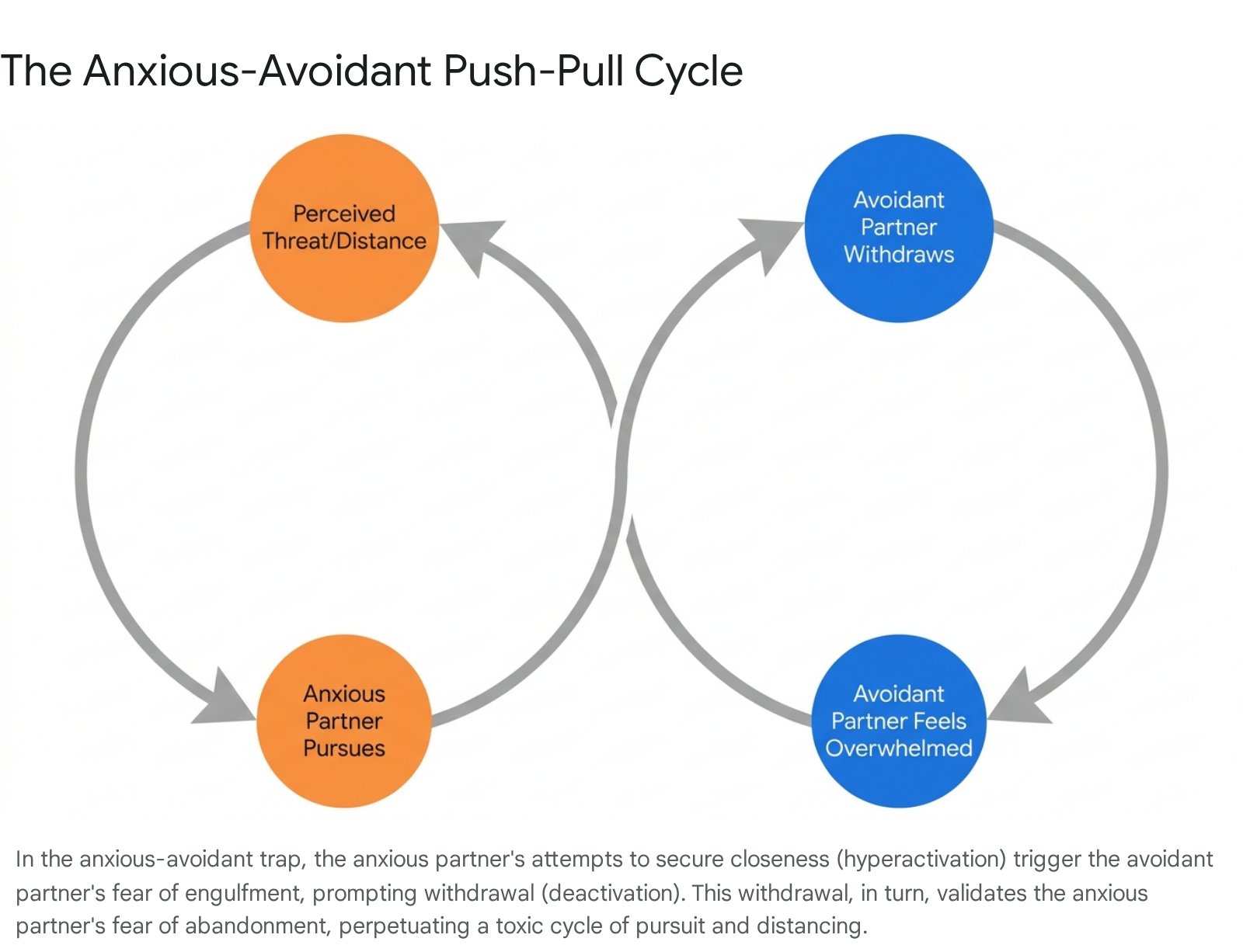
Individuals possessing an anxious-preoccupied attachment style harbor a deep-seated, persistent fear of abandonment, stemming from inconsistent caregiving in their early development. They exhibit a constant hunger for external validation and intense emotional closeness 525355. For the anxious attacher, romantic rejection is not just a disappointment; it is a catastrophic psychological event that seemingly confirms their worst internalized fears of being fundamentally unlovable and unworthy of care 5053.
Upon sensing distance or actual rejection, their attachment system wildly hyperactivates. Driven by evolutionary panic, they deploy "protest behaviors" aimed at forcefully re-establishing the severed connection. These behaviors include obsessive text messaging, seeking excessive and immediate reassurance, pleading, or intensely monitoring the ex-partner's social media activity 525336. Because they rely on their partner to regulate their nervous system, anxious individuals are highly prone to prolonged, devastating rumination, losing their independent sense of identity, and remaining trapped in a cycle of acute physiological distress 3738.
For the anxious attacher, actionable resilience requires aggressive boundary setting. Strict, non-negotiable "no contact" rules are absolutely essential. Any communication, including the breadcrumbing or orbiting behaviors prevalent in digital dating, will continuously hyperactivate their attachment system and reset their healing timeline to zero 2950. Furthermore, because their self-esteem is historically outsourced to romantic partners, therapeutic interventions must focus heavily on building internalized validation. Practices such as somatic self-soothing techniques and cognitive behavioral therapy can help calm their chronically activated nervous systems and rebuild a self-concept that does not rely on external romantic approval 525439.
Calibrated Resilience for the Avoidant Attacher
Individuals with a dismissive-avoidant attachment style value extreme self-reliance and view deep emotional vulnerability as inherently dangerous. Often raised in environments where their emotional needs were neglected or explicitly rejected by caregivers, they have learned to proactively shut down their attachment systems to protect themselves from the pain of disappointment 5052.
When faced with romantic rejection or intense relational conflict, avoidant individuals rapidly deactivate their attachment systems. They deploy sophisticated emotion-focused suppression strategies: intellectualizing the breakup, creating severe physical and emotional distance, and aggressively denying that they are experiencing any distress whatsoever 535536. On the surface, they appear highly resilient, seemingly moving on immediately and functioning perfectly 50. However, this defensive suppression is highly maladaptive because it entirely prevents true emotional processing. The unprocessed grief and rejection trauma remain trapped in the subconscious, frequently manifesting months or years later through psychosomatic symptoms, severe substance abuse, depressive episodes, or a hardened inability to form any future intimate attachments 5460.
For the avoidant attacher, resilience strategies must be implemented with careful, calibrated uncertainty. While an anxious person requires immediate distraction and boundary setting, an avoidant person requires gentle, unforced exposure to their own buried emotions. Recovery involves practicing basic emotional identification and systematically dismantling the deeply held belief that vulnerability equates to weakness or danger 5261. Solitary processing methods, such as journaling, are highly effective initial steps. These methods allow avoidant individuals to confront the pain of rejection privately, free from the perceived threat or pressure of a therapist or friend judging their vulnerability, gradually building their tolerance for emotional openness 5261.
The Secure Baseline and Flexible Goal Adjustment
Securely attached individuals, nurtured through consistent caregiving, possess a strong intrinsic sense of self-worth and a fundamental trust in interpersonal relationships. They exhibit remarkably high relational resilience 343562. Because they do not view rejection as a fatal indictment of their inherent lovability, they are capable of experiencing deep, profound grief without their core identity collapsing 3462.
Following a breakup, secure individuals naturally engage in constructive, relationship-centered coping. They lean heavily on their social support networks without becoming pathologically dependent, and they process their emotions fluidly and authentically 13638. A hallmark of secure attachment recovery is "Flexible Goal Adjustment" (FGA). Secure individuals possess the psychological flexibility to accept the reality of the rejection, pivot away from the lost relationship, and extract positive meaning from the experience. They are adept at absorbing positive life events and utilizing them to restore subjective well-being far more rapidly than their insecurely attached peers, allowing for a swift transition toward personal growth 383940.
Are There Geographically Diverse Dimensions to Rejection and Stigma?
The clinical psychological literature has historically viewed romantic rejection through a distinctly Western, Eurocentric lens, emphasizing the preservation of individual self-esteem, personal boundary setting, and independent coping mechanisms. However, expansive cross-cultural research reveals that the stigma associated with relationship dissolution, the cognitive processing of rejection, and the resulting psychological fallout vary drastically across global populations.
Relational Mobility and Collectivism in Asian Contexts
A primary sociological driver of these cross-cultural differences is the concept of "relational mobility." In highly individualistic Western cultures, relational mobility is relatively high; individuals can seamlessly leave toxic or unfulfilling relationships and forge new social bonds with minimal societal friction. However, in deeply collectivist societies - such as those found across East Asia and the Middle East - relational mobility is extraordinarily low 41. Group memberships, community standing, and extended family ties are highly stable, exclusive, and intricately woven into the individual's life.
In these environments, romantic rejection, a broken engagement, or divorce is not merely an unfortunate individual setback; it is perceived and heavily penalized as a profound social failure. Consequently, individuals in Eastern and Asian cultures exhibit significantly higher baseline levels of "rejection sensitivity" compared to their Western counterparts in the United States or Australia 4142. The psychological fear of ostracism is massively amplified because recovering one's social standing after being rejected from a relationship or a core group is a monumentally difficult, sometimes impossible, task 41. Within Asian contexts characterized by an interdependent self-construal, interpersonal rejection damages not just the personal ego, but fractures the individual's fundamental identity and utility within the broader community matrix, often leading to severe social withdrawal and heightened clinical depression 4142.
Honor, Shame, and Silence in Middle Eastern Cultures
In Middle Eastern and Arab cultures, the psychological weight of relationship dissolution is heavily compounded by rigid patriarchal norms, deep-seated religious expectations, and the overarching societal concept of family honor 4344. The culture's deeply collectivist nature dictates that individual transgressions or visible relationship failures reflect directly and permanently on the entire family's social reputation 4344.
Women in the Middle East face a highly disproportionate burden of this relational stigma. Rejection, divorce, or engaging in non-traditional romantic behaviors are frequently met with real or threatened social isolation. Due to the interdependent nature of the society, this ostracism is psychologically equated to social death 43. This intense, unforgiving cultural environment fosters severe "shame proneness." Rather than seeking professional therapy or engaging in vital emotional processing, individuals are heavily conditioned from childhood to suppress their anger, grief, and emotional distress entirely to preserve the family's public facade. This culturally mandated emotional suppression acts as a direct catalyst for severe depression, unresolved trauma, impaired cognitive functioning, and delayed help-seeking behaviors 434445.
Intersectionality, Cultural Trauma, and the Global South
In Latin America and across the African diaspora, the stigma surrounding romantic rejection cannot be accurately analyzed without untangling it from broader systemic inequalities and historical traumas. Research applying a critical intersectionality framework to Latinx populations reveals that the psychological trauma of relationship dissolution is exponentially magnified when combined with other marginalizing demographic factors, such as severe mental illness or precarious undocumented immigration status 4647. For South American immigrants navigating life without legal status in countries like Chile, romantic and social rejection acts as a devastating trigger. It creates a severe internalized stigma that fully mediates the destruction of their self-esteem 47. The complete lack of a societal safety net or institutional protection turns what would be a standard personal rejection into a literal existential threat to their survival and well-being.
Similarly, within African communities and the broader Black diaspora, individuals grapple continuously with the compounding effects of "cultural trauma" and multi-generational systemic racism 7148. When the acute pain of a romantic rejection intersects with the broader, relentless societal devaluation of Black individuals, it generates a "triple jeopardy" of stigma 7148. Mental health struggles stemming from breakups or relational trauma are often aggressively "silenced" due to intense ideological stigmas deeply embedded within the community itself. This forces individuals into a painful state of "divided identity," where they must expend massive psychological energy hiding their suffering to avoid further ostracism from their own support networks 4873. In these nuanced, high-stakes contexts, standard recovery interventions must move beyond the limitations of individualistic cognitive-behavioral therapy. Effective healing requires culturally competent community engagement, which often involves leveraging trusted faith-based organizations to carefully destigmatize psychological vulnerability and promote communal healing 4873.
Furthermore, contemporary research analyzing interracial couples within the United States highlights that an individual's "Racial-Ethnic Worldview" (REW) strictly dictates how they process relationship stigma and societal rejection. Individuals in interracial relationships who actively acknowledge the reality of institutional racism and possess strong, positive ethnic identities exhibit far greater relationship resilience. They demonstrate superior coping mechanisms when facing societal or familial rejection regarding their relationship compared to individuals who attempt a "color-blind" approach or deny the reality of structural inequality 4950.
What Are the Most Effective, Actionable Resilience Strategies?
Synthesizing the neurobiological data on the pain response, the behavioral reality of dating app fatigue, attachment theory, and cross-cultural considerations provides a clear, evidence-based roadmap for actionable resilience. Healing from romantic rejection demands a deliberate transition away from avoidant and ruminative behaviors toward active, problem-solving, and emotionally honest processing strategies.
The following table categorizes common psychological responses to romantic rejection, distinctly contrasting evidence-based healthy coping mechanisms with their prevalent unhealthy counterparts, organized by their underlying psychological drivers 60:
| Coping Facet | Healthy Coping Mechanisms (Processing) | Common Unhealthy Responses (Rumination & Avoidance) |
|---|---|---|
| Emotion-Focused | Self-Distanced Reflection: Analyzing the emotional fallout of the breakup from an objective, abstract, "fly-on-the-wall" perspective to extract logical meaning without becoming physiologically overwhelmed. | Self-Immersed Rumination: Obsessively replaying the exact details of the rejection and past conversations, leading directly to cognitive exhaustion and prolonged depressive affect. |
| Emotion-Focused | Authentic Vulnerability: Acknowledging and validating genuine feelings of grief, anger, and betrayal in safe environments (e.g., structured journaling, professional therapy, confiding in trusted friends). | Toxic Positivity & Suppression: Forcing a superficial "good vibes only" facade to appease others, leading to emotional numbing, internalized shame, and severely delayed psychological recovery. |
| Problem-Focused | Boundary Setting (No Contact): Severing digital and physical ties entirely to prevent the intermittent reinforcement of false hope and to effectively calm a hyperactivated attachment system. | Orbiting & Breadcrumbing Engagement: Passively monitoring an ex's social media accounts or accepting minimal, non-committal attention, trapping oneself indefinitely in a state of ambiguous, agonizing limbo. |
| Problem-Focused | Active Meaning-Making & Flexible Adjustment: Re-evaluating personal relationship goals, engaging in novel hobbies, utilizing the "distanced-why" technique, and focusing energy on aspects of life within one's direct control. | Retaliation & "Winning" the Breakup: Rushing into maladaptive behaviors or spiteful rebound relationships purely to incite jealousy, manipulate the ex-partner, or artificially prove one's desirability. |
| Avoidant-Focused | Strategic Distraction (Temporary): Engaging in intense physical activity, career development, or healthy social events to provide the brain with necessary, temporary respite from acute, overwhelming grief. | Substance Abuse & Complete Denial: Utilizing alcohol, drugs, or immediate, compulsive dating-app swiping to entirely numb the psychological pain and fundamentally deny the reality of the interpersonal loss. |
Bottom Line
The psychological processing of romantic rejection is an incredibly complex undertaking that intertwines evolutionary neurobiology, early childhood attachment patterns, and the macro-level influences of cultural and systemic stigma. The modern proliferation of digital dating apps has introduced unprecedented levels of choice overload, plunging users into a toxic digital landscape rife with ghosting, breadcrumbing, and chronic dating fatigue that exacerbates rejection sensitivity. To navigate this successfully, individuals must recognize that social pain is neurologically equivalent to physical injury and demands active, patient rehabilitation. By firmly rejecting the societal pressures of toxic positivity, establishing impenetrable digital boundaries, and leaning into self-distanced emotional processing meticulously calibrated to their specific attachment style, individuals can transcend the trauma of rejection. Doing so ultimately fosters deeper self-awareness, psychological flexibility, and the capacity for more secure, resilient future connections.