
How Caffeine Affects Your Body Minute by Minute
Caffeine does not actually provide your body with cellular energy; instead, it temporarily paralyzes your brain's ability to perceive fatigue by blocking adenosine receptors. Within minutes of your first sip, caffeine hijacks your nervous system, elevating your heart rate and sharpening your focus, but the chemical cascade it triggers - and the potent byproducts it leaves behind - can take up to 24 hours to fully clear from your bloodstream. Ultimately, your personal genetic blueprint determines whether that morning coffee makes you highly productive, acutely anxious, or paradoxically sleepy.
Minutes 0 to 15: The First Sip and Rapid Absorption
The biological journey of your morning coffee begins almost the moment the liquid hits your tongue. Unlike many complex nutrients that must be painstakingly broken down in the stomach and intestines, caffeine is an incredibly efficient and aggressive molecule. Absorption begins immediately through the oral mucosa in your mouth and continues rapidly as the liquid moves down the digestive tract.
Caffeine is uniquely suited for rapid physiological infiltration. Structurally, it is a plant alkaloid (1,3,7-trimethylxanthine) that is hydrophilic (water-soluble) enough to distribute freely into your body's intracellular tissue water 1. Simultaneously, it is sufficiently lipophilic (fat-soluble) to pass through biological membranes with near-zero resistance 1.
Crucially, caffeine bypasses the hepatic first-pass effect 1. This means that as it is absorbed from the gut into the general circulation, the liver does not immediately filter or remove it. The plasma concentration curve of oral caffeine ingestion looks almost identical to an intravenous injection 1. Because it ignores the body's standard filtering checkpoints, caffeine crosses the highly selective blood-brain barrier within minutes, initiating its primary pharmacological effects long before you have even finished your mug 2.
Minutes 15 to 45: The Adenosine Hijack and Cardiovascular Peak
By the 15-to-45-minute mark, your body reaches a critical threshold of caffeine saturation. Approximately 99 percent of the ingested caffeine has been absorbed, and plasma concentrations are climbing rapidly toward their peak 12.
It is during this window that you begin to feel the classic "buzz." To understand exactly what is happening in your brain during this time, you must first understand how your body generates actual, biological energy.
Cellular ATP vs. Stimulant "Energy"
A common misconception is that coffee gives you energy. At a biochemical level, caffeine contains zero units of actual cellular fuel 43. Real, sustained cellular energy comes from a molecule called adenosine triphosphate (ATP), which is produced in your mitochondria via complex metabolic pathways including glycolysis, the Krebs cycle, and oxidative phosphorylation 4.
Every time your body performs a function - whether it is your heart beating, your muscles contracting, or your neurons firing to retrieve a memory - your cells spend ATP 44. When ATP is broken down to release energy, it leaves behind metabolic byproducts, specifically adenosine monophosphate (AMP) and free adenosine 45.
As your day progresses and you expend more cellular energy, adenosine continuously accumulates in the fluid surrounding your brain's neurons 35. Your brain is equipped with specialized docking stations known as A1 and A2A adenosine receptors 45. When accumulated adenosine binds to these receptors, it acts as an elegant braking system for your central nervous system, suppressing neural firing and sending a progressive signal to your body that it is time to slow down, rest, and sleep 48.
Caffeine is a chemical impersonator. Its molecular structure is remarkably similar to adenosine 456. When caffeine enters the brain, it acts as an antagonist, seamlessly slipping into the A1 and A2A receptors and physically blocking adenosine from docking 46. Caffeine acts like a piece of tape placed over a blinking "check engine" light. It does not fix the underlying fatigue or replenish your ATP; it simply mutes the chemical messenger telling your brain that you are tired 43.
With the inhibitory, calming effect of adenosine blocked, your brain's alertness circuits run unchecked. This triggers a relative surge in stimulating, excitatory neurotransmitters - including dopamine, norepinephrine, and glutamate - which generates a short-term increase in concentration, motivation, and wakefulness 41078.
The Heart Rate Surge
While your brain is experiencing a surge in excitatory neurotransmitters, your cardiovascular system is also responding in real-time. By blocking adenosine, caffeine stimulates the autonomic nervous system, triggering a mild fight-or-flight response.
Typically within 15 to 30 minutes of consumption, caffeine prompts the adrenal glands to release adrenaline (epinephrine) 91415. This causes your blood vessels to constrict and your resting heart rate to increase. In healthy adults, a standard dose of caffeine can cause the heart rate to rise by 10 to 20 beats per minute, peaking alongside caffeine's plasma concentration 9.
Interestingly, caffeine's effect on the heart is not merely a blunt acceleration. During submaximal exercise, studies show that a moderate dose of caffeine (around 5 mg per kilogram of body weight) significantly increases the parasympathetic modulation of the heart rate, altering heart rate variability (HRV) during both rest and active movement 10. This suggests a complex interplay where caffeine simultaneously stimulates the heart while altering its autonomic regulation.
For the average consumer drinking 3 to 6 cups of coffee daily over a span of weeks or months, meta-analyses demonstrate no statistically significant long-term elevation in resting heart rate, provided the individual is habituated to the dose 11. However, excessive chronic consumption tells a different story. A 2024 study presented at the American College of Cardiology Asia conference evaluated 92 healthy, normotensive participants. The researchers found that individuals consuming more than 400 mg of caffeine daily experienced persistent elevations in heart rate and blood pressure that failed to recover normally even after a 3-minute physical step test and a 5-minute rest period 1213. This suggests that massive, chronic adenosine blockade can put otherwise healthy individuals at a sustained risk for hypertension and cardiovascular stress 1213.
Minutes 45 to 90: Peak Concentration and Paradoxical Effects
For most healthy adults on an empty stomach, caffeine levels in the blood reach their absolute peak between 30 and 60 minutes after ingestion, though consuming coffee alongside a heavy meal can delay this peak up to 90 minutes or more 2014. This window represents the maximum systemic saturation of the drug.
For the majority of the population, this peak is characterized by peak alertness, potential jitteriness, and a noticeable urge to urinate. However, a significant subset of the population experiences an entirely different reality during this window.
The ADHD Paradox: Why Coffee Makes Some People Sleepy
While the standard reaction to peak caffeine is heightened arousal, a distinct group of people experiences a paradoxical reaction: they drink a double espresso and promptly feel calm, heavily sedated, or even ready for a nap within minutes 152324.
This paradoxical sleepiness is incredibly prevalent among individuals with Attention-Deficit/Hyperactivity Disorder (ADHD), and the phenomenon is rooted in the unique neurobiology of the ADHD brain 242526. The ADHD brain typically features dysregulated or lower baseline levels of dopamine - the crucial neurotransmitter responsible for motivation, reward anticipation, and sustained attention 107242527. Because their baseline dopamine is low, ADHD brains are constantly seeking stimulation to reach equilibrium.
In a neurotypical brain, caffeine's stimulation of dopamine pathways pushes the system past baseline into a heightened state of arousal and potential anxiety 24. However, in an ADHD brain, the mild dopaminergic boost provided by caffeine simply elevates dopamine levels closer to a "normal," functional baseline 72425. Rather than overstimulating the brain, this sudden normalization reduces mental hyperactivity, quiets racing thoughts, and satisfies the brain's biological craving for stimulation. The result is a profound sense of relaxation. When the brain finally stops desperately searching for dopamine, the body often interprets this sudden neurological quiet as physical sleepiness 242528.
Beyond dopamine, emerging neurobiological research points to a secondary mechanism involving mast cells and histamine. In the human brain, histamine acts as a powerful wakefulness-promoting neurotransmitter (which is why antihistamine allergy medications cause drowsiness) 29. Mast cells are immune cells that release histamine. Some recent hypotheses and cellular models suggest that caffeine acts as a mast cell stabilizer - specifically acting as an agonist for the Siglec-6 receptor - inhibiting the release of histamine and inflammatory cytokines 29. For individuals with a high baseline of neuroinflammation or a hypersensitive nervous system, caffeine's ability to shut down this histamine "hum" can result in immediate sedation rather than stimulation 2329.
Does Coffee Actually Dehydrate You?
It is typically around the peak concentration mark that coffee drinkers notice an increased need to use the restroom, leading to one of the most enduring nutritional myths: that coffee actively dehydrates you 1430.
This misconception stems from a fundamental misunderstanding of early 20th-century studies that correctly identified caffeine as a mild diuretic 30. Caffeine does, in fact, temporarily increase blood flow to the kidneys and inhibit the reabsorption of sodium, which leads to increased urine output 3031.
However, modern controlled hydration trials have thoroughly debunked the idea that this process leads to meaningful dehydration in normal consumers. The fluid content of the coffee itself - which is roughly 95 percent water - vastly outweighs the mild additional fluid loss triggered by the caffeine 3016.
A landmark 2014 randomized crossover trial published in PLOS ONE directly tested this by having 50 male participants consume either four 200ml servings of coffee or equal amounts of water over three consecutive days. Using highly accurate isotope dilution techniques, the researchers found zero statistically significant differences in total body water, 24-hour urine volume, or hydration biomarkers between the coffee and water groups 303116.
Furthermore, the human body develops a profound tolerance to caffeine's diuretic effects. Within just 3 to 5 days of regular consumption, the kidneys adapt, and the diuretic effect is heavily blunted 3031. Organizations including the European Food Safety Authority and the American College of Sports Medicine have concluded that caffeinated beverages contribute to your daily fluid intake just as effectively as water, and concerns about coffee-induced dehydration are entirely overstated 3116. Interestingly, research also shows that if you consume caffeine right before intense physical activity, the exercise actually suppresses the diuretic effect further 16.
Hours 2 to 6: The Liver's Counterattack and Genetic Speed Limits
Once caffeine reaches its peak, the body must metabolize and excrete it. Because caffeine is readily reabsorbed by the renal tubules in the kidneys, very little of it (less than 5 percent) is excreted unchanged in the urine 133. The responsibility for clearing the drug falls almost entirely on the liver.
In the liver, caffeine is dismantled by the cytochrome P450 oxidase enzyme system, specifically relying on an enzyme called CYP1A2 2234. The average elimination half-life of caffeine in a healthy adult is approximately 5 hours 12. This means that if you consume 200 mg of caffeine at 8:00 AM, you will still have 100 mg actively circulating in your bloodstream by 1:00 PM, and 50 mg remaining by 6:00 PM 201435.
However, this 5-hour figure is merely a statistical average. Real-world half-lives range wildly from 1.5 to 9.5 hours, dictated by a massive array of physiological and environmental variables 133.
Smoking, for example, heavily induces hepatic cytochrome enzymes. In heavy smokers, the CYP1A2 enzyme works in overdrive, clearing caffeine up to 50 percent faster than in non-smokers, requiring them to drink significantly more coffee to maintain the same level of alertness 23317. Conversely, pregnancy substantially suppresses this enzyme. In pregnant women, the half-life of caffeine can be extended by as much as 15 hours, prompting health agencies to recommend a strict upper limit of 200 mg per day to protect the fetus from prolonged exposure 233. Liver disease causes the most dramatic alterations; in patients with severe alcoholic hepatic disease, caffeine's half-life has been recorded stretching to a staggering 60 to 168 hours (up to a full week) 33.
Your Genetic Speed Limit: Fast vs. Slow Metabolizers
While smoking and pregnancy alter the enzyme's behavior temporarily, your baseline metabolic speed is hardcoded into your DNA. The inducibility and speed of your CYP1A2 liver enzyme are largely controlled by a single genetic polymorphism - a variation in the DNA sequence - at position 163 (rs762551) on the CYP1A2 gene 17181920.
This polymorphism divides the human population into distinct metabolic categories based on which alleles they inherited.
| Genotype | Alleles | Metabolic Classification | Physiological and Clinical Implications |
|---|---|---|---|
| Homozygous Wild-Type | AA | Fast Metabolizers | Features high enzyme inducibility. Rapidly clears caffeine from the blood. These individuals can often consume heavy amounts of coffee without severe sleep disruption. In smokers with the AA genotype, enzyme activity is massively accelerated (up to 1.6 times higher than slow metabolizers). 1718194021 |
| Heterozygous | AC | Slow Metabolizers | Features decreased enzyme activity and lower inducibility. Caffeine half-life is extended, leading to prolonged systemic exposure. Prone to jitteriness, anxiety, and sleep disruption if consuming caffeine late in the day. 181921 |
| Homozygous Mutant | CC | Slow Metabolizers | The slowest metabolic rate. Represents the highest risk for caffeine accumulation. Highly susceptible to caffeine-induced side effects and prolonged cardiovascular stress. 181921 |
Being a "slow metabolizer" (AC or CC genotype) carries distinct clinical risks if you consume high amounts of caffeine. Because the caffeine lingers in the bloodstream for hours longer than average, the blockade of adenosine receptors is prolonged, keeping the autonomic nervous system in an extended state of arousal 18192223.
Large-scale cohort studies have demonstrated that heavy coffee consumption (more than 3 cups daily) among individuals with the slow-metabolizing AC or CC genotypes significantly increases the hazard ratios for developing hypertension, impaired fasting glucose, and kidney dysfunctions such as albuminuria and hyperfiltration 18192022. For fast metabolizers (AA), these risks do not manifest at the same consumption levels, and coffee often exerts a neutral or even renally protective physiological effect 19.
The Global Distribution of Caffeine Processing
The genetic lottery of caffeine metabolism is not evenly distributed across the globe. The prevalence of these genotypes differs wildly by regional ancestry, influencing cultural patterns of coffee consumption, tolerance, and susceptibility to caffeine-related cardiovascular risks 172425.
Genome-wide association studies and deep exome sequencing databases (such as the Iranome database) reveal a striking diversity in how different populations process this universal stimulant 2627.
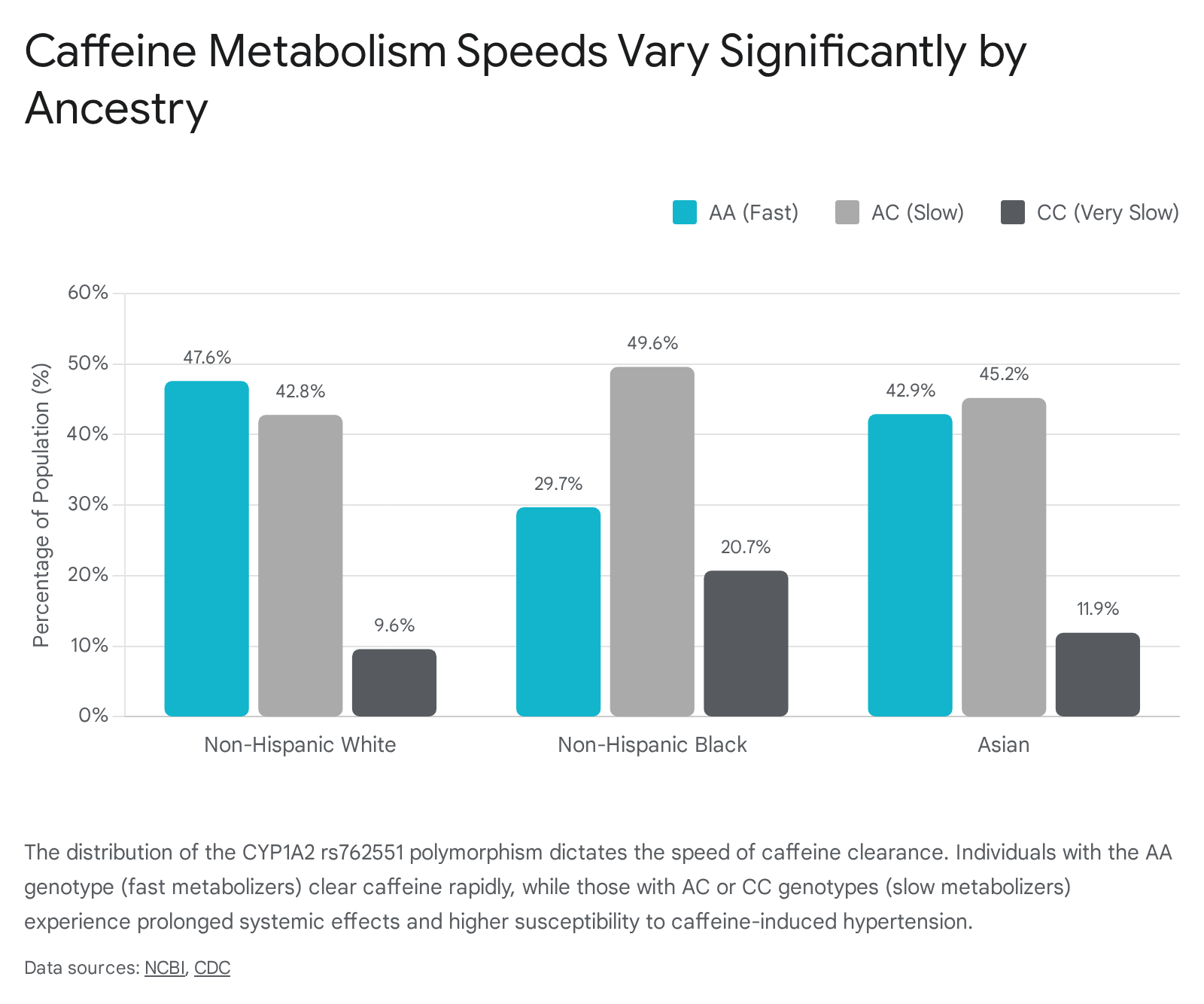
In populations of European descent, the slow-metabolizing C-allele has a frequency of roughly 29 to 33 percent, meaning a large portion of the population possesses the fast AA genotype 17. Conversely, in Asian populations, the C-allele frequency rises to 30 to 39 percent, and it climbs to 40 to 51 percent in populations of African descent, meaning slow metabolizers make up a much larger share of these demographics 17. Data from the Middle East reveals further stratification; among Iranian ethnicities, the Persian Gulf Islander population shows a 50 percent frequency of the fast *1F allele, whereas the Persian population shows an elevated 66.8 percent frequency 27.
Ultimately, these genetic realities indicate that blanket guidelines (e.g., "four cups of coffee a day is safe") fail to account for the massive underlying genetic variation in how humans clear the drug.
Hours 6 to 10: The Afternoon Crash and the Paraxanthine Wave
For many coffee drinkers, the initial burst of productivity gives way to a debilitating mid-afternoon slump. This phenomenon is commonly known as the "caffeine crash," but it is not caused by a drop in blood sugar or a sudden depletion of metabolic fuel. It is the delayed consequence of the adenosine mechanism finally catching up with you.
Remember that while caffeine spends hours successfully blocking the A1 and A2A receptors, your body continues to burn ATP, and adenosine continues to build up in the background 486. The adenosine does not vanish; it pools in the extracellular fluid, waiting. As your liver slowly metabolizes the caffeine and the molecules begin to unbind and fall off the receptors, a massive backlog of accumulated adenosine abruptly floods the now-open docking stations 48625.
This sudden, overwhelming surge of sleep pressure manifests as intense fatigue, brain fog, and irritability. The rebound effect often leaves individuals feeling significantly more tired than they did before their first cup 81528. Furthermore, if you consume caffeine chronically, your brain actively adapts by upregulating (increasing) the total number of adenosine receptors in an attempt to maintain homeostasis 286. This upregulation ensures that the eventual crash is even more severe, driving the user back to the coffee pot to simply achieve baseline normalcy 828.
The Paraxanthine Crossover
However, the caffeine crash does not mean the stimulant is entirely gone. As the liver breaks down parent caffeine, it creates new, highly active compounds.
When the CYP1A2 enzyme strips a methyl group from caffeine, 80 to 84 percent of the drug is converted into a primary metabolite called paraxanthine (1,7-dimethylxanthine) 2234295051. Smaller fractions are converted into theobromine (12 percent) and theophylline (4 percent) 251.
Paraxanthine is a remarkable molecule. It is almost entirely absent from the natural food supply; humans experience it almost exclusively as a byproduct of their own internal metabolism 5051. Yet, paraxanthine is just as potent - and in some biological assays, more potent - than parent caffeine at antagonizing adenosine receptors 1234.
Because caffeine is cleared more quickly from the blood than paraxanthine, a metabolic crossover event occurs late in the day. About 8 to 10 hours after you drink a cup of coffee, the accumulating levels of paraxanthine in your plasma definitively exceed the dwindling levels of caffeine 1234.
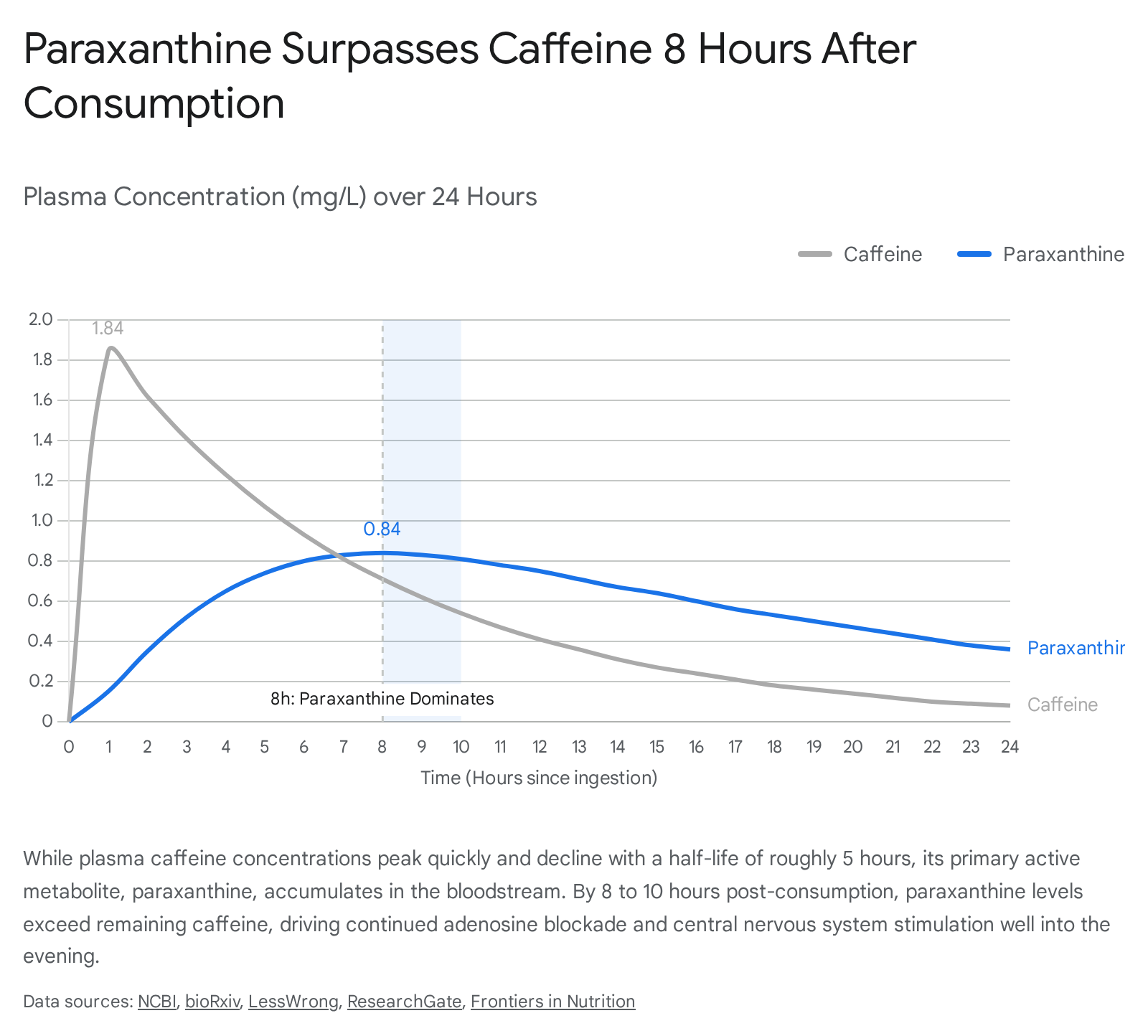
You are no longer primarily under the influence of coffee; you are under the influence of your own metabolite.
Paraxanthine exerts many of the same physiological effects as caffeine, including wake-promotion, psychostimulation, and the release of epinephrine 234. However, it possesses unique properties that distinguish it from its parent compound. Laboratory and animal models indicate that paraxanthine acts as an inhibitor of cGMP-preferring phosphodiesterase-9 (PDE9), leading to increased nitric oxide levels (up to 100 percent over baseline) and superior vasodilation 295030. It is also highly lipolytic, triggering the release of free fatty acids for metabolic fuel more aggressively than caffeine 1295131.
Crucially, paraxanthine appears to offer robust central nervous system stimulation with a lower toxicity profile. Research indicates it is significantly less anxiogenic than caffeine, and it drives stronger dopaminergic locomotor activation without causing the hypothermic (temperature-dropping) adverse effects seen with high doses of parent caffeine 295130. Because of this "cleaner" profile, pure paraxanthine is now being investigated and commercialized as a standalone supplement in the sports nutrition sector 503154.
The Dangers of the "Wide-Awake Drunk"
As the day transitions into evening, the prolonged wakefulness driven by paraxanthine and residual caffeine poses a severe behavioral risk if combined with alcohol.
The Centers for Disease Control and Prevention (CDC) strictly warns against mixing alcohol and caffeine, noting that the combination produces a dangerous psychological state colloquially known as a "wide-awake drunk" 553257. Alcohol is a central nervous system depressant. It impairs motor coordination, slows reaction times, and induces a heavy drowsiness that typically acts as a natural stopping point for a drinker 5833.
However, when caffeine is introduced into the mix, it violently masks the sedative effects of the alcohol 5558. The caffeine makes the drinker feel artificially alert, highly competent, and sober, yet it does absolutely nothing to lower blood alcohol content or restore compromised judgment and motor skills 555834.
This false sense of sobriety leads to highly destructive decision-making. Studies tracking young adults show that individuals who consume alcohol mixed with caffeinated energy drinks are four times more likely to drive while intoxicated, and significantly more likely to engage in binge drinking, sustain alcohol-related injuries, and require emergency medical attention 325733. The FDA has routinely cracked down on manufacturers attempting to pre-mix high doses of caffeine and alcohol (such as the original formulation of Four Loko), explicitly stating the combination poses an unacceptable risk to public safety 5557.
Hours 10 to 24: The Lingering Tail and Sleep Disruption
By the time midnight approaches, you may assume that your 8:00 AM coffee is long gone. While you no longer consciously feel the euphoric rush of dopamine or the jittery peak of adrenaline, the drug is still actively manipulating your neurochemistry.
Trace amounts of caffeine and high concentrations of paraxanthine remain in the systemic circulation well into the night, persistently binding to adenosine receptors and resisting the natural buildup of sleep pressure 346135. The clinical data regarding this lingering tail reveals that even small doses of caffeine consumed too late in the day fundamentally alter the architecture of your sleep.
When caffeine remains active during sleep onset, it profoundly degrades sleep quality by artificially suppressing slow-wave deep sleep (stages N3 and N4) - the vital phases where the brain consolidates memory and clears cellular waste 835. The brain is forced to spend significantly more time in the superficial, un-restorative light sleep phase (stage N1) 35. Furthermore, the lingering adenosine blockade increases sleep onset latency (the time it takes to fall asleep) and drastically increases Wake After Sleep Onset (WASO), resulting in highly fragmented, interrupted sleep patterns 353536.
To quantify exactly how long caffeine damages sleep, chronobiologists and sleep researchers rely on highly controlled clinical trials. A landmark 2024 randomized controlled trial published in the journal SLEEP (Gardiner et al.) tested exactly how different doses of caffeine disrupt rest when consumed 4, 8, and 12 hours before bedtime 353664.
The findings upended the traditional, generalized advice to simply "stop drinking coffee at 2:00 PM." The researchers demonstrated that sleep disruption is fiercely dose-dependent, and heavy consumers require dramatically longer clearance windows to protect their sleep.
Evidence-Based Caffeine Cutoff Guidelines
| Caffeine Dose | Equivalent Beverage | Minimum Recommended Cutoff Before Bedtime | Clinical Impact on Sleep if Ignored |
|---|---|---|---|
| 100 mg | 1 Standard Cup of Coffee | 4 to 6 Hours | Negligible impact on total sleep time if consumed before the cutoff. 3536 |
| 107 mg | 1 Strong Cup of Coffee | 8.8 Hours | Diminishes total sleep time by 45 mins; reduces overall sleep efficiency by 7%. 356437 |
| 200 mg | 2 Cups of Coffee | 6 to 8 Hours | Noticeably increases sleep latency (time to fall asleep); actively reduces restorative deep slow-wave sleep. 3535 |
| 400 mg | 4 Cups / Pre-Workout | 12 to 13.2 Hours | Clinically meaningful increase in sleep latency (>10 mins) and Wake After Sleep Onset (>20 mins). 353664 |
For individuals utilizing heavy caffeine doses (400 mg or more, standard in many pre-workout supplements and large energy drinks), the mathematics of the 5-hour half-life are unforgiving. If a 400 mg dose is consumed at noon, approximately 100 mg of parent caffeine - plus a massive concentration of paraxanthine - is still actively firing in the brain at midnight 35. To avoid clinically significant reductions in sleep time, the researchers concluded that a 400 mg dose must be consumed a staggering 13.2 hours before sleep 3564.
The failure to respect these biological clearance times traps many individuals in a vicious, self-perpetuating cycle. Caffeine severely degrades the quality and duration of their nighttime sleep, leaving them waking up with high baseline adenosine levels and a profound sleep debt 835. To combat this exhaustion, they consume even more caffeine the following day, further upregulating their adenosine receptors and guaranteeing poor sleep the following night 835. Breaking this cycle typically requires a 7-to-14-day abstinence period to allow the brain's adenosine receptor density to normalize back to baseline 8.
Bottom line
Caffeine is a master of biochemical deception; it provides zero actual metabolic energy while seamlessly blocking the brain's fatigue signals and altering heart rate variability within minutes of ingestion. The duration and intensity of these effects are highly individualized, dictated primarily by your genetic CYP1A2 profile, your baseline dopamine levels, and your overall dosage. While moderate consumption does not meaningfully dehydrate you, mistiming your intake guarantees severe sleep disruption, as active compounds - specifically the potent, delayed metabolite paraxanthine - remain in your bloodstream for up to 12 hours. Ultimately, leveraging caffeine effectively requires respecting its long biological half-life and understanding that the fatigue it masks must always be paid back.