
6 Longevity Supplement Claims Lacking Human Evidence
The longevity supplement market in 2026 is defined by a striking paradox: while advanced compounds successfully alter molecular biomarkers in laboratory settings, robust clinical evidence proving they extend functional human healthspan remains overwhelmingly absent. Consumers are currently funding an expensive biological experiment, highlighting the urgent need to prioritize proven lifestyle interventions, await the maturation of global regulatory frameworks, and demand long-term clinical trial data.
What is the Financial Reality of Longevity Supplements Versus Lifestyle Interventions?
The global longevity supplement market is expanding at a highly aggressive pace, having been valued at $28.6 billion in 2025 and projected to reach $62.4 billion by 2034, expanding at a compound annual growth rate (CAGR) of 9.0% 1. The influx of capital is staggering, with longevity startup investments reaching $8.49 billion across 331 deals in 2024 alone 2. However, the extraordinary financial burden this industry places on consumers requires careful evaluation against the historically proven return on investment (ROI) of traditional, lifestyle-based preventive health interventions.
In 2026, a comprehensive "longevity stack" - often comprising nicotinamide adenine dinucleotide (NAD+) precursors, senolytics, and metabolic regulators - commands average retail prices of $65 to $180 per month's supply, significantly above the general supplement industry average of approximately $28 1. A consumer adopting the "Balanced Optimiser" protocol faces an annual cost of roughly £2,600, culminating in a 10-year expenditure of £26,000 3. Those adopting the "Heavy Stacker" approach, which involves multiple individual supplements, experimental nootropics, and continuous biological age testing, can easily incur a 10-year cost exceeding £40,000 3. At the absolute premium end of the market, exclusive longevity clinics charge up to $21,500 per year for membership access to advanced diagnostics and unproven therapeutic stacks 2.
By contrast, foundational lifestyle investments yield a demonstrably higher and scientifically validated clinical return. A purely lifestyle-focused approach - incorporating physical training or a gym membership (£200 - £720/year) alongside optimized nutritional quality (an extra £400 - £1,200/year) - addresses the complex, interconnected factors that govern overall cardiovascular health, muscle preservation, and long-term independence 3. Economic models from progressive longevity medical practices in 2026 indicate that every dollar invested in established disease prevention and health promotion yields a $4.40 return in reduced healthcare costs and improved workforce productivity 4. While dietary supplements may transiently alter targeted biomarkers in a vacuum, lifestyle interventions systematically improve functional capacity, cognitive performance, and quality of life in later years, compressing the period of morbidity rather than merely extending biological existence 5.
Why Do We Fall for the Animal-to-Human Translation Trap?
The foundational misconception driving the rampant commercialization of longevity supplements is the assumption that lifespan extension observed in model organisms will seamlessly translate to human biology. For decades, theories of aging and experimental anti-aging compounds have relied heavily on data derived from mice, worms ( C. elegans ), and yeast 67. While these organisms are invaluable for decoding fundamental cellular pathways, they possess vastly different metabolic rates, environmental exposures, and evolutionary lifespans compared to humans 6.
In model organisms, genetic or pharmacological interventions can often yield dramatic double-digit percentage increases in lifespan 8. However, the biology of a laboratory mouse, which typically lives for two to three years in a highly controlled, sterile environment, does not accurately model the decades of cumulative molecular damage, complex immune system shifts, and chronic environmental exposures experienced by an 80-year-old human 61. Promising compounds that effectively extend life in preclinical models - such as resveratrol or various experimental senolytics - have consistently struggled to demonstrate safe, reproducible, and significant anti-aging effects in complex human clinical trials 610. Currently, 23 senolytic compounds are in various stages of development, yet the vast majority have failed to advance past Phase 2 clinical trials due to efficacy or safety hurdles in human subjects 2.
How Do Complex Aging Mechanisms Work in Everyday Terms?
To understand why human translation is so complex and why single-molecule supplements often fail, it is necessary to demystify the cellular mechanisms targeted by the longevity industry. In 2013, researchers identified the primary "hallmarks of aging," which have since been updated to encompass 12 distinct, interconnected categories of root-cause molecular damage, including genomic instability, deregulated nutrient sensing, disabled macroautophagy, and altered intercellular communication 1121314.
The concept of Telomere Attrition is a central pillar of aging biology. Human DNA is packaged into chromosomes, the ends of which are protected by repetitive DNA sequences called telomeres. These structures can be perfectly compared to the plastic tips - or aglets - at the ends of shoelaces 1113. Just as an aglet prevents a shoelace from fraying, telomeres prevent vital genetic information from being lost or corrupted during cell division 1113. With every cellular replication over a human's lifetime, these telomeres shorten. Once they become critically short, the cell enters a state of crisis, leading to genomic instability, disabled tissue regeneration, and systemic dysfunction 11153.
When cells accumulate excessive DNA damage or experience critical telomere shortening, they do not always undergo apoptosis (programmed cell death). Instead, they frequently enter a state of Cellular Senescence, permanently halting division 11134. These senescent cells are commonly referred to as "zombie cells." To understand this mechanism, one can use the real-world analogy of a mismanaged municipal garbage collection system undergoing a catastrophic breakdown 7. Normally, healthy cells act like responsible citizens, sorting their cellular waste - such as misfolded proteins - and disposing of it efficiently. However, if the internal waste collection system breaks down, the trash accumulates and causes problems for the entire neighborhood 7. Senescent cells not only cease to function correctly, but they actively sabotage their environment by secreting a toxic mixture of pro-inflammatory molecules and tissue-degrading enzymes known as the Senescence-Associated Secretory Phenotype (SASP) 134. This toxic "trash" infects neighboring healthy cells, spreading senescence locally and accelerating systemic aging, chronic inflammation, and organ failure 713.
Furthermore, Genomic Instability occurs when the fundamental instruction manual of the cell (DNA) accumulates corrupted pages. Our DNA is constantly challenged by external insults like ultraviolet radiation and internal replication errors 13. When repair enzymes fail to fix these "typos," the cellular system collapses into chaos, leaving the body vulnerable to oncogenesis and metabolic decay 1113. Similarly, Mitochondrial Dysfunction represents a failure of the cell's microscopic power plants 1. As we age, these power plants become highly inefficient, producing excessive reactive oxygen species (ROS) - cellular exhaust that further damages the surrounding biological machinery and limits the energy available for cellular repair 115.
What is the "Biomarker Illusion" in Longevity Science?
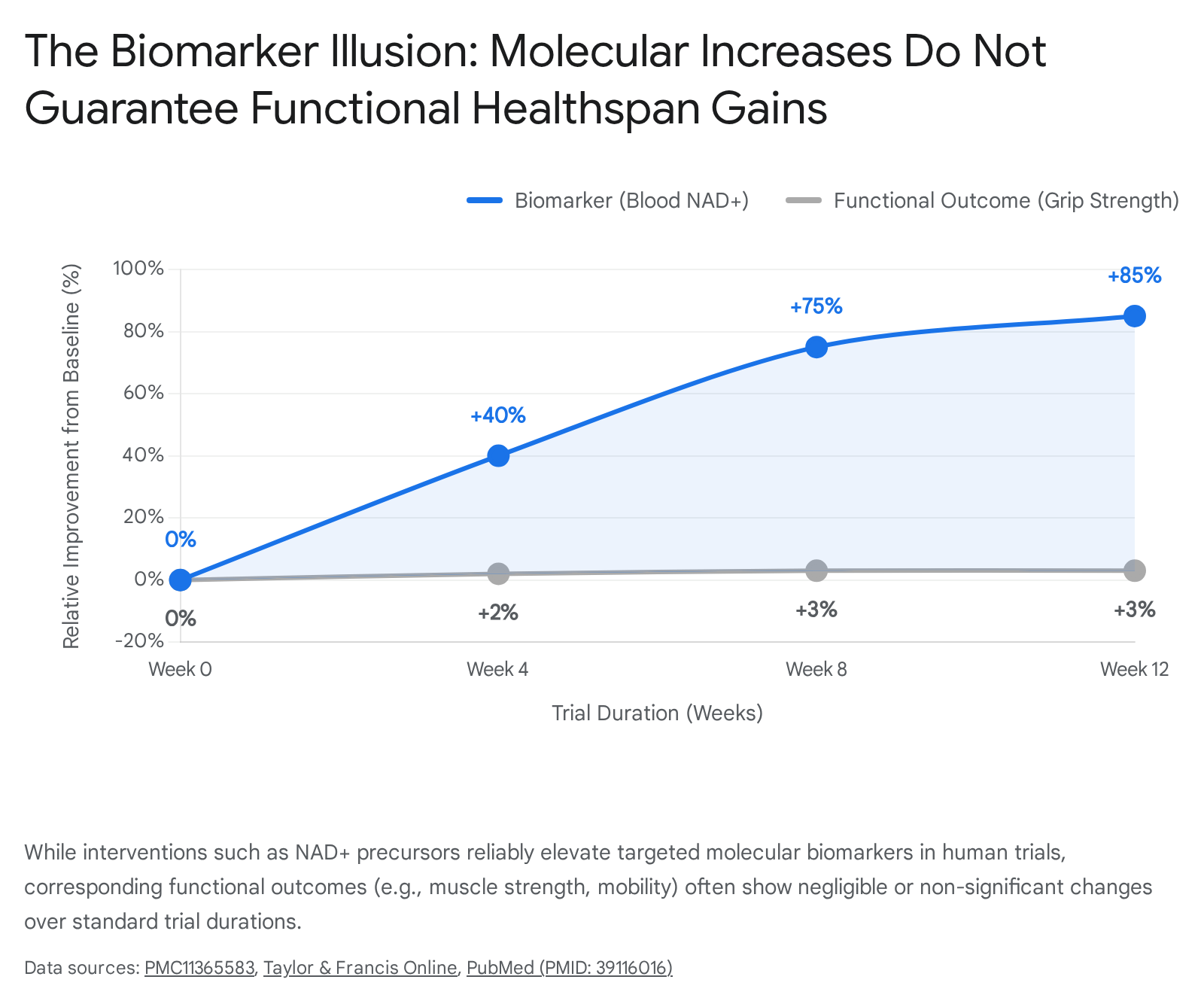
The discrepancy between altering molecular pathways and extending actual human healthspan introduces a critical issue dominating the 2026 longevity discourse: the reliance on intermediate biomarkers over functional outcomes. As regulatory bodies and clinicians attempt to track the efficacy of anti-aging interventions, they face a stark reality - there is an absolute lack of universally agreed-upon aging biomarkers that reliably predict long-term functional healthspan 56.
The industry has heavily adopted molecular aging clocks, particularly epigenetic DNA methylation clocks such as DunedinPACE and PhenoAge, to estimate "biological age" and track the pace of aging 417. While these sophisticated tools offer superior sensitivity to physiological shifts compared to chronological age, they do not consistently or perfectly correlate with physical reality in clinical trials 46. A molecular clock might suggest a patient's biological age has reversed by three years following a supplement protocol, but this invisible molecular shift does not guarantee that the individual will maintain the ability to climb stairs, avoid neurodegeneration, or live independently in their final decades 565.
Consequently, independent researchers and geroscience experts emphasize that simple physiological biomarkers - such as cardiorespiratory fitness (VO2 max), grip strength, muscle mass, and gait speed - remain the most robust, measurable, and consistent predictors of disease risk, frailty, and all-cause mortality 621. If a longevity supplement significantly improves an epigenetic methylation score or elevates blood NAD+ levels, but yields absolutely no measurable increase in physical endurance, insulin sensitivity, or cognitive performance, its true therapeutic value for extending human healthspan remains highly questionable 567.
Which 6 Popular Longevity Supplements Lack Strong Human Evidence?
Despite the compelling biological mechanisms outlined above, the clinical translation of specific supplements remains highly problematic. In 2026, several of the most heavily marketed and culturally pervasive longevity compounds suffer from a profound lack of rigorous human evidence.
1. Is NMN the ultimate cellular battery charger or just a biomarker manipulator?
Nicotinamide Mononucleotide (NMN) is a direct, orally bioavailable precursor to NAD+, a critical coenzyme involved in cellular energy production, mitochondrial health, and the activation of sirtuins - proteins responsible for repairing DNA and maintaining genomic stability 11228. As humans age, endogenous NAD+ levels naturally decline, leaving DNA damage unrepaired, accelerating telomere attrition, and stalling mitochondrial function 1124.
Preclinical animal studies consistently demonstrate that NMN supplementation successfully restores NAD+ levels, counters cardiovascular disease markers, improves walking endurance in mice, and delays cellular senescence 32425. In human populations, multiple randomized controlled trials (RCTs) confirm that oral NMN safely and reliably elevates blood NAD+ levels by 40% to 90%, operating effectively as a molecular booster 82627. The first phase I human clinical study of NMN (UMIN000021309) conducted by Keio University and Washington University established its safety profile in healthy adults 929.
However, the critical, unresolved issue is whether this reliable biomarker elevation translates to functional healthspan improvements. A comprehensive 2024 systematic review and meta-analysis of 12 robust clinical studies involving 513 participants found that while NMN significantly elevated blood NAD+, the vast majority of clinically relevant metabolic outcomes - including fasting glucose, triglycerides, total cholesterol, low-density lipoprotein cholesterol (LDL-C), and high-density lipoprotein cholesterol (HDL-C) - were completely unaffected, showing no significant difference between the NMN intervention and placebo control groups 1011. Similarly, while isolated, smaller trials noted minor improvements in walking endurance or specific aspects of insulin sensitivity in prediabetic women, broader meta-analyses of physical performance parameters (such as grip strength and skeletal mass index) demonstrated non-significant improvements 18. Ultimately, NMN is a scientifically proven biomarker booster, but the clinical verdict on its ability to systematically reverse functional metabolic or physical aging in healthy humans remains unproven and deeply exaggerated 101011.
2. Does Resveratrol actually mimic caloric restriction in humans?
Resveratrol, a polyphenol naturally found in red wine and certain berries, gained massive cultural and scientific popularity due to its proposed ability to activate sirtuin longevity pathways, theoretically mimicking the highly protective biological effects of caloric restriction 223212. While it exhibits undeniably compelling biology in yeast, worms, and murine models - frequently extending their lifespans - its human clinical record has been overwhelmingly disappointing 10.
Resveratrol suffers from severe pharmacokinetic limitations, specifically exceptionally poor oral bioavailability; extensive first-pass metabolism in the liver means that less than 1% of the ingested compound actually reaches systemic circulation in its active form 27. Large-scale human RCTs utilizing standard supplement doses (250 to 1,000 mg) have repeatedly produced inconsistent or entirely negative results 1027. The high-profile REFRAME clinical trial found absolutely no significant cardiovascular or metabolic benefits in older adults 10. Even more concerning, an analysis of the DIRECT trial revealed that high-dose resveratrol actually blunted the natural cardiovascular benefits of exercise in older men 10. The failure of resveratrol serves as a textbook example in the longevity industry of how mechanisms that operate flawlessly in model organisms frequently fail to navigate the extreme complexities of human biology 10.
3. Can Quercetin effectively clear out "zombie" cells?
Quercetin is a naturally occurring flavonoid categorized as a senolytic - a compound theoretically capable of selectively inducing apoptosis in senescent "zombie" cells that refuse to die naturally 1332. In theory, effectively clearing these cells from human tissue should drastically reduce the secretion of toxic SASP factors, lowering systemic inflammation and preventing the progressive scarring of vital organs 134.
While in vitro data and mouse models strongly support Quercetin's senolytic capabilities - most notably when paired with the chemotherapy drug dasatinib (the "D+Q" protocol) to reduce inflammation in lung and kidney models - human evidence for Quercetin as a standalone, over-the-counter longevity supplement is exceptionally weak 1013. Current marketing claims regarding its ability to reverse biological aging rely almost entirely on preclinical models. In reality, Quercetin requires highly specialized, high-bioavailability formulations to achieve the plasma concentrations necessary to trigger any meaningful senolytic activity in human tissue, making standard oral supplements largely ineffective for longevity purposes 10.
4. Will Fisetin reverse tissue aging as seen in mice?
Fisetin, another dietary flavonoid similar to Quercetin, operates on a similar theoretical premise. It has demonstrated potent senolytic properties in murine models, effectively reducing the burden of senescent cells, lowering inflammation, and measurably extending lifespan in mice 32. The scientific community has shown intense interest in Fisetin due to these spectacular animal results, leading to multiple ongoing clinical trials across the globe, including the STOP-Sepsis trial, studies on multimorbidity (NCT06342791), and the TROPHY trial for breast cancer survivors 34.
However, as of 2026, the results of these critical human trials remain unpublished or locked in preliminary phases 34. The diversity of the patient populations currently being studied reflects the immense theoretical potential of the compound, but no Fisetin supplement is currently established as effective for reversing tissue aging, improving healthspan, or acting as a proven senolytic in healthy human adults outside of a controlled trial setting 3235.
5. Is Spermidine the key to triggering cellular cleanup (autophagy)?
Spermidine is a naturally occurring polyamine compound originally isolated from human semen and found in foods like wheat germ and soybeans 12. It is highly regarded for its ability to induce macroautophagy - the vital cellular process of digesting, clearing, and recycling damaged organelles and misfolded proteins 1112. Because a loss of proteostasis (protein balance) is a primary hallmark of aging linked to neurodegenerative diseases, autophagy inducers are highly desirable targets for longevity science 11.
While extensive epidemiological and population studies indicate that higher dietary spermidine intake correlates with a potential increase in human lifespan and cardiovascular protection, human clinical trials testing isolated spermidine supplements are remarkably scarce 1036. The compound has an intriguing mechanism of action and isolated positive RCTs regarding minor cognitive parameters, but it currently lacks the robust, multi-center, long-term human outcome data required to substantiate the definitive anti-aging and life-extension claims frequently printed on its packaging 10.
6. Does Urolithin A truly rejuvenate mitochondria to prevent frailty?
Urolithin A is not technically found in food; rather, it is a postbiotic metabolite generated by the human gut microbiome from ellagitannins found in foods like pomegranates and berries 12. It is marketed heavily as a potent "mitophagy inducer," theoretically facilitating the identification and recycling of dysfunctional, ROS-leaking mitochondria, thereby restoring cellular energy and muscle resilience 12.
Recent data from a 2025 clinical trial showed that in healthy older adults, 1,000 mg/day of Urolithin A supplementation over four months significantly lowered plasma ceramides, which are lipid biomarkers strongly associated with an elevated risk of cardiovascular disease 37. While this data strongly suggests Urolithin A can improve mitochondrial quality control and potentially reduce age-related heart disease risks, its efficacy still relies heavily on intermediate lipid biomarkers rather than clinical endpoints 3713. Direct, irrefutable evidence linking oral Urolithin A supplementation to extended human lifespan, enhanced functional mobility, or a dramatic reduction in all-cause frailty over decades has not yet been established in human populations 3713.
Quick-Reference Summary: The Evidence Gap
| Supplement | Animal Evidence | Human Evidence | The Current 2026 Verdict |
|---|---|---|---|
| NMN | Strong (Improves energy metabolism, physical endurance, and DNA repair) 2224 | Moderate (Reliably elevates blood NAD+ levels; fails to alter standard lipid/metabolic markers) 1011 | Proven biomarker booster, but functional clinical healthspan claims are highly exaggerated 1011. |
| Resveratrol | Strong (Activates Sirtuin pathways, mimics caloric restriction, extends lifespan) 32 | Weak (Failed major RCTs, extraordinarily poor oral bioavailability) 1027 | Not recommended; mechanisms observed in model organisms do not translate to complex human biology 10. |
| Quercetin | Strong (Functions as a potent senolytic, clears "zombie" cells) 1013 | Weak (Limited standalone efficacy data in healthy humans; requires Dasatinib for heavy impact) 1035 | Promising theoretical mechanism, but lacks definitive human outcome data for over-the-counter use 1032. |
| Fisetin | Strong (Reduces senescent burden, extends lifespan in mice) 32 | Pending (Multiple human clinical trials are currently ongoing, results remain unpublished) 34 | Highly experimental; consumers must wait for published, peer-reviewed clinical trial results 3435. |
| Spermidine | Strong (Induces cellular autophagy, clears damaged proteins) 12 | Weak to Moderate (Positive epidemiological dietary data, but very few controlled RCTs) 1036 | Intriguing biological target, but requires large-scale human efficacy trials to prove supplementation value 10. |
| Urolithin A | Strong (Induces mitophagy, restores mitochondrial function) 12 | Moderate (Measurably reduces lipid biomarkers like ceramides linked to cardiovascular disease) 37 | High potential for mitochondrial health, but definitive long-term human frailty data is still missing 3713. |
What Are the Latest Results from Major Human Longevity Trials?
Recognizing the dire need to move beyond animal models and proxy biomarkers, the scientific community has initiated large-scale clinical trials testing off-label pharmaceuticals to definitively prove that human aging can be modulated. Two landmark trials are actively shaping the longevity landscape in 2026.
The TAME Trial (Targeting Aging with Metformin): Metformin is an FDA-approved drug used safely for over 60 years to treat type 2 diabetes, known to influence fundamental aging pathways by acting as a brake on the mTOR (mechanistic target of rapamycin) pathway and activating AMPK, thereby reducing systemic oxidative stress and cellular overgrowth 1440. The Targeting Aging with Metformin (TAME) trial is the first large-scale, placebo-controlled study specifically testing a drug for healthy aging in non-diabetic older adults 34. Orchestrated across 14 leading U.S. research institutions and engaging over 3,000 individuals aged 65-79, the trial seeks to establish a causal link between metformin and delayed aging 1441.
Crucially, TAME aims to achieve a regulatory paradigm shift by earning an FDA "indication" for aging, allowing aging itself to be treated as a medical condition rather than merely managing its downstream diseases independently 1441. While preliminary 2026 data from associated longitudinal cohorts suggests metformin may significantly reduce the long-term risk of cardiovascular disease, cognitive decline, and aggressive cancers by improving mitochondrial quality control, definitive results from the official TAME trial are not expected until 2028 - 2030 3440. Furthermore, the trial has historically struggled with securing complete funding, as the generic nature of metformin offers little financial incentive for major pharmaceutical backing 4142.
The PEARL Trial (Participatory Evaluation of Aging with Rapamycin for Longevity): Rapamycin, an FDA-approved immunosuppressant used to prevent organ rejection, has gained massive notoriety for its potent anti-aging properties in preclinical models, operating similarly to metformin by inhibiting the nutrient-sensing mTOR pathway 8. The PEARL trial represents the longest decentralized, double-blinded, randomized, placebo-controlled clinical evaluation of low-dose, intermittent rapamycin in a healthy, normative-aging human cohort 15.
Concluding with 114 participants over a 48-week period, the trial evaluated doses of 5 mg and 10 mg weekly 15. The results indicated that low-dose rapamycin administration was relatively safe in healthy adults, with the 5 mg cohort demonstrating statistically significant improvements in self-reported emotional well-being and general health 15. However, the researchers noted a critical complication during the trial: the compounded rapamycin utilized for placebo generation considerations suffered from reduced bioavailability relative to commercial formulations, potentially muting the full clinical impact of the intervention 15. Despite its promise, the FDA does not consider aging a disease, and the likelihood of rapamycin ever achieving official approval for anti-aging purposes remains incredibly low due to its generic status 8.
In tandem with these trials, the National Institute on Aging (NIA) continues to shape the future of geroscience. As they finalize their Strategic Directions for Research spanning 2026-2030, the NIA is heavily prioritizing clinical standardization 3716. With global populations aged 65 and older projected to reach 1.6 billion in the coming decades, the NIA is shifting focus away from splintered, preclinical proof-of-concept experiments and toward focused, large-scale clinical evaluations equipped with advanced data science and precision medicine to track true biological resilience 3716.
How Do Global Regulatory Bodies View Anti-Aging Claims in 2026?
In response to the $62.4 billion market projection and the dangerous proliferation of unsubstantiated health claims, regulatory bodies across the globe have drastically updated their frameworks between 2024 and 2026. The geopolitical approach to longevity supplements varies wildly, ranging from strict prohibition and novel food paradigms to highly progressive, functional categorizations.
United States: FDA Reversals and FTC Crackdowns
The U.S. regulatory environment for longevity supplements has experienced significant turbulence. NMN existed in a precarious regulatory gray area until November 2022, when the Food and Drug Administration (FDA) officially excluded it from the definition of a dietary supplement under the drug preclusion clause of the Dietary Supplement Health and Education Act (DSHEA), citing its ongoing investigation as a pharmaceutical drug 4546. Following extensive industry pushback, lawsuits, and a citizen petition from the Natural Products Association, the FDA executed a complete reversal in September 2025 46. The agency legally restored NMN's status as a New Dietary Ingredient (NDI), allowing it to return to major retail shelves unhindered 46.
Simultaneously, the Federal Trade Commission (FTC) has severely intensified its crackdowns on the deceptive marketing of anti-aging products. Under the FTC Act, the commission actively targets clinics and marketers making unsubstantiated claims regarding disease prevention, extreme age reversal, or stem cell regeneration without competent and reliable human scientific evidence 47. Companies misrepresenting their speculative longevity supplements as "clinically proven" based solely on preclinical mouse data face immense regulatory penalties 47.
Europe: Strict Novel Food Paradigms (EFSA)
The European Food Safety Authority (EFSA) maintains a highly stringent, conservative regulatory posture. EFSA explicitly does not recognize aging as a disease and has consequently found the scientific evidence insufficient to authorize specific Article 13 or 14 health claims regarding anti-aging, immune system support, or cellular repair for highly sought-after longevity compounds 1217. Resveratrol, for instance, has zero approved functional health claims regarding longevity or cardiovascular health; furthermore, due to its potential to interact with prescription medicines, EU labels must bear explicit warnings that consumers should only consume the product under medical supervision 12.
Furthermore, Europe enforces incredibly strict Novel Food authorizations. While naturally occurring compounds like Spermidine and L-ergothioneine have managed to navigate extensive safety evaluations to gain Novel Food status, NMN remains completely unapproved as a Novel Food 1246. Therefore, the sale of NMN as a dietary supplement within the EU is technically unauthorized, creating a stark regulatory and distribution divide with the United States 1246. To streamline its notoriously slow operations, EFSA introduced major procedural updates for late 2025 and early 2026, establishing strict deadline monitoring systems and limiting deadline extensions to a maximum of two per application for companies seeking ingredient authorizations 49.
Asia: Divergent Pathways in China, Japan, and Singapore
The Asia-Pacific region demonstrates the fastest regional market growth globally (11.3% CAGR expected by 2034) but presents a deeply fragmented and complex regulatory landscape 1.
China (SAMR & NMPA): The State Administration for Market Regulation (SAMR) maintains authoritarian control over both ingredient classifications and consumer marketing. While SAMR introduced progressive regulations on January 1, 2026, officially adding the new health function claim to "help maintain bone and joint health" - a direct regulatory nod to the demands of an aging population - it simultaneously requires products making these claims to undergo rigorous human consumption trials unless explicitly exempted 185152. Conversely, SAMR strictly prohibits NMN from being used as a general food ingredient, blocking domestic retail distribution 4546. Furthermore, in late 2025, SAMR launched an aggressive, targeted crackdown on the false advertising of health products aimed at the elderly, heavily penalizing "private domain" (WeChat) marketing, telemarketing scams, and livestreaming influencers who exploit longevity trends with exaggerated promises 19. Meanwhile, the National Medical Products Administration (NMPA) enacted new Implementation Measures in May 2026 to formalize a rigorous six-year protection regime for clinical study data submitted in marketing authorizations for true, innovative anti-aging drugs 5455.
Japan (MHLW & CAA): Japan possesses the most accommodating and lucrative framework for longevity ingredients globally. The Ministry of Health, Labor and Welfare (MHLW) classifies NMN officially as a non-drug food ingredient, and the Consumer Affairs Agency (CAA) allows its sale under the Foods with Function Claims (FFC) system 4556. Between 2023 and 2025, an impressive 13 different NMN products successfully registered as FFCs, legally permitted to claim that they support "skin hydration" and "maintain walking ability" in middle-aged adults based on localized studies 56. Expanding this flexibility, the CAA updated its rules on October 1, 2025, allowing "negative claims" (such as "no sugar added") on FFC packaging, provided they do not misleadingly emphasize unnotified functional ingredients 5758. However, following severe safety concerns and health hazard cases in the broader supplement market (e.g., the "beni koji" red yeast rice incident), the Japanese government amended the Food Labeling Standards to strictly enforce comprehensive Good Manufacturing Practice (GMP) compliance, mandating self-inspections and reporting requirements effective April 2025 59.
Singapore (HSA): Observing the rapid, post-COVID influx of longevity products, Singapore's Health Sciences Authority (HSA) has initiated a comprehensive modernization review of its complementary health product regulations, slated for finalization by mid-2028 620. Currently, longevity products like NMN are managed with a light-touch, risk-proportionate approach as general health supplements 6. However, in keynote speeches delivered in February and May of 2026, HSA Chief Executive Dr. Raymond Chua explicitly stated that these supplements absolutely cannot claim to prevent or cure diseases, warning that the inclusion of any Western medicinal products would render them adulterated 562021. Recognizing that the longevity space presents unique complexities, the HSA is actively calling for urgent collaboration between the industry and academia to establish universally agreed aging biomarkers and robust clinical governance frameworks before implementing stricter regulatory guardrails 56.
Should Consumers Wait for More Data? (Practical Takeaways)
The rapid commercialization and aggressive marketing of longevity science have far outpaced the execution of rigorous, long-term human clinical trials. Interventions such as the TAME trial are desperately attempting to provide proof-of-concept that human aging can be treated systemically, but definitive results will not materialize until the end of the decade 34.
For consumers in 2026 seeking evidence-based interventions, the practical takeaway is to exercise profound skepticism toward expensive, unproven "longevity stacks" claiming to reverse biological age or clear cellular senescence. New and trending compounds offer undeniably compelling mechanistic science and flawless theoretical pathways, but they lack the long-term human outcome data necessary to justify their exorbitant financial cost and potential unknown risks 273513.
Instead of experimenting with speculative senolytics, individuals should redirect their focus and finances toward "Tier 1" foundational interventions 27. The most robust human trial data continues to unequivocally support basic, well-understood nutrients. Vitamin D supplementation is statistically associated with modestly reduced all-cause mortality across a meta-analysis of 80 RCTs 35. Omega-3 fatty acids consistently demonstrate reduced cardiovascular mortality across 38 RCTs involving nearly 150,000 participants 35. Finally, Creatine - the most extensively studied sports supplement in history - showcases massive clinical utility in the preservation of lean muscle mass during aging, directly mitigating sarcopenia, which remains one of the strongest predictors of all-cause mortality and loss of independence in older adults 27.
Bottom Line
The 2026 longevity supplement market is heavily saturated with premium-priced products that excel in extending the lifespans of model organisms but repeatedly fail to produce measurable, functional healthspan outcomes in human beings. While highly marketed compounds like NMN effectively alter intermediate molecular biomarkers, and senolytics like Quercetin present fascinating theoretical mechanisms for clearing cellular waste, neither category currently possesses the definitive, long-term human clinical data required to substantiate their bold claims of age reversal. Rather than participating in an expensive, unregulated biological experiment, consumers are far better served by investing in evidence-based lifestyle interventions - such as resistance training and optimized nutrition - and waiting for the results of rigorous human trials and evolving global regulatory frameworks to finally separate true geroscience from profitable commercial hype.