
What Your Resting Heart Rate Says About Your Fitness
Your resting heart rate is a highly personalized biometric that reflects your cardiovascular efficiency, autonomic nervous system balance, and overall physical conditioning. While clinical guidelines have long defined a normal range as 60 to 100 beats per minute, modern wearable data reveals that optimal health is heavily influenced by age, sex, and activity levels, with ideal baselines often sitting much lower. A progressively declining resting heart rate over time is one of the strongest indicators that your heart is adapting to exercise, effectively allowing your body to work less while accomplishing more.
What Exactly Is Resting Heart Rate?
At its most fundamental level, your resting heart rate (RHR) is the number of times your heart beats per minute (bpm) when you are completely at rest, awake, and not digesting a heavy meal, fighting off an illness, or experiencing emotional stress 112. It represents the biological "idle speed" of your cardiovascular engine, reflecting the minimal amount of effort required to sustain your body's baseline metabolic functions 4.
Every time your heart beats, it pushes oxygen-rich blood through your arteries to deliver nutrients to your tissues and clear away metabolic waste. The total volume of blood your heart pumps in a single minute is known as your cardiac output. Cardiac output is the mathematical product of two distinct variables: your heart rate (how fast the pump runs) and your stroke volume (the exact amount of blood ejected with each individual contraction) 56.
When you are simply sitting on the couch or lying in bed, your body's oxygen demand is remarkably stable and relatively low. To meet that baseline demand without wasting energy, your autonomic nervous system steps in to regulate the pace. The autonomic nervous system consists of two competing branches that engage in a continuous tug-of-war: * The Sympathetic Nervous System: This is the body's "fight or flight" accelerator. When activated by physical activity, anxiety, or illness, it releases neurotransmitters like norepinephrine (noradrenaline), which bind to the heart's receptors and increase the firing rate of the sinoatrial (SA) node, speeding your heart up 73. * The Parasympathetic Nervous System: This is the "rest and digest" brake. Operating largely through the vagus nerve, it releases acetylcholine to slow the heart rate down when you are relaxed, recovering, or sleeping 73.
Your true resting heart rate is a direct reflection of this parasympathetic "vagal tone." A lower resting heart rate indicates that the parasympathetic nervous system is robust, dominant, and actively keeping the heart in a relaxed, highly efficient state 74.
How to Accurately Measure Your True Baseline
In the era of continuous biometric tracking, understanding how and when to measure your resting heart rate is critical. Many people glance at their smartwatch while sitting at their office desk and assume the number they see is their true resting baseline. Physiologically, this is incorrect.
The Problem with Daytime Desk-Sitting
Your daytime seated heart rate is not your true resting baseline. The simple act of sitting upright in a chair requires your cardiovascular system to work against gravity to pump blood from your lower extremities back up to your chest and brain. Studies tracking orthostatic changes - the body's response to changing postures - demonstrate that moving from a supine (laying down) position to a seated position causes blood to pool in the legs, which decreases venous return 56.
To compensate for this drop in blood pressure and maintain cardiac output, the autonomic nervous system mildly withdraws parasympathetic activity and increases sympathetic drive. This process naturally elevates your heart rate by roughly 10 to 15 beats per minute compared to when you are lying flat 67. For individuals with specific autonomic conditions, such as Postural Orthostatic Tachycardia Syndrome (POTS), simply transitioning from laying down to sitting up can trigger heart rates to spike well over 100 bpm 138. Therefore, relying on daytime seated measurements will artificially inflate your perceived resting heart rate.
Measurement Protocols for Accuracy
To obtain a clinically useful and highly repeatable resting heart rate measurement, you must eliminate the variables of gravity, recent physical exertion, digestion, and psychological stress.
- The Gold Standard: Nocturnal Data. The absolute most accurate representation of your cardiovascular baseline is taken during your deepest phases of sleep. Clinical evaluations show that measuring RHR during sleep provides a highly repeatable coefficient with an average deviation of only 2 bpm from day to day 9. This is why modern wearables that average your heart rate overnight provide the most reliable long-term data 16.
- The Morning Manual Check. If you do not have a sleep-tracking wearable, the next best protocol is a morning manual check. Wait until you wake up naturally. Before you sit up, look at your phone, or consume caffeine, remain completely flat on your back for several minutes to ensure complete relaxation. Place your index and middle fingers on your radial artery (the thumb side of your inner wrist) or your carotid artery (the side of your neck, next to the windpipe). Count the distinct beats for 30 seconds and multiply by two to calculate your beats per minute 12.
Wearable Accuracy in the Real World
The explosion of consumer wearable technology has democratized access to overnight biometric data, but not all devices are created equal. A comprehensive 2024-2025 meta-analysis evaluated 17 peer-reviewed validation studies to test the accuracy of consumer wearables against gold-standard medical electrocardiograms (ECGs) 1718.
The results indicate that while wearables often struggle with complex estimations like precise sleep staging or energy expenditure (calorie counting), they are phenomenally accurate at measuring nocturnal resting heart rate 18. The Oura Ring Gen 4 emerged as the most accurate wearable for detecting nocturnal resting heart rate, achieving a Concordance Correlation Coefficient (CCC) of 0.98, which is virtually indistinguishable from a medical-grade ECG 18. This was closely followed by the Oura Ring Gen 3 (0.97) and the Whoop 4.0 (0.91) 18.
Conversely, when tracking active heart rate during workouts or providing FDA-cleared spot checks for arrhythmias, the Apple Watch Series remains the undisputed leader in the consumer space, achieving superior accuracy during high-motion activity 1819.
The "Normal" Range vs. The "Ideal" Range
If you review standard medical literature or visit a primary care physician, you will be informed that a normal resting heart rate for adults falls anywhere between 60 and 100 bpm 14. This exceptionally broad range was established decades ago by the American Heart Association (AHA) and the wider medical community 710. Historically, this threshold was set not to define optimal fitness, but rather to serve as a crude diagnostic boundary to differentiate a healthy sinus rhythm from severe pathological states like fever, severe anemia, thyrotoxicosis, or congestive heart failure 10.
However, modern preventive cardiology, aided by massive datasets from wearable technology, has dramatically shifted our understanding of what constitutes a truly "healthy" heart rate. Simply falling inside the 60-100 bpm boundary does not guarantee optimal cardiovascular health.
What Big Data Tells Us About Heart Rate
Historically, resting heart rates were measured sparingly, perhaps once a year during an annual physical in a stressful clinical environment. Today, millions of people wear smartwatches that passively collect heart rate data around the clock, providing an incredibly accurate picture of true human baselines.
A landmark study published in the journal PLOS One analyzed data from 92,457 Fitbit users over an average tracking period of 320 days, encompassing over 33 million daily RHR values 1122. The researchers discovered that the actual normal resting heart rate among the public spans an incredibly wide range: from a low of 39.7 bpm to a high of 108.6 bpm 1122. The average resting heart rate across this massive, diverse population was 65.5 bpm 1122.
While the range of normal human variation is wide, the medical literature makes it increasingly clear that sitting at the higher end of the "normal" clinical spectrum is a major independent risk factor for cardiovascular events and early mortality. A vast 2015 review of 46 studies involving over 1.2 million participants found that individuals with a resting heart rate over 80 bpm had a 45% higher risk of death from any cause compared to those with a resting heart rate between 60 and 80 bpm 11.
Furthermore, longitudinal studies have demonstrated that for every 10-beat-per-minute increase in resting heart rate, the risk of early death rises by roughly 16%, irrespective of an individual's physical fitness level 11. Even minor, time-updated changes matter; a 5-bpm increase in resting heart rate over time has been associated with a 12% higher risk of all-cause mortality and a 13% higher risk of incident heart failure 12. Because of these stark findings, many researchers and cardiologists now argue that the upper threshold for a healthy resting heart rate should be lowered from the traditional 100 bpm down to roughly 80 or 85 bpm 10.
The Longevity Benefit: Saving Heartbeats
To fully conceptualize the benefit of a low resting heart rate, consider the total lifetime workload of your heart muscle. The average human heart ejects around 70 milliliters of blood with each contraction. At an average resting heart rate of 72 bpm, the heart pumps roughly 1.3 gallons of blood every minute, totaling over 100,000 beats per day 5. Over an 80-year lifespan, that equates to roughly 3 billion beats 5.
Recent research out of Australia challenges the old myth that humans are born with a finite, predetermined number of heartbeats that are "used up" by vigorous exercise 13. Instead, it highlights a fascinating metabolic reality: fitter individuals essentially "save" heartbeats over their lifespan. Because endurance athletes have highly efficient hearts, their resting heart rate is so low that, even when factoring in an hour of intense daily exercise where the heart is racing, their heart beats about 10% less per day than a sedentary person 13. That equates to a savings of over 11,000 beats every single day, dramatically reducing the long-term mechanical wear and tear on the cardiovascular system and strongly correlating with a longer life expectancy 13.
Demographics: Resting Heart Rate by Age and Sex
"Normal" is deeply relative to your specific biology. A heart rate that is alarmingly low for an inactive 70-year-old might be a sign of elite conditioning in a 25-year-old triathlete. Beyond fitness, two primary demographic factors dictate your cardiovascular baseline: biological sex and age.
The Gender Gap in Heart Rate
It is a well-established physiological fact that women, on average, maintain resting heart rates that are 2 to 7 beats per minute higher than men 114. According to massive population data collected by WHOOP, the average resting heart rate for their male users is 55.2 bpm, while the average for female users is 58.8 bpm 2615. A similar gap was identified in the Fitbit 92,000-user study, which pegged the average male RHR at roughly 64 bpm and the average female at 67 bpm across the broader, less athletically focused general public 16.
This disparity is not an indicator of poorer cardiovascular fitness in women; it is a matter of anatomical geometry. Women generally have smaller bodies and, consequently, smaller cardiac chambers (specifically, the left ventricle) than men 2615. Because a smaller heart chamber holds and pumps less blood volume with each individual contraction, the female heart must beat more frequently to circulate the exact same required volume of oxygenated blood per minute 52615.
The Lifespan Curve
Heart rates do not remain static as we age. In children, resting heart rates are naturally much higher to support rapid metabolism and physical growth - infants can have heart rates up to 160 bpm, and toddlers routinely sit between 98 and 140 bpm 2617.
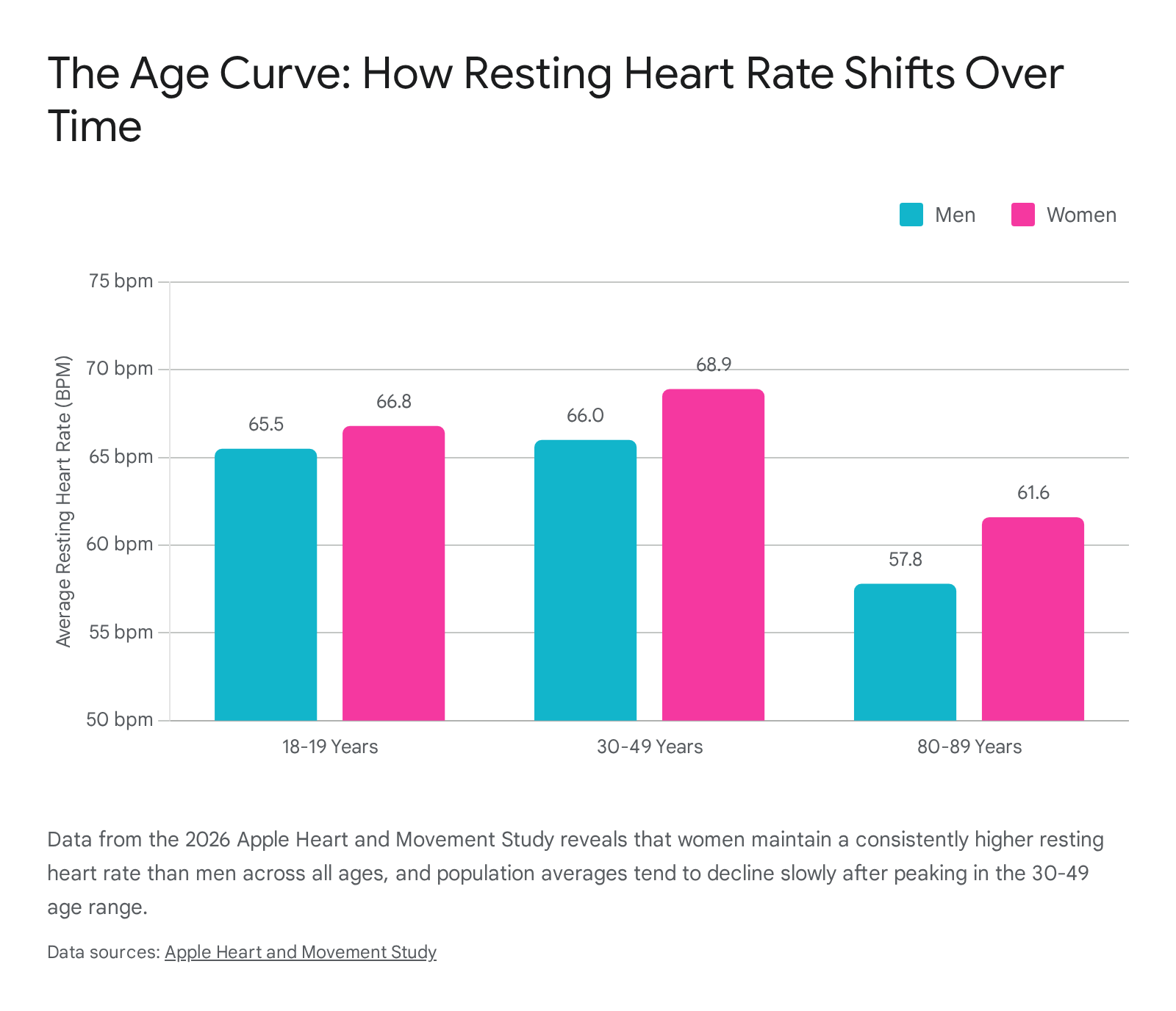
In adulthood, resting heart rate follows a fascinating inverted U-shaped curve, heavily influenced by lifestyle, autonomic shifts, and age-related physiological changes. The 2026 Apple Heart and Movement Study, an enormous research initiative analyzing over 200,000 participants, provided unprecedented detail into this aging curve 18.
The study found that resting heart rate generally peaks in early-to-middle adulthood and then steadily declines into older age 18. * Men: The average RHR for men began at 65.5 bpm in the 18-19 age bracket, reached a slight peak in their 30s and 40s (around 66.0 bpm), and then declined steadily to 57.8 bpm for those in the 80-89 age group 18. * Women: Women's RHR peaked more noticeably in the 30-49 age range (averaging 68.3 to 68.9 bpm) before declining sharply to 61.6 bpm in the oldest age group (80-89) 18.
Researchers attribute this age-related decline in resting heart rate to a gradual degradation and fibrous remodeling of the heart's natural pacemaker (the SA node), decreased responsiveness to sympathetic nervous system stimulation, and the increased use of heart-rate-lowering medications (like beta-blockers) in older populations, rather than an organic improvement in fitness 419.
Geographic and Ethnic Differences in Heart Rate
It is worth noting that fitness and age are not the only variables affecting population baselines. Broad epidemiological studies have demonstrated that ethnicity and geographic location play subtle but distinct roles in autonomic regulation.
Meta-analyses evaluating ethnic disparities in cardiovascular health have shown that African Americans generally possess higher Heart Rate Variability (HRV) and correspondingly lower resting heart rates compared to European Americans, indicating a naturally robust parasympathetic tone 2033. Despite this seemingly cardio-protective physiological profile, this demographic continues to experience disproportionate cardiovascular disease risk, a paradox that researchers are actively investigating 20. Conversely, studies examining South Asian populations have shown that they tend to maintain slightly higher average resting heart rates than European cohorts (e.g., 64.1 bpm vs 59.1 bpm in specific age-matched male cohorts), independent of other risk factors like insulin resistance 21.
Geographic location also plays a surprising role. The 2026 Apple Heart and Movement Study highlighted massive geographic variability within the United States. States traditionally associated with high levels of outdoor recreation and active commuting, such as Hawaii, Vermont, and Massachusetts, posted the lowest average resting heart rates in the country (60.2 to 61.4 bpm) 18. Conversely, states burdened with higher rates of obesity, systemic health issues, and sedentary behavior, such as West Virginia, Mississippi, and Arkansas, recorded the highest resting heart rates (65.5 to 66.4 bpm) 18.
Fitness Benchmarks: Where Do You Stand?
To help individuals interpret their specific resting heart rate and what it says about their cardiovascular conditioning, sports scientists and medical institutions have established population benchmarks. The tables below outline where your numbers fall based on your current age, biological sex, and general fitness level 35.
Table 1: Resting Heart Rate Benchmarks for Men (BPM)
| Fitness Level | Ages 18-25 | Ages 26-35 | Ages 36-45 | Ages 46-55 | Ages 56-65 | Ages 65+ |
|---|---|---|---|---|---|---|
| Athlete | 49-55 | 49-54 | 50-56 | 50-57 | 51-56 | 50-55 |
| Excellent | 56-61 | 55-61 | 57-62 | 58-63 | 57-61 | 56-61 |
| Good | 62-65 | 62-65 | 63-66 | 64-67 | 62-67 | 62-65 |
| Average | 70-73 | 71-74 | 71-75 | 72-76 | 72-75 | 70-73 |
| Below Average | 74-81 | 75-81 | 76-82 | 77-83 | 76-81 | 74-79 |
| Poor | 82+ | 82+ | 83+ | 84+ | 82+ | 80+ |
Table 2: Resting Heart Rate Benchmarks for Women (BPM)
| Fitness Level | Ages 18-25 | Ages 26-35 | Ages 36-45 | Ages 46-55 | Ages 56-65 | Ages 65+ |
|---|---|---|---|---|---|---|
| Athlete | 54-60 | 54-59 | 54-59 | 54-60 | 54-59 | 54-59 |
| Excellent | 61-65 | 60-64 | 60-64 | 61-65 | 60-64 | 60-64 |
| Good | 66-69 | 65-68 | 65-69 | 66-69 | 65-68 | 65-68 |
| Average | 74-78 | 73-76 | 74-78 | 74-77 | 74-77 | 73-76 |
| Below Average | 79-84 | 77-82 | 79-84 | 78-83 | 78-83 | 77-84 |
| Poor | 85+ | 83+ | 85+ | 84+ | 84+ | 84+ |
(Note: These ranges serve as clinical generalizations. Minor deviations from these brackets are perfectly normal, heavily influenced by daily stressors, and do not immediately imply pathology 35.)
The Athlete's Heart: The Physiology of a Low Baseline
When an individual adopts a rigorous endurance training program - whether that involves running, cycling, swimming, or rowing - their resting heart rate inevitably begins to drop. Elite professional athletes, such as Olympic swimmers or Tour de France cyclists, are famous for boasting resting heart rates in the low 30s or even the high 20s 36.
This phenomenon is known clinically as athletic bradycardia or "Athlete's Heart" 537. It is not a malfunction or a sign of a failing heart; rather, it is a sign of extreme physiological efficiency resulting from two primary biological adaptations.
Structural Remodeling: The Enlarged Heart
Long-term endurance training forces the heart to adapt exactly like any other skeletal muscle subjected to load. However, unlike the dangerous thickening of the heart wall caused by chronic high blood pressure, athletic adaptation causes a benign, highly functional expansion known as eccentric hypertrophy 536.
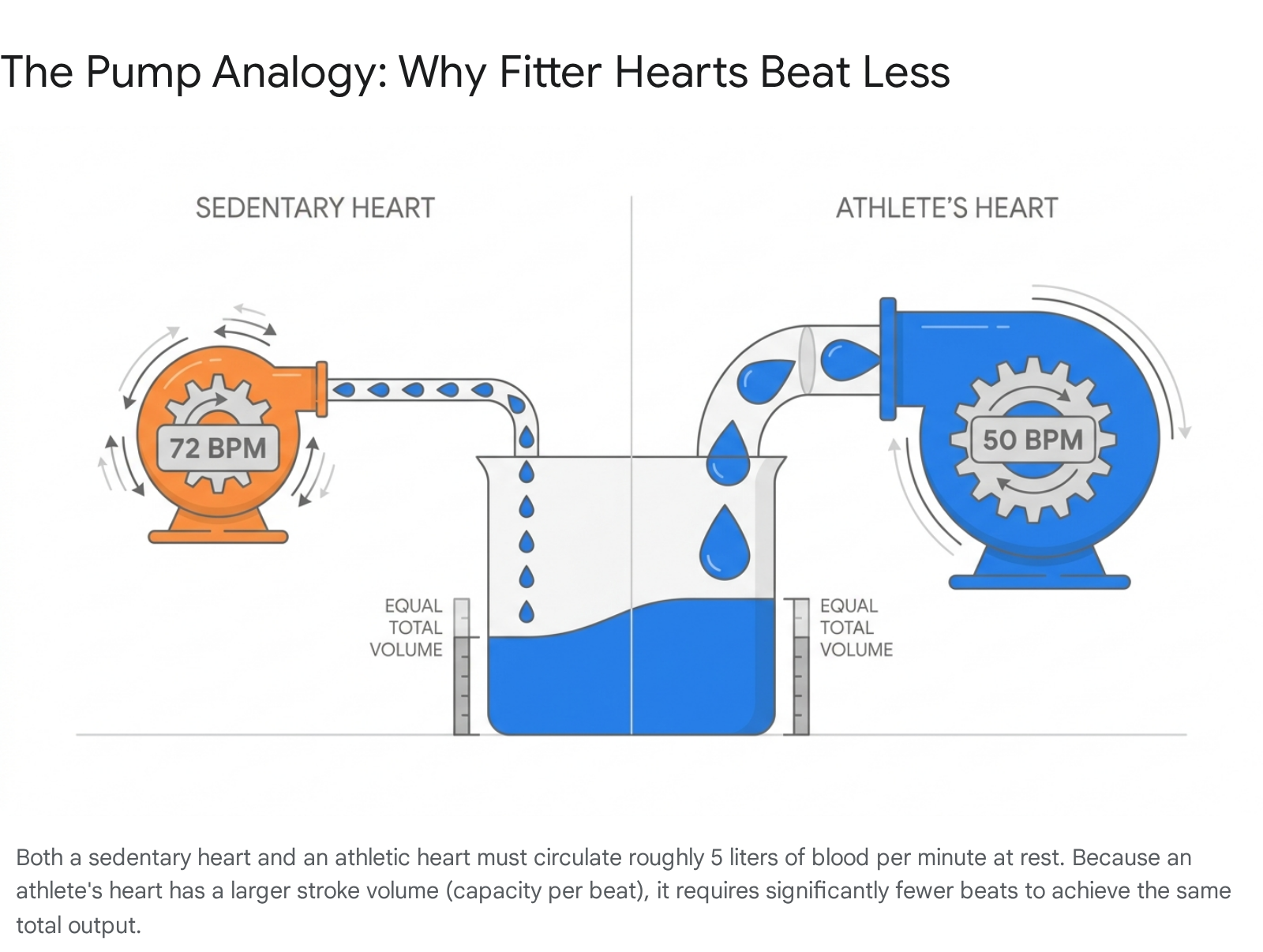
During this process, the walls of the left ventricle thicken slightly and the overall internal chamber size expands 536. Because the chamber is physically larger and structurally stronger, its capacity increases dramatically. It can fill with more blood and eject a massive volume of oxygenated blood with a single, powerful squeeze. If the human body requires 5 liters of blood per minute to sustain itself at rest, an untrained, sedentary heart might need to beat 75 times to achieve that total volume. The athlete's enlarged, highly efficient heart only needs 45 massive beats to move the exact same 5 liters 5636.
Neurological and Electrical Shifts
Beyond physical size, exercise fundamentally alters the neurological software running the heart. Consistent aerobic training shifts the body's default neurological state away from the stressed, high-alert sympathetic system and toward the relaxed parasympathetic system. The vagus nerve becomes highly active at rest, intentionally suppressing the firing rate of the SA node to conserve energy 74.
Furthermore, recent research in animal models and elite endurance athletes suggests that years of heavy exercise physically rewrite the intrinsic electrophysiology of the heart. Prolonged training can lead to the downregulation of specific ion channels responsible for the heart's pacemaker potential, subtly slowing the built-in firing rate of the SA node itself, entirely independently of autonomic nerve signals 73.
This extreme efficiency has compounding benefits. In addition to a low resting heart rate, endurance athletes typically exhibit low resting blood pressure. During exercise, their systolic blood pressure rises less drastically than in non-athletes, and their diastolic pressure often stays steady or drops due to highly compliant, dilating blood vessels 5.
When Is a Low Heart Rate a Red Flag?
In a clinical setting, a resting heart rate that drops below 60 bpm is technically defined as bradycardia 1922. While bradycardia is a badge of honor for marathon runners and fitness enthusiasts, it can be a serious medical warning sign for the sedentary public.
How do clinicians differentiate between a highly trained "athlete's heart" and a failing heart? The primary differentiator is the presence of symptoms and the heart's chronotropic response (its ability to speed up when necessary).
Physiological vs. Pathological Bradycardia
Physiological (athletic) bradycardia is completely asymptomatic and inherently functional 22. The individual feels excellent, maintains normal blood pressure, and sees their heart rate rise smoothly and appropriately the moment they stand up, climb stairs, or start jogging 22. The European Heart Rhythm Association (EHRA) formally recommends that asymptomatic bradycardia with resting rates even as low as 30 bpm can be considered completely normal in a highly trained athlete and requires no medical intervention 2324.
Pathological bradycardia, on the other hand, occurs when the heart's electrical pathways are damaged or degraded. This can be caused by aging (idiopathic degeneration), scar tissue from a previous myocardial infarction (heart attack), infiltrative diseases like sarcoidosis, hypothyroidism, or blockages induced by medications like beta-blockers or calcium-channel blockers 1937. The heart beats slowly not because it is efficient, but because the electrical signal is failing to propagate properly through the AV node.
You should seek immediate consultation with a cardiologist if your low heart rate is accompanied by any of the following symptoms 42526: * Chronic fatigue or profound physical weakness. * Dizziness, confusion, or lightheadedness upon standing. * Fainting spells (clinically known as syncope). * Shortness of breath or ischemic chest discomfort.
Furthermore, a sudden, inexplicable drop in heart rate that feels entirely new to you - especially if you are not an active athlete - warrants a 12-lead electrocardiogram (ECG) to rule out high-grade atrioventricular (AV) blocks, profound sinus pauses, or sick sinus syndrome 192225.
What Causes Your Resting Heart Rate to Spike?
Just as a low resting heart rate signifies efficiency and health, a sudden or chronic elevation in your resting heart rate is a powerful physiological distress signal. Because your heart rate is intricately controlled by the autonomic nervous system, virtually anything that stresses the body will trigger the sympathetic "fight or flight" response, subsequently driving your resting baseline up.
The Viral Warning System: COVID-19 and Acute Infections
One of the most profound, emerging uses of daily resting heart rate tracking is the early detection of systemic illness. When a virus or bacteria enters your body, the immune system triggers a massive inflammatory cascade. This physiological stressor can spike your resting heart rate by 5 to 10 beats per minute before you even register subjective symptoms like a sore throat, cough, or a clinical fever 2728.
This predictive phenomenon was heavily documented during the global COVID-19 pandemic. Researchers at the Scripps Research Translational Institute launched the DETECT study, analyzing data from hundreds of individuals who wore Fitbit devices and were subsequently infected with COVID-19 4529. They found that resting heart rates spiked rapidly upon infection and remained elevated for an astonishing average of 79 days post-symptom onset before returning to baseline 4529.
Even more striking, in 13.7% of sufferers, the resting heart rate remained significantly elevated (more than 5 bpm above their normal baseline) for more than 133 days - over four and a half months 4529. These prolonged autonomic disturbances served as a highly visible, quantifiable biometric marker for what is now known as "Long COVID," correlating strongly with individuals who experienced worse acute symptoms like body aches and shortness of breath 4529.
Short-Term Lifestyle Triggers
If your wearable device alerts you that your resting heart rate is 8 or 10 beats higher than normal this morning, it is rarely a sign of sudden heart disease. It is almost always an autonomic reaction to lifestyle choices made in the preceding 24 to 48 hours. Common culprits for resting heart rate spikes include: * Alcohol Intake: Processing alcohol acts as a mild toxin and a severe physiological stressor. Even moderate drinking can suppress parasympathetic tone, dropping your heart rate variability and spiking resting heart rates by up to 6% overnight 47. * Poor Sleep: Sleep deprivation keeps the sympathetic nervous system abnormally active, preventing the heart from fully dropping into its deepest, most restorative resting state 48. * Dehydration: When you are dehydrated, your total blood plasma volume drops. To maintain adequate blood pressure and deliver the same amount of necessary oxygen to tissues, the heart is forced to beat faster to compensate for the lower volume 30. * Mental Stress: Chronic anxiety, emotional distress, and high-pressure work environments trigger the continuous release of cortisol and adrenaline, establishing a chronically elevated cardiac baseline 115. * Overtraining: If you are an athlete or fitness enthusiast, a resting heart rate that creeps up by 5-7 bpm and stays elevated for several consecutive days is a classic, early indicator that you have accumulated too much training strain. It signals that your body is failing to recover and requires immediate rest before injury occurs 1550.
Dangerous Tachycardia and Arrhythmias
A resting heart rate consistently above 100 bpm in adults is known clinically as tachycardia 448. If your heart rate frequently jumps above 100 bpm while you are simply sitting and resting, or if you experience sudden, erratic spikes accompanied by chest pain, shortness of breath, or severe palpitations, you must seek immediate emergency medical care 2531.
A jumping, erratic, or dangerously high heart rate can be a sign of structural or electrical disorders of the heart. Two common arrhythmic conditions include: * Supraventricular Tachycardia (SVT): This occurs when a faulty electrical circuit in the heart, typically originating above the ventricles, causes the heart to suddenly beat incredibly fast - often well over 100 bpm - even while you are at rest. SVT episodes can start and stop abruptly and may cause dizziness, weakness, or chest discomfort 31. If an episode is prolonged or causes faintness, emergency treatment (like cardioversion or specific medications) is required 3132. * Inappropriate Sinus Tachycardia (IST): This is a condition where the heart's natural pacemaker (the SA node) fires far too rapidly without any clear external trigger like fever or exercise. People with IST often have resting heart rates well above 100 bpm or average over 90 bpm throughout the entire day. It is most commonly diagnosed in young women and, while rarely life-threatening, can cause chronic palpitations, dizziness, and fatigue 8. IST is distinct from Postural Orthostatic Tachycardia Syndrome (POTS), as IST symptoms occur regardless of whether the individual is sitting, standing, or lying down 8.
If you experience sudden, racing palpitations but do not require emergency care, cardiologists often advise attempting "vagal maneuvers." These are simple actions, such as coughing forcefully, bearing down as if having a bowel movement, or plunging your face into ice water, which stimulate the vagus nerve and can successfully break a fast, abnormal heart rhythm 32.
Lowering Your Heart Rate: How Much Exercise Is Needed?
It is widely understood that aerobic exercise is the single most effective intervention for strengthening the left ventricle, improving vagal tone, and permanently lowering your resting heart rate 33. But a critical question remains: exactly how much exercise is required to force these physiological adaptations?
For years, global health organizations, including the World Health Organization (WHO) and the American Heart Association (AHA), have recommended 150 minutes of moderate-intensity aerobic exercise per week as the gold standard for cardiovascular health 3435.
However, a massive observational study published in 2026 in the British Journal of Sports Medicine fundamentally challenged this paradigm. The research indicates that the 150-minute threshold may actually represent a bare minimum needed to offset modern sedentary damage, rather than an optimal target for profound heart health 3456.
Analyzing highly detailed activity tracker and clinical data from over 17,000 adults in the UK Biobank study, researchers found that meeting the 150-minute benchmark provided only a modest 8% to 9% reduction in overall cardiovascular risk 3456.
To achieve a substantial, transformative reduction in cardiovascular disease risk (defined as a reduction greater than 30%), adults actually needed to accumulate between 560 and 610 minutes of moderate-to-vigorous exercise per week 3456. This equates to roughly 80 to 85 minutes of dedicated activity every single day, nearly quadruple the standard public health advice. Furthermore, the researchers noted a "steeper challenge" for deconditioned populations: individuals who started with the lowest fitness levels needed to put in slightly more time (approximately 30 to 50 additional minutes a week, pushing closer to the 610-minute mark) to force the cardiovascular adaptations necessary to match the risk reduction of highly fit individuals 3456.
Finding Your Target Zone
To effectively train the heart and lower your resting baseline, you must exercise at the correct intensity. A highly effective way to calculate this is using the Heart Rate Reserve (HRR) method, which factors in your current fitness level 36: 1. Calculate Maximum Heart Rate: Subtract your age from 220 (or use the alternate formula: 208 minus [0.7 x your age]) 1736. 2. Calculate Heart Rate Reserve (HRR): Subtract your morning resting heart rate from your maximum heart rate 36. 3. Find Your Target Zone: For moderate-to-vigorous exercise, multiply your HRR by 0.50 (50%) to 0.85 (85%) and then add your resting heart rate back to that number 3637.
While committing to 80 minutes of activity a day is daunting for many, you do not need to run ultramarathons to see results. Consistent, purposeful activities like brisk walking, cycling, or swimming in your target heart rate zone are entirely sufficient to induce the cardiac remodeling required to drag your resting heart rate down into a healthier, highly efficient zone 3538.
Bottom line
Your resting heart rate is a dynamic, highly revealing window into your cardiovascular efficiency, stress levels, and autonomic nervous system health. While clinical definitions maintain a "normal" range of 60 to 100 bpm, modern population data strongly suggests that aiming for the lower end of that spectrum - or even into the 50s through dedicated aerobic training - is a powerful strategy for extending lifespan and preventing cardiovascular disease. However, physiological context is paramount; an extremely low heart rate in the absence of athletic training, or sudden, unexplained spikes during rest, should always prompt an immediate evaluation by a healthcare provider. Monitor your baseline consistently, respect the trends over time, and focus on building a stronger, more resilient heart.