
Effects of thermal and physical stressors on mental health
Modern psychiatric and rehabilitative medicine increasingly integrates somatic, body-centric interventions to address the escalating global burden of mental health disorders. Among these interventions, controlled environmental and physical stressors - specifically heat therapy (sauna), cold water immersion (CWI), and brief, high-frequency physical exertion (micro-workouts) - have emerged as potent modulators of the autonomic nervous system. By leveraging the principle of hormesis, wherein acute, low-dose physiological stress stimulates adaptive biological pathways, these modalities influence neuroendocrine regulation, mitigate systemic inflammation, and enhance psychological resilience.
Autonomic Nervous System Regulation and Biomarkers
The autonomic nervous system, composed of the sympathetic and parasympathetic branches, serves as the primary regulatory mechanism for physiological homeostasis and psychological stress responses. Chronic psychological stress, trauma, and anxiety disorders frequently manifest as autonomic dysregulation, characterized by a hyperactive sympathetic state (fight-or-flight) and an impaired parasympathetic state (rest-and-digest).
Heart Rate Variability and Vagal Tone
The dynamic interplay between sympathetic and parasympathetic activation is quantified through heart rate variability (HRV), which measures the precise temporal fluctuations between consecutive heartbeats 11. A high HRV indicates robust vagal tone and a flexible autonomic nervous system capable of rapid adaptation to external stimuli. Conversely, a chronically low HRV is a validated biomarker for allostatic overload, predicting adverse psychological outcomes, delayed physical recovery, and elevated risks of cardiovascular and psychiatric morbidity 12.
Clinical assessments of HRV utilize both time-domain and frequency-domain metrics. The standard deviation of NN intervals (SDNN) and the root mean square of successive differences (RMSSD) reflect parasympathetic dominance and overall autonomic resilience 13. Following exhaustive exercise or acute psychological stress, these metrics typically plummet - often decreasing by over 80% - indicating intense vagal withdrawal and sympathetic override 3. The rate at which these metrics return to baseline during the recovery phase determines an individual's resilience to stress 23.
The Hypothalamic-Pituitary-Adrenal Axis and Burnout
The body's response to chronic stress is further mediated by the hypothalamic-pituitary-adrenal (HPA) axis, which regulates the secretion of cortisol. While acute cortisol spikes are essential for mobilizing energy during immediate threats, chronic HPA axis activation leads to systemic neuroinflammation, disrupted sleep architecture, and impaired cognitive function 678.
Over time, relentless stress can precipitate HPA axis dysfunction, colloquially termed "adrenal fatigue" or burnout, characterized by an inability to produce adequate cortisol. In this depleted state, patients experience profound lethargy, cognitive fog, and disrupted circadian rhythms 8410. For such populations, the application of intense environmental stressors must be carefully calibrated; excessive cold plunging or high-intensity interval training can further exhaust the HPA axis, compounding systemic fatigue rather than promoting adaptation 41011.
Heat Therapy: Modalities and Cultural Contexts
Therapeutic heat exposure operates as a passive cardiovascular challenge, eliciting physiological responses that closely mimic moderate-intensity aerobic exercise. While global sauna practices share common thermoregulatory mechanisms, variations in ambient temperature, humidity, and cultural rituals dictate the intensity of the autonomic response.
Nordic and Baltic Sauna Traditions
The traditional Finnish sauna is the most extensively researched thermal modality. It utilizes dry heat, with temperatures typically maintained between 80°C and 100°C (176°F to 212°F) and low ambient humidity ranging from 5% to 15% 12135. This dry environment allows for rapid sweat evaporation, enabling the body to endure extreme heat for extended durations. Culturally, the Finnish practice is deeply meditative, prioritizing silence and solitary contemplation 1215.
In the Baltic states, sauna traditions incorporate significant environmental and botanical variations. The Estonian suitsusaun (smoke sauna), recognized on the UNESCO Intangible Cultural Heritage list, lacks a traditional chimney, allowing wood smoke to heavily permeate the room before the space is ventilated and used 16. Lithuanian sauna practices place a high value on medicinal phytotherapy, actively utilizing abundant local herbs to provide an aromatherapeutic stimulus that influences limbic system processing and autonomic balance during the heat exposure 1617.
The Russian Banya and Wet Heat
In contrast to the dry heat of the Nordic tradition, the Russian banya operates at moderate temperatures of 60°C to 70°C (140°F to 158°F) but sustains high humidity levels between 40% and 70% 1213. The humidity is generated by continually ladling water over heated stones in a pechka (stove). High atmospheric moisture inhibits the evaporative cooling of sweat, creating an enveloping heat that rapidly elevates core body temperature 1319.
The banya experience is also highly mechanical and tactile. It integrates the venik platza ritual, which involves rhythmically striking the skin with bundles of soaked birch, oak, or eucalyptus branches 1315. This practice serves a dual physiological purpose: it stimulates superficial mechanoreceptors to promote localized vasodilation and forces heated air downward onto the bather, intensifying the thermal load and accelerating the subsequent parasympathetic rebound upon exit 13.
Social and Interpersonal Mechanisms
Beyond the raw physiological effects of heat, the social architecture of sauna bathing plays a measurable role in mental health outcomes. Recent behavioral studies in the United Kingdom examined the concept of the sauna as a "social cure" 6. Analyzing cohorts engaged in community sauna rituals, researchers found that participants experienced high levels of "identity fusion" and emotional synchrony. These feelings of belonging and community cohesion significantly predicted post-sauna increases in positive affect, suggesting that the mental health benefits of communal thermal therapies are partially mediated by social integration and the alleviation of loneliness 6.
Neurobiological and Psychiatric Outcomes of Heat Therapy
Extensive epidemiological and clinical research has linked regular heat exposure to profound neuroprotective and psychiatric benefits.
Longitudinal Data and Neuroprotection
The most robust observational evidence regarding sauna use stems from the Kuopio Ischaemic Heart Disease Risk Factor (KIHD) study, a 20-year prospective cohort analyzing over 2,300 Finnish men. The data revealed a strong, dose-dependent relationship between sauna frequency and neurological longevity. Participants who engaged in four to seven sauna sessions per week demonstrated a 66% decreased risk of developing dementia and Alzheimer's disease, a 62% reduction in stroke risk, and a 78% reduction in the incidence of psychotic disorders, which often arise secondary to vascular or memory-related cognitive decline 7823.
Clinical Efficacy in Major Depressive Disorder
Recent clinical investigations have sought to isolate whole-body heating as an acute intervention for psychiatric conditions. The HEATBed trial, conducted by the University of California, San Francisco (UCSF) Osher Center for Integrative Health, evaluated the integration of whole-body heating with cognitive behavioral therapy (CBT) for the treatment of major depressive disorder (MDD) 91011.
The trial operated on the established biological observation that individuals with severe depression frequently exhibit elevated baseline core body temperatures and impaired natural thermoregulatory cooling 1027. In the 2025 cohort, 30 adult patients with MDD received eight weekly virtual CBT sessions alongside biweekly whole-body heating sessions in an infrared sauna dome 911. The protocol raised patients' core body temperatures to 101.3°F (38.5°C) over approximately 90 minutes 28. The intervention yielded exceptional clinical outcomes: 86.2% of the participants who completed the trial experienced clinically meaningful reductions in depressive symptoms and no longer met the diagnostic criteria for MDD at the final assessment 91128.
Endocrine and Molecular Mechanisms of Heat Stress
The psychiatric efficacy of sauna therapy is driven by specific molecular cascades induced by heat stress.
- Heat Shock Proteins and Anti-Inflammatory Action: Thermal stress triggers the cellular expression of Heat Shock Proteins (HSPs), notably HSP70. These proteins function as molecular chaperones that correct misfolded proteins, but they also possess potent anti-inflammatory properties, suppressing NF-κB inflammatory signaling pathways 52327. Because systemic inflammation and elevated C-reactive protein (CRP) are established drivers of treatment-resistant depression, the anti-inflammatory action of regular sauna use provides a direct biochemical route to mood stabilization 512.
- Brain-Derived Neurotrophic Factor (BDNF): Heat exposure stimulates the release of BDNF, a neurotrophin critical for neuroplasticity, learning, and the survival of neurons in the hippocampus, a brain region that typically atrophies under chronic stress 530.
- Endogenous Opioids: The physical discomfort of extreme heat promotes the robust release of β-endorphins. This opioid response generates a post-sauna analgesic and euphoric effect, reliably alleviating subjective self-reports of tension, anxiety, and hostility 530.
Cold Water Immersion: Physiological Shock and Neural Connectivity
Cold water immersion (CWI), executed through ice baths, cold plunges, or winter swimming, involves rapid full-body submersion in water temperatures typically ranging from 10°C to 15°C (50°F to 59°F) 1332. Unlike the gradual physiological loading of a sauna, CWI delivers an immediate, violent shock to the autonomic nervous system.
Catecholamine Release and Sustained Dopaminergic Tone
The defining neurochemical characteristic of CWI is the massive, systemic release of catecholamines. Experimental data demonstrates that one hour of immersion in 14°C (57°F) water can increase plasma norepinephrine concentrations by 530% and dopamine concentrations by 250% 733.
Norepinephrine acts to enhance systemic arousal, vigilance, and focus, directly counteracting the cognitive fog and lethargy associated with depressive disorders 33. Concurrently, dopamine regulates pathways governing motivation, reward, and positive affect. Crucially, the dopaminergic profile of cold immersion differs significantly from that induced by pharmacological stimulants or caffeine. Rather than causing a rapid, volatile spike followed by a severe neurochemical depletion or "crash," cold-induced dopamine rises steadily and remains elevated at two to three times the baseline level for several hours post-immersion 3414. This sustained elevation explains the prolonged mental clarity and mood stabilization frequently reported by practitioners 3414.
Functional Magnetic Resonance Imaging Findings
Recent neuroimaging studies have provided structural evidence for the mood-altering capabilities of cold exposure. A 2023 functional magnetic resonance imaging (fMRI) study investigated healthy adults who underwent a five-minute head-out immersion in 20°C (68°F) water 715. Immediately following the immersion, participants displayed significant alterations in functional connectivity between large-scale intrinsic brain networks 733.
Specifically, the immersion increased neural coupling between the medial prefrontal cortex (mPFC), the anterior insula, and the anterior cingulate cortex 715. Because aberrant connectivity and hyperactivity in these specific nodes of the salience network are established neurobiological markers of major depression, the ability of CWI to acutely modulate these circuits offers a direct neurological mechanism for its efficacy in rapidly shifting affective states from negative to positive 715. Following the plunge, participants' ratio of positive to negative affect shifted dramatically, crossing a threshold associated with flourishing mental well-being 3315.
Delayed Stress Reduction and Long-Term Outcomes
While the acute effects of CWI are well-documented, the long-term baseline shifts require careful interpretation. A 2025 systematic review and meta-analysis published in PLOS ONE synthesized data from 11 randomized controlled trials involving 3,177 healthy adults 321617.
The meta-analysis revealed that the benefits of CWI are highly time-dependent. Contrary to assumptions that cold plunging immediately lowers all stress biomarkers, the data indicated a statistically significant increase in inflammatory markers immediately and one hour post-immersion, accurately reflecting the body's acute stress and sympathetic activation 3216. Similarly, immediate reductions in psychological stress were not statistically significant 16.
However, a highly significant reduction in psychological stress was observed 12 hours post-immersion, demonstrating a delayed, adaptive parasympathetic rebound 1617. The review also noted long-term improvements in sleep quality - particularly among male participants - and general quality of life, alongside a 29% reduction in sickness absence linked to regular cold shower usage 3216.
Further evidence from Polish clinical trials suggests that the efficacy of CWI can be amplified when combined with specific breathwork protocols. Participants utilizing a combined cold exposure and breathwork regimen demonstrated superior indices of general mental health and significant reductions in the duration of upper respiratory tract infections compared to control groups or those utilizing CWI alone 1819.
The Danger of Autonomic Conflict
Despite its benefits, cold water immersion introduces severe physiological risks, primarily mediated by competing neural reflexes. When the human body is rapidly submerged in cold water (<15°C), the sympathetic nervous system triggers the "cold shock response," leading to an involuntary inspiratory gasp, hyperventilation, and extreme tachycardia (accelerated heart rate) 152042.
Simultaneously, if the face is submerged and the breath is held, the parasympathetic nervous system activates the "diving reflex," an evolutionary mechanism designed to conserve oxygen by forcing profound bradycardia (slowed heart rate) 2042. This simultaneous firing of maximum sympathetic and maximum parasympathetic signals generates an "autonomic conflict" at the heart's pacemaker cells 2042.
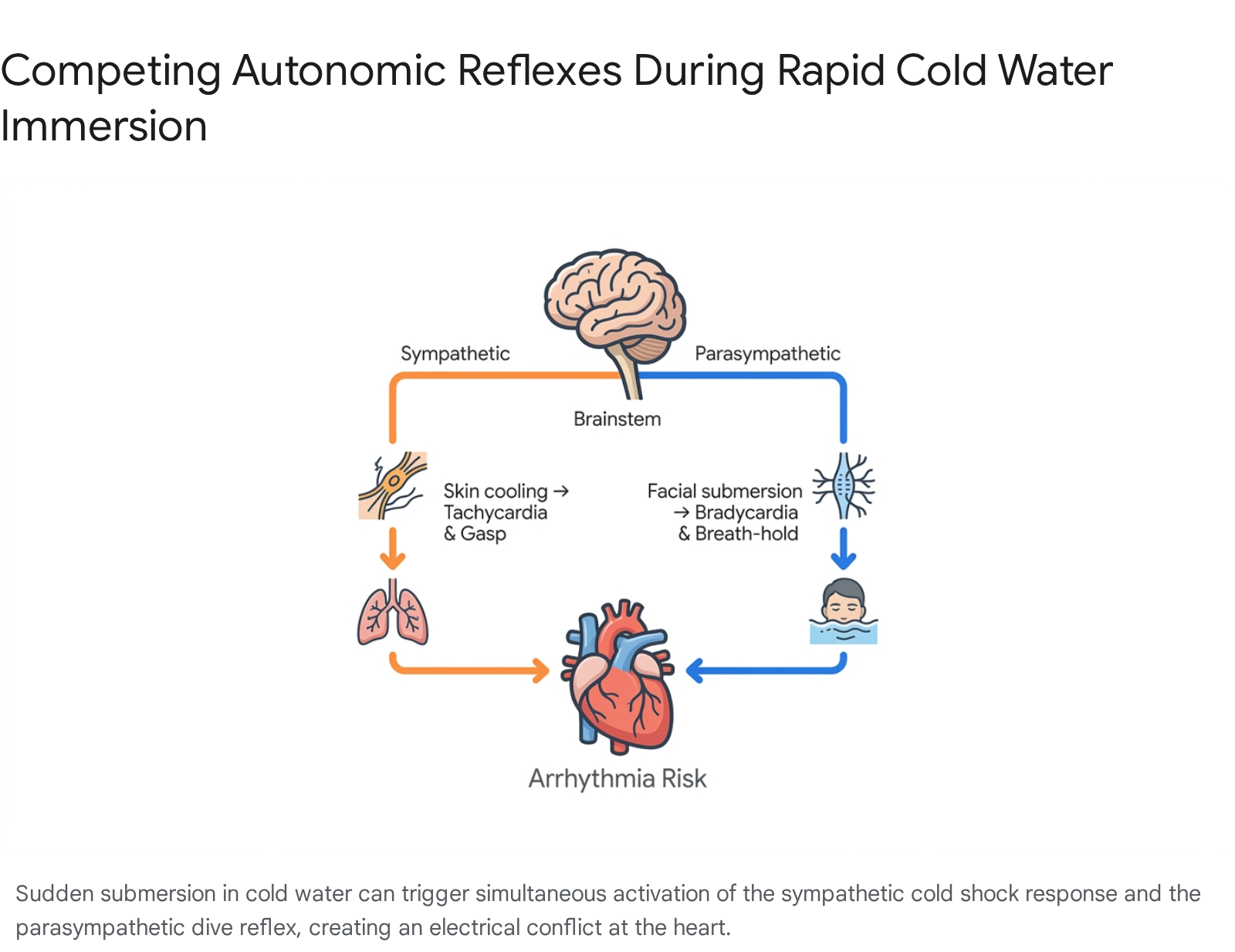
In susceptible individuals - or those with undiagnosed coronary artery disease, arrhythmias, or uncontrolled hypertension - this electrical conflict can induce lethal arrhythmias or cardiac arrest 204221. Consequently, cold plunges should be approached with gradual acclimation, and breath-holding during initial cold shock should be strictly avoided.
Vagus Nerve Stimulation and Somatic Health
The vagus nerve, the primary neural pathway of the parasympathetic nervous system, is integral to the regulation of heart rate, digestive function, and systemic inflammation 2245. Modern somatic therapies aim to improve vagal tone, thereby enhancing the body's ability to efficiently transition out of stressed states.
Transcutaneous Auricular Vagus Nerve Stimulation
While implantable vagus nerve stimulation (VNS) devices are FDA-approved for treatment-resistant epilepsy and depression, non-invasive transcutaneous auricular vagus nerve stimulation (taVNS) has emerged as an accessible alternative 222324. Utilizing microcurrents, taVNS targets the auricular branch of the vagus nerve via electrodes placed on the tragus or cymba conchae of the outer ear 2223.
Research indicates that 15 to 20 minutes of taVNS can significantly increase cellular ATP production, reduce pro-inflammatory cytokines, and improve autonomic regulation 2245. Sessions exceeding 30 minutes may risk overstimulation, particularly in patients with chronic fatigue or trauma, necessitating careful dose management 22.
Natural Vagal Toning
Parallel to technological interventions, natural vagal toning techniques have gained clinical traction. Respiratory interventions, such as 4-7-8 breathing or prolonged exhalations, mechanically stimulate the vagus nerve via its innervation of the diaphragm 45. Similarly, vocal exercises, humming, and the temperature-shock pathways engaged by cold water exposure directly engage vagal afferents 45. Combining multiple natural techniques has been shown to yield up to a 40% greater improvement in resting HRV compared to single-modality approaches 45.
Micro-Workouts and Exertion Thresholds
While prolonged cardiovascular exercise is a cornerstone of systemic health, chronic lack of time and the physiological toll of long, high-intensity workouts can limit adherence. "Micro-workouts" or "exercise snacks" - defined as brief bouts of intentional physical activity lasting under 15 minutes - offer a highly efficient alternative for neurological and metabolic maintenance 2526.
Dose-Response Metrics for Mental Health
The relationship between physical activity volume and mental health is not strictly linear. A rigorous 2025 cross-sectional analysis utilizing a representative sample of 30,054 adults examined this dose-response dynamic using Metabolic Equivalent of Task (MET) metrics 2751.
The study revealed a "reverse J-shaped" curve linking physical activity to the mitigation of psychiatric symptoms 27. For depression and anxiety, optimal likelihood reduction was achieved at a threshold of exactly 2.15 METs-hour per day 27. For subjective stress reduction, the optimal threshold was slightly higher, at 3.25 METs-hour per day 27. Crucially, physical activity exceeding these thresholds did not confer any additional statistically significant improvements in mental health outcomes 27. This indicates that overwhelming the system with exhaustive exercise is unnecessary for psychiatric benefit, validating the efficacy of brief, moderate exertions like stair climbing, brisk walking, or mobility flows 2527.
Furthermore, the data indicated that achieving between 4 and 6 METs-hour per day was sufficient to offset the depressive and anxious symptoms associated with short sleep duration, while 1 to 3 METs-hour per day buffered the psychological impact of unhealthy dietary intake 27.
Autonomic Recovery and Modality Selection
The choice of exercise modality also dictates the speed and efficiency of autonomic recovery. A cross-sectional trial comparing healthy adults engaged in long-term yoga, aerobic training, or resistance training evaluated post-exercise parasympathetic reactivation following a submaximal step test 2.
The data demonstrated that the yoga practitioners exhibited a significantly superior autonomic recovery profile. The yoga group showed enhanced vagal reactivation, reflected in statistically significant elevations in High-Frequency (HF) power, pNN50, and SDNN metrics during the 10-minute recovery window, outperforming both the aerobic and resistance training cohorts 2. This suggests that mindful, movement-based micro-workouts that actively incorporate breath control offer unique advantages for strengthening autonomic flexibility 228.
Integration: Contrast Therapy and Physiological Stacking
Integrating heat and cold exposure - known as contrast therapy - produces synergistic physiological adaptations that surpass single-modality interventions 2954.
The Vascular Pump and HRV Implications
The efficacy of contrast therapy relies on extreme vascular fluctuation. Heat exposure forces profound peripheral vasodilation to dissipate thermal energy. A sudden transition to cold water forces rapid, aggressive vasoconstriction, shunting blood from the extremities to the core to protect vital organs 5430. This intense expansion and contraction functions as a systemic vascular pump, clearing metabolic waste, improving arterial elasticity, and rapidly altering blood pressure dynamics 54.
Neurologically, the transition from extreme heat to extreme cold amplifies the sympathetic stress response, reportedly increasing norepinephrine release by three to five times the magnitude observed in singular exposures 54. Following the cessation of the contrast protocol, the body initiates a massive parasympathetic rebound, drastically elevating HRV and promoting deep physiological relaxation and sleep onset 1454.
Comparative Overview of Modalities
To fully understand the varied impacts of these stressors, it is essential to categorize their environmental parameters, primary neurochemical mechanisms, and distinct clinical outcomes.
| Modality | Environmental Parameters | Primary Neurochemical/Autonomic Shift | Core Clinical & Psychiatric Outcomes |
|---|---|---|---|
| Finnish Sauna | 80 - 100°C; 5 - 15% Humidity | ↑ HSP70, ↑ BDNF, ↑ β-Endorphins | Long-term cardiovascular protection, severe depression alleviation, dementia risk reduction. |
| Russian Banya | 60 - 70°C; 40 - 70% Humidity | ↑ β-Endorphins; Mechanoreceptor activation | Deep parasympathetic relaxation, enhanced localized circulation, social/communal buffering. |
| Cold Plunge (CWI) | 10 - 15°C; 2 - 5 Minutes | +530% Norepinephrine, +250% Dopamine | Acute mood elevation, immediate alertness, delayed stress reduction (12-hour), vagal toning. |
| Micro-Workouts | <15 Minutes; Moderate METs | ↑ BDNF, Stabilized Insulin/Glucose | Prevents HPA-axis burnout, offsets sleep/diet deficits, accumulative anxiety reduction. |
Calibrating Expectations and Debunking Myths
While the integration of these protocols is highly effective for state management, clinical data urges calibrated expectations. A randomized multi-arm trial investigating long-term HRV adaptations found that eight weeks of regular exercise significantly improved time- and frequency-domain measures of HRV. However, appending a 15-minute sauna session post-exercise offered no additional statistically significant improvements to resting HRV over exercise alone 31. This underscores that while thermal therapies are potent adjunctive tools, baseline aerobic fitness remains the primary driver of cardiovascular autonomic health.
Furthermore, the mainstream proliferation of these modalities has generated pervasive misconceptions 2132. Clinical literature definitively refutes claims that saunas can cure or cause cancer; they are supportive therapies that improve circulation and quality of life, not oncological treatments 33. Similarly, claims that brief cold plunges result in instantaneous, massive fat loss are overstated; while cold exposure activates metabolically active brown adipose tissue (BAT), the caloric expenditure is minimal and does not replace caloric deficit for weight management 205960. Finally, the perception that these therapies are exclusively for elite athletes is false; optimal benefits for mood and stress resilience are frequently observed in sedentary or general populations utilizing moderate protocols 3261.
Conclusion
Thermal stress therapies and micro-workouts represent highly effective, non-pharmacological interventions for the modulation of mental health and autonomic recovery. By actively exposing the body to controlled environmental and physical stress, these modalities exploit hormetic adaptation to enhance neural connectivity, regulate systemic inflammation, and correct neurotransmitter deficits.
Cold water immersion excels as an acute intervention, leveraging massive, sustained catecholamine release to rapidly elevate mood, enhance focus, and train the vagal brake. Conversely, sauna therapy operates on a chronic timeline, providing immediate endorphin-mediated relaxation while accumulating profound neuroprotective and cardiovascular benefits over years of consistent practice. Micro-workouts provide the daily, low-barrier structural maintenance necessary to prevent HPA axis dysfunction and buffer against lifestyle stressors. When utilized responsibly and tailored to an individual's autonomic capacity, these somatic tools grant practitioners direct, physiological leverage over their psychological well-being.