
4 Scenarios for the Future of Pandemics and Biosecurity
The landscape of global health security is undergoing a profound structural and philosophical realignment. In the wake of the COVID-19 pandemic, international frameworks, national defense strategies, and corporate risk models have been forced to acknowledge that biological threats are not merely episodic public health crises, but systemic shocks capable of destabilizing the global economy, fracturing supply chains, and paralyzing international travel. Data aggregated from the Global Health Security (GHS) Index, the Nuclear Threat Initiative (NTI), and the World Health Organization (WHO) reveals a concerning paradox: while scientific capabilities - such as the speed of genomic sequencing and vaccine development - have reached unprecedented heights, foundational vulnerabilities at the geopolitical and infrastructural levels remain dangerously unresolved 123.
The GHS Index reports that seventy percent of countries currently lack sufficient clinical and community health capacity to manage large outbreaks, underscoring a systemic fragility that transcends national borders 1. This fragility is compounded by contracting global investments in pandemic preparedness, a fragmented financing architecture for medical countermeasures, and a steep decline in therapeutics funding, which together leave a critical vulnerability in the global ability to promote biosecurity and respond to viral threats 4. Furthermore, geopolitical fragmentation, climate-induced ecological shifts, and the rapid democratization of artificial intelligence (AI) and synthetic biology have fundamentally altered the threat matrix 467. Biological risks are no longer confined to the natural emergence of pathogens; they increasingly encompass engineered biological risks and dual-use research of concern (DURC) 475.
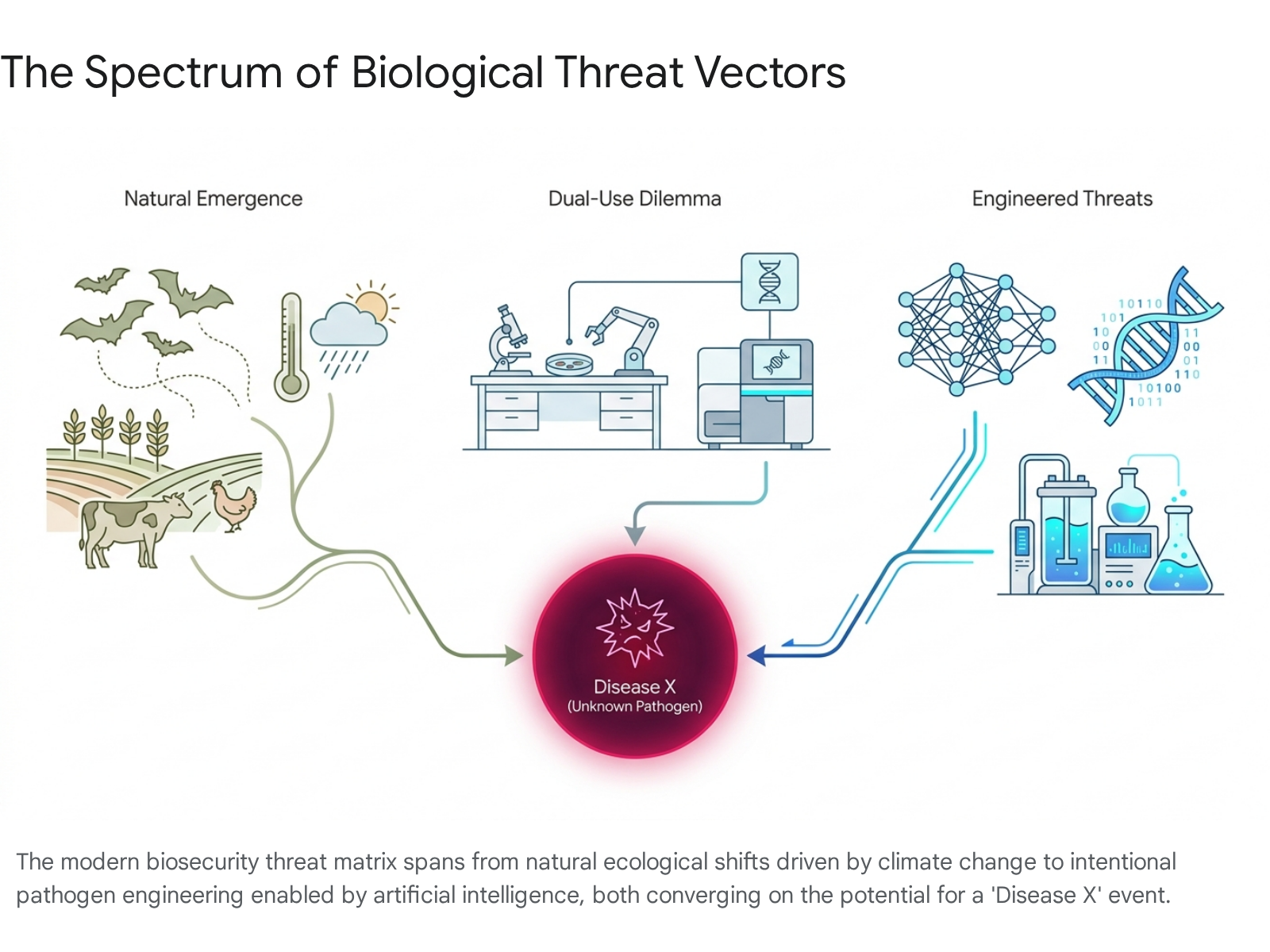
To navigate this highly complex and volatile environment, it is imperative to model the future of pandemics through distinct, highly plausible scenarios, deconstruct persistent public misconceptions regarding endemicity, and examine the geographic decentralization of health security architectures. The shift from a centralized, Western-dominated health governance model toward robust, sovereign regional networks - particularly in Africa and the Indo-Pacific - represents one of the most significant evolutions in the modern biosecurity paradigm 678.
The Macroeconomic and Travel Imperative: Preparedness as a Business Strategy
The fallout from global health emergencies extends far beyond epidemiology; it strikes at the core of the macroeconomic system. As demonstrated by the COVID-19 crisis, biological shocks trigger multi-trillion-dollar losses, cascading through supply chains, labor markets, and the travel sector 1. For the travel, tourism, and aviation industries, biosecurity is intrinsically linked to operational survival. The emergence of a novel pathogen immediately results in airspace closures, route disruptions, and the imposition of uncoordinated, punitive border restrictions 913.
The macroeconomic environment projected for the 2025 - 2026 horizon is already characterized by elevated risks that compound the threat of future pandemics. Analysts modeling the 2025 outlook identify a "Global Power Vacuum" and intense geopolitical instability as key drivers of reduced international cooperation 9. A lack of centralized global leadership emboldens rogue actors and heightens the risk of conflict, which subsequently collapses healthcare infrastructure in conflict zones, halts vaccination programs, and causes infectious diseases to surge 913. Concurrently, anticipated economic policies in the United States and unmanaged decoupling between the U.S. and China are projected to introduce higher inflation, disruptive global trade wars, and severe supply chain frictions 910. Within this strained economic context, the resilience of the travel sector is tested by cyber insecurity, maritime disruptions in the Middle East, and accelerating climate feedback loops that increase the frequency of extreme weather events and flight cancellations 913.
The long-term economic scarring of biological shocks is profound and persistent. The liquidation of long-standing travel operators serves as a micro-economic indicator of macro-level vulnerability. For example, the collapse of UK-based Gold Crest Holidays in early 2026 demonstrated how prolonged pandemic-induced financial strain, combined with shifting partner arrangements and rising operational costs, can collapse established businesses years after the acute phase of a crisis has officially ended 15. When such businesses fail, the ripple effects impact creditors, suppliers, and international consumer confidence, highlighting the fragility of systems dependent on frictionless global movement 15. Furthermore, shifting immigration and travel policies in response to health security - such as the complexities surrounding EB-5 investor visas in the United States, where applicants race against program reauthorization deadlines - highlight how border health measures intertwine with international capital flows and legal frameworks 16.
To mitigate these severe disruptions, economic resilience must be viewed as a proactive investment rather than a reactive scramble. The integration of economic support packages, harmonized travel advisories, and the maintenance of fiscal headroom are essential to buffer against systemic shocks 1711. Industry leaders and advisory groups like the NTI argue that pandemic preparedness is a fundamental business imperative; corporate entities can no longer relegate health security solely to the public sector 1. Multinational firms, seventy-five percent of which reported supply-chain disruptions linked to health-system failures during COVID-19, must actively partner with governments to invest in supply chain transformation and health intelligence data to survive future biological events 1. Pre-emptive fiscal and monetary planning, alongside regular simulation exercises and operational drills, are proactive investments essential for mitigating the profound economic consequences of future widespread health events 17.
Deconstructing the Misconceptions of Endemicity and COVID-19 Similarities
A critical vulnerability in global biosecurity planning is the pervasive public and political misunderstanding of epidemiological terminology. As the acute phase of the COVID-19 pandemic receded, a dangerous narrative took hold across global populations and political systems: the transition from "pandemic" to "endemic" signaled a return to safety and the neutralization of the virus 1920.
This assumption is fundamentally flawed. In strict epidemiological terms, "endemic" merely describes a state of equilibrium where a disease's reproductive number is stable (an R0 stably at one), and its presence within a given population in a specific geographic area is constant and predictable 1912. The designation of endemicity conveys absolutely no information regarding the severity, morbidity, or mortality of the pathogen 1913. As infectious disease experts note, diseases such as malaria and tuberculosis are both considered endemic across large swathes of the globe, yet they continue to cause millions of fatalities annually, rivaling the death toll of COVID-19 2013. Tuberculosis alone killed nearly two million people in 2020 despite the existence of vaccines 20.
Furthermore, the stability of an endemic disease is highly precarious. Endemic viruses can easily spark new epidemic waves or regional pandemics if vaccination rates fall, if public health infrastructure degrades, or if the virus undergoes significant antigenic drift . Evolutionary virologists have forcefully warned against the "rosy misconception" that viruses inherently evolve to become more benign over time 201213. There is no predestined evolutionary outcome for a virus to lessen its severity, particularly for pathogens like SARS-CoV-2, where the vast majority of transmission occurs before the host develops severe disease or succumbs 2012. Because the virus has already replicated and transmitted before it kills its host, there is minimal evolutionary pressure to reduce its virulence.
The semantic misuse of the term "endemic" breeds a perilous complacency, characterized by experts as "lazy optimism" 2013. When policymakers and the general public believe a disease has become a harmless fixture of everyday life, vital investments in surveillance, next-generation vaccine development, and healthcare infrastructure are prematurely scaled back 113. Forecasting consultancies like Airfinity estimate a twenty-eight percent chance of another COVID-like pandemic occurring by 2033, underscoring that the overarching biological risk is accelerating, not diminishing 1. Treating an active, mutating pathogen as a benign inevitability guarantees that societies will be caught entirely off guard by the next variant or the next novel spillover event 1214.
Four Strategic Scenarios for the Future of Global Biosecurity
Anticipating future biological shocks requires moving beyond the paradigm of fighting the last war. The WHO, the Global Preparedness Monitoring Board (GPMB), the NTI, and independent forecasting consultancies continually model various trajectories for future public health emergencies 121425. Synthesizing the 2023+ data from these organizations yields four primary scenarios that will dictate the future of global biosecurity. Each scenario features distinct origins, transmission dynamics, and socio-economic consequences, necessitating tailored preparedness strategies.
To synthesize the qualitative assessments and multidimensional impacts of these threats, the data has been aggregated into a comparative matrix below, detailing the primary drivers, expected economic severity, travel industry implications, and the required preparedness focus for each scenario.
| Scenario Category | Primary Epidemiological Driver | Projected Economic Impact Level | Travel Industry Disruption | Primary Preparedness Focus |
|---|---|---|---|---|
| Scenario A: Endemic Churn | Complacency & Evolutionary Mutability | Moderate but Chronic (Attrition) | High Friction, Localized Advisories | Primary Care Investment, Surveillance |
| Scenario B: Zoonotic Spillover | Climate Change & Ecological Shifts | High & Sectoral (Agriculture/Trade) | Regional Bans, Stringent Biosecurity | One Health Approaches, Veterinary Health |
| Scenario C: Engineered Pathogen | Synthetic Biology & DURC | Catastrophic (Systemic Collapse) | Complete Global Paralysis | Biosecurity Governance, AI Regulation |
| Scenario D: Disease X | Unknown Novel Pathogen | Catastrophic (Systemic Collapse) | Complete Global Paralysis | 100 Days Mission, Rapid R&D Platforms |
Scenario A: "Endemic Churn" and the Attrition of the Global Workforce
The first scenario does not involve a sudden, novel pandemic, but rather the compounding socio-economic damage of multiple, co-circulating endemic pathogens. Driven by the public misconceptions outlined above, health systems and economies suffer a slow, grinding attrition. In this scenario, pathogens settle into predictable transmission cycles, but the cumulative burden of these cycles is devastating 1912.
A persistent endemic churn of respiratory and systemic viruses leads to chronic workforce shortages, elevated healthcare costs, and localized economic disruptions 2013. For the everyday economy and the travel sector, the impact is chronic rather than acute. Businesses face continuous supply chain friction as sick leave depletes productivity and operating costs rise 125. The travel industry experiences a "new normal" characterized by fluctuating insurance premiums, localized travel advisories, and the permanent integration of health surveillance at borders 917. Passengers face longer journey times, mandatory health checks, and fluctuating ticket prices as airlines navigate variable demand and operational disruptions 1310. The overarching risk in this scenario is political fatigue; because the threat is constant rather than explosive, political will and funding for advanced biosecurity infrastructure gradually erode, leaving the global system uniquely vulnerable when a larger shock inevitably occurs 1326.
Scenario B: Accelerated Zoonotic Spillover in a Shifting Climate
The second scenario envisions a rapid acceleration of zoonotic spillover events driven by climate change, urbanization, and agricultural expansion. More than sixty-five percent of pathogens discovered since 1980 are of zoonotic origin, meaning they are transmitted from vertebrate animals to humans 27. As global temperatures rise and extreme weather events become more frequent, the geographic ranges of vectors expand. For example, updated risk maps published in 2025 demonstrate that Aedes aegypti and Aedes albopictus mosquitoes are expanding into higher latitudes, including parts of Europe and the Middle East, potentially exposing an additional half a billion people to diseases like dengue, Zika, and chikungunya by 2050 15. Concurrently, habitat destruction forces wildlife into closer proximity with human settlements and livestock, creating novel ecological interfaces for viral crossover 2716.
The mechanics of zoonotic spillover are often sensationalized in media, yet the reality is deeply rooted in mundane human-animal interactions. Spillover occurs when a pathogen circulating harmlessly in an animal reservoir successfully infects a human host 2730. Real-world examples highlight this insidious mechanism: a hunter in Arizona contracting bubonic plague from handling a wild bobcat, or farm workers in Wyoming contracting Campylobacter jejuni after using their teeth to castrate sheep 31. These localized events usually result in "dead-end" infections that do not spread further 31. However, when a spillover event intersects with dense human populations, high mobility, and a pathogen capable of sustained human-to-human transmission, it transforms into an epidemic 31.
A contemporary manifestation of this scenario is the ongoing spread of high pathogenicity avian influenza (HPAI) H5N1. The introduction of the H5N1 clade 2.3.4.4b virus into the Americas via migratory birds, reaching as far as the sub-Antarctic by 2023, demonstrates the uncontrollable velocity of animal-borne pathogens 17. In Latin America, this has caused mass mortality events in wild birds and marine mammals, alongside documented spillover to humans via agricultural exposure in countries like Mexico and the United States 17.
The everyday hooks of this scenario are tied intimately to the global food supply and rural economies. Economically, a major zoonotic event triggers devastating agricultural culls, spiking food inflation, and halting international trade in poultry and livestock 17. For travel, it necessitates hyper-vigilant border controls regarding the import of agricultural goods and the movement of individuals from rural outbreak epicenters, severely disrupting regional trade corridors 17.
Scenario C: The Engineered Pathogen and the Synthetic Biology Dilemma
The third scenario represents a profound shift in the nature of biological threats: the deliberate or accidental release of an engineered pathogen. This scenario is deeply intertwined with Dual-Use Research of Concern (DURC) - a utilitarian dilemma where legitimate scientific endeavors intended for societal benefit can simultaneously pose significant security threats if misapplied 51834. The convergence of biotechnology, artificial intelligence, and automated chemical synthesis has effectively democratized access to the building blocks of life 46.
Historically, biosecurity focused on restricting access to physical samples of known dangerous pathogens, such as smallpox or anthrax 1936. The DURC debate gained intense prominence following the 2001 anthrax letter attacks in the United States, which demonstrated the devastating potential of biological agents weaponized outside traditional military contexts 19. The dilemma intensified a decade later when researchers artificially mutated the H5N1 avian influenza virus to make it transmissible among mammals via respiratory droplets 2038. Today, however, synthetic biology has rendered physical barriers increasingly obsolete. The de novo chemical synthesis of poliovirus and the recreation of the extinct horsepox virus demonstrate that pathogens now exist as digital information stored in databases, capable of being synthesized into reality without needing a natural viral template 19.
The integration of Large Language Models (LLMs) and generative AI into synthetic biology further exacerbates this risk. AI accelerates the design and production of biological compounds, offering groundbreaking advancements in medicine and agriculture, but these same tools lower the barrier to entry for malicious actors to design pathogens with enhanced virulence or to evade existing medical countermeasures 6.
Public discourse often frames this threat through a highly polarized lens - either viewing synthetic biology as an existential threat capable of destroying civilization, or conversely, dismissing biosecurity concerns as exaggerated narratives designed to secure funding 43940. Sociologists argue that the dominant narrative often overlooks the importance of "tacit knowledge" - the unwritten, hands-on expertise required to successfully manipulate biological agents 3921. This creates the "synthetic biology/engineering conundrum": if synthetic biology truly becomes a standardized engineering discipline, it overcomes the barrier of tacit knowledge, vastly increasing the dual-use threat 3921.
The economic and travel impacts of an engineered pathogen release - such as the theoretical "Clade X" tabletop exercise hosted by the Johns Hopkins Center for Health Security, which resulted in a simulated 150 million deaths - would be absolute 4. Global travel would freeze instantly, supply chains would face total gridlock, and the resulting geopolitical fallout and mutual suspicion could trigger secondary military conflicts, necessitating unprecedented domestic controls and the invocation of acts like the Defense Production Act to manage scarce medical resources 91342.
Scenario D: "Disease X" and the Acute Global Shock
The final scenario involves "Disease X," a placeholder designation adopted by the WHO's Research and Development (R&D) Blueprint in 2018 to represent a serious international epidemic caused by a pathogen currently unknown to cause human disease 222324. COVID-19 is widely considered the first real-world manifestation of a Disease X event, exposing massive weaknesses in global surveillance, preparedness, and response 152446.
The WHO maintains a constantly updated list of priority pathogens that pose the greatest public health threat due to their epidemic potential and lack of countermeasures. The inclusion of Disease X on this list forces governments and scientists to shift from a reactive posture - fighting the last war - to a proactive strategy 2246.
| WHO R&D Blueprint Priority Pathogens (2025-2026 Horizon) |
|---|
| COVID-19 |
| Crimean-Congo haemorrhagic fever |
| Ebola virus disease and Marburg virus disease |
| Lassa fever |
| Middle East respiratory syndrome coronavirus (MERS-CoV) & Severe Acute Respiratory Syndrome (SARS) |
| Nipah and henipaviral diseases |
| Rift Valley fever |
| Zika |
| "Disease X" (Hypothetical unknown pathogen) |
The pathogen responsible for the next Disease X is statistically likely to be a novel, zoonotic RNA virus that transmits via the respiratory route 46. RNA viruses lack a biological "proofreading" mechanism when multiplying, allowing them to mutate rapidly, while respiratory transmission makes containment exceptionally difficult 46. Because the virus will be completely novel to the human species, there will be zero pre-existing natural immunity, no existing diagnostic tests, and no readily available vaccines 46.
Because the specific pathogen is unknown, preparedness cannot rely on stockpiling a specific vaccine. Instead, global strategy - spearheaded by organizations like the Coalition for Epidemic Preparedness Innovations (CEPI) and the WHO - focuses on the "100 Days Mission" 1524. This ambitious initiative aims to develop and deploy targeted diagnostics, therapeutics, and vaccines within one hundred days of identifying a novel pathogenic threat, utilizing rapid-response platforms like self-amplifying RNA and molecular-clamp technology 424. To support this, cutting-edge initiatives like the Pandemic Preparedness Engine (PPX) and the Global Pathogen Analysis Platform (GPAP), announced by the World Economic Forum, aim to use federated AI networks to compress development timelines and model viral mutations before they escalate into global crises 25.
The economic consequences of a Disease X scenario are characterized by violent, immediate disruption followed by a prolonged, uneven recovery. As witnessed during the COVID-19 pandemic, the healthcare system becomes immediately overwhelmed, leading to increased costs and reduced access to care for other conditions, while the broader economy suffers from business closures, job losses, and massive supply chain shortages 25. Investing in pathogen intelligence and countermeasure readiness is therefore not merely a health intervention, but foundational infrastructure for resilient economies and societies 25.
Geographic Diversity: The Rise of Decentralized Health Networks
A critical lesson from recent global health crises is the failure of centralized, highly consolidated global supply chains and response mechanisms. In response to the inequities witnessed during the COVID-19 pandemic, regional blocks in the Global South are rapidly developing decentralized, sovereign health security architectures to ensure self-reliance and tailor responses to unique regional ecologies.
Africa CDC and the Transition to Sovereign Health Security
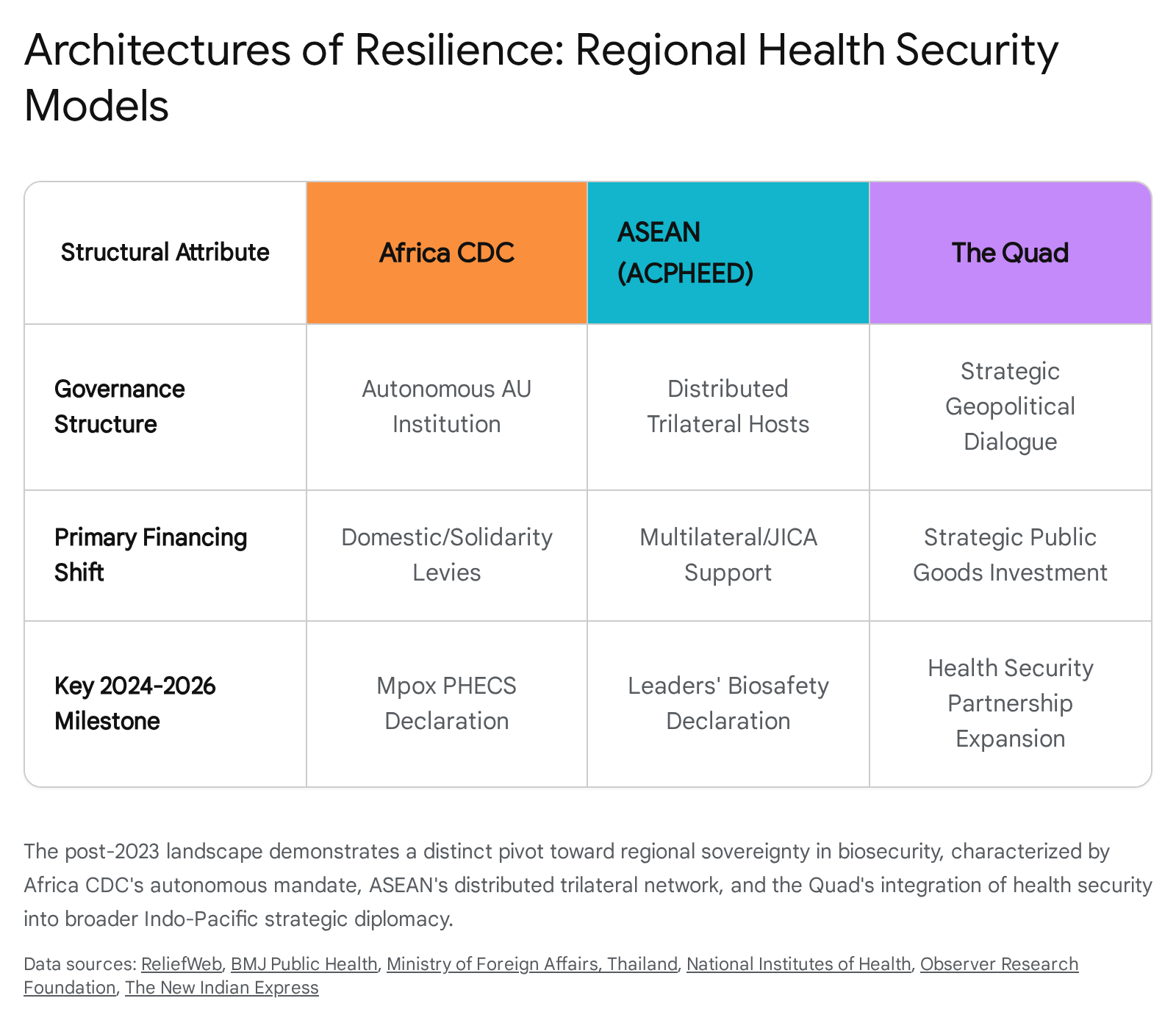
The African continent is undergoing a paradigm shift in its approach to public health, transitioning from aid dependence to sovereign health financing. Recognizing that external health aid to Africa is projected to plunge by seventy percent between 2021 and 2025, the Africa Centres for Disease Control and Prevention (Africa CDC) has initiated a radical "New Public Health Order" 62627. This strategy is designed to ensure that Africa drives its own health agenda and maintains the capacity to respond to crises with autonomy 627.
In 2022, the African Union (AU) granted the Africa CDC autonomous institutional status, a landmark decision that endowed the agency with the authority to declare Public Health Emergencies of Continental Security (PHECS) 28. The exercise of this power during the August 2024 Mpox outbreak - the first PHECS in the continent's history - galvanized rapid regional funding and forced the WHO to reinstate its own global emergency declaration, demonstrating Africa CDC's growing influence as a global norm entrepreneur 2829. To track and contain such threats, Africa CDC launched the Pathogen Genomics Initiative and the Africa Genome Archiving for Response and Insight platform in late 2025, accelerating public health decision-making and ensuring that over seventy percent of AU member states possess domestic sequencing capability 28.
To finance this autonomy, the Africa CDC's strategy urges member states to fulfill the Abuja Declaration, which requires allocating at least fifteen percent of national budgets to health 6. It also explores innovative mechanisms such as solidarity levies on airline tickets, alcohol, and mobile services, alongside the redirection of diaspora remittances 626. Concurrently, through the Biosafety and Biosecurity Initiative (BBI) 2021-2025, the Africa CDC is aggressively working to bring member states into compliance with International Health Regulations (IHR) and the Biological Weapons Convention, establishing surveillance networks for high-consequence agents to mitigate both natural outbreaks and the growing threat of bioterrorism across the continent 525330. Despite facing scrutiny in recent audits, Africa CDC's rapid implementation of robust anti-fraud policies and economic risk frameworks has secured renewed direct funding from international partners like the UK, indicating strong global confidence in its decentralized model 28.
The ASEAN Approach: Distributed Operational Structures
In Southeast Asia, the Association of Southeast Asian Nations (ASEAN) has similarly recognized the need for localized defense mechanisms against biological threats. Following the 2020 commitment by ASEAN leaders, the region established the ASEAN Centre for Public Health Emergencies and Emerging Diseases (ACPHEED), heavily supported by technical cooperation from the Japan International Cooperation Agency (JICA) 313233.
Unlike centralized models like the ECDC in Europe or the Africa CDC, ACPHEED utilizes a highly distributed operational structure across three host countries to navigate ASEAN's consensus-based, non-legislative nature 734. Thailand hosts the response and secretariat functions, Indonesia hosts the detection functions, and Vietnam hosts the prevention functions 734. This trilateral model requires intricate coordination but ensures broad member-state ownership across a diverse geographical area.
In October 2024, the region further solidified its commitment by adopting the ASEAN Leaders' Declaration on Strengthening Regional Biosafety and Biosecurity 3560. This declaration, spearheaded by Lao PDR, led to the establishment of the ASEAN Biosafety and Biosecurity Network in 2025 to harmonize standards and manage both emerging infectious diseases and the dual-use risks associated with biotechnology 353637. Through the Mitigation of Biological Threats (MBT) program, which launched its ambitious third phase (2024-2027), ASEAN is strengthening multi-sectoral integration, ensuring that biosecurity is not just a health sector issue, but a core component of regional defense and foreign affairs 3538.
The Indo-Pacific Quad: Health Security as Geopolitical Statecraft
Parallel to ASEAN's efforts, the Quad - comprising the United States, India, Japan, and Australia - has increasingly positioned health security and biotechnology as central pillars of its strategic engagement in the Indo-Pacific 8. Moving beyond traditional military posturing, the Quad frames its role as the provision of "public goods" for the Indo-Pacific, delivering tangible cooperation in areas such as maritime security, critical minerals, and digital infrastructure to build regional resilience without framing the alliance as a purely anti-China military bloc 39.
Through the Quad Health Security Partnership and the commitments outlined in the Wilmington Declaration, the coalition is aligning national biotechnology capabilities 8. At the Quad Foreign Ministers' Meeting in New Delhi in May 2026, the members pledged over fifty million dollars to train health professionals for public health emergencies and reinforced capabilities for regional disaster response 4067. By focusing on equitable access to vaccines, strengthening regional surveillance measures through simulation exercises, and promoting engagement among the scientific community, the Quad demonstrates that biosecurity is now recognized as a critical component of national sovereignty and high-level geopolitical statecraft 840.
The Evolving Governance Architecture: IHR Amendments and the GPMB
To govern this highly complex, multi-polar threat landscape, international legal frameworks are undergoing critical revisions. In 2024, the World Health Assembly adopted landmark amendments to the International Health Regulations (IHR) following over two years of intense negotiations 414243. These amendments, which enter into force for 182 States Parties on September 19, 2025, represent a historic commitment to protect future generations with a renewed focus on equity and solidarity 414344.
| Key Feature of 2024 IHR Amendments | Strategic Objective | Implementation Target |
|---|---|---|
| "Pandemic Emergency" Tier | Triggers stronger, rapid international collaboration when a health risk escalates beyond a standard PHEIC, posing a severe societal threat. | Effective Sept. 2025 |
| National IHR Authorities | Overcomes fragmented domestic governance by mandating a central, empowered body to coordinate intersectoral implementation within each nation. | Effective Sept. 2025 |
| Equity & Financing Provisions | Strengthens access to medical products and establishes financing mechanisms based on global solidarity for low-resource states. | Effective Sept. 2025 |
A central feature of these amendments is the creation of a new, elevated tier of global alert: the "pandemic emergency" 4144. This mechanism is designed to trigger aggressive international collaboration when a public health event threatens to escalate beyond a localized Public Health Emergency of International Concern (PHEIC) into a global shock with widespread impact on health systems and societies 41. Furthermore, the amendments mandate that states designate National IHR Authorities to coordinate intersectoral implementation at the domestic level 4143. This aims to resolve the fragmented authority, limited legal mandates, and weak cross-sectoral coordination that crippled responses during the COVID-19 pandemic 43.
While the vast majority of nations have adopted these amendments, eleven of the 196 IHR States Parties rejected the 2024 amendments 41. For instance, New Zealand formally communicated its rejection to the WHO Director-General in March 2026, opting to conduct a 'national interest test' to preserve sovereignty over future amendment timelines, highlighting the ongoing tension between binding global health governance and national autonomy 4145.
Complementing these legal shifts, the Global Preparedness Monitoring Board (GPMB) released its 2025 report, The New Face of Pandemic Preparedness, which calls for a radical paradigm shift encapsulated in three imperatives: CARE, MEASURE, and COOPERATE 373.
- CARE: Emphasizes that technological advancements are insufficient without robust primary healthcare systems that reach deep into communities, providing essential services in peacetime to build the trust necessary for crisis response 1446.
- MEASURE: Proposes the establishment of a comprehensive global pandemic risk observatory to monitor threats, vulnerabilities, and preparedness in real time, synthesizing environmental, social, and economic data into clear signals for leadership 1473.
- COOPERATE: Urges the ratification of binding pandemic agreements and the strengthening of cross-sector connections, moving beyond fragmented efforts to embrace collaborative innovation 1446.
Practical Healthcare Takeaways for the 2025-2035 Horizon
For frontline healthcare systems, clinical practitioners, and policymakers, the macro-level scenarios and geopolitical shifts discussed above dictate immediate, practical transformations. Preparing for the next biological event - whether a zoonotic spillover or Disease X - requires fundamentally rewiring the delivery of care and the regulation of medical technology.
The Shift from Hospital to Community Care
As outlined in strategic healthcare planning, such as the UK National Health Service (NHS) clinical strategy for 2035, systemic resilience demands moving care out of concentrated hospital settings and into the community 47. Over-reliance on centralized, massive hospital infrastructure creates critical bottlenecks during a pandemic, as witnessed when COVID-19 overwhelmed intensive care units globally. A robust primary care network allows for early detection, decentralized triage, and the maintenance of essential, non-pandemic medical services (such as cancer screenings and chronic disease management) during a crisis 1447. The strategic focus is pivoting from reactive treatment to proactive prevention, utilizing remote monitoring and community-based interventions to keep populations healthier and out of the hospital ecosystem 47.
Navigating the Regulation of Digital Health and AI
The integration of artificial intelligence into clinical decision support, epidemiological surveillance, and synthetic biology is accelerating at an unprecedented pace. However, as mandated by incoming regulations like the EU AI Act (with most high-risk obligations becoming applicable by August 2026) and the U.S. FDA's updated Clinical Decision Support software guidance (effective January 2026), healthcare systems must implement strict, auditable governance 76.
AI triage systems or predictive diagnostic tools deployed during a public health emergency are classified as high-risk 76. Their implementation must be subject to stringent human oversight, clear override protocols, and rigorous documentation of outputs to prevent algorithmic failures or biased resource allocation during a chaotic crisis 76. Organizations deploying Large Multimodal Models (LMMs) in clinical settings must ensure that professional liability coverage explicitly addresses AI use and that incident response protocols are prepared for AI-related adverse events 76.
Workforce Protection and Community-Led Monitoring
The Endemic Churn scenario highlights the severe vulnerability of the healthcare workforce to attrition and burnout. Systemic preparedness requires protecting health workers not only through physical biosecurity measures - such as implementing ISO 35001 biorisk management standards in laboratories - but also through mental health support and sustainable staffing models 4. Furthermore, integrating Community-Led Monitoring (CLM) into Pandemic Prevention, Preparedness, and Response (PPPR) strategies ensures that the lived experiences of vulnerable populations inform real-time public health interventions, avoiding the top-down, opaque policy failures seen in past crises 77. By actively engaging community feedback, health authorities can build the trust necessary to implement effective containment and vaccination campaigns when Disease X inevitably emerges 377.