Scientific Research on Optimal Screen Time for Adults
The proliferation of digital interfaces has fundamentally rewired the daily architecture of human existence. In an era where global average screen time hovers around 6 hours and 58 minutes per day, and upwards of 40% of waking hours are spent engaging with internet-connected devices, the public health discourse surrounding screen exposure has become increasingly urgent and highly polarized 123. Historically, the narrative has been dominated by a reductionist focus on aggregate duration - measuring the sheer volume of hours an individual spends looking at a screen. However, an overwhelming consensus emerging from contemporary scholarship published between 2023 and 2026 indicates that this monolithic metric is vastly inadequate, particularly for adult populations 156.
This comprehensive report deconstructs the prevailing orthodoxies surrounding adult screen habits. It explicitly untangles the persistent conflation of adult digital behaviors with pediatric screen time guidelines, illustrating the misconception of a universal, optimal hour limit for adults 1. Furthermore, the analysis stratifies screen use into nuanced typologies - differentiating between active social engagement, passive consumption, and compulsive behaviors such as doomscrolling - to accurately assess their divergent psychological impacts 2345. By synthesizing recent peer-reviewed literature and geographically diverse data, this investigation maps the underlying physiological mechanisms of digital engagement, challenging established myths regarding blue light and sleep architecture, while detailing the severe somatic consequences of musculoskeletal strain and ophthalmic morbidity 678. Ultimately, the report positions the "displacement hypothesis" as the central explanatory framework for understanding the true costs of ubiquitous digital immersion, providing a granular, evidence-based paradigm for navigating the modern digital ecosystem.
The Pediatric Conflation and the Misconception of a Universal Hour Limit
A persistent fallacy in public health reporting and popular consciousness is the assumption that screen time operates on a linear toxicity curve applicable to all demographics, driving a futile search for a universal "safe" hour limit for adults 1. This misconception is largely an artifact of conflating adult technological integration with pediatric and adolescent developmental guidelines, which are necessarily stringent and highly specific 1910.
In recent years, health authorities globally have issued rigorous, age-stratified guidelines for children to protect neurological development. A prominent example emerged in September 2024, when the Public Health Agency of Sweden (Folkhälsomyndigheten) announced sweeping recommendations: zero screen exposure for children under two years of age, a maximum of one hour for children aged two to five, and a strict cap of three hours for adolescents up to age 18 11121813. These guidelines, mirrored by revised directives from the Danish Health Authority and the Norwegian Directorate of Health, are deeply rooted in developmental neurobiology 14. Early childhood represents a critical window for the acquisition of language, motor skills, and socio-emotional regulation, all of which require complex, three-dimensional, face-to-face interactions and the physical manipulation of the environment 132115. Screen use in these vulnerable cohorts poses a significant risk of disrupting fundamental brain development. Longitudinal studies, such as the Adolescent Brain Cognitive Development study from the University of Fukui and longitudinal tracking from the National University of Singapore, have linked excessive early screen exposure to smaller volumes in the brain's reward centers, reduced overall gray matter, increased symptoms of attention deficit hyperactivity disorder (ADHD), and severe delays in executive functioning 21.
However, translating these quantitative caps directly to adult populations represents a categorical error in public health translation 15. Unlike pediatric use, which is heavily weighted toward entertainment, passive consumption, and unregulated algorithmic feeds, adult screen use is deeply integrated into occupational, logistical, and complex social infrastructures 1516. As researchers and behavioral psychologists increasingly point out, asking "how much screen time is too much for adults?" is the wrong question entirely 1. An adult spending eight hours engaged in intensive, screen-based occupational tasks (such as coding, writing, or data analysis), followed by a two-hour video call to maintain long-distance familial relationships, accrues ten hours of total screen time. This profile is profoundly different - both neurologically and sociologically - from an adult spending ten hours passively scrolling through high-arousal algorithmic social media feeds 153.
For adult populations, the concept of a rigid, optimal hour limit is biologically and sociologically obsolete 1. Instead, the scientific paradigm has shifted away from measuring quantity toward evaluating context, content, and cognitive engagement. The health outcomes associated with adult digital habits are determined by the specific nature of the activity, the cognitive state of the user, and, crucially, what physical and restorative offline activities that screen time is displacing 56.
Media Sensationalism and the Amplification of Digital Fear
The conflation of pediatric caps with adult limits is frequently exacerbated by the media's framing of scientific research. A pervasive trend in science communication surrounding digital habits is the disproportionate amplification of negative findings, driven by the algorithmic incentive structures of the internet itself 1017.
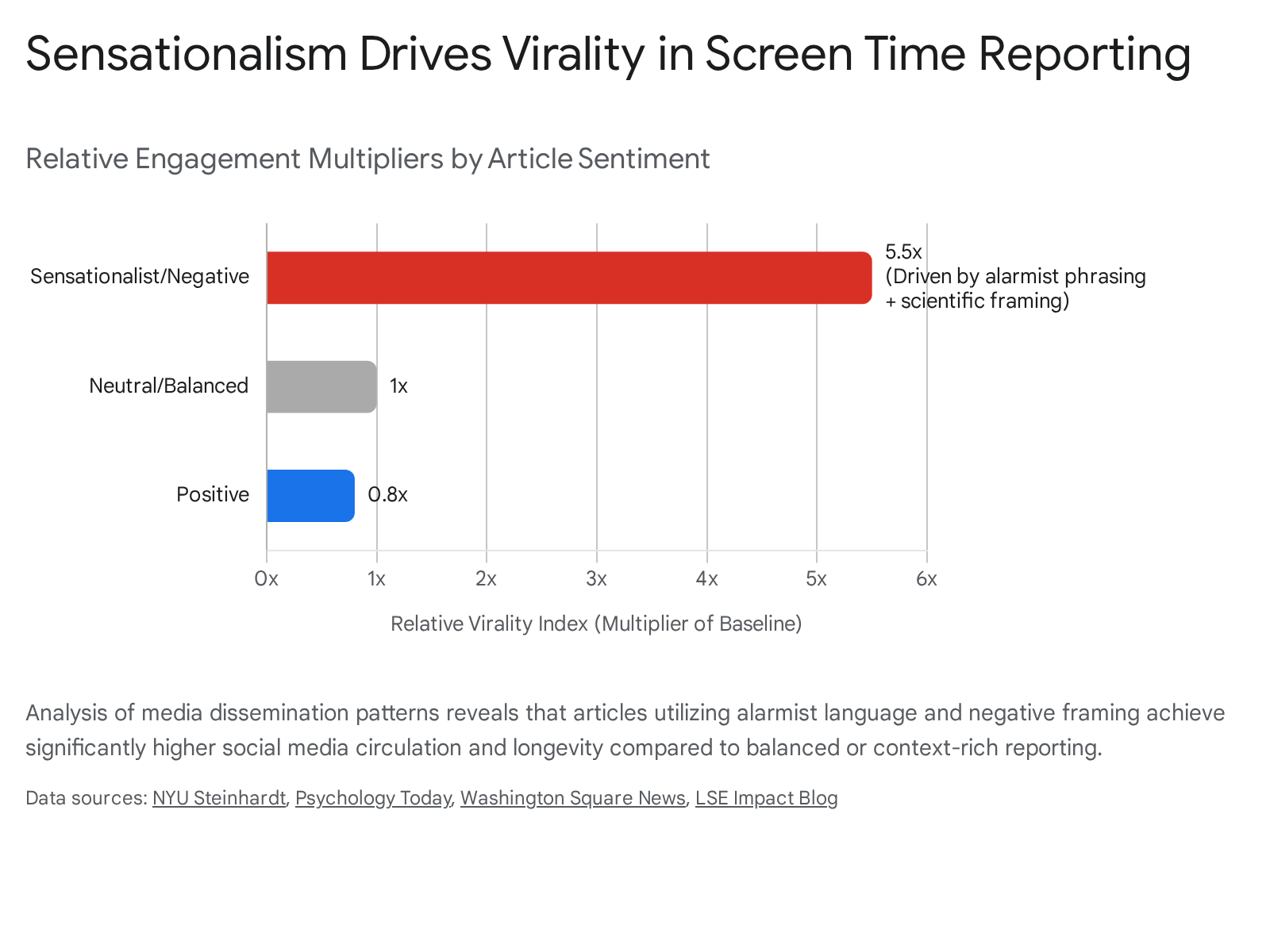
A 2025 study conducted by researchers at New York University's (NYU) Steinhardt School analyzed how screen time research is disseminated to the public. By examining 136 online articles regarding digital habits published between 2016 and 2021, the researchers discovered that the online articles achieving the highest virality and longevity consistently blended attention-grabbing, sensationalist terminology (e.g., using terms like "alarming," "irreversible damage," and "epidemic") with strong scientific framing 1718. The inclusion of scientific context, such as referencing multiple peer-reviewed studies or discussing methodological limitations, ironically served to legitimize the alarmist rhetoric, making the stories both gripping and perceived as highly credible 1017.
This dynamic creates a potent echo chamber: articles portraying screen time as universally harmful spread exponentially faster than those presenting neutral, conditional, or balanced findings 101718. Furthermore, the NYU researchers found that a mere six academic studies accounted for 43% of all scientific references across hundreds of articles, creating an illusion of overwhelming scientific consensus around maximal harm while entirely ignoring a vast body of literature demonstrating nuanced or even positive effects of digital engagement 1017. This sensationalism directly impacts public perception, fostering a cycle of fear and guilt, particularly among parents and young adults, who are left feeling entirely dysregulated by their unavoidable reliance on technology 1026.
To appropriately contextualize this phenomenon, the following table contrasts prevalent, sensationalist media headlines with the nuanced realities of the underlying peer-reviewed findings, highlighting the primary deficits in media interpretation.
Markdown Table 1: Media Sensationalism vs. Empirical Reality
| Sensationalist Media Headline / Narrative | Actual Underlying Study Findings & Context | Primary Deficit in Media Interpretation |
|---|---|---|
| "Social Media Drives Unprecedented Adult & Teen Depression Epidemic" | A 2026 Manchester University longitudinal study of 25,600 youths found no evidence that heavier social media use inherently increased anxiety or depression over a multi-year period for boys or girls 27. | Ignoring Complexity & Bidirectionality: Sensationalist articles ignore that pre-existing mental health issues often drive individuals to seek coping mechanisms online, creating a bidirectional feedback loop rather than a simple causal chain 91920. |
| "Banning Screens Before Bed Will Cure the Insomnia Crisis" | 2024 meta-analyses reveal that blue light intensity from standard consumer devices (max ~80 lux) is vastly insufficient to significantly alter circadian timing, delaying sleep onset by a negligible average of 9.9 minutes 6. | Misattributing the Mechanism: Headlines blame the photonic properties of the screen (blue light) rather than the psychological arousal caused by the interactive and emotionally charged content being consumed 621. |
| "Global Screen Time Averages Reach a Shocking 7 Hours: The New Health Crisis" | While the global average is roughly 6 hours and 58 minutes, much of this is driven by occupational necessity. Outcomes depend entirely on whether the time is active/social or passive/isolated 135. | Flattening of Context: Fails to distinguish between a telecommuting professional engaged in cognitive labor and a passive consumer of algorithmic short-form video 51622. |
| "Technology is Destroying Empathy and Real-World Connection" | Evidence from 141 studies shows that active social media use is associated with greater perceptions of social support and connection, particularly for those with strong pre-existing offline networks 24. | Conflation of Use Types: Assumes all screen time is isolating, ignoring the prosocial benefits of active engagement, messaging, and community building for marginalized or geographically isolated groups 310. |
Geographic Diversity and Cultural Contexts of Digital Consumption
The manifestation and impact of screen time are not geographically or culturally uniform; they are heavily mediated by macroeconomic factors, cultural values, and infrastructural access. An analysis of global internet usage statistics from 2024 and 2025 reveals stark contrasts in how different populations interact with digital interfaces, proving that screen habits cannot be analyzed in a cultural vacuum 12324.
Globally, the average time spent using internet-connected screens rose by nearly 50 minutes between 2013 and 2024, currently sitting at roughly 6 hours and 58 minutes per day 134. However, this global average obscures massive regional variance. Nations within the Global South and emerging economies consistently report the highest aggregate durations. For instance, South Africa leads global internet usage, with adults averaging an extraordinary 9 hours and 24 minutes to 10 hours and 46 minutes of screen time daily 1235. Similarly, Brazil and the Philippines report averages exceeding 9 hours per day 23525. In these regions, high usage is fundamentally tied to the smartphone serving as the singular conduit for internet access, banking, essential social infrastructure, and entertainment, as opposed to distributed multi-device ecosystems found in wealthier nations 2335. Conversely, in the United States, Canada, and parts of Europe, daily averages hover closely around the 7-hour mark, reflecting a blend of heavy occupational computer use during the day and robust leisure consumption via televisions and mobile devices in the evening 122337.
The East Asian context presents a particularly fascinating dichotomy between absolute duration and cultural anxiety, offering critical insights into how societal values shape digital health outcomes. Japan records some of the lowest average daily screen times in the industrialized world, averaging just under 4 hours per day (3 hours and 56 minutes) 235. This lower aggregate is partially attributable to demographic skew - nearly 30% of the Japanese population is over 65 years old, a cohort that generally exhibits lower digital engagement 37. Furthermore, a 2026 study by Chiba University revealed an "AI divide" in Japan, where only 21.3% of adults had utilized generative AI technologies within the past year, trailing significantly behind adoption rates in China (81.2%) and the US (68.6%) 26. Despite this relatively low overall usage, Japan exhibits profound societal concern regarding digital well-being. A 2025 wellness survey by Dentsu Inc. noted that while older generations prioritize health, younger demographics actively seek digital health communities, balancing tech integration with well-being 39. Japan's hypersensitivity to technological impact is evidenced by the establishment of outpatient clinics for "smartphone dementia" in Tokyo - a condition characterized by temporary cognitive overload, memory impairment, and severe concentration deficits due to processing vast amounts of digital information 25. Furthermore, municipal ordinances, such as the one enacted in Toyoake in 2025, actively advise residents to limit leisure screen time to two hours per day, illustrating a top-down cultural approach to digital hygiene 25.
In sharp contrast to Japan's lower usage, South Korea represents a highly connected, high-usage paradigm driven by world-leading digital infrastructure and intense societal pressures 2427. With an astonishing 98% smartphone ownership rate among adults and 99.1% among adolescents, South Korean screen time has grown at an estimated annual rate of 12.6% since 2016 2427. A 2024 government survey indicated that 42.6% of South Korean adolescents and a substantial portion of adults are classified as being at risk for "smartphone overdependence," a psychological state where the device becomes the most salient aspect of daily life, impairing self-regulation and leading to physical, psychological, or social dysfunction 2728. Predictive models tracking South Korean populations emphasize that this overdependence often displaces deeply ingrained Confucian values of educational rigor, productivity, and familial duty 2429. Studies using the Smartphone Overdependence Scale in Korea show strong correlations between high usage (over 4 hours daily) and elevated odds of generalized anxiety disorder (GAD), loneliness, and perceived stress 3031. In both Japan and South Korea, the qualitative impact of screen time on psychological well-being is treated as a major public health priority, demonstrating that the psychological salience and cultural context of device use are far more predictive of harm than the raw hours accumulated 253032.
The Taxonomy of Engagement: Active, Passive, and Compulsive Consumption
To accurately understand the adult digital experience, epidemiological and psychological research has decisively moved beyond tracking "total minutes" toward analyzing the taxonomy of engagement. The psychological sequelae of screen time are fundamentally dictated by whether the user is an active participant utilizing the tool for connection, a passive receptacle for content, or a compulsive consumer trapped in an algorithmic loop 235.
Active vs. Passive Social Media Use
A comprehensive 2024 systematic review and meta-analysis published in the Journal of Computer-Mediated Communication, encompassing 141 studies and approximately 145,000 participants, evaluated the disparate effects of active versus passive social media use on adult mental health and well-being 2. Active use is behaviorally defined as actions that facilitate reciprocal interaction and content creation - such as direct messaging, commenting thoughtfully on peers' updates, sharing original content, or participating in targeted community discussions 2333. Passive use, conversely, involves mindless, infinite scrolling, lurking, and consuming algorithmic content without engaging in two-way communication or creating a digital footprint 23433.
The empirical evidence decisively demonstrates that active engagement yields modest but statistically significant positive effects on psychological well-being. The meta-analysis revealed that active use is positively correlated with greater perceptions of online social support (r = .34), reduced feelings of loneliness, and the alleviation of social isolation 23. For adults utilizing digital platforms to maintain preexisting offline relationships, collaborate professionally, or seek out specialized affinity groups, active screen time functions as a potent pro-social mechanism 34. Interestingly, age demographics modulate this effect; some 2024 research suggests that while younger adults heavily rely on active engagement to build self-esteem and peer networks, older adults may actually derive moderate well-being benefits from passively consuming content they enjoy without the pressure of active social maintenance 47.
However, for the general adult population, passive consumption is consistently linked to deleterious mental health outcomes 43348. The mechanisms driving this harm are deeply rooted in evolutionary psychology and social comparison theory. Infinite scrolling exposes users to highly curated, idealized, and often heavily edited representations of others' lives, triggering relentless upward social comparisons 333. This constant benchmarking fosters profound feelings of inadequacy, envy, and body dissatisfaction. Furthermore, passive consumption creates a dangerous illusion of social connection while entirely lacking the neurochemical rewards - such as the release of oxytocin and reduction of cortisol - generated by genuine, reciprocal human interaction, ultimately exacerbating feelings of isolation 3.
The Neuroscience of Doomscrolling and "Brain Rot"
Perhaps the most pernicious and rapidly accelerating manifestation of passive screen time is "doomscrolling" - the compulsive, indiscriminate, and prolonged consumption of negative news and hostile social media feeds 343551. Originally entering the cultural lexicon during the COVID-19 pandemic, doomscrolling has evolved into a persistent behavioral phenomenon driven by the intersection of human neurobiology and algorithmic platform design 53451. The Oxford Word of the Year for 2024, "brain rot," colloquially captures this exact phenomenon: the cognitive decline, emotional desensitization, and mental exhaustion resulting from the overconsumption of low-quality, high-arousal digital content 36.
From an evolutionary standpoint, the human brain is hardwired with a "negativity bias," an adaptive survival trait designed to prioritize novel threats in the environment to ensure physical safety 3451. Algorithms governing social media platforms are explicitly optimized to exploit this bias to maximize user retention and ad revenue. A 2024 computational study by Stanford University, which utilized sophisticated sentiment analysis on nearly 30 million social media posts over a decade, demonstrated that highly arousing, negative content goes viral at significantly higher rates than positive or neutral content 37. The researchers found that news sources consistently post twice as much negative content as positive, effectively weaponizing fear and anger to capture human attention 37. Similarly, a 2024 study from the Massachusetts Institute of Technology (MIT) identified a causal, bidirectional relationship: individuals with pre-existing mental health symptoms are more likely to seek out fearful or negative online content, which in turn significantly worsens their mood, creating a toxic feedback loop 19.
When an adult engages in doomscrolling, the brain's amygdala initiates a severe stress response, triggering the release of cortisol and adrenaline 51. Because the "threat" is continuous, abstract, and unresolved within the digital feed, the autonomic nervous system remains locked in a state of chronic hyperarousal. Recent studies from 2024 and 2025 have linked doomscrolling to severe psychological consequences, including "popcorn brain" (a state of chronic overstimulation making it difficult to engage with the slower pace of the offline world), existential anxiety (dread regarding the fragility and lack of control over one's life), and intense misanthropy (a profound distrust and suspicion of humanity) 53551. Unlike healthy, bounded information-gathering aimed at problem-solving, doomscrolling provides no actionable utility; it merely induces a state of learned helplessness, cognitive overload, and physical tension 53436.
Deconstructing Physiological Mechanisms: Blue Light vs. Psychological Arousal
For the past decade, public health messaging regarding screen time and sleep architecture has overwhelmingly focused on the pernicious effects of blue light. The standard, widely accepted hypothesis posits that the short-wavelength (blue) light emitted by digital devices suppresses the pineal gland's secretion of melatonin - the hormone responsible for regulating circadian rhythms - thereby delaying sleep onset and degrading overall sleep quality 213839. While this mechanism is photobiologically sound in highly controlled laboratory settings using intense, continuous light sources, recent systematic reviews from 2024 indicate that the clinical impact of blue light from standard consumer electronics has been vastly overstated 621.
A landmark 2024 analysis published in Sleep Medicine Reviews evaluated global data on technology use and sleep, concluding that the light emitted from standard smartphones and tablets is simply not intense enough to cause massive circadian disruption in real-world scenarios 6. To significantly alter sleep timing (e.g., treating jet lag or shift work disorders), the human eye requires exposure to approximately 500 lux of light 6. In contrast, the brightest consumer screens typically emit a maximum of only 80 lux 6. Consequently, the meta-analysis found that screen use before bed delays sleep onset by a mathematically negligible average of just 9.9 minutes 6.
If the photons themselves are not the primary culprit behind modern, screen-induced insomnia, what is? Sleep specialists and neuroscientists increasingly point to psychological and cognitive arousal 2138. The emotional stimulation derived from interacting with digital content commands the brain to remain alert and engaged. This neurochemical state of high arousal directly counteracts the physiological transition into the parasympathetic "rest and digest" state necessary for sleep initiation 551. For instance, reading a static, calming e-book on a brightly lit tablet may yield similar sleep outcomes to reading a physical book. However, playing a highly competitive multiplayer game, interacting with generative AI, or engaging in hostile social media debates will severely disrupt sleep architecture, regardless of whether the user is wearing blue-light-blocking glasses 62156. The disruption is cognitive, not purely photonic.
The Displacement Hypothesis vs. Direct Effects
To understand why high volumes of screen time consistently correlate with adverse health outcomes in adults, researchers leverage two competing but occasionally overlapping paradigms: the direct effect model and the displacement hypothesis.
The direct effect model argues that the digital medium itself intrinsically causes harm (e.g., the specific visual strain of the pixels, or the inherent toxicity of digital interfaces promoting addiction). While valid in specific contexts like dopamine regulation, contemporary meta-analyses overwhelmingly favor the displacement hypothesis as the primary engine of systemic morbidity 615574041.
The displacement hypothesis posits that digital media is not necessarily inherently toxic; rather, the harm arises from the essential, health-promoting physical and psychological activities that are pushed out - or displaced - by exorbitant screen time 6225742. Time is a rigid, zero-sum commodity. When global adults average nearly 7 hours of daily screen time, that massive duration must be cannibalized from other essential aspects of human life 1640.
- Sleep Displacement: As previously established, adults routinely sacrifice hours of restorative sleep to accommodate late-night screen use (often termed "revenge bedtime procrastination") 65740. The erosion of sleep architecture is a profound catalyst for a cascade of psychiatric and metabolic pathologies. A massive 2025 cohort study identifying cardiometabolic risks demonstrated that the cardiovascular dangers of high screen time are heavily moderated and worsened by the displacement of adequate sleep duration 43.
- Physical Activity Displacement: Prolonged screen engagement is inherently sedentary. The displacement of physical exercise and "green time" (outdoor exposure) creates a severe "nature deficit" 641. A lack of physical exertion deprives the adult brain of mood-regulating endorphins and neurogenesis factors, rendering highly sedentary populations statistically more vulnerable to internalizing disorders such as depression, anxiety, and multisite chronic pain (MCP) 64144.
- Social Displacement: While the internet theoretically facilitates global connection, heavy, unstructured screen time often displaces high-fidelity, face-to-face interactions 62045. Longitudinal dynamic linear panel models from 2026 observing adult populations reveal a reciprocal, bidirectional relationship between Problematic Internet Use (PIU) and loneliness 45. As individuals spend excessive time online at the expense of physical socializing, they become lonelier; this loneliness, in turn, drives them to seek solace in further compulsive internet use, creating a destructive, self-reinforcing behavioral loop that erodes actual community ties 45.
Somatic Consequences: Musculoskeletal and Ophthalmic Morbidity
While the psychological and temporal impacts of screen time dominate public and psychiatric discourse, the profound somatic consequences - specifically targeting the musculoskeletal and visual systems - represent a rapidly escalating occupational and public health crisis for adults globally.
"Tech Neck" and Cervical Instability
The human head weighs roughly 10 to 12 pounds in a neutral, upright position 64. However, the biomechanics of engaging with smartphones and laptops demand a sustained, extreme forward head posture, colloquially known as "text neck" or "tech neck" 76465. For every 15 degrees the head tilts forward, the load placed on the cervical spine more than doubles; at a standard 45-to-60-degree smartphone viewing angle, the cervical spine is subjected to approximately 27 to 60 pounds of continuous, unnatural force 64.
This chronic, unnatural loading leads to a cascade of musculoskeletal pathologies. Prolonged screen time is significantly correlated with muscular spasms, facet joint syndrome, and early-onset cervical spondylosis (spinal degeneration) 76446. Crucially, breakthrough anatomical research in 2024 and 2025 has identified far deeper, systemic ramifications of this postural collapse. Studies utilizing advanced imaging have linked chronic forward head posture to Ligamentous Cervical Instability (LCI), specifically at the C1-C2 vertebrae 767. This profound structural instability can physically compress the Internal Jugular Vein (IJV) and cause degeneration of the vagus nerve 767. The compression of the IJV severely impairs venous outflow from the brain, leading to intracranial hypertension. This buildup of pressure is a newly identified, critical physiological mechanism explaining why heavy screen users frequently report persistent headaches, eye pain, photophobia, and blurry vision - symptoms traditionally misattributed solely to the optical glare of the screen itself 76768.
Digital Eye Strain and the Global Myopia Epidemic
Simultaneous to the musculoskeletal damage, the human visual system bears a heavy burden from constant, close-proximity focal accommodation. The phenomenon of Digital Eye Strain (DES), also referred to as Computer Vision Syndrome, affects up to 90% of regular computer users globally 6768. It is characterized by severe visual fatigue, dry eyes due to significantly reduced blink rates, and conjunctival hyperemia 6568.
Beyond acute fatigue, exhaustive peer-reviewed literature has confirmed a direct, dose-dependent relationship between screen time and the development and progression of myopia (nearsightedness) 84748. A monumental 2025 systematic review and nonlinear dose-response meta-analysis (DRMA) - published in JAMA Network Open, encompassing 45 studies and over 335,000 participants - provided definitive, alarming quantification of this risk 87149. The researchers found that each additional hour of daily screen time is associated with a staggering 21% increase in the risk of developing myopia 84749. Crucially, the nonlinear dose-response curve exhibits a sigmoidal shape: the risk of myopia accelerates sharply between 1 and 4 hours of continuous daily screen exposure, after which the incremental risk plateaus at a high baseline 84771. Furthermore, the risk of myopia increases by 77% when smartphone or tablet use is combined with computer use 8. This comprehensive data suggests a potential optical "safety threshold" of less than one hour of continuous near-focal screen exposure, emphasizing the absolute necessity of interrupting sustained ciliary muscle contraction to halt myopic progression 4771.
Contextual Synthesis: Physiological vs. Psychological Impacts
To synthesize the complex, multidimensional effects of modern digital habits, it is essential to map the specific outcomes of screen time against the behavioral context of the user. As established throughout this report, screen time is not a monolithic toxin, but a highly variable exposure whose impacts are dictated by the taxonomy of engagement.
The following table summarizes the divergent physiological and psychological impacts based entirely on the specific context of screen use, providing a definitive roadmap for understanding adult digital morbidity.
Markdown Table 2: Contextual Stratification of Screen Impacts
| Typology of Screen Use | Behavioral Definition & Context | Primary Psychological Impacts | Primary Physiological Impacts |
|---|---|---|---|
| Active / Pro-social Engagement | Direct messaging, collaborative gaming, content creation, and active participation in online community discussions 2333. | Positive/Neutral: Enhanced perception of social support, reduced feelings of isolation, and fulfillment of fundamental belongingness needs 234. | Neutral: Lower stress biomarkers compared to passive use, though still carries risks of sedentary behavior if displacing physical activity 3. |
| Passive Consumption | Infinite scrolling, lurking, and observing idealized, curated lifestyles without interacting or contributing 23433. | Negative: Severe upward social comparison, envy, fear of missing out (FOMO), and exacerbation of loneliness and depressive symptoms 3433. | Negative: Sedentary behavior leading to lethargy; high potential for sleep displacement and subsequent cardiometabolic risk 343. |
| Compulsive (Doomscrolling / Brain Rot) | Indiscriminate, extended, and uncontrollable consumption of highly arousing, negative news and hostile feeds 534355136. | Highly Negative: Existential anxiety, misanthropy, learned helplessness, emotional desensitization, and "popcorn brain" (cognitive overstimulation) 5355136. | Highly Negative: Chronic autonomic hyperarousal, elevated cortisol/adrenaline, psychological insomnia, tension headaches, and muscle spasms 53451. |
| Occupational / Utility | Engaging with professional software, teleconferencing, academic research, and digital organization 1516. | Variable: Dependent on job stress. Can lead to severe cognitive fatigue, burnout, and diminished engagement if uninterrupted 15. | Highly Negative: Maximum risk for digital eye strain, myopia progression (21% risk increase per hour), "tech neck", and LCI C1-C2 instability 786747. |
Conclusion
The contemporary adult relationship with digital screens is an inextricable, foundational component of modern socioeconomic survival. Consequently, public health frameworks that rely on draconian, arbitrary hour limits - borrowed inappropriately from pediatric developmental guidelines - are both impractical and scientifically invalid for adult populations 1910.
The empirical consensus derived from robust 2020-2026 data dictates a fundamental, necessary paradigm shift in how digital health is assessed. Screen time must be evaluated not by the stopwatch, but by its qualitative nature, its psychological salience, and its systemic bodily consequences. Active, intent-driven engagement that fosters genuine social connection, maintains familial ties, and provides occupational utility serves as a net positive, provided it does not violate fundamental ergonomic boundaries 123. Conversely, passive scrolling and compulsion-driven doomscrolling act as insidious, algorithmically driven vectors for psychological distress, trapping the autonomic nervous system in chronic hyperarousal and exacerbating feelings of existential dread and societal isolation 5355137.
Furthermore, the profound physical costs of this digital era - ranging from the structural decay of the cervical spine due to forward head posture to the global, unprecedented surge in myopia - demand rigorous, immediate ergonomic intervention and public awareness 7867. Above all, individuals, medical professionals, and policymakers must confront the displacement hypothesis: the ultimate metric of digital harm is not merely what is happening on the screen, but what is quietly vanishing from the physical world. When screens routinely cannibalize restorative sleep architecture, vital cardiovascular exercise, and the rich, complex neurochemistry of face-to-face human interaction, the resulting deficits manifest as a profound, systemic crisis of both physiological and psychological public health 65740. Optimizing adult screen habits requires a complete rejection of simplistic time caps in favor of a holistic, disciplined curation of digital context, content, and rigid physical boundaries.