
Scientific evaluation of the microaggression construct
Introduction to the Phenomenon
The concept of microaggressions has transitioned from a specialized psychiatric descriptor into a focal point of psychological research, organizational behavior, and societal discourse. Originally introduced in 1970 by Chester Pierce, a Harvard-trained psychiatrist, the term was formulated to describe the subtle, recurring, and often unconscious racial slights directed at Black Americans by White Americans 12. Pierce characterized these interactions as subtle and stunning offenses that, while seemingly minor in isolation, accumulate to create a hostile psychological environment 34.
The construct remained relatively dormant in mainstream empirical psychology until 2007, when Derald Wing Sue and colleagues published a seminal taxonomy that expanded the framework to encompass a broader range of marginalized identities. Sue defined microaggressions as brief and commonplace daily verbal, behavioral, or environmental indignities, whether intentional or unintentional, that communicate hostile, derogatory, or negative racial slights and insults toward people of color 2567. This theoretical expansion catalyzed the Microaggression Research Program, which has since produced an extensive body of scholarly literature seeking to quantify the prevalence and impact of these interactions 8.
The proliferation of this research has revealed a profound bifurcation within the scientific community. A robust body of empirical evidence links the experience of subtle, everyday discrimination to severe psychological distress, workplace burnout, and physiological weathering 910. Conversely, prominent psychological scientists have launched rigorous methodological critiques, arguing that the construct is conceptually amorphous, lacks psychometric validity, and inappropriately conflates unintentional slights with deliberate aggression 71211. This report provides an exhaustive synthesis of the scientific literature surrounding microaggressions, evaluating current taxonomies, empirical evidence regarding physiological impacts, the intensive construct validity debate, the phenomenon of semantic concept creep, and the efficacy of organizational interventions globally.
Foundational Theory and Categorization
To operationalize microaggressions for empirical study, researchers generally rely on the tripartite taxonomy formalized by Sue and colleagues, which categorizes these acts into three distinct manifestations. The first category, microassaults, encompasses explicit, conscious derogations characterized by verbal or nonverbal attacks meant to hurt the intended victim 17. Examples include using racial epithets, displaying discriminatory symbols, or engaging in purposeful avoidant behavior. Critics and some proponents frequently debate whether microassaults should be included under the microaggression umbrella, as their overt intentionality aligns them more closely with traditional, overt bigotry 112.
The second category, microinsults, represents unconscious behavioral or verbal remarks that convey rudeness, insensitivity, or demean a person's racial heritage or identity. A frequently cited example in the literature is a dominant group member expressing surprise that a person of color is articulate, which carries the implicit assumption that high intelligence is atypical for that demographic 126. The third category, microinvalidations, includes verbal comments or behaviors that exclude, negate, or nullify the psychological thoughts, feelings, or experiential reality of a marginalized individual. Statements endorsing colorblindness or denying that systemic racism exists fall into this category, as they theoretically invalidate the lived experiences of minoritized groups 26.
Recent theoretical advancements emphasize the necessity of distinguishing microaggressions from macroaggressions and systemic racism, while acknowledging their functional interconnectedness. The literature delineates these concepts based on their level of impact and systemic integration.
| Construct Level | Definition and Scope | Behavioral or Systemic Manifestation |
|---|---|---|
| Systemic Racism | The overarching system of beliefs, practices, and historical policies that advantages the dominant racial group while disadvantaging others 13. | Societal wealth gaps, historical redlining, and pervasive cultural hegemony 1314. |
| Macroaggressions | The active manifestations of systemic or institutional biases codified into the philosophy, policies, programs, and structures of institutions 1415. | Algorithmic biases in hiring software, gerrymandering of voting districts, and inequitable healthcare allocation systems 1416. |
| Microaggressions | Interpersonal or environmental slights that occur at the person-to-person level, operating as the daily localized expression of broader systemic biases 1517. | Verbal microinsults, nonverbal invalidations, and assumptions of criminality or inferiority directed at an individual 615. |
Researchers contend that these levels are highly synergistic.
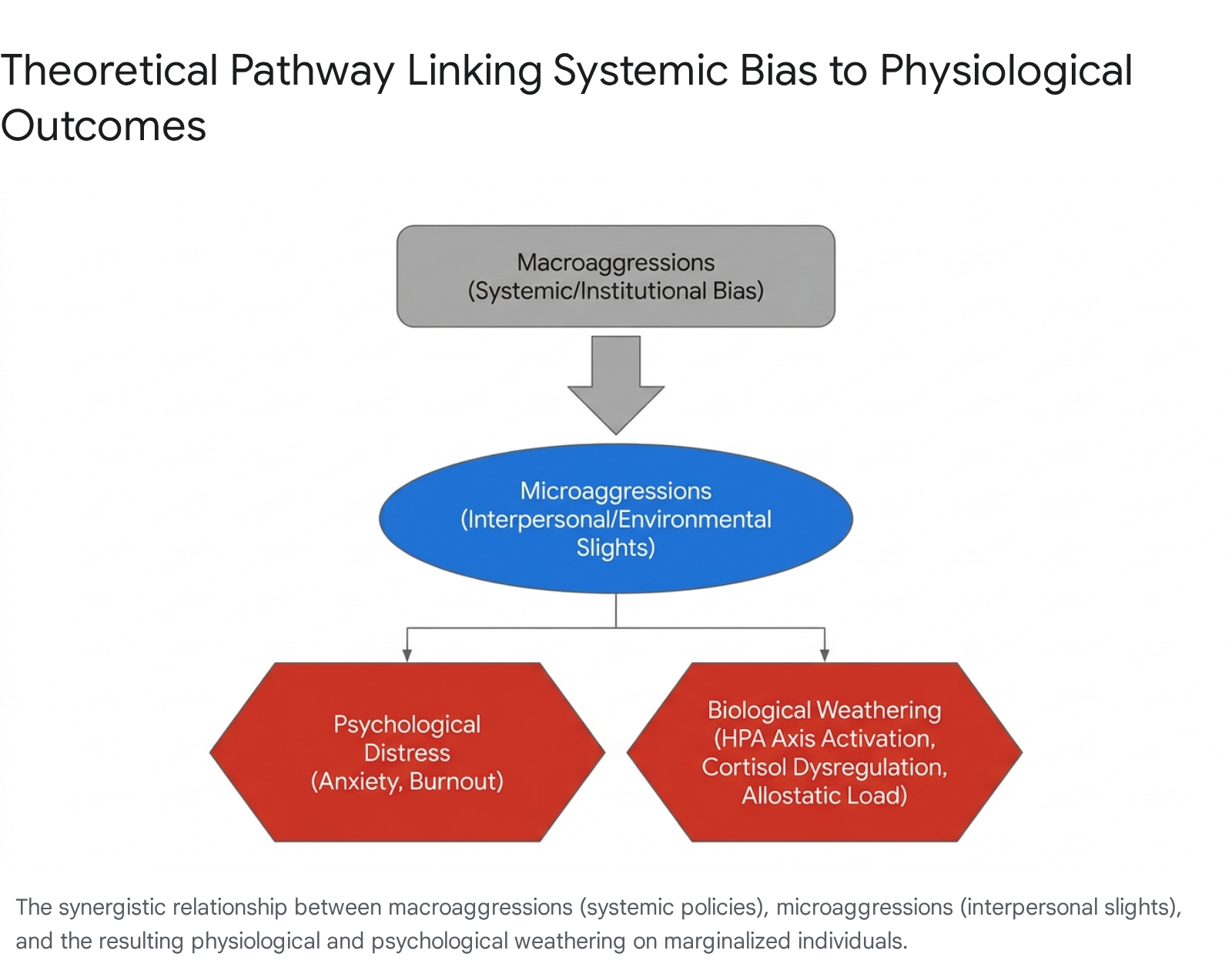
Microaggressions are increasingly theorized as the interpersonal enforcement mechanism of systemic macroaggressions 13. Individuals in positions of power unwittingly act as agents of systemic racism when they deploy microaggressions that reinforce institutional policies favoring the dominant group, thereby perpetuating systemic inequity through daily interactions 1718.
Psychometric Measurement Tools and Methodologies
The scientific investigation of microaggressions relies heavily on psychometric scaling to quantify subjective experiences. The rapid expansion of the Microaggression Research Program has led to the development of numerous self-report measures designed to capture the frequency and severity of these experiences across different demographic groups 19. However, systematic evaluations of these tools reveal significant variance in their reliability, validity, and theoretical applicability.
A comprehensive systematic review conducted by McCallaghan and Steyn analyzed 103 scholarly articles to assess prevalent microaggression measurement tools 2021. Out of 25 distinct instruments examined, the Racial and Ethnic Microaggressions Scale emerged as the most widely employed measure in the literature 20. Developed as a 45-item self-report questionnaire, this scale assesses six factors: assumptions of inferiority, second-class citizenship, microinvalidations, assumptions of criminality, microaggressions in educational or workplace settings, and exoticization 222324. While highly utilized, researchers note limitations regarding its length and its narrow focus on specific racial contexts, which may restrict its cross-cultural generalizability 23.
The Homonegative Microaggressions Scale was identified by the same systematic review as demonstrating the broadest theoretical applicability, making it a preferred tool for diagnosing workplace climates and assessing inclusion interventions 20. To address the persistent lack of metacontextual measures, researchers recently developed the BeLiv Microaggression Scale 23. Validated through cross-sectional surveys with populations in South Africa and African migrants in Germany, this 27-item instrument attempts to provide a unified framework applicable across diverse global contexts by capturing verbal, behavioral, and structural manifestations across different social identities 23.
Despite the proliferation of psychometric scales, methodological reviews consistently highlight structural limitations within the broader research program. The most pervasive critique involves mono-source bias, characterized by the near-exclusive reliance on retrospective self-reporting by the targets of microaggressions 112825. Critics in the psychological sciences argue that self-reports measure the perception of a microaggression rather than the objective occurrence of an aggressive act, introducing potential confounding variables related to participant disposition 28. Furthermore, a significant portion of the foundational studies heavily sampled college student populations in North America, resulting in an empirical base that may not accurately reflect how these phenomena manifest in older adults, non-academic workplaces, and complex global settings 2631.
Psychological and Occupational Consequences
The most empirically robust defense of the microaggression construct lies in its measurable impact on psychological well-being and occupational functioning. A substantial body of literature, including extensive meta-analyses and longitudinal studies, demonstrates that the chronic accumulation of subtle discrimination exerts a severe toll on mental health.
The inherent ambiguity of microaggressions creates a unique cognitive burden. Unlike overt racism, which is easily identifiable, microaggressions trap the recipient in a state of attributional ambiguity 7. The target must expend significant cognitive energy deciphering whether a slight was racially motivated, determining whether to confront the perpetrator, and managing the emotional fallout of the interaction 7. Confrontation risks accusations of hypersensitivity or paranoia, while silence risks internalized resentment and diminished self-esteem 7.
A comprehensive meta-analysis encompassing 72 independent studies and approximately 19,000 participants evaluated the associations between microaggressions and psychological adjustment 127. The findings indicated that microaggression experiences are strongly and consistently linked to internalizing problems, specifically depression, anxiety, stress, and negative affect 1. These internalizing problems were more strongly associated with microaggressions than externalizing problems or health-harming behaviors such as substance misuse 1.
In occupational and academic settings, the impact of microaggressions translates into measurable performance deficits and institutional instability. A systematic review of workplace microaggressions confirmed that individuals from minority racial and ethnic groups are significantly more likely to experience subtle discrimination than those from majority groups 9. The review found that microaggressions are negatively associated with job satisfaction, organizational commitment, productivity, and work volition 933. Continuous exposure increases feelings of isolation, positively predicts burnout and counterproductive work behavior, and elevates turnover intentions 9.
The literature also highlights the importance of intersectionality in occupational microaggressions. Women from minority groups frequently face unique microaggressions, such as being ignored by male colleagues despite possessing relevant expertise, while immigrants report frequent microinvalidations questioning their education, skills, or legal status 9. In response, individuals employ various coping strategies, ranging from adaptive approaches like seeking social support and assertive confrontation, to maladaptive strategies such as restricting one's identity expression, avoiding perpetrators, or overworking to compensate for hostile environments 9.
Biological Pathways and Physiological Weathering
Recent advances in psychoneuroendocrinology and epigenetics have mapped the biological pathways through which interpersonal microaggressions manifest as physiological harm. The scientific literature increasingly utilizes the weathering hypothesis to explain how cumulative exposure to subtle, chronic discrimination accelerates cellular aging and contributes to severe health disparities among marginalized populations .
Hypothalamic-Pituitary-Adrenal Axis Dysregulation
The primary biological pathway implicated in the stress response to discrimination is the Hypothalamic-Pituitary-Adrenal axis 1028. When an individual experiences a microaggression, the event functions as a social-evaluative threat. This triggers the hypothalamus to release corticotropin-releasing hormone, which stimulates the anterior pituitary to secrete adrenocorticotropic hormone, ultimately signaling the adrenal cortex to release cortisol into the bloodstream 2829. While short-term activation of this system is adaptive, chronic psychosocial stress leads to profound neuroendocrine dysregulation 2829.
Empirical studies utilizing real-time ecological momentary assessments and salivary cortisol sampling reveal significant disruptions in hormonal patterns. Healthy individuals typically exhibit a steep diurnal cortisol slope, characterized by high cortisol levels upon waking that gradually decline throughout the day. However, multilevel modeling indicates that on days when individuals report higher-than-usual frequencies of microaggressions, they exhibit a significantly flatter diurnal cortisol slope 30. This flatter slope, marked by lower morning levels and higher evening levels, is a well-documented biological predictor of chronic disease and metabolic dysfunction 30.
Furthermore, research evaluating cortisol reactivity using laboratory stressors, such as the Trier Social Stress Test, indicates complex physiological adaptations. Individuals who frequently experience and are highly sensitive to ethnic microaggressions often demonstrate a blunted cortisol response to acute stressors 2829. This hypocortisolism represents a compensatory downregulation of the stress response system following chronic overstimulation, which prior studies have associated with fatigue, cognitive strain, and heightened vulnerability to psychiatric illnesses 28.
Systemic Inflammation and Allostatic Load
The sustained activation of the stress response system, including the sympathetic nervous system, increases allostatic load, which is defined as the physiological wear and tear on the body resulting from chronic stress 10283132. Elevated sympathetic nervous system activity triggers the release of epinephrine and norepinephrine, increasing blood viscosity, heart rate, and blood sugar 10. Over time, this heightened physiological state causes arterial scarring and systemic inflammation, significantly elevating the risks for cardiometabolic conditions such as hypertension, abdominal obesity, and type 2 diabetes 1031.
A longitudinal study spanning 17 years analyzed blood proteins in diverse adult populations to track the long-term biological toll of systemic discrimination . The researchers found that the daily stress of resilience - specifically the continuous effort required to navigate microaggressions and engage in code-switching to conform to dominant workplace norms - was associated with higher levels of systemic inflammation . This chronic inflammation correlated directly with earlier mortality, providing empirical support for the assertion that the chronic suppression of frustration in the face of subtle discrimination exacts a severe, life-shortening physiological cost .
The Construct Validity and Falsifiability Debate
Despite the extensive evidence documenting physiological and psychological harm, the foundational scientific architecture of the Microaggression Research Program has been the subject of intense and sustained methodological scrutiny. The debate reached a crescendo with the publication of a comprehensive critique by clinical psychologist Scott Lilienfeld in Perspectives on Psychological Science 71133. Lilienfeld argued that while subtle prejudice undoubtedly exists and causes harm, the microaggression construct itself is fundamentally flawed, scientifically premature, and heavily reliant on unfalsifiable premises 711.
Critique of Core Premises
Lilienfeld systematically evaluated the research program by assessing it against five core premises that advocates implicitly rely upon to justify the construct's validity.
The first critique centers on operational clarity. Skeptics argue that the microaggression concept is an open concept with fuzzy, porous boundaries, lacking the rigorous a priori criteria required for scientific falsifiability 7. Because the definition is amorphous, researchers frequently engage in retrofitting, classifying vastly contradictory behaviors as microaggressions after the fact 7. For instance, critics point out that an educator ignoring a minority student, as well as an educator focusing excess attention on that same student, have both been categorized as microaggressive acts in different studies, making the theory difficult to test or falsify 7.
The second and third critiques focus on interpretation and intent. Lilienfeld challenged the assumption that these subtle acts are universally interpreted negatively by minority group members, noting substantial individual variance in how ambiguous statements are received 712. Furthermore, labeling an unconscious act as an aggression implies a hostile or implicitly prejudicial motive. Critics argue that many interactions labeled as microaggressions may simply represent benign cultural missteps or inadvertent slights rather than aggressive bigotry 71233.
The final critiques address methodological reliance on subjective reporting and causal claims regarding mental health. The overwhelming reliance on mono-source self-reporting means researchers capture the subjective perception of a slight rather than objective behavioral data 711. Consequently, critics suggest that the observed correlational link between reporting microaggressions and experiencing psychological distress may be heavily confounded by negative emotionality 3334. Negative emotionality is a temperamental disposition to experience aversive emotions; individuals high in this trait possess a hostile attributional bias, making them more likely to perceive ambiguous interactions as aggressive and simultaneously more likely to report baseline psychological distress 733.
Proponent Rebuttals and Theoretical Defenses
Proponents of the construct, including scholars like Monnica Williams and Derald Wing Sue, have published extensive rebuttals defending the scientific rigor of the research program 82535. In response to concerns regarding operational clarity, proponents argue that microaggressions are inherently contextual and that ambiguity is a defining feature of modern, covert racism, not a scientific flaw 813. They argue that demanding objective proof or third-party verification for every interaction invalidates the lived realities of marginalized populations, noting that foundational psychological constructs like self-esteem have long been validated using self-report methodologies 835.
Regarding intent versus impact, proponents assert that focusing on the perpetrator's lack of conscious malice serves as a defensive posture that protects dominant groups from accountability 3637. The term aggression is maintained because these actions, regardless of conscious intent, actively reinforce systemic oppression and power differentials 2436. While acknowledging that not every individual reacts identically, defenders point to robust meta-analyses indicating that microaggression measures display consistent criterion-related validity with indices of mental health, explaining variance in psychological distress above and beyond overt forms of discrimination 1253435.
Semantic Expansion and Concept Creep
The intense academic debate over the validity of microaggressions is deeply intertwined with the broader psychological phenomenon identified as concept creep 383940. Introduced by psychologist Nick Haslam, concept creep describes the progressive semantic expansion of harm-related concepts within academic discourse and public consciousness over recent decades 394142. Haslam posits that foundational psychological concepts - including trauma, bullying, abuse, and prejudice - have systematically broadened to encompass a much wider array of human experiences 3941.
This semantic inflation occurs across two distinct axes. Horizontal creep occurs when a concept extends outward to encompass qualitatively new phenomena within a new semantic domain, such as extending the definition of abuse to include emotional neglect or acts of omission 383941. Vertical creep occurs when a concept extends downward to encompass quantitatively less severe or less extreme phenomena than it did previously 394142.
Microaggressions represent a paradigmatic example of vertical concept creep operating upon the construct of prejudice. Historically, the definition of prejudice required an individual to commit a blatant, intentional act of bigotry, such as using overt slurs or enforcing segregation 3839. The semantic boundary of prejudice has since crept downward to encompass subtle, unconscious, and seemingly benign interpersonal dynamics 3839.
Psychological theorists suggest that concept creep reflects an escalating societal sensitivity to harm and a dominant moral agenda within the social and developmental sciences aimed at protecting vulnerable populations from diffuse forms of maltreatment 4243. However, critics warn of a creep paradox. While expanding definitions highlights previously ignored forms of suffering, categorizing minor interpersonal friction alongside severe trauma under the umbrella of aggression risks diluting clinical specificity 404344. Skeptics caution that expansive harm concepts may encourage hyper-vigilance, promote self-diagnosing of trauma, and inadvertently increase baseline anxiety among the populations the expanded definitions are intended to protect 4044.
Efficacy of Interventions and Psychological Reactance
In response to the documentation of microaggressions, institutions universally implement Diversity, Equity, and Inclusion training to mitigate biases. However, empirical evaluations of these interventions yield mixed results. A systematic review of 44 microaggression-focused training programs implemented in healthcare settings found that while interventions consistently succeed in increasing cognitive awareness and self-efficacy in recognizing microaggressions, there is insufficient rigorous evidence to confirm that these programs actually reduce the subsequent occurrence of microaggressive behavior 3345.
The Unintended Consequences of Diversity Training
A significant barrier to the long-term success of microaggression interventions is the phenomenon of psychological reactance. Grounded in Jack Brehm's 1966 reactance theory, this framework posits that when individuals perceive their autonomy or freedom is restricted by authoritative mandates, they experience negative physiological and psychological arousal 464748. This arousal creates a powerful motivation to regain freedom, frequently resulting in a boomerang effect where individuals adopt attitudes or behaviors directly opposite to the intended message of the intervention 4648.
Recent empirical studies demonstrate that mandatory diversity training, particularly sessions involving compulsory instructions to acknowledge systemic privilege or recognize microaggressions, frequently triggers high levels of psychological reactance 4647. This reactance engenders solution aversion; the negative emotional response elicited by the mandatory nature of the training leads individuals to deny that systemic discrimination is a problem in the first place 47. Studies indicate that this counteractive effect is moderated by individual differences, with reactance and subsequent denial of systemic inequity appearing more pronounced among individuals holding conservative political orientations or those possessing a strong internal locus of control 4647.
Evidence-Based Mitigation Strategies
To circumvent reactance and improve training outcomes, researchers are designing and testing alternative intervention paradigms focused on empowerment rather than compliance.
| Mitigation Strategy | Mechanism of Action | Empirical Findings |
|---|---|---|
| Cognitive Inoculation | Preemptively addressing potential resistance before exposing participants to mandatory directives 49. | Providing a narrative-based, pro-DEI message prior to a training notification resulted in significantly lower reactance and greater positive attitude shifts toward the intervention 49. |
| Active Bystander Interventions | Shifting organizational focus from identifying perpetrators to empowering peer networks to intervene collectively 3350. | Systems-level approaches like Get A GRIP foster collective accountability and address bias without triggering the acute defensiveness associated with perpetrator-focused confrontation 3350. |
| Microinterventions | Equipping individuals with specific, standardized behavioral toolkits to disarm biases in real-time 11545. | Utilizing strategies such as separating intent from impact, asking for clarification, or explicitly contradicting stereotypes with evidence provides actionable pathways to interrupt bias safely 155152. |
Global Perspectives and Western-Centric Bias
A rapidly emerging critique within the academic literature focuses on the overwhelming Western-dominance bias inherent in the conceptualization and measurement of microaggressions 263153. The construct's foundational taxonomies were developed almost exclusively within the historical, racial, and sociopolitical context of the United States, utilizing paradigms rooted in individualistic Western cognitive styles 232654. Recent scholarship has begun to test the construct's robustness in non-Western and global contexts, revealing that while the psychological toll is universal, the vectors of aggression are highly dependent on regional history and cultural frameworks.
In South Africa, research involving multiethnic focus groups indicates that reactions to microaggressions are heavily tied to specific post-apartheid racial identity consciousness. Furthermore, participants report that systemic and environmental microaggressions exert a far more detrimental impact on subjective well-being than isolated interpersonal insults 55. In Japan, qualitative analyses of migrant elderly care workers from Southeast Asia reveal a prevalence of microassaults based on assumptions of dominance, alongside microinsults manifesting as strict linguistic expectations and systemic invisibility. To prevent occupational burnout, these workers rely heavily on emotion-focused and meaning-focused positive coping strategies 5657.
In Europe, studies of African migrants in Germany demonstrate that microaggressions manifest predominantly through nativism, colorism, and xenophobia, frequently involving inquiries that attempt to criminalize migrant status 523. Similarly, research involving Chinese Postgraduate Researchers in the United Kingdom reveals that microaggressions are tied directly to modern geopolitical tensions and Sino-Western relations, leading individuals to employ nationalist expressions as a defense mechanism against invisible racism 58.
Algorithmic and Epistemological Implications
The Western-centric bias of the construct extends beyond sociological studies into the domain of technology and information systems. The dominance of Western perspectives disproportionately shapes computational models, algorithmic design, and artificial intelligence systems, marginalizing non-Western viewpoints 162631. Systematic reviews of Explainable AI (XAI) systems reveal that over 80 percent of studies utilize WEIRD samples, assuming that individualistic, mental-state-centered explanations are universally preferred 2654. Collectivist cultures, however, exhibit a preference for externalist explanations centering on context and social roles, a dimension largely unaddressed in current systems 2654. Consequently, AI models frequently output homogenizing narratives that mirror Western frameworks, underscoring the need for culturally tuned methodologies in both technological design and psychological construct validation 2631.
Institutional Policy and Societal Implications
The scientific debate regarding the validity and measurement of microaggressions has inevitably influenced institutional policy and professional governance. Major governing bodies, including the American Psychological Association, have historically issued formal resolutions affirming that systemic racism and discrimination are central drivers of health inequities, explicitly supporting efforts to identify subtle biases and train healthcare providers in culturally responsive care 596061.
However, the intersection of psychological science and political environments remains highly volatile. The integration of microaggression theory into mandatory educational standards has faced intense socio-political backlash. Recently, the APA faced significant controversy when it suspended diversity, equity, and inclusion requirements for postgraduate accreditation programs, citing the need to avoid political conflict and protect institutions from threats to federal funding 6162. Scholars and practitioners argue that this policy reversal undermines long-term attempts to diversify the psychological workforce and highlights the fragility of institutional support for diversity research when confronted with organized political pressure 6162.
Conclusion
The scientific evaluation of microaggressions reveals a complex phenomenon that is simultaneously robust in its observed physiological effects and deeply contested in its theoretical architecture. The empirical evidence demonstrating that the frequent experience of subtle, everyday discrimination correlates with profound psychological distress and measurable physiological weathering - including dysregulation of the HPA axis and systemic inflammation - is compelling. For marginalized populations, the chronic accumulation of these subtle interactions undeniably exacts a biological and emotional toll.
Conversely, the methodological critiques aimed at the construct's foundational premises highlight significant areas for scientific refinement. The classification of microaggressions as an open concept with highly porous boundaries makes the framework difficult to falsify. The heavy reliance on mono-source self-reporting, the conflation of unintentional slights with conscious aggression, and the potential confounding role of negative emotionality underscore gaps in the psychometric rigor of current research. Furthermore, the phenomenon of concept creep suggests that the continual downward expansion of harm-based definitions may yield unintended consequences for public mental health, while the threat of psychological reactance complicates the implementation of effective organizational interventions.
Ultimately, the scientific consensus suggests that while the terminology, measurement scales, and operational boundaries of microaggressions will require ongoing methodological refinement, the underlying phenomenon - the insidious, cumulative impact of subtle socio-environmental bias on human homeostasis - represents a critical reality that demands rigorous, culturally sensitive scientific investigation.