The psychology of online shaming and cancel culture
The Evolution and Architecture of Digital Ostracism
The phenomenon of digital vigilantism, colloquially recognized as "cancel culture," represents a profound shift in how modern societies negotiate moral boundaries, enforce normative behaviors, and dispense social justice. Over the past decade, the conceptual framework of public shaming has transitioned from a decentralized mechanism of holding powerful figures accountable into an autopoietic system of collective punishment 1. Originating in part from marginalized communities seeking leverage against systemic power imbalances - most notably through the #MeToo movement and Black Twitter - the practice has increasingly evolved into a ubiquitous feature of the global digital ecosystem 23. The transition from localized physical ostracism to digital cancellation is underpinned by the unprecedented scale, speed, and permanence of internet communications. While the human impulse to enforce community standards through social pressure is a historical constant, modern social media architectures have fundamentally altered the mechanics, speed, and reach of this enforcement 3.
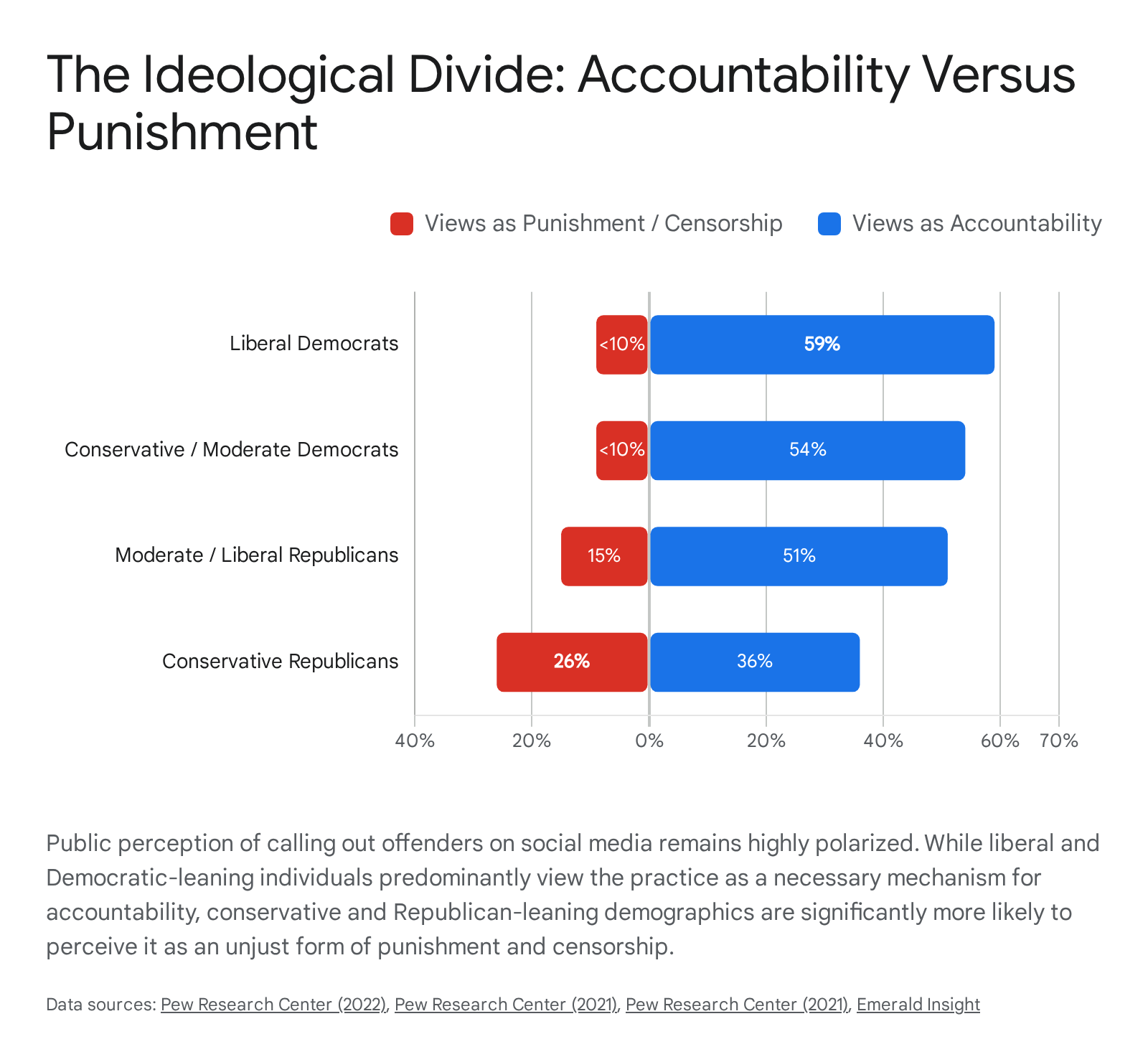
Digital platforms offer a low-cost, high-visibility arena for moral signaling, transforming private transgressions into public spectacles that demand immediate communal arbitration. The discourse surrounding this phenomenon has become highly polarized. Empirical data indicates a severe split in public perception, with contemporary surveys revealing that the definition of cancel culture is fundamentally shaped by ideological lenses. Research conducted by the Pew Research Center demonstrates that awareness of the term grew sharply from 44 percent of adults in 2020 to 61 percent by mid-2022, effectively moving the concept from niche internet slang into the center of mainstream political and social debate 235. Within this widespread awareness, the public is divided: a significant portion of the population views digital shaming as a necessary tool for democratic accountability, while others interpret it as a draconian form of censorship and disproportionate punishment 354.
As digital spaces continue to blur the boundaries between the public and private spheres, understanding the psychological underpinnings of this behavior has become an urgent academic priority. This necessitates a rigorous psychological and sociological analysis of why individuals participate in online mobs, how algorithms facilitate the virality of outrage, how non-Western cultural paradigms interpret and execute digital shaming, and the severe, often irreversible clinical outcomes experienced by the targets of these campaigns. The contemporary digital landscape has become an arena where moral codes are contested authorities, and the digital tools used to express righteous indignation frequently cross the threshold into coordinated extortion and psychological abuse 75.
Taxonomic Boundaries: Cancel Culture, Call-Out Culture, and Cyberbullying
A significant barrier to the empirical study of online socio-behavioral phenomena is the persistent conflation of distinct terminologies. In both mainstream media and early academic literature, terms relating to digital conflict are frequently utilized interchangeably. To achieve rigorous academic precision and to fully understand the clinical and societal implications of these actions, it is necessary to explicitly differentiate "cancel culture" from adjacent concepts, most notably "call-out culture" and "cyberbullying." While these behaviors often overlap in digital spaces and share structural affordances - such as reliance on social media platforms and public visibility - they are driven by distinct psychological motivations, structural mechanisms, and intended outcomes 256.
Call-Out Culture: The Discursive Accountability Mechanism
Call-out culture operates primarily as a discursive accountability practice. It involves publicly drawing attention to an individual's, organization's, or brand's perceived transgression, typically with the stated goal of educating the offender, fostering dialogue, or demanding a change in behavior 5610. The psychological orientation of a "call-out" is often rooted in righteous indignation and a desire for restorative justice. The ultimate objective is reform; the target is expected to acknowledge the harm, apologize, learn from the public discourse, and modify their future actions 10.
Historically, this semantic constellation - cancel, boycott, deplatform - illuminates how democratic societies renegotiate the boundaries of acceptable discourse 3. Calling someone out relies heavily on the belief that the offender is capable of redemption. It seeks to balance the scales of power by allowing marginalized voices to publicly address grievances that traditional institutional pathways may ignore or suppress 611. The mechanism is a public confrontation, but the intended resolution is reintegration following a demonstration of accountability.
Cancel Culture: The Punitive and Exclusionary Paradigm
In stark contrast, cancel culture is characterized by its punitive, absolute, and exclusionary objectives. It transcends mere dialogue or confrontation, moving directly into systemic ostracism. The goal is to isolate the target, sever their social and professional capital, and effectively "silence" them from the public sphere 23. Cancel culture operates on the premise that the offender's action is fundamentally irredeemable, reducing their entire character to a single defining transgression or mistake 6.
This phenomenon manifests through aggressive boycotts, mass-reporting of social media accounts, and coordinated pressure campaigns directed at employers, sponsors, or affiliated institutions to terminate relationships with the targeted individual 23. The lie frequently embedded within the defense of cancel culture is that a formal "boycott" actually occurs for the majority of the canceled; in reality, the practice more closely resembles extortion, intimidation, and the weaponization of a community's latent values to force institutional authorities into enacting punitive measures 5. When an entity is "canceled," the collective behavior functions as a modern form of social excommunication, driven by a highly vocal minority that succeeds in creating an artificial impression of widespread consensus 27.
Cyberbullying: Interpersonal Malice and Dominance
Cyberbullying, while sharing the digital arena, operates on a fundamentally different psychological axis. It is generally defined as repeated, hostile, and aggressive behavior conducted via digital platforms with the specific intent to harm, humiliate, or intimidate a target 8910. Unlike call-out or cancel culture, which usually stems from a perceived moral, social, or political violation (regardless of how trivial), cyberbullying often lacks any socio-political grievance or ideological justification.
Cyberbullying is frequently driven by interpersonal animosity, prejudice, or the pursuit of social dominance within smaller, more defined social circles, such as secondary school environments or specific online gaming communities 89. The triggers for cyberbullying are often arbitrary, targeting an individual's physical appearance, socio-economic status, or mere vulnerability 1112. Furthermore, cyberbullying heavily relies on anonymity and power imbalances, allowing perpetrators to evade accountability while inflicting maximum emotional distress 89. In contrast, cancel and call-out cultures rely on the collective power of the "mob," and are often enacted by individuals who publicly attach their actual identities to the moral cause in pursuit of in-group prestige 58.
| Feature | Call-Out Culture | Cancel Culture | Cyberbullying |
|---|---|---|---|
| Primary Objective | Education, acknowledgment, and behavioral reform 610. | Social ostracism, deplatforming, and economic/professional ruin 23. | Interpersonal harm, intimidation, and humiliation 810. |
| Psychological Motivation | Restorative justice, moral correction, righteous indignation 510. | Punitive justice, moral grandstanding, boundary maintenance 613. | Malice, dominance-seeking, interpersonal conflict 910. |
| Trigger Mechanism | A specific statement, action, or ideological stance deemed problematic. | A perceived violation of an unwritten moral code or societal norm. | Often arbitrary; physical appearance, social status, or mere vulnerability 1112. |
| Outcome for Target | Public scrutiny and pressure to apologize or make amends. | Long-term reputational damage, termination of employment, social isolation 23. | Psychological distress, lowered self-esteem, potential for physical self-harm 914. |
| Underlying Power Dynamic | Historically marginalized voices checking systemic power 2. | Collective action (the "mob") overwhelming an individual or entity 220. | Perpetrator utilizing anonymity or social leverage against a vulnerable victim 8. |
| Identity of Aggressor | Usually public; identities tied to social activism and discourse. | Public or semi-public; participants seek status within their moral ingroup 1215. | Often anonymous; relying on technological obfuscation to avoid reprisal 89. |
The Psychological Mechanisms Driving Digital Shaming
The mass participation required to successfully "cancel" an individual cannot be explained merely by a sudden, collective commitment to social justice. A purely ideological explanation fails to account for the speed, ferocity, and often disproportionate nature of the backlash. Instead, empirical research indicates that digital shaming is fueled by a confluence of deeply ingrained psychological mechanisms that are exacerbated by the unique affordances of digital media.
Moral Grandstanding: Prestige versus Dominance
A central driver of cancel culture - and a critical factor in explaining why social media discourse is often so caustic and unpleasant - is "moral grandstanding." Adapted from philosophical literature into contemporary psychological frameworks, moral grandstanding is defined as the use of moral discourse primarily for self-promotion and the enhancement of one's own social status 121316. Rather than contributing to a discourse to arrive at objective truth or enact genuine societal reform, the grandstander uses the public forum to signal their moral purity to an in-group, effectively seeking social capital by demonstrating their credibility and righteous anger 1215.
Empirical studies, including extensive survey research utilizing YouGov samples matched to U.S. demographic norms, identify two distinct motivational dimensions within moral grandstanding: prestige-seeking and dominance-seeking 151617. Prestige-seeking grandstanders aim to inspire admiration; they wish to be recognized by their peers as virtuous, empathetic, and highly morally sensitive 1516. They may exaggerate emotional displays, announce that they care more deeply about an issue than others, or formulate statements designed to generate awe 1517. While highly performative, prestige-seeking tends to foster closer interpersonal ties among individuals sharing similar ideological views 15.
Conversely, dominance-seeking grandstanding is overtly aggressive and hostile. The objective is not merely to be seen as good, but to outcompete, shame, and humiliate others 1516. Dominance-seekers actively trump up moral charges, pile on during episodes of public shaming, and seek to make ideological opponents or perceived transgressors feel psychological pain 1517. They engage in moral one-upmanship, continually ramping up their outrage to outdo other discussants 17.
Recent, robust demographic analyses across multiple Western nations (including Germany, France, Greece, and Hungary, encompassing thousands of respondents) reveal a striking demographic pattern: dominance-oriented moral grandstanding is exceptionally high among young men (ages 18 - 35) 16. Crucially, this behavior operates independently of specific political party affiliations. The data suggests that moral grandstanding, particularly in its most antagonistic forms, is driven less by genuine ideological commitment than by underlying competitive status behaviors and psychological traits related to narcissism and machiavellianism 1216. In this light, participating in a digital mob is frequently less about the victim's transgression and more about the perpetrator asserting dominance and securing rank within their own social hierarchy 1315.
The Online Disinhibition Effect
The scale and severity of digital ostracism are heavily reliant on the psychological phenomenon known as the "Online Disinhibition Effect" 8181920. When interacting through digital interfaces, users experience a psychological detachment from their physical identities. The lack of direct eye contact, the physical distance from the target, the illusion of invisibility, and the asynchronous nature of communication collectively lower traditional social restraints and empathy thresholds that govern face-to-face human interaction 192021.
This disinhibition manifests in two distinct forms: benign and toxic. While benign disinhibition can lead to increased vulnerability, emotional openness, and rapid connection among strangers, toxic disinhibition results in the normalization of harsh language, threats, and disproportionate retaliation 19. In the context of cancel culture, individuals who would never confront an offender in a physical, real-world setting feel emboldened to dispense severe vitriol online, perceiving their actions as carrying minimal real-world risk to themselves 822. The digital screen acts as a protective shield, simultaneously dehumanizing the target - reducing them to an avatar of a moral failing rather than a complex human being - and absolving the aggressor of immediate social consequences 819.
Identity-Protective Cognition, Partisan Bias, and Pluralistic Ignorance
Digital shaming is also a critical function of in-group boundary maintenance. Through "identity-protective cognition," individuals subconsciously process information in ways that defend their group's core values and punish perceived out-group aggressors 22. When a target violates an unwritten moral code or expresses a heterodox idea, the in-group mobilizes to expel the offender, thereby reinforcing their own collective identity and demonstrating ideological purity 1322. This behavior is closely tied to the "Hostile Media Effect" (HME) and affective polarization, where partisans interpret neutral or ambiguous information as inherently biased against their views, prompting aggressive defensive maneuvers 22. A 2022 national survey highlighted these partisan divisions, revealing that 65 percent of Democrats endorsed the "accountability" interpretation of cancel culture, while only 32 percent of Republicans held the same view, instead framing it as a threat to free speech and personal autonomy 22.
However, the perceived absolute consensus of the mob is frequently an illusion generated by "pluralistic ignorance" 2324. Pluralistic ignorance occurs when a majority of group members privately reject a norm, behavior, or extreme response, but incorrectly assume that most others accept it, leading them to conform publicly or remain silent. In the context of cancel culture, a highly vocal, dominance-seeking minority often initiates the shaming event. Observing this aggressive backlash, moderate users - who may view the punishment as disproportionate - self-censor out of fear of becoming the next target of the mob 23. This dynamic creates a "spiral of silence," where the visible digital discourse becomes completely misaligned with the privately held beliefs of the broader community, artificially inflating the apparent size, fury, and consensus of the outrage campaign 2324.
The Virality Loop and Algorithmic Amplification of Outrage
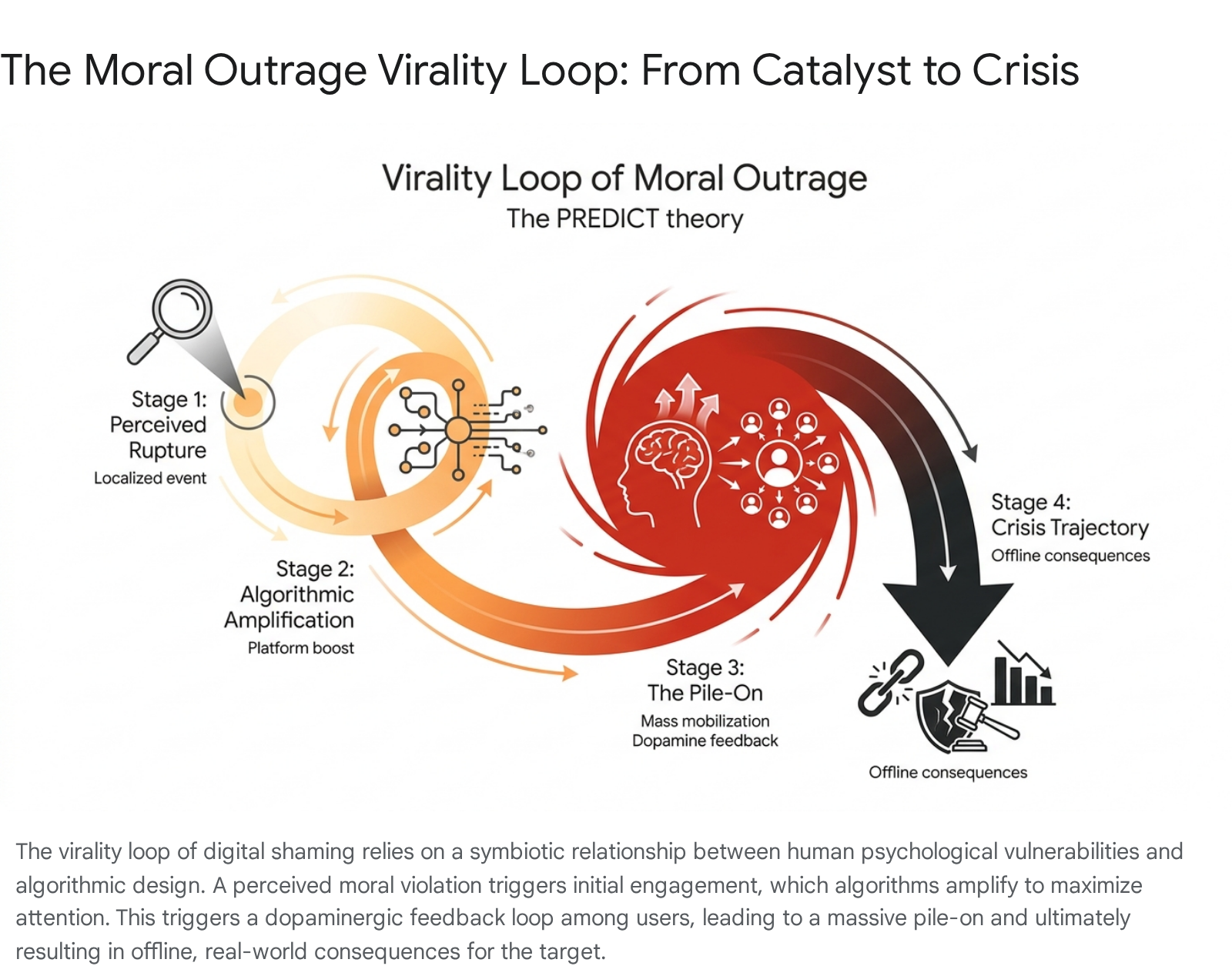
Cancel culture is not a spontaneous, entirely organic phenomenon; it operates within highly structured, algorithmically optimized corporate environments designed to maximize human attention. To fully understand the unprecedented speed and scale of online shaming events, researchers in computational social science and communications have developed theoretical models such as the PREDICT theory (Perceived Rupture of Equilibrium, Dynamic Interactions, and Crisis Trajectory) 25. Grounded in chaos theory and complex systems analysis, PREDICT frames digital crises not as unknowable disruptions, but as predictable phenomena driven by feedback loops and network dynamics 25.
The Stages of the Moral Outrage Cycle
The virality loop of an online shaming event generally follows a distinct, predictable trajectory, moving from localized disturbance to global crisis.
-
Perceived Rupture of Equilibrium (PRE) - The Catalyst: The cycle initiates with a catalyst - a tweet, a leaked video, a controversial statement, or an uncovered historical document that violates the expectations or moral codes of a specific community 25. At this initial stage, the content represents a localized disturbance. Uncertainty often surrounds the authenticity, context, or precise details of the transgression, triggering immediate suspicion, disbelief, and moral concern 2532.
-
Dynamic Interactions (DI) and Algorithmic Amplification: As stakeholders begin to interact with the catalyst, the platform's algorithms immediately detect the sudden influx of highly emotional engagement. Social media architectures are explicitly designed and optimized to prioritize "PRIME" content - material that is Prestigious, Ingroup-focused, Moral, and Emotional 33. Algorithms disproportionately reward moral outrage terminology; the inclusion of trigger words like "evil," "hate," and "attack" has been shown to significantly increase the expected share rate of content 33. As users engage, retweet, and comment, a positive, non-linear feedback loop is established. The algorithm pushes the content beyond the localized community into the broader digital ecosystem, ensuring maximum visibility and generating the "heat" required for virality 253334.
-
The Pile-On and Dopaminergic Feedback Loop: As the event breaches the mainstream, users are drawn into the cycle not merely by the original transgression, but by the neurochemical rewards of participation. Joining the outrage provides users with immediate social validation in the form of likes, retweets, and follower growth 34. This creates a literal slot-machine dopamine loop: users experience a spike in adrenaline and cortisol (the tension of conflict) followed by intermittent dopaminergic rewards tied to moral superiority and tribal belonging 33. The outrage becomes highly performative, and the severity of the accusations escalates rapidly as individuals engage in moral grandstanding to outcompete one another 1517. The brain stays stuck in a state of high arousal, craving the next hit of validation, turning the shaming event into a form of addictive entertainment 33.
-
Crisis Trajectory (CT) and Real-World Bleed: The final stage maps how the digital instability fractures into multiple, often unpredictable real-world outcomes 25. The controversy inevitably transitions from social media platforms to legacy news outlets and broadcast networks, fueling "junk food news" cycles 35. These media ecosystems prioritize spectacle over substance, relying on short-form "micro-junk" snippets to sustain the outrage cycle for ratings and advertising revenue 35. At this point, the target experiences severe real-world consequences: employers are inundated with demands for termination, sponsorships are severed, and organized boycotts are mobilized 236. The target is effectively isolated, and the digital event achieves offline devastation.
Geographic Expansion: Collectivist Dynamics in Non-Western Contexts
While the specific terminology of "cancel culture" gained initial prominence within Western media ecosystems, the underlying mechanisms of digital vigilantism are global. However, the manifestation and psychological interpretation of online shaming are heavily mediated by cultural frameworks. An exhaustive analysis must account for the fundamental differences between individualist cultures - which traditionally prioritize personal autonomy, rights, and individual self-expression - and collectivist cultures, which place a premium on harmony, civic duty, proper relationships, and group cohesion 7373826.
In collectivist societies, moral codes are deeply intertwined with community reputation, and the concept of shame operates as a powerful communal regulatory mechanism. Consequently, the mechanisms of online shaming in these regions are uniquely severe, highly organized, and often intersect with historical and societal expectations of absolute conformity.
China: The "Human Flesh Search Engine" and Cybernetic Authoritarianism
In the People's Republic of China, digital vigilantism is profoundly institutionalized through a phenomenon known as the "Human Flesh Search Engine" (HFS) or rénròu sōusuǒ 272829. Emerging into mainstream awareness as early as 2006 (following the infamous "Kitten Killer of Hangzhou" incident), HFS is a massive, crowdsourced form of cyber-manhunting 3629. When an individual violates unwritten moral norms or commits an act deemed socially unacceptable - even if the act does not violate formal Chinese law - millions of netizens spontaneously mobilize to uncover the target's offline identity, physical address, employment history, and family details 362729.
Unlike Western iterations of cancel culture, which frequently focus on ideological disputes, historical tweets, or linguistic missteps, HFS campaigns most commonly target perceived government corruption at the local level, animal abuse, infidelity, or egregious breaches of public morality 203629. The sheer volume of the Chinese internet population creates an unprecedented detective force capable of decoding minor, seemingly innocuous clues in digital media to identify targets within a matter of hours 3629.
HFS operates as an important form of non-institutional information gathering and non-judicial punishment 27. The consequences for the target are devastatingly physical and immediate; individuals are routinely fired from their jobs, harassed at their homes, and driven into extreme social ostracism 36. The psychological engine driving HFS is a collective desire among the "little people" to enforce social discipline, exact revenge, and enact justice where the formal legal system is perceived to be insufficient or compromised 2729. Furthermore, researchers viewing the Chinese internet through cybernetic theory propose that the state's tolerance of certain HFS events serves a stabilizing function for authoritarianism. By allowing citizens to channel their dissatisfaction as "loyalty" to national moral standards rather than voicing criticism of the central government, the regime effectively utilizes digital mobs as a release valve for societal tension 28.
South Korea: Netizen Justice, K-Pop, and the Purity Standard
In South Korea, the manifestation of cancel culture is extraordinarily swift, brutal, and absolute, driven by a combination of high digital connectivity and rigorous, unforgiving societal standards of moral purity. This dynamic is most visibly concentrated within the South Korean entertainment industry, where highly organized "netizens" wield immense, almost dictatorial power over the careers and personal lives of K-pop idols, actors, and public figures 2030.
The psychological landscape of Korean cancel culture is deeply rooted in an expectation of hyper-accountability and the commodification of perfection. Idols undergo years of intense training and are expected to maintain an image of absolute moral, physical, and personal flawlessness 2031. Even minor infractions or unsubstantiated allegations - such as unverified dating rumors, accusations of poor attitude, or historical school bullying claims dating back a decade - can trigger catastrophic public backlash 20. Due to the interconnected nature of prominent Korean online forums (such as Pann, Nate, and DCInside) and a tabloid-style journalism apparatus that frequently amplifies anonymous claims without rigorous fact-checking, public sentiment can turn irredeemably hostile within 24 hours 20.
The outcomes in South Korea are uniquely severe due to the structural institutional response. Entertainment agencies frequently terminate contracts, pull commercials, and cancel projects immediately upon the onset of public outrage, prioritizing corporate reputation and brand safety over the defense or well-being of the individual artist 120. This hyper-vigilant environment creates a psychological panopticon for public figures. The immense, unrelenting pressure to avoid cancellation, combined with the profound shame of public failure in a face-saving culture, has contributed to a deeply concerning mental health crisis within the industry 2031.
This pressure has tragically culminated in multiple high-profile celebrity suicides over the past several years 2031. In a grim sociological twist, research indicates that when a public figure's suicide is directly linked to intense public shaming, the netizen reaction often shifts retroactively. The post-mortem response frequently transforms into overwhelming sympathy and grief, reflecting a complex cultural interplay where death is sometimes interpreted as the ultimate taking of responsibility, thereby restoring a degree of honor to the deceased 31.
Japan: "Flaming" (Enjō) and the Preservation of Face
In Japan, a society characterized by deeply entrenched collectivist values and a strong emphasis on "face" (social standing and reputation), the dynamics of digital ostracism center around the concept of enjō (flaming) 182132. Flaming involves a sudden, overwhelming influx of hostile, insulting, and highly critical comments directed at a target on platforms like YouTube or Twitter 2132.
However, cross-cultural psychological research, including simulated trolling experiments utilizing the Cyberball paradigm, indicates that the reaction to digital shaming in Japan is heavily dependent on the in-group versus out-group dynamic 21. Because preserving social harmony and avoiding overt conflict are paramount cultural directives, being flamed or ostracized by an in-group member is perceived as a significantly more intense, damaging, and painful experience than an attack originating from an out-group member 21. An attack from within one's own community severely threatens the individual's "face" and their fundamental standing within the social hierarchy.
Consequently, Japanese internet users often display highly passive responses to trolling, flaming, or cancellation attempts. Rather than engaging in the reactive, aggressive retaliation frequently observed in individualist societies (such as the United States), victims of Japanese digital shaming prioritize attempts to repair the relationship, issue extensive public apologies, or enact a quiet, complete withdrawal from the digital sphere to minimize further disruption of group harmony 2132.
Clinical Outcomes and the Psychopathology of the Target
While public and academic discourse surrounding cancel culture often focuses heavily on the macro-societal implications of free speech, censorship, and institutional accountability, the profound psychological toll extracted from the individual targets of these mass shaming events is frequently overlooked 21033. The architecture of the internet ensures that the trauma of cancellation extends far beyond the duration of the initial viral event, resulting in clinical outcomes that are profound, long-lasting, and severely debilitating.
Disintegrative Shaming and the Permanence of the Digital Archive
Historically, physical public shaming (such as the use of the pillory or the stocks) functioned as a form of "reintegrative shaming." The punishment, while humiliating, was finite; once the sentence was served and the individual descended from the platform, the shaming was formally concluded, and the individual was theoretically permitted an avenue to seek redemption and re-enter the community fold 33. Digital cancel culture, however, functions entirely as a mechanism of "disintegrative shaming."
The permanence of digital records fundamentally alters the nature of the punishment. Online shaming is never formally marked as "over" 3334. Search engine optimization algorithms, digital archiving, and the propensity of social media users to resurrect past transgressions ensure that a target's worst moment is perpetually tethered to their digital identity 533. This permanence undercuts any genuine opportunity for redemption, rehabilitation, or moving forward 3348. For the target, the psychological burden is constant; they exist in a state of suspended ostracism where prospective employers, romantic partners, and peers can instantly summon the archived outrage with a single web search 5. This environment of perpetual digital surveillance fosters a deep-seated loss of trust in society and effectively forces the target into long-term, involuntary isolation 143335.
Post-Traumatic Stress and the Pressure for Perfect Conduct (PPC)
The clinical outcomes for individuals subjected to targeted online harassment, doxing, and cancellation closely mirror those of severe psychological trauma 101436. Victims routinely report a cascade of negative mental health outcomes, including acute emotional distress, chronic stress, severe anxiety disorders, clinical depression, and somatic symptoms such as persistent insomnia and physical illness 10143536.
The suddenness of the attack, combined with the sheer volume of vitriol and the unpredictability of the digital mob's reach, strips the victim of their sense of agency and physical safety 101114. Furthermore, the rapid loss of livelihood, the destruction of professional reputation, and the ensuing financial instability add compounding, concrete stressors to the psychological burden 21435. In severe cases, the sustained trauma results in symptoms characteristic of Post-Traumatic Stress Disorder (PTSD), including hypervigilance, avoidant behaviors, flashbacks to the harassment, and an enduring, paralyzing fear of negative evaluation 10353637. For minority individuals, this chronic stress is frequently compounded by existing systemic inequalities and marginalization, exacerbating the severity of the psychological impact 35.
Beyond the immediate targets, the pervasive threat of cancel culture radically alters the psychological landscape of the broader digital population. This phenomenon has given rise to the "Pressure for Perfect Conduct" (PPC) model within contemporary clinical psychology 38. Users, acutely aware of the devastating and permanent consequences of a digital misstep, engage in exhausting cognitive processing to curate an idealized, unassailable online persona 3738. This intense "false self-presentation" creates a painful, widening discrepancy between the individual's true, flawed self and their polished digital avatar. The effort required to maintain this facade leads to emotional dysregulation, deep dissatisfaction, and a chronic, low-level anxiety driven by the persistent fear of being unmasked, judged, and subsequently canceled by their peers 3738.
Cancel Culture Fatigue, Self-Censorship, and Market Realities
The relentless nature of the moral outrage cycle, combined with the expanding parameters of what constitutes a cancelable offense, has inevitably resulted in a widespread societal phenomenon identified by researchers as "cancel culture fatigue" 5354. The immense emotional energy required to constantly navigate the digital microscope, anticipate potential backlash, and engage in performative morality is resulting in profound psychological burnout 53. This fatigue is particularly acute among Generation Z, a demographic cohort that has lived its entire developmental lifespan under the specter of digital scrutiny 5339.
Fearing that innocuous comments may be taken out of context, aggressively misinterpreted, or judged without the benefit of nuance, a significant and growing portion of the population engages in systemic self-censorship 653. This deliberate suppression of expression is driven not by a lack of opinion or an absence of political engagement, but by the overwhelming anxiety of becoming the next target of a digital mob 62353. This chilling effect stifles open dialogue, discourages intellectual risk-taking, and ensures that online discourse is dominated only by the most extreme, highly polarized voices 2353.
Furthermore, longitudinal tracking indicates that the general public is becoming increasingly desensitized to the perpetual cycles of outrage. While the noise of cancellation campaigns remains loud on social platforms, the actual market impact of these campaigns is beginning to wane. Consumer data tracking values-based purchasing from 2021 through early 2023 indicates a marked decline in the willingness of the public to participate in sustained political boycotts 5.
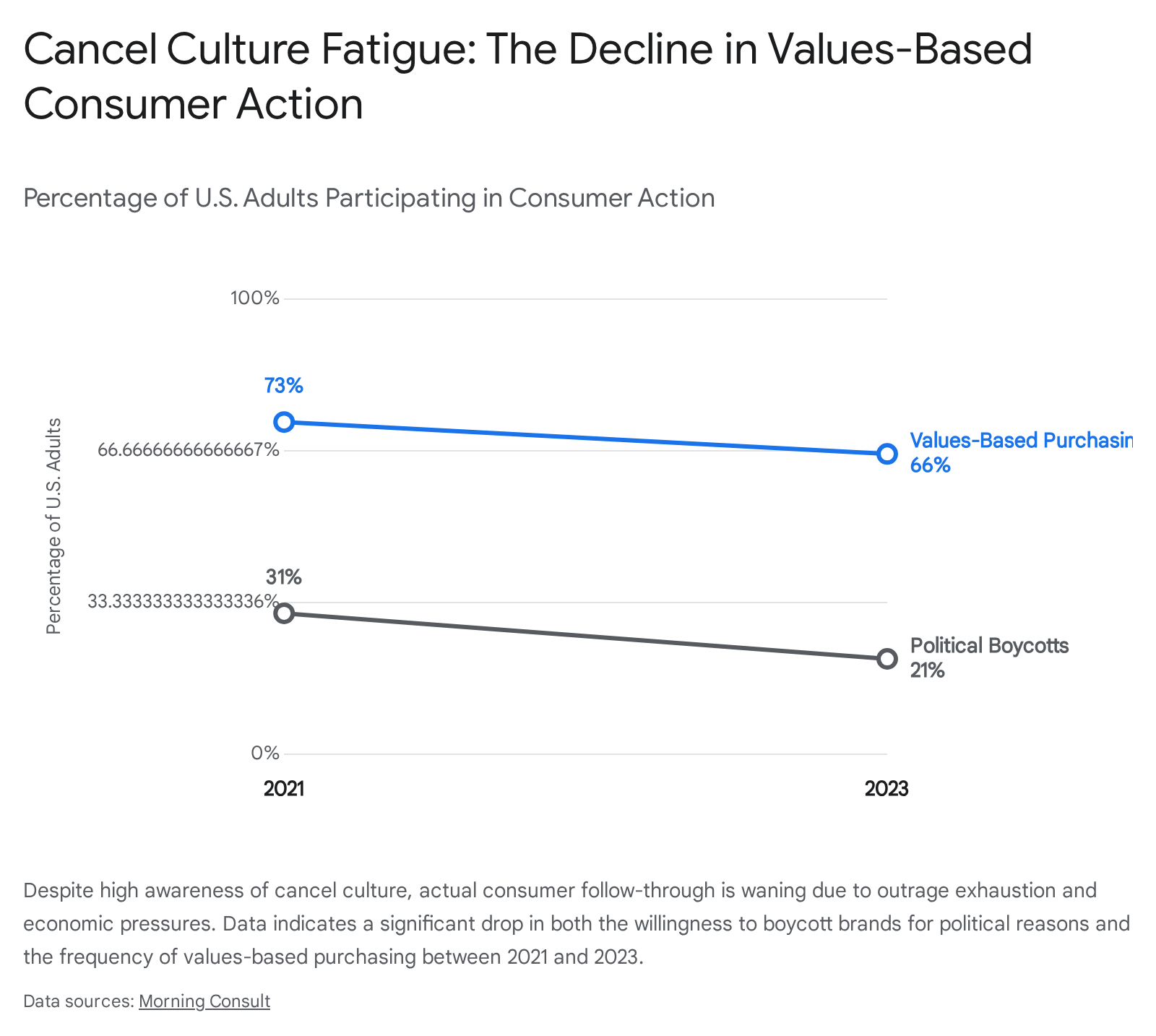
As macroeconomic realities such as inflation and budget pressures mount, and as outrage exhaustion sets in, everyday consumers are increasingly prioritizing price and intrinsic value over performative moral indignation at the point of sale 5.
Future Outlook and Systemic Implications
The psychology of cancel culture represents a highly complex, volatile intersection of innate human social dynamics, advanced algorithmic exploitation, and rigid cultural paradigms. What began theoretically as an egalitarian tool for marginalized groups to demand systemic accountability has unmistakably metastasized into an autopoietic system of digital ostracism, capable of inflicting profound psychological and economic damage 123.
Driven fundamentally by the human pursuit of status through moral grandstanding, exacerbated by the empathy deficit of online disinhibition, and protected by pluralistic ignorance, digital mobs operate within an algorithmically fortified virality loop 16233334. This loop relies on conflict and moral outrage, rewarding aggressive behavior with continuous dopaminergic feedback while simultaneously degrading the quality of public discourse 33.
Furthermore, analysis of the global context reveals that the implementation of digital shaming is highly adaptable to local cultural environments. In Western, individualist societies, it frequently takes the form of ideological warfare, partisan polarization, and professional sabotage 22. In collectivist societies, such as China and South Korea, it manifests as severe, highly organized cyber-manhunts and zero-tolerance institutional purging, enforcing social conformity and routinely resulting in catastrophic psychological consequences for the targets 7202931.
Ultimately, the permanence of the digital archive has replaced the historical, necessary concept of reintegrative shaming with a disintegrative, punitive model that implicitly denies the possibility of human redemption 33. The resulting psychological landscape across the digital sphere is one heavily characterized by chronic anxiety, widespread and chilling self-censorship, and profound emotional exhaustion 483753. As modern societies continue to navigate this era of intense digital discontent, mitigating the severe clinical impacts of cancel culture will require more than mere resilience from users. It will necessitate fundamental structural adjustments to platform algorithms that currently incentivize outrage, the development of robust legal frameworks to address digital vigilantism, and a concerted cultural shift away from performative, dominance-seeking morality toward genuine, restorative dialogue.