
Effects of pet ownership on human wellbeing
The relationship between humans and domestic dogs is frequently characterized in contemporary cultural discourse as inherently therapeutic. Popular narratives broadly claim that owning a dog lowers blood pressure, cures depression, and significantly improves overall happiness. However, epidemiological research and psychological literature present a much more complex, nuanced, and occasionally contradictory picture. While substantial evidence supports the cardiovascular and physical health benefits of dog ownership, the psychological outcomes - specifically regarding clinical depression, anxiety, and general life satisfaction - are mixed. Evaluating the true impact of dog ownership on human wellbeing requires untangling confounding variables, cross-cultural differences in animal function, and the inherent methodological limitations of human-animal interaction research.
Methodological Constraints in Interaction Research
The study of human-animal interaction (HAI) is complicated by fundamental methodological hurdles that make establishing causality exceedingly difficult.
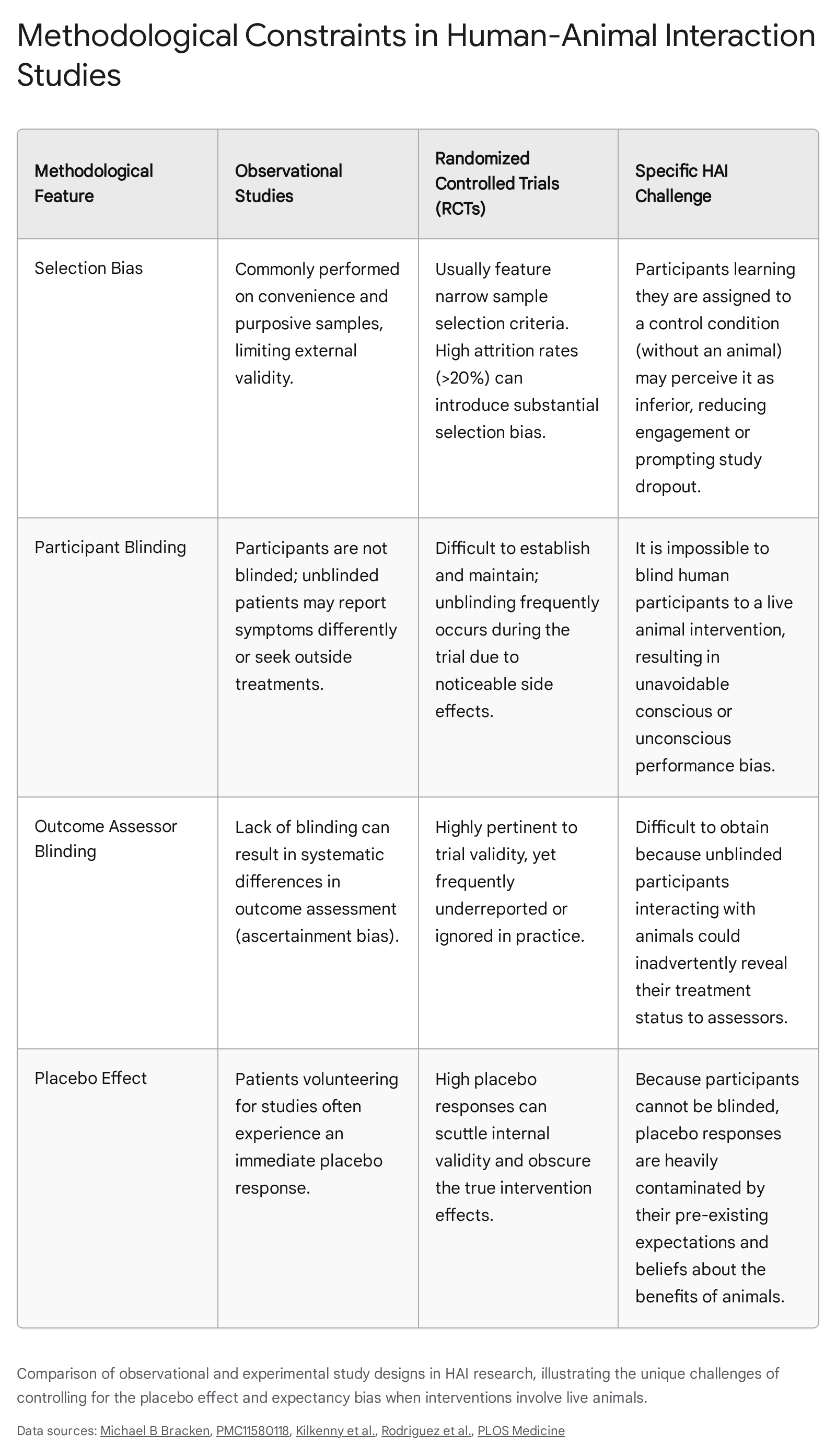
Much of the widely publicized data suggesting that dogs improve human health is derived from cross-sectional observational studies, which are highly susceptible to confounding variables.
The Healthy User Effect and Demographic Confounders
One of the primary confounders in HAI research is the "healthy user effect" or selection bias. The decision to acquire and maintain a dog requires a baseline level of physical mobility, financial stability, and cognitive organization. Consequently, individuals who own dogs may already possess demographic and socioeconomic characteristics that independently predict better health outcomes 1234.
A large-scale study analyzing data from 42,000 participants in California demonstrated that wealthy individuals are significantly more likely to live with pets than individuals in lower-income brackets 1. Furthermore, pet keeping was found to be almost three times more common among homeowners compared to renters, and demographic variables such as race strongly predicted ownership rates 1. In Denmark, research into human socioeconomic position (SEP) further validated that dog ownership practices are deeply linked to socioeconomic stability, education, and housing infrastructure 5. Initial unadjusted analyses in such observational studies often show that dog owners report better general health; however, when researchers rigorously control for demographic variables - such as income, race, and marital status - the general health differences between pet owners and non-owners frequently vanish entirely 1.
This selection bias extends beyond socioeconomic status to physical baseline capabilities. Dog ownership requires physical exertion, meaning that individuals who are already active and metabolically healthy are more likely to adopt and consistently walk dogs 2. If a study finds that dog owners have better cardiovascular metrics, it remains analytically challenging to determine whether the dog caused the increased physical activity or if active individuals are simply more predisposed to dog ownership, thereby exaggerating the perceived therapeutic effect of the animal 26.
Limitations of Randomized Controlled Trials
In evidence-based medicine, the randomized controlled trial (RCT) is the gold standard for determining causality 789. However, implementing rigorous RCTs in HAI research presents unique ethical and logistical challenges 710.
The most significant limitation is the impossibility of blinding participants 101111. In a pharmaceutical trial, a participant does not know if they are receiving an active drug or a placebo, which isolates the physiological effect of the drug from the psychological expectation of healing 12. In HAI research, participants cannot be blinded to the presence of a dog. Consequently, individuals who volunteer for animal-assisted interventions often have preexisting positive beliefs about animals 13. This introduces a massive expectancy bias; any psychological improvement may be a placebo response driven by the participant's belief that dogs are beneficial, rather than an intrinsic therapeutic effect of the animal itself 101314.
Furthermore, outcome assessors in HAI studies are rarely blinded to the participant's intervention group, which can lead to observer bias. Meta-epidemiological analyses demonstrate that non-blinded outcome assessments can exaggerate reported odds ratios by an average of 59% compared to blinded assessments 1415.
Subjective Metrics and Publication Bias
Beyond blinding, HAI literature frequently suffers from reliance on subjective, self-reported metrics rather than objective physiological biomarkers. When dealing with self-reported outcomes regarding anxiety or life satisfaction, participants who possess a strong psychological investment in their identity as a "pet owner" may unconsciously inflate their wellbeing scores to validate their lifestyle choice 101517.
Additionally, publication bias heavily skews the publicly available literature. Studies demonstrating a positive, heartwarming effect of dogs on human health are far more likely to be accepted by high-impact journals and subsequently amplified by mainstream media outlets, while null or negative findings languish unpublished 1617. This structural bias artificially inflates the perceived scientific consensus surrounding the psychological benefits of companion animals.
Psychological Health and Psychiatric Outcomes
The cultural consensus heavily favors the notion that dog ownership improves psychological wellbeing. However, rigorous systemic reviews and longitudinal studies across diverse global populations present highly inconsistent findings. While dog ownership correlates with specific social benefits, its relationship with clinical mental health conditions is extraordinarily complex.
Depression and Clinical Anxiety
The claim that dogs "cure" or prevent depression is not supported by the broader scientific consensus 18. A comprehensive 2025 systematic review and meta-analysis comprising 21 studies and 159,322 participants evaluated the association between pet ownership and the risk of depression. The analysis found that overall pet ownership was not associated with a significant change in depression risk compared to non-ownership (Odds Ratio: 1.03; 95% CI: 0.995 - 1.07) 18.
When disaggregating the data by pet type, the nuances become more pronounced. Dog ownership showed no significant association with depression risk (OR: 0.93; 95% CI: 0.789 - 1.10), while cat ownership was associated with a modestly increased risk of depression (OR: 1.06; 95% CI: 1.02 - 1.09) 18. Individual studies evaluating the impact of dog ownership on depression and anxiety exhibit high heterogeneity. Some longitudinal cohorts report a negative association, suggesting lower depression rates, while others find a positive association, indicating higher depression among owners, or no association whatsoever after adjusting for sociodemographic factors 1920.
Research utilizing large adult cohorts further complicates the narrative. A 2026 epidemiological study involving 8,986 patients with chronic diseases in China assessed mental health using the Center for Epidemiologic Studies Depression Scale (CES-D-10) and the Generalized Anxiety Disorder scale (GAD-7) 21. In this specific demographic, pet ownership was positively associated with both clinical depression (β = 0.47) and anxiety (β = 0.26), despite being negatively associated with social isolation 21.
The Paradox of High Attachment
Paradoxically, strong attachment to a dog is not uniformly protective against psychological distress; in many cases, it operates as a liability. A mixed-methods study of 1,693 dog owners in the United Kingdom revealed that while a stronger dog-owner relationship was associated with greater feelings of emotional support and companionship, it was also correlated with poorer mental health in terms of clinical anxiety and depression 1722.
Owners who interacted more intensely with their dogs reported worse psychological outcomes 17. This phenomenon may be explained by reverse causality: individuals experiencing poor mental health or high anxiety may actively seek out dogs for comfort, utilizing the animal as a coping mechanism for pre-existing psychiatric vulnerabilities 1722. Alternatively, the hyper-attachment itself may generate distress, as owners become excessively anxious regarding the dog's welfare, behavioral needs, and potential morbidity 172223. The perceived costs and burdens of ownership - ranging from financial strain to caregiving stress and anticipatory grief - can significantly erode an owner's overall wellbeing, creating a complex risk-benefit ratio that negates the buffering effects of companionship 182223.
Loneliness, Social Isolation, and Social Capital
Where dog ownership demonstrates the most consistent psychological benefit is in the mitigation of loneliness and the generation of social capital. Dogs act as powerful social catalysts in community environments 242526. Walking a dog dramatically increases the likelihood of incidental social interactions with neighbors, strangers, and other dog walkers, fostering a robust sense of community integration and perceived social support 242527.
A systematic review evaluating the relationship between pet ownership, loneliness, and social isolation among adult samples confirmed that owning a pet was significantly associated with lower levels of social isolation 28. This dynamic was particularly pronounced during the COVID-19 pandemic lockdowns, where dog ownership served as a crucial buffer against the acute psychological impacts of forced physical distancing 20283129. The Human Animal Bond Research Institute (HABRI) global survey across ten nations found that 48% of pet owners explicitly reported that their pet makes them feel less lonely, and 17% noted that their pet helps them integrate into their local community 30.
However, it is vital to distinguish between objective social isolation and the clinical pathology of major depressive disorder. While a dog can alleviate the psychological pain of isolation by providing non-evaluative social support and unconditional positive regard 3132, it does not inherently alter the underlying neurochemistry or structural psychosocial factors that drive clinical depression 17223233.
Wellbeing, Happiness, and Life Satisfaction Across Regions
Studies measuring overall life satisfaction and happiness between dog owners and non-owners frequently yield null results, particularly when analyzed across diverse geographic and cultural settings.
In a study evaluating 250 university students in India, utilizing the Mental Health Continuum and Satisfaction with Life Scale, researchers found no significant difference in mental health or life satisfaction between dog owners and non-pet respondents 3438. The researchers concluded that the effect of dog ownership on student wellbeing is not universal and depends heavily on individual, cultural, and contextual factors, such as the perceived cost of maintenance and the specific breed of the dog 34.
Similar nuances emerge in Latin American research. A pilot study of 801 adults across the five macro-regions of Brazil found a distinct interaction between pet ownership and sex regarding wellbeing indicators. Men who owned pets reported better sleep quality, improved relationships with neighbors, and less sadness compared to non-owning men. Conversely, women who owned pets reported lower levels of personal life organization. Crucially, regarding overarching life satisfaction, no statistically significant differences were found between pet owners and non-owners in the Brazilian cohort, regardless of sex 3540. Furthermore, a survey of 602 adults in Mexico indicated that while dog owners reported lower psychosomatic symptoms, less stress, and better perceived general health, there was no significant difference between the groups concerning overall life satisfaction or happiness 6.
| Geographic Region | Cohort Description | Key Psychological Findings |
|---|---|---|
| United Kingdom | 1,693 adult dog owners | High attachment linked to greater emotional support but higher clinical anxiety and depression. |
| China | 8,986 chronic disease patients | Pet ownership associated with higher depression/anxiety, but lower social isolation. |
| Japan | 2,584 adolescents (Tokyo Cohort) | Dog ownership at age 10 predicts better mental wellbeing at age 12; cat ownership predicts worse. |
| India | 250 university students | No significant difference in life satisfaction or general mental health compared to non-owners. |
| Brazil | 801 adults across 5 macro-regions | Men reported better sleep and neighbor relations; women reported lower life organization. No difference in overarching life satisfaction. |
| Mexico | 602 adults | Dog owners reported lower stress and better general health, but no difference in happiness or life satisfaction. |
Cardiovascular Physiology and Systemic Health
In stark contrast to the ambiguous psychological data, the scientific consensus regarding dog ownership and cardiovascular health is robust and largely positive. The physiological demands and emotional buffering provided by dogs trigger measurable, protective changes in human autonomic nervous system function and systemic hemodynamics.
All-Cause Mortality and Post-Event Survival
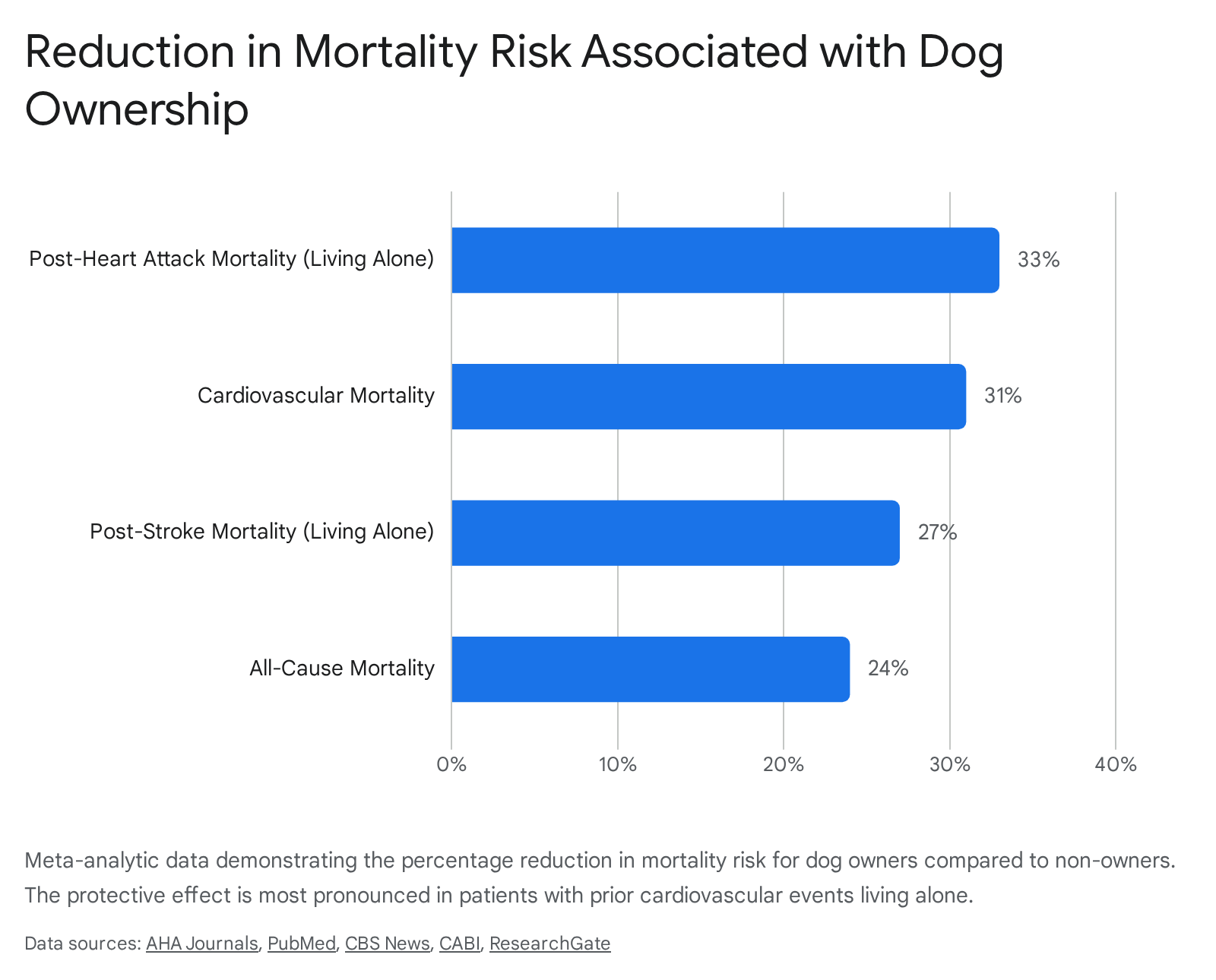
Dog ownership is associated with significant, quantifiable long-term survival benefits. A highly cited 2019 systematic review and meta-analysis published by the American Heart Association (AHA) aggregated data from 10 studies encompassing 3,837,005 participants with a mean follow-up of 10.1 years 363738. The comprehensive analysis revealed that dog ownership was associated with a 24% risk reduction for all-cause mortality compared to non-ownership (Relative Risk: 0.76; 95% CI: 0.67 - 0.86) 363738.
The protective benefits were particularly pronounced for individuals with pre-existing cardiovascular vulnerabilities. When restricting the analysis to cardiovascular mortality, dog ownership conferred a 31% risk reduction for cardiovascular death (RR: 0.69; 95% CI: 0.67 - 0.71) 363738. Furthermore, a prospective study utilizing the Swedish National Patient Register evaluated residents aged 40 - 85 who experienced a heart attack or ischemic stroke between 2001 and 2012. For heart attack patients living alone, dog ownership reduced the risk of death after hospitalization by 33% compared to those who did not own dogs. For stroke patients living alone, the risk of death was reduced by 27% 3940.
Autonomic Nervous System and Heart Rate Variability
The physiological mechanisms driving this cardiovascular protection are deeply rooted in the autonomic nervous system. Heart Rate Variability (HRV) - the physiological variation in the time interval between consecutive heartbeats - is a vital biomarker of cardiac health, adaptability, and psychological stress 4142. Reduced resting HRV indicates autonomic dysfunction and is a well-established risk factor for metabolic disorders and cardiovascular disease mortality, while higher HRV suggests a resilient cardiovascular system capable of recovering rapidly from acute stress 4142.
Longitudinal assessments demonstrate that dog owners, particularly those who have survived a myocardial infarction, possess significantly higher short-term and intermediate-term HRV indexes compared to non-owners 414243. Continuous 24-hour HRV monitoring, considered the clinical gold standard, reveals that older pet owners maintain more favorable autonomic profiles throughout both day and night cycles 4142.
Interacting with a dog actively buffers cardiovascular reactivity to acute environmental stress. In experimental settings where participants were subjected to mental arithmetic or cold pressor tasks, individuals with pets exhibited lower resting baseline heart rates, significantly smaller increases in systolic and diastolic blood pressure during the stressor, and faster recovery to baseline levels after the stressor ceased 4344. This physiological dampening is partially mediated by the release of neurohormones - specifically oxytocin, b-endorphin, and dopamine - during human-animal interaction, which actively inhibit stress hormones like cortisol and promote parasympathetic nervous system dominance 3245.
Systemic Blood Pressure and Physical Activity
Dog ownership essentially functions as an enforced behavioral intervention for physical activity. Dogs require regular exercise, which inextricably links their physiological wellbeing to the owner's daily mobility. Studies consistently demonstrate that dog owners walk significantly more, are more likely to meet recommended public health guidelines for aerobic exercise (150 minutes per week), and exhibit lower rates of general physical inactivity and obesity than non-owners 224254647.
This consistent low-to-moderate aerobic exercise yields modest but cumulative improvements in vascular health. A meta-analysis of 11 rigorous studies investigating the link between pet ownership and hemodynamics found that pet owners had a 1.7 mmHg lower systolic blood pressure and a significantly lower resting heart rate of 2.3 bpm compared to non-owners 48. While these individual reductions may seem minor in isolation, when extrapolated across an aging population over several decades, they contribute substantially to the prevention of systemic hypertension and subsequent vascular disease. Furthermore, observational data from 9,354 children and adolescents in China indicated that early exposure to a dog significantly reduced the risk of pediatric hypertension by 32 - 34%, suggesting that the cardiovascular benefits of pet ownership compound over a lifetime 48.
| Cardiovascular Metric | Scientific Consensus | Putative Biological/Behavioral Mechanism |
|---|---|---|
| All-Cause Mortality | 24% Risk Reduction | Cumulative effects of daily exercise routine, improved stress resilience, and mitigation of isolation. |
| Cardiovascular Mortality | 31% Risk Reduction | Dampened sympathetic nervous system responses; improved lipid profiles and blood pressure. |
| Heart Rate Variability | Higher (Favorable) in Owners | Autonomic nervous system regulation; oxytocin-mediated enhancement of parasympathetic tone. |
| Resting Blood Pressure | Modest Reduction (~1.7 mmHg Systolic) | Increased daily aerobic activity; improved vascular compliance and reduced systemic stress markers. |
| Physical Activity Levels | Strong Positive Association | Enforced daily dog walking requirements; increased motivation and sense of responsibility. |
Geriatric Outcomes and Cognitive Preservation
As populations age globally, human-animal interaction researchers are increasingly shifting their focus from general emotional wellbeing toward specific geriatric health metrics, notably sleep architecture, cognitive preservation, and functional independence in older adults.
Sleep Architecture and Quality
The presence of a dog in the home, and specifically in the bedroom, has complex implications for human sleep architecture. A nationwide cross-sectional study of 1,434 elderly individuals in China utilized the validated Athens Insomnia Scale to precisely assess the impact of diverse pet-related characteristics on sleep 4955. The study found that general pet ownership was significantly associated with a reduced risk of insomnia (adjusted OR = 0.75; 95% CI: 0.59 - 0.96) 4955. Dog ownership, specifically, served as a strong protective factor (OR = 0.63), likely due to the diurnal rhythm stabilization provided by routine morning walks and the physical exhaustion resulting from daily outdoor activity 4955.
However, the benefits to sleep quality are highly context-dependent and are easily reversed by high-burden animals. The same study revealed that ownership duration of less than one year, daily interactions exceeding two hours, and the ownership of specific high-maintenance animals (such as rabbits) were associated with an increased risk of poor sleep quality and insomnia 4955. Furthermore, in longitudinal studies tracking children's movement behaviors over time, acquiring a dog showed no significant positive associations with sleep duration, and in some cohorts, girls who lost a dog experienced significant disruptions in their unstructured physical activity, indirectly impacting sleep hygiene 2950.
Cognitive Decline and Neurological Resilience
There is tentative but growing evidence within gerontology that dog ownership may buffer against age-related cognitive decline, particularly for older adults at high risk due to severe social isolation. Analysis of comprehensive data from the English Longitudinal Study of Ageing, involving approximately 8,000 adults, demonstrated that pet owners exhibited slower rates of decline in specific cognitive domains, including verbal cognition, verbal memory, and verbal fluency 5152.
Crucially, this protective neurological effect was observed primarily in individuals who lived alone, acting as a functional compensatory mechanism for the lack of human-human social interaction 51. Living alone is an established independent risk factor for dementia, operating on a similar scale to metabolic risk factors like diabetes and obesity. While dog ownership cannot reverse the underlying neuropathology of Alzheimer's disease or vascular dementia, the cognitive demands of caring for an animal provide persistent stimulation. Remembering feeding schedules, navigating physical environments during walks, processing non-verbal canine communication, and managing veterinary care require ongoing executive function 5152. This daily cognitive engagement may help maintain neural pathways and cognitive reserve longer than in isolated, non-pet-owning peers 5152.
Global Contexts and Non-Western Societies
A significant, systemic limitation of human-animal interaction research is its overwhelming, disproportionate reliance on data from "WEIRD" (Western, Educated, Industrialized, Rich, and Democratic) societies 535455. In Western, high-income contexts, the dog is predominantly viewed as a "fur-baby" or an indoor companion kept almost exclusively for emotional and psychological purposes 5456. This highly specific paradigm does not reflect the daily reality for over half of the global dog population. Examining non-Western settings reveals that the impact of a dog on human wellbeing is intimately tied to the animal's functional role in society and local public health infrastructure.
Functional Roles of Dogs in Cross-Cultural Samples
An expansive anthropological study utilizing the eHRAF cross-cultural database analyzed the precise function and perception of dogs across 124 globally distributed non-Western societies 545557. The rigorous research challenged the Western assumption that non-Western dogs serve single, utilitarian functions or are uniformly treated poorly as mere tools. Instead, dogs in these diverse cultures frequently fill multiple functional roles simultaneously, including hunting, herding, guarding livestock, and general defense 5557.
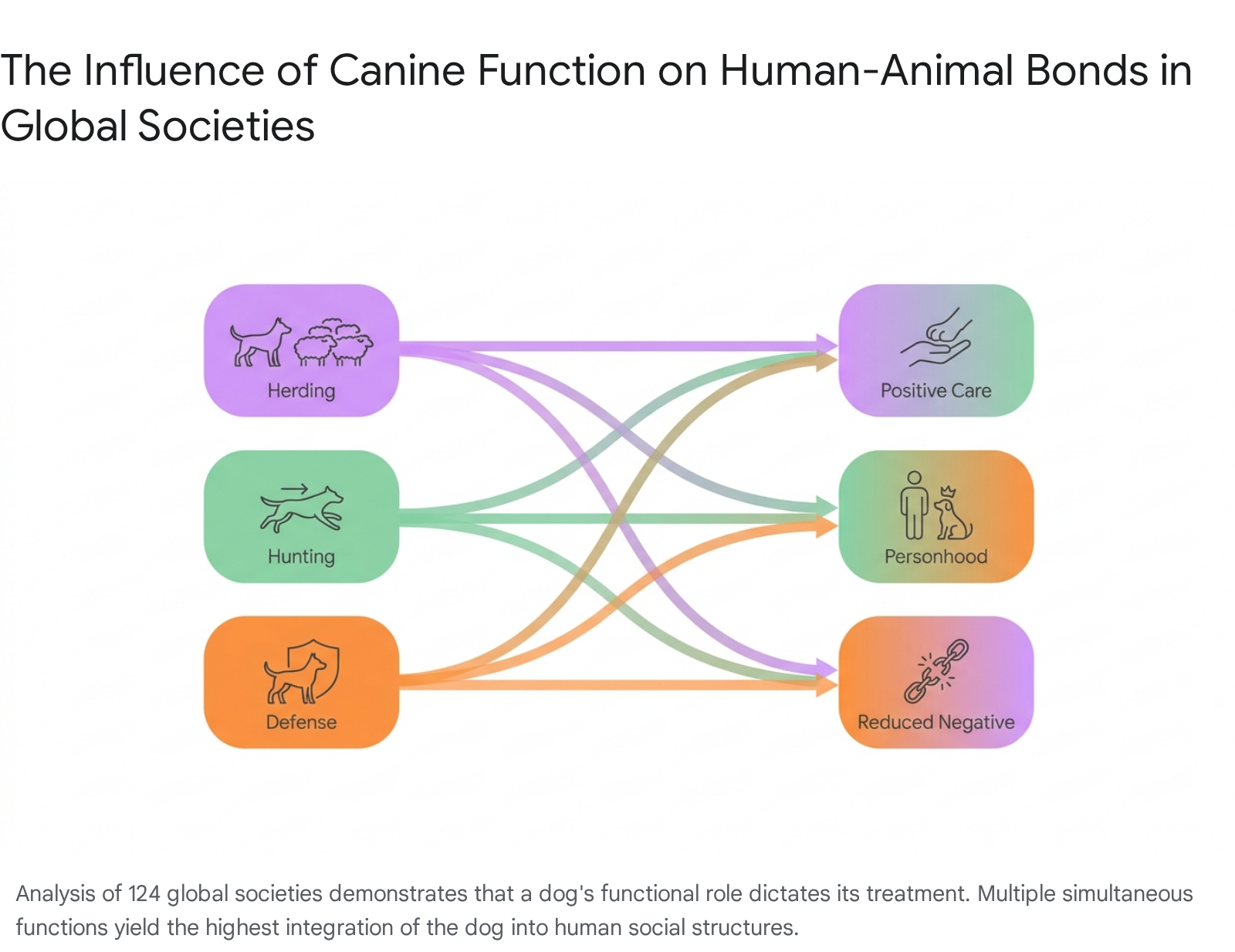
The study uncovered a direct, mechanistic link between a dog's specific societal function and the resulting characteristics of the human-dog bond: 1. Multiple Functions: The more distinct functions a dog fills within a society, the closer the human-animal relationship becomes. Multiple roles correlate strongly with increased positive care (e.g., receiving healthcare, indoor access) and a significantly higher likelihood of the dog being granted sociological "personhood" (e.g., being named, formally mourned, or treated as kin) 5455. 2. Herding Dogs: Societies utilizing dogs for herding demonstrate a substantial increase in positive caregiving toward the animals, likely because herding is a highly cooperative, derived behavior requiring high investment and trust between human and dog 55. 3. Hunting Dogs: The use of dogs for hunting strongly predicts the attribution of personhood to the dog. However, it does not uniformly predict positive physical care; in certain societies, hunting dogs are deliberately kept hungry to increase their prey drive, representing a split between emotional reverence and physical welfare 5455. 4. Watchdogs (Defense): The presence of watchdogs is associated with a significant decrease in negative treatment (e.g., physical abuse, culling) within the society, as these dogs require lower daily investment but provide baseline security 55.
Interestingly, positive care and negative treatment are not mutually exclusive within a single culture. In 32 of the surveyed societies, both dynamics coexist (e.g., dogs may be allowed indoors to sleep but are also subjected to physical punishment or regular culling of puppies). This duality highlights that cross-cultural human-dog relationships involve a complex, deeply pragmatic balance between maximizing the dog's utility and minimizing the nutritional and economic costs of maintenance 5455.
Free-Roaming Populations and Community Health
In rapidly developing nations like India, Sri Lanka, Thailand, and various South American countries, the predominant canine demographic consists of free-roaming "community dogs" rather than strictly confined indoor pets 58596061. These animals blur the lines of traditional ownership; they may be loosely owned by a neighborhood that provides communal food and water, or they may be entirely unowned, feral animals 5962.
In these specific contexts, the impact of dogs on human wellbeing is heavily intertwined with immediate public health risks, specifically zoonotic disease transmission (notably rabies, which causes approximately 59,000 human deaths annually), severe dog bites, traffic accidents, and livestock predation 58596061. For individuals living alongside massive free-roaming populations, the psychological distress of potential rabies exposure or unprovoked attacks can severely diminish local quality of life 585962.
Attitudes Toward Dog Population Management
Public health interventions in these regions focus on systemic Dog Population Management (DPM) frameworks, such as catch-neuter-return (CNR) programs, mass rabies vaccination, and community education on bite prevention 5862. When these systems are implemented effectively, they generate significant, quantifiable social impacts. Effective DPM reduces the feral nuisance index, lowers human-wildlife conflict, and dramatically improves community health perceptions 5859. Ultimately, managing the structural population of community dogs indirectly improves the psychological wellbeing of the human community by restoring a sense of environmental safety and fostering a peaceful coexistence between humans and urban canines 5862.
Cross-national surveys reveal that attitudes toward managing roaming dogs vary wildly. In a comparative study of Bulgaria, Italy, and Ukraine, respondents from Bulgaria and Ukraine reported higher rates of feeling physically threatened by roaming dogs and were significantly more likely to allow their own dogs to roam unsupervised 6364. The probability of neutering an owned dog also varied by demographic; male respondents, those with lower formal education, and highly religious individuals were statistically less likely to neuter their animals, complicating efforts to control the community dog population and stabilize public health outcomes 6364.
Working Dogs Versus Companion Breeds
A final critical factor in evaluating whether a dog improves human wellbeing is the specific ethological mismatch between working breeds and modern companion lifestyles. The domestic dog (Canis lupus familiaris) encompasses a massive spectrum of selective breeding. Working breeds - such as the Belgian Malinois, Border Collie, and Siberian Husky - were genetically engineered for high intelligence, independent problem-solving, and extreme physical endurance 5365.
When these specific working breeds are placed into standard, low-activity companion homes without adequate physical outlets or complex mental stimulation, the results are frequently detrimental to the wellbeing of both the human and the animal. The dog's unmet drive often manifests as severe behavioral issues, including destructive chewing, obsessive-compulsive digging, and excessive vocalization 5365. For the human owner, the constant need to manage a highly reactive or destructive animal generates profound caregiving stress, actively reducing life satisfaction and creating a domestic environment characterized by friction rather than the anticipated emotional support 172265. Choosing a dog breed with energy levels and mental requirements that fundamentally match the owner's lifestyle is a prerequisite for achieving any of the psychological benefits associated with the human-animal bond 255365.
Conclusion
The scientific inquiry into whether owning a dog "makes you happier" yields a multifaceted answer that defies simple cultural tropes. The evidence unequivocally supports the physical and cardiovascular benefits of dog ownership. Through the diverse mechanisms of enforced physical activity, autonomic nervous system regulation, and the physiological dampening of sympathetic stress responses, dogs provide a measurable, long-term shield against all-cause and cardiovascular mortality, particularly for individuals recovering from severe cardiac events.
However, the psychological outcomes are highly conditional and stubbornly resistant to generalization. Dog ownership does not act as a reliable, uniform prophylactic against clinical depression or psychiatric anxiety. In fact, managing high-burden dogs, dealing with behavioral mismatches, or developing hyper-attached relationships can severely exacerbate psychological distress. The primary mental health benefit of a dog lies in its capacity to act as a social lubricant and a routine-enforcer, significantly reducing feelings of loneliness and objective social isolation, particularly for aging populations or those living alone.
Ultimately, dog ownership is an active, dynamic, and frequently demanding relationship rather than a passive medical intervention. The wellbeing benefits derived from a dog are inextricably linked to the owner's baseline capacity to care for the animal, the functional role the dog plays within its specific cultural and environmental context, and the bidirectional nature of the human-animal bond.