Digital Media Effects on Dopamine and Attention Spans
Introduction
The intersection of modern digital technology and human cognitive performance has generated significant academic scrutiny, psychiatric debate, and public alarm. Over the past decade, a pervasive cultural narrative has emerged positing that digital environments - specifically algorithmic social media and short-form video platforms - are fundamentally rewiring the human brain, eradicating innate attention spans, and driving a global epidemic of digital dependency. This discourse frequently relies on sensationalized comparisons between smartphone use and chemical substance abuse, alongside widely circulated but scientifically unverified statistics regarding human attention spans.
While the psychological, behavioral, and neurobiological impacts of digital consumption are profound and distinctly measurable, much of the popular narrative is predicated on neurochemical oversimplifications and fabricated epidemiological data. To understand the true mechanisms by which digital interfaces influence cognitive control, it is necessary to separate scientifically validated neurophysiological responses from technological hype. This comprehensive research report exhaustively evaluates the current neuroscientific landscape regarding dopaminergic function, the clinical measurement of sustained attention, the cognitive consequences of short-form algorithmic media, and the evolving psychiatric and regulatory frameworks designed to mitigate digital behavioral disorders globally.
Neurobiological Functions of Dopamine
The Reward Prediction Error Framework
In popular culture and generalized media commentary, dopamine is nearly ubiquitously mischaracterized as a literal "pleasure chemical" - a neurotransmitter whose primary, isolated function is to induce feelings of joy, satisfaction, or euphoria upon the receipt of a reward or the engagement in a desirable activity. Neuroscientific consensus, established over decades of rigorous study, demonstrates a far more complex, computationally sophisticated reality. Midbrain dopamine neurons, primarily located in the ventral tegmental area (VTA) and the substantia nigra, function as a crucial learning and prediction signal mechanism rather than a simple pleasure mediator 12.
The prevailing computational framework for understanding dopamine function is the Reward Prediction Error (RPE) model. Initially described in theoretical terms by Sutton and Barto's model-free reinforcement learning algorithms in 1981, the concept was subsequently validated in neuronal hardware by neuroscientist Wolfram Schultz and colleagues in 1997 234. Through single-cell recordings in macaque monkeys, Schultz demonstrated that dopamine neurons respond most vigorously not to rewards themselves, but to the discrepancy between an expected reward and the actual outcome experienced 125.
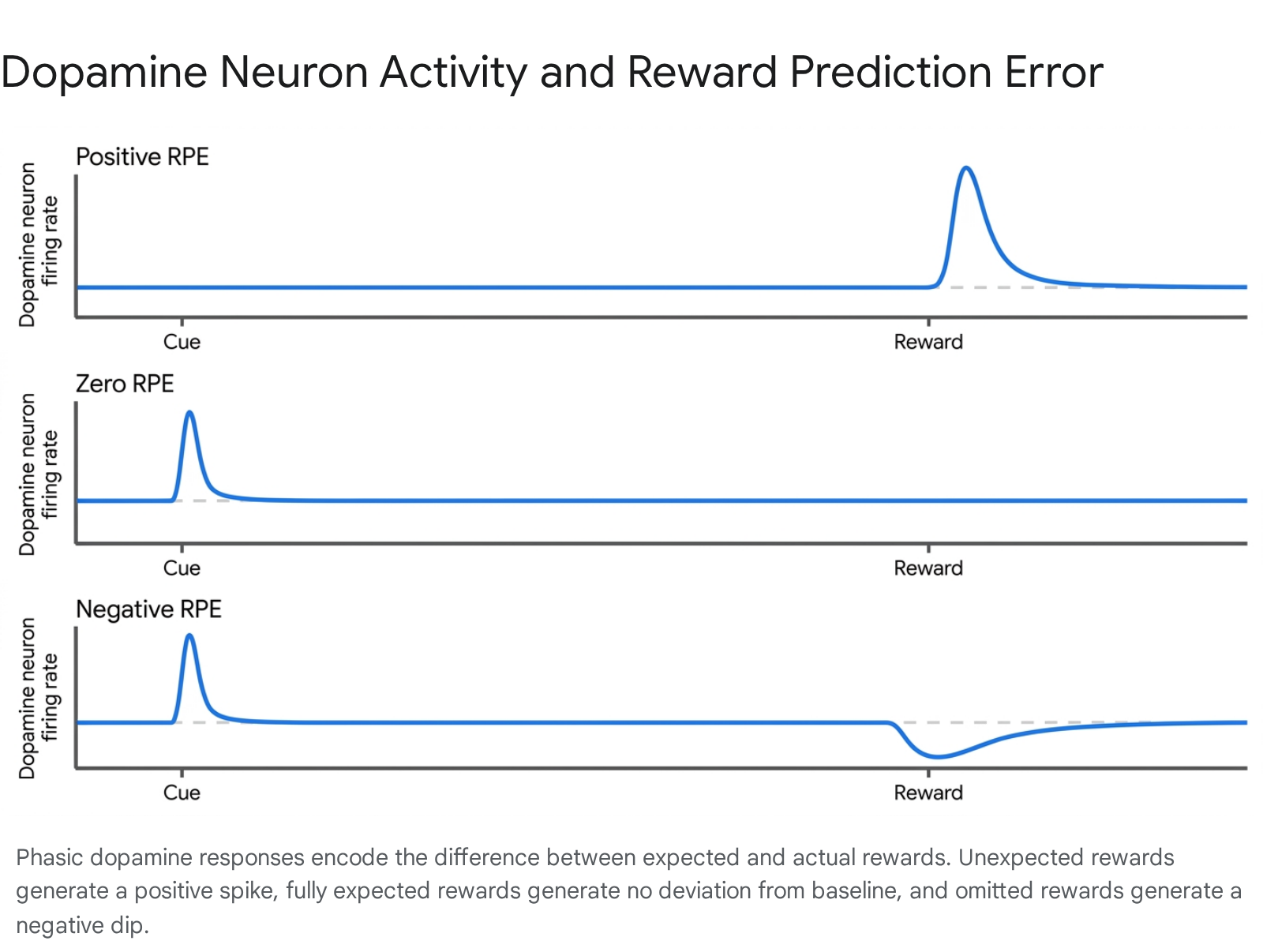
Dopamine in the mesolimbic system is released in two primary operational modes: tonic firing and phasic firing 67. Tonic firing constitutes a slow, steady baseline level of dopamine release that dictates general arousal, mood stability, and baseline motivation 67. Phasic firing consists of rapid, high-frequency bursts of activity that cause short-term dopamine peaks in response to specific environmental stimuli 67. Phasic bursts occur when an individual receives an unexpected positive outcome - a positive prediction error - which signals the brain to update its associative models and reinforces the behavior that led to the novel reward 146.
Critically, as an organism learns through repeated exposure that a specific cue reliably predicts a forthcoming reward, the phasic dopamine spike undergoes a temporal shift. The burst of dopamine activity transfers from the actual receipt of the reward to the presentation of the predictive cue 123. Consequently, when the fully predicted reward eventually occurs, dopamine neurons remain precisely at their tonic baseline firing rate, indicating zero prediction error and signaling that the environment behaved exactly as the internal model expected 4. If an anticipated reward is entirely omitted, or if the reward is substantially less than expected, dopamine firing dips sharply below the tonic baseline 1234. This negative prediction error induces a neurobiological state of reduced motivation, disappointment, and behavioral extinction, driving the organism to abandon unproductive pursuits 1234.
Therefore, dopamine functions primarily as an engine for anticipation, learning, and motivated goal pursuit (often summarized as "wanting" in behavioral psychology), rather than the consummatory physiological enjoyment of the goal itself ("liking") 88. Digital platforms, particularly those utilizing algorithmic feeds and notification systems, are highly optimized to exploit this specific mechanism. By delivering unpredictable social validation, varying content formats, and intermittent novelty, they maintain a continuous state of positive prediction error 810. This variable-ratio reinforcement schedule prevents normal neural habituation and sustains artificially high levels of anticipatory dopamine, ensuring continuous user engagement 810910.
Habituation and Receptor Down-Regulation
When an individual is chronically exposed to environments that provoke continuous, high-volume dopamine release, the brain attempts to maintain homeostasis through neuroadaptation 1112. As detailed by researchers exploring the modern state of digital overconsumption, repeated exposure to hyper-stimulating stimuli forces the brain to down-regulate its dopamine transmission 11. It achieves this by reducing the number of active dopamine receptors (such as the D2 receptors) in the striatum and lowering the tonic baseline of dopamine production 111213.
This biological adaptation creates a chronic dopamine-deficit state 11. In this state, normal, everyday activities that previously generated sufficient motivation and mild pleasure - such as reading a complex book, engaging in unhurried conversation, or completing a routine work task - no longer meet the newly elevated neurological threshold required to stimulate the reward pathway 811. The user experiences increased anhedonia, restlessness, and an overwhelming drive to return to the high-stimulation digital environment merely to feel a baseline sense of normalcy, a classic hallmark of behavioral addiction 81112.
Comparative Magnitudes of Dopamine Release
A frequent motif in modern commentary regarding the digital economy is the direct equation of social media or smartphone usage to severe illicit drug abuse. Headlines routinely assert that scrolling through a digital feed "looks exactly like a brain on cocaine," attempting to frame digital consumption as biologically indistinguishable from chemical dependency 101415. While both sets of stimuli undeniably activate the identical mesolimbic reward circuitry - specifically the neural projections from the VTA to the nucleus accumbens - the quantitative magnitude, physiological mechanisms, and duration of the dopamine release are radically different 88.
Primary natural reinforcers, established through evolutionary biology to ensure survival, such as consuming highly palatable food or engaging in sexual activity, typically increase extracellular dopamine levels in the brain by 50% to 150% above the resting baseline 1218. Digital interactions, such as receiving an anticipated text message, accumulating "likes" on a social media post, or viewing a novel algorithmic video, trigger phasic dopamine elevations that are roughly comparable to these natural, mild reinforcers 81218. The addictive nature of social media stems from the unprecedented frequency, immediate accessibility, and lack of physical satiation associated with these digital triggers, not their neurochemical volume 111215.
In stark contrast, pharmacological agents bypass standard sensory perception and cognitive appraisal, directly manipulating the neurochemical transport infrastructure 812. Cocaine achieves its effects by directly blocking the dopamine transporter (DAT) on the presynaptic neuron 8. By preventing the natural reuptake and clearance of dopamine from the synaptic cleft, cocaine forces a massive, unnatural accumulation of the neurotransmitter, increasing the rate of dopamine output into regions like the prefrontal cortex by approximately 1,000% above baseline 81218. Methamphetamine operates via an even more aggressive mechanism, not only blocking reuptake but physically entering the presynaptic terminal and forcing the release of stored dopamine vesicles, resulting in catastrophic spikes ranging from 1,000% to as high as 10,000% above baseline 1218.
| Stimulus Type | Primary Mechanism of Action | Approximate Dopamine Increase Above Baseline | Clinical Categorization |
|---|---|---|---|
| Palatable Food / Sexual Activity | Natural sensory reward processing and cognitive appraisal. | 50% - 150% | Primary Natural Reinforcer 1218 |
| Nicotine | Activation of nicotinic acetylcholine receptors, stimulating the VTA. | ~150% | Substance Use Disorder 18 |
| Social Media / Notifications | Variable-ratio social validation and novelty processing. | ~50% - 150% | Behavioral / Compulsive Use 812 |
| Cocaine | Direct pharmacological blockade of the dopamine transporter (DAT). | ~1,000% | Severe Substance Use Disorder 1218 |
| Methamphetamine | Reversal of DAT and forced release of intracellular dopamine stores. | 1,000% - 10,000% | Severe Substance Use Disorder 1218 |
While the anatomical pathways engaged by digital platforms and illicit substances are the same, the sheer quantitative release of dopamine is separated by an order of magnitude 812. Furthermore, long-term severe substance addiction frequently results in direct neurotoxic damage and cell death within prefrontal cortical areas, a severity of irreversible physical degradation that is not observed in behavioral addictions related to technology use 16.
The Dopamine Fasting Phenomenon
Popular Misconceptions in Digital Culture
As global public awareness of algorithmic manipulation and digital burnout has grown, a prominent wellness trend known as "dopamine fasting" or "dopamine detoxing" has proliferated across media platforms. Originally popularized by productivity influencers, tech entrepreneurs, and Silicon Valley executives, the colloquial trend posits that individuals can actively "deplete," "flush out," or "reset" their brain's dopamine levels by temporarily adopting extreme asceticism 17181920. In its most extreme, internet-distorted iterations, practitioners advocate for periods of total abstinence from all sources of pleasure or stimulation, including avoiding smartphones, abstaining from eating flavorful food, listening to music, and even avoiding eye contact or engaging in human conversation 181921.
Neurobiologists, psychiatrists, and clinical researchers uniformly dismiss the biological premise of a literal "dopamine detox" as scientifically illiterate 7172021. Dopamine is an essential, naturally occurring neuromodulator required for fundamental human survival; it orchestrates basic voluntary motor control, cognitive flexibility, and physiological motivation 2721. A human cannot "fast" from dopamine any more than they can fast from cellular respiration 171821. Dopamine does not accumulate like a bodily toxin that requires flushing, nor does it deplete like fuel in a mechanical tank 717. Furthermore, medical experts note that deliberately abstaining from healthy, pleasurable activities like social interaction or exercise does not artificially suppress baseline dopamine levels, and attempting to do so is fundamentally maladaptive and potentially harmful to long-term mental health 1718.
Clinical Validity Through Cognitive Behavioral Therapy
Despite the foundational neurobiological inaccuracies of the trend's title, clinical researchers acknowledge that the underlying psychological practice of the original protocol holds significant therapeutic merit 1921. Dr. Cameron Sepah, the clinical psychologist credited with coining the term "dopamine fasting," explicitly stated that the name was merely a "catchy title" designed to capture public attention, and was never intended to be interpreted as a literal neurochemical intervention 71718.
Properly administered, the practice is firmly rooted in established Cognitive Behavioral Therapy (CBT) techniques, specifically the mechanism of "stimulus control" 171821. The objective is not to reduce brain chemicals, but to systematically reduce an individual's exposure to the conditioned, high-frequency, instant-reward triggers (such as notification chimes, infinite scrolling interfaces, and algorithmic autoplay) that drive compulsive behavior 7171821. By taking structured, intentional breaks from these specific digital stimuli, individuals disrupt ingrained patterns of impulsivity 718.
This temporary digital abstinence forces the individual to tolerate transient feelings of boredom, loneliness, or restlessness without immediately reaching for a digital pacifier 1821. Over time, this practice allows the prefrontal cortex - the brain region responsible for executive function, long-term planning, and self-control - to strengthen its regulatory oversight over the striatum-driven, impulsive urges 720. The benefits widely reported by practitioners of moderated dopamine fasting - including increased mental clarity, reduced baseline anxiety, lower emotional volatility, and a restored ability to derive pleasure from slower, effortful tasks - are empirically valid 182122. However, these positive outcomes stem from psychological habituation, the breaking of compulsive behavioral loops, and a reduction in chronic cognitive overload, not from a literal recalibration of dopamine reservoirs 7192122.
Human Attention Span Metrics
The Goldfish Attention Span Misconception
Alongside the hyperbole surrounding dopamine, perhaps the most ubiquitous and damaging statistic cited in modern discourse regarding digital culture is the claim that the average human attention span is shrinking at an alarming rate. It is routinely stated as verified fact that the average human attention span has plummeted from 12 seconds in the year 2000 to a mere 8 seconds today, purportedly placing human cognitive focus one full second behind the 9-second attention span of a common goldfish 2324282925.
Rigorous scientific investigation and journalistic auditing have demonstrated that this statistic is an outright fabrication with no basis in peer-reviewed science 242531. The claim gained global, uncritical prominence after it was featured in a 2015 consumer insights report published by a division of Microsoft Canada 232426. The Microsoft report, focused on marketing strategies, utilized a graphical infographic attributing the 8-second human and 9-second goldfish metrics to a secondary research aggregator called "Statistic Brain" 232426.
Subsequent investigations by researchers attempting to verify the data revealed that Statistic Brain had entirely fabricated the figures 242526. The aggregator cited older studies from the National Center for Biotechnology Information (NCBI) and the Associated Press as their primary sources; however, researchers at those institutions confirmed no such data or studies existed within their archives 2526. Furthermore, aquatic ecologists and marine biologists note the profound irony of the goldfish comparison. Professor Felicity Huntingford, a renowned aquatic ecologist, points out that goldfish are actively utilized by neuro-psychologists as prime model organisms for studying learning processes and memory formation precisely because their memory and attention are robust, enduring for months, rendering the 9-second metric biologically absurd 232531.
Dr. Edward Vogel, a professor of psychology and neuroscience at the University of Chicago who has dedicated decades to measuring human cognitive capacity, notes that fundamental human attentional capabilities have remained remarkably stable across generations 25. Cognitive scientists broadly reject the concept of an "average human attention span" as a scientifically meaningless construct, because the application of attention is intrinsically task-dependent, heavily modulated by factors such as intrinsic personal interest, baseline arousal, task fluency, and the presence of external environmental stressors 242827.
Clinical Classifications of Attention
To accurately assess how digital media interfaces affect cognitive focus, one must transition away from the colloquial, one-dimensional concept of an "attention span" and utilize the formal, multi-dimensional taxonomies established in clinical psychology and cognitive neuroscience. Attention is not a singular, monolithic mental muscle; rather, it is a complex, distributed cognitive system comprising distinctly different operational modes 28293031.
| Attention Classification | Clinical Definition | Digital Era Challenge |
|---|---|---|
| Sustained Attention (Vigilance) | The ability to voluntarily maintain cognitive focus and steady performance on a continuous, often repetitive task over an extended duration, resisting spontaneous mind-wandering 2829303132. | Diminished by the conditioned expectation of rapid, high-dopamine content delivery; users experience "vigilance decrement" much faster on unstimulating academic or professional tasks 282939. |
| Selective Attention | The cognitive capacity to concentrate intensely on a specific target stimulus while actively suppressing, filtering, and ignoring competing external distractors in the environment 2930. | Severely overtaxed by digital environments intentionally designed with dense visual and auditory noise (e.g., pop-up notifications, haptic feedback, banner ads) 2930. |
| Alternating Attention | The mental flexibility required to shift cognitive resources smoothly and sequentially back and forth between tasks that possess fundamentally different cognitive demands 2930. | Exploited and exhausted by the rapid context-switching inherent in algorithmic media feeds (e.g., swiping instantaneously from a tragic global news story to a comedic dance video) 1029. |
| Divided Attention | The theoretical ability to process multiple distinct information streams or execute multiple complex tasks simultaneously (commonly referred to as multitasking) 2930. | Frequently attempted by media-multitaskers, leading to severe cognitive degradation and increased error rates, as the brain cannot truly divide focus but instead rapidly toggles between tasks, incurring high cognitive switching costs 293033. |
Within these classifications, "vigilance decrement" represents the most critical metric for understanding modern distraction. First systematically described by researcher Norman Mackworth in 1948 while studying World War II radar operators, vigilance decrement refers to the progressive, natural decline in target detection accuracy over time when a human is engaged in a monotonous, low-stimulation task 2831. While humans can sustain intense focus for hours on highly engaging tasks (such as playing a complex video game or watching a compelling film), performance on unstimulating tasks predictably wanes 282728. Modern concerns regarding attention are primarily related to a perceived acceleration in this vigilance decrement when users are separated from their digital devices.
Standardized Measurement Methodologies
Rather than relying on unscientific marketing metrics - such as tracking how quickly an internet user clicks away from a poorly designed webpage - clinical neuroscientists measure attentional capacity using rigorous, standardized psychometric tools known collectively as Continuous Performance Tests (CPTs) 28323435.
The Test of Variables of Attention (T.O.V.A.) represents the gold standard among CPTs. It functions as a highly controlled, non-language-based, computerized assessment that tracks a subject's responses to either visual or auditory stimuli over a strictly timed 21.6-minute interval 3436. The test design is intentionally monotonous to isolate specific attentional variables: it requires the subject to press a highly accurate, microsecond-calibrated microswitch when presented with a specific target stimulus (e.g., a square appearing at the top of a screen) and critically, to withhold any physical response when presented with a non-target stimulus (e.g., a square at the bottom of the screen) 32343644.
The T.O.V.A. is administered in two distinct phases: a low-frequency target block (where the target appears rarely, inducing boredom and testing vigilance) and a high-frequency target block (where the target appears constantly, establishing a rhythm that the user must suddenly break when a non-target appears, testing impulse control) 32.
These tests yield several vital, objective metrics: * Omission Errors: The failure of the subject to press the button when a target stimulus is presented. Clinically, this acts as the primary metric for quantifying pure inattention and lapses in sustained vigilance 3244. * Commission Errors: The act of erroneously pressing the button when a non-target stimulus is presented. This measures a failure of inhibitory control, effectively quantifying neurological impulsivity 32353644. * Response Time and Variability: These metrics measure baseline processing speed and, more importantly, the mathematical consistency (stability) of the subject's attention over the full duration of the assessment 323536.
When academic researchers attempt to assess the genuine impact of digital media on attention, they utilize experimental protocols derived from these exact clinical principles, such as the Sustained Attention to Response Task (SART) and the Attention Network Test (ANT), generating objective data entirely distinct from subjective user complaints 393337.
Cognitive Impacts of Short-Form Video Formats
While the intrinsic biological capacity for human attention has not biologically devolved over the last two decades, emerging empirical evidence strongly suggests that heavy, chronic consumption of short-form video (SFV) platforms - such as TikTok, Instagram Reels, and YouTube Shorts - actively conditions users to adopt cognitive patterns that are highly maladaptive for traditional, sustained tasks 10393839.
Algorithmic Architecture and Variable Rewards
The design architecture of modern SFV platforms represents a fundamentally novel paradigm in media consumption. Unlike traditional linear media (such as cinema or long-form television), which requires sustained attention and narrative investment over minutes or hours, SFVs deliver highly compressed, visually and aurally dense narratives ranging strictly from 15 to 60 seconds 1038. The user interface is engineered to eliminate all operational friction via an endless scroll mechanism (autoplay) that removes natural stopping cues, while a sophisticated algorithmic recommendation engine curates a hyper-personalized feed based on instantaneous micro-interactions (e.g., specific watch time down to the millisecond, rewatches, pauses, and shares) 910393839.
This continuous, high-velocity stream of novel stimuli acts directly upon the mesolimbic dopamine system discussed previously. Because the exact duration, content, and emotional valence of the next video in the feed are entirely unpredictable, the platform establishes a highly effective variable-ratio reinforcement schedule 10910. Frequent users undergo a rapid process of neural habituation, wherein their baseline threshold for required stimulation drastically increases. Consequently, users report a heightened reliance on rapid content delivery, manifesting behaviorally as extreme restlessness, chronic boredom, and an inability to tolerate the delayed gratification inherent in traditional academic, professional, or interpersonal tasks 39383940.
Neurophysiological and Behavioral Evidence
Recent peer-reviewed analyses leveraging both objective behavioral assessments and advanced neuroimaging highlight the concrete cognitive costs associated with heavy SFV consumption.
A comprehensive 2025 behavioral experiment involving a large cohort of university students utilized the Sustained Attention to Response Task augmented with a memory component (SART-M) to assess the cognitive performance of heavy TikTok users 33. The resulting data demonstrated that higher TikTok usage correlated significantly with greater reaction time variability during the task 33. High reaction time variability is a prime clinical marker of attention lapsing and cognitive instability 3233. Furthermore, these heavy users exhibited impaired incidental memory encoding, reduced academic comprehension, and markedly higher rates of media multitasking and impulsivity 103933. Another methodology leveraging Stroop tasks paired with advanced eye-tracking technology found that individuals exhibiting addictive short-form video behaviors showed an increased overall number of visual fixations and much shorter fixation durations, indicative of highly fragmented, unstable, and erratic attentional patterns when attempting to process longer-form information 1039.
Neurologically, the persistent state of high arousal and rapid context-switching exacts a structural toll on executive function. An electroencephalography (EEG) study conducted by Yan et al. (2024) discovered that participants exhibiting short-form video addiction had measurably lower theta brainwave activity localized within the prefrontal cortex 937. Theta waves within the prefrontal cortex are neurobiologically crucial for supporting and maintaining focused attention, regulating cognitive control, and filtering out distractors 37. This measurable reduction in theta activity provides an objective biological correlate to the widespread, self-reported complaints of "brain fog" and the inability to focus on complex, long-form reading assignments 9103937. Thus, while the 8-second attention span remains a cultural myth, the environmentally conditioned erosion of sustained attention due to SFV overuse is a highly documented, scientifically observable phenomenon 10.
Psychiatric Classification of Digital Addictions
As the cognitive and emotional consequences of extreme digital consumption become increasingly undeniable in clinical settings, the global psychiatric community faces a highly complex diagnostic debate: At what precise threshold does enthusiastic, culturally normalized technology use transition into a verifiable, pathological psychiatric disorder requiring medical intervention?
Diagnostic Evolution in DSM-5 and ICD-11
The formal classification of digital media overuse remains highly contentious among practitioners, requiring a delicate balance between the ethical mandate to offer clinical treatment and insurance coverage for genuinely distressed individuals, against the significant risk of over-pathologizing normative, daily life in a digitized society 4142. The two primary global diagnostic manuals - the DSM and the ICD - have adopted divergent, yet continuously evolving, approaches to this challenge.
In 2013, the American Psychiatric Association (APA) published the highly anticipated Diagnostic and Statistical Manual of Mental Disorders, Fifth Edition (DSM-5). After extensive review, the APA declined to include generalized constructs such as "Internet Addiction" or "Smartphone Addiction" as formal diagnoses 434445. The rationale rested on a lack of standardized diagnostic criteria and the conceptual difficulty of differentiating the medium from the function. Specifically, it remained unclear whether a patient was addicted to the physical smartphone device itself, or merely using the device as a highly efficient conduit for existing established addictions, such as online gambling, cybersex, or compulsive shopping 414244.
However, the APA did make one significant inclusion: Internet Gaming Disorder (IGD) was placed in Section III as a "condition for further study," signaling that while not yet a fully recognized disorder, it warranted intense clinical tracking 42434647. The DSM-5 proposed nine specific criteria for IGD, heavily derived from legacy substance abuse models, including symptoms such as tolerance (the need to spend increasing amounts of time gaming), withdrawal (irritability when gaming is removed), and deception (lying to family members about usage time) 4247. A diagnosis is considered if five of the nine criteria are met over a 12-month period 414247.
Conversely, the World Health Organization (WHO) took a far more decisive step in 2019 with the adoption of the 11th Revision of the International Classification of Diseases (ICD-11), which became jurisdictionally permissible in 2022 41424346. The ICD-11 officially recognized Gaming Disorder (GD) as a distinct, codifiable clinical entity under the parent category of "disorders due to addictive behaviors," placing it directly alongside Gambling Disorder 42434647.
Crucially, the ICD-11 criteria intentionally eschew the biological concepts of tolerance and withdrawal, recognizing that behavioral addictions may present differently than chemical dependencies 4247. Instead, the ICD-11 focuses on three strict, essential behavioral pillars: 1. Severely impaired control over gaming behaviors (onset, frequency, intensity, duration, termination, context). 2. Increasing priority given to gaming to the extent that it takes absolute precedence over other life interests and daily activities. 3. The continuation or escalation of gaming despite the occurrence of severe negative consequences (e.g., critical impairment in personal, family, social, educational, or occupational functioning) 414247.
Empirical research indicates that the ICD-11 criteria are substantially stricter and more clinically robust than the DSM-5 proposals. In a major comparative cohort study of high-risk adolescents in South Korea, researchers found that 32.4% of the participants met the broader DSM-5 criteria for IGD, whereas only 6.4% of the exact same sample met the stringent ICD-11 criteria for GD 42. This discrepancy suggests that the ICD-11 framework is highly effective at preventing false-positive diagnoses, successfully differentiating between highly engaged, passionate gamers and those suffering from true, debilitating pathology 4142.
Neuroimaging Profiles of Smartphone Use Disorder
To further clarify the clinical nature of digital dependency, neuroimaging research using functional Magnetic Resonance Imaging (fMRI) has been heavily deployed to identify whether structural and functional brain changes in behavioral addictions mirror those traditionally seen in substance use disorders.
Studies examining individuals displaying symptoms of severe Smartphone Use Disorder (SmUD) demonstrate distinct morphological changes in brain architecture. Specifically, structural MRI scans reveal a measurable reduction in gray matter volume in several critical regions, including the left anterior insula, the inferior temporal cortex, and the parahippocampal cortex 4849. The anterior insula is a critical node deeply involved in emotional regulation and empathy, while regions of the prefrontal cortex mediate high-level executive control, working memory, and complex decision-making under risk 454849.
Furthermore, task-based fMRI studies utilizing "cue-reactivity" paradigms provide insight into the functional mechanics of the addiction 444550. In these studies, an addicted individual is placed in an MRI machine and presented with an image of their preferred stimuli (e.g., an active smartphone screen displaying notifications) 4450. These scans consistently reveal hyperactivation in salience-processing and reward-related brain regions (such as the anterior cingulate cortex and striatum), coupled with simultaneous hypoactivation in cognitive control regions 444550. This neurological pattern - an overactive reward drive failing to be suppressed by an underactive executive control center - is highly analogous to the cue-reactivity documented in individuals addicted to cocaine or alcohol 444550.
However, leading neuroscientists caution against declaring absolute equivalence between smartphones and hard drugs. While chronic internet and smartphone use clearly generate similar patterns of functional dysregulation within the brain's mesolimbic reward circuits, toxic substances like cocaine and methamphetamine impart profound, direct neurotoxic damage and cellular apoptosis (cell death) to the prefrontal cortex that internet addiction simply does not replicate 16.
Global Epidemiology of Internet Gaming Disorder
The prevalence of Internet Gaming Disorder and its corresponding behavioral pathologies displays extreme epidemiological variation across the globe. These discrepancies are heavily influenced by local technological infrastructure, societal norms, cultural attitudes toward gaming, and varying academic study methodologies.
Regional Prevalence Disparities
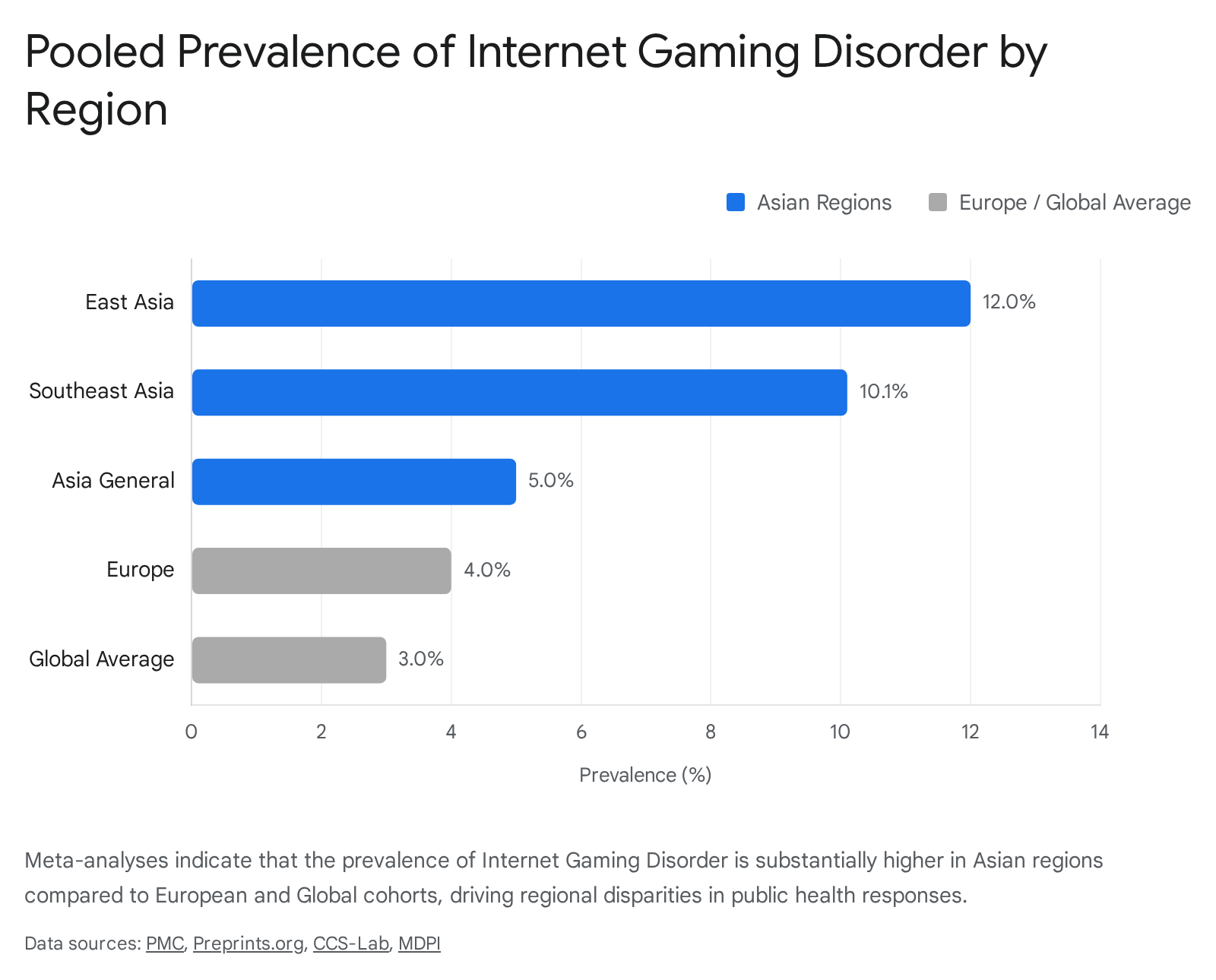
Extensive meta-analyses aggregating data from millions of respondents reveal that the global pooled prevalence of gaming disorder hovers reliably around 3.0% to 5.0% among general, non-selected populations 5152615354. However, the geographic split is remarkably stark, suggesting strong environmental and cultural vectors.
Meta-analyses demonstrate that the prevalence of IGD in Europe generally ranges between a low of 2.6% and a high of 4.0% 5254. By contrast, rates reported across the Asian continent are dramatically higher. The pooled prevalence of GD in Southeast Asia is estimated at 10.1% 6154. Furthermore, East Asia - notably the highly connected nations of South Korea, China, and Japan - demonstrates an overall pooled prevalence of 12.0%, the highest concentration globally 515255.
This disproportionately high prevalence in East Asia has historically catalyzed the world's most aggressive state-led interventions, establishing these nations at the absolute forefront of clinical research, diagnostic refinement, and treatment infrastructure for digital addiction long before Western nations acknowledged the crisis 51565758.
Demographic and Methodological Variables
Beyond geography, specific demographic variables heavily dictate prevalence rates. A massive systematic review of 96 studies comprising nearly 150,000 participants found that the pooled prevalence of IGD rises significantly to 6.1% in young adults (ages 18-35) 59. Unsurprisingly, when studies isolate cohorts of dedicated gamers rather than sampling the general population, the prevalence jumps to 8.1% 59. Furthermore, prevalence rates are consistently higher among adolescent males compared to females, often by a factor of two to one 51615558.
Researchers caution that the high degree of statistical heterogeneity observed across these meta-analyses (often displaying I2 values exceeding 97%) is heavily influenced by methodological variations 525354. Differences in the specific psychometric assessment tools utilized, reliance on self-reported surveys versus clinical interviews, and whether studies utilize the broader DSM-5 criteria versus the stricter ICD-11 criteria all heavily impact the final epidemiological estimates 615359.
| Region / Demographic | Estimated Pooled Prevalence | Data Context / Source |
|---|---|---|
| Global Average | 3.0% - 5.0% | General population average across multiple global meta-analyses 51526153. |
| Europe | 2.6% - 4.0% | Lower end of the global spectrum 5254. |
| Southeast Asia | 10.1% | Higher prevalence driven by rapid mobile expansion 6154. |
| East Asia | 12.0% | Highest global prevalence, leading to state interventions 515255. |
| Young Adults (18-35) | 6.1% | Age-specific demographic risk factor 59. |
| Dedicated Gamers | 8.1% | Sub-population highly exposed to gaming environments 59. |
Regulatory Frameworks and Public Health Interventions
As the profound consequences of algorithmic media and gaming overuse clearly manifest in tangible public health data - ranging from progressive childhood myopia and severe sleep disturbances to cognitive fragmentation and clinical addiction - governments globally are rapidly transitioning from pure public awareness campaigns to statutory, architectural regulation 406061.
State-Level Interventions in East Asia
Because East Asian nations were among the first to experience high rates of IGD and possess unique cultural and political infrastructures, they pioneered state-level legislative interventions to curb digital consumption.
South Korea: Viewing severe internet addiction as one of the country's most critical public health vulnerabilities, South Korea established over 500 specialized hospitals and residential treatment centers specifically designed for internet addiction recovery 5657. From a policy standpoint, in 2011, the government passed the Juvenile Protection Act, colloquially known worldwide as the "Cinderella Law." This legislation strictly prohibited children under the age of 16 from accessing online games between midnight and 6:00 AM 556162. However, after a decade of strict enforcement, the law was ultimately abolished in 2021. Authorities cited widespread circumvention (such as youths using their parents' identification numbers to log in) and limited long-term efficacy as reasons for the repeal, shifting the national strategy back toward parental education, media literacy, and industry self-regulation 5556.
China: Confronting an estimated 20 million citizens categorized as internet addicts, the Chinese government labeled excessive online gaming as "spiritual opium" and historically utilized highly aggressive, controversial interventions, including militaristic residential treatment boot camps 5657. Unlike South Korea's retreat from strict mandates, China has continuously tightened its regulatory grip. In 2019, and subsequently tightened in 2021, the National Press and Publication Administration implemented escalating nationwide restrictions, ultimately limiting minors to playing online video games for merely three hours per week (strictly between 8:00 PM and 9:00 PM on Fridays, weekends, and statutory public holidays) 555658. Early post-implementation data suggests these severe, technologically enforced restrictions significantly reduced the average weekly gaming time of minors, though the long-term psychological impacts of such sweeping authoritarian policies on youth autonomy remain fiercely debated by sociologists 5561.
Singapore: Adopting a more balanced, technologically progressive approach, Singapore relies heavily on robust digital education protocols and robust clinical support. Facilities such as the National Addictions Management Service offer comprehensive outpatient support for youth gaming addicts 62. While avoiding the outright national curfews seen in China, recent alarming data indicating that Singaporean teenagers spend nearly 8.5 hours daily on electronic devices has prompted swift action 4060. The Ministry of Digital Development and Information has issued updated, age-specific screen-time guidelines and implemented a stringent Code of Practice for Online Safety, requiring designated app stores to institute strict age assurance measures by 2026 to protect minors 406063.
The European Union Digital Fairness Act
While East Asia has historically focused on restricting user access via time limits and curfews (a demand-side approach), the European Union is currently pioneering a landmark regulatory framework focused on platform architecture and corporate responsibility (a supply-side approach).
Following the successful implementation of the Digital Services Act (DSA) and Digital Markets Act (DMA), the European Commission is currently drafting the Digital Fairness Act (DFA), which is expected to be formally proposed to the legislature in mid-2026 64657566. This initiative was born from a comprehensive 2024 "fitness check" of existing EU consumer protection directives (including the Unfair Commercial Practices Directive). The Commission concluded that legacy consumer laws are vastly insufficient to protect modern consumers from advanced digital manipulations, particularly the deployment of "dark patterns" and intentionally "addictive designs" 6465756677.
The DFA represents a profound regulatory paradigm shift. It explicitly frames addictive digital environments not as a failure of individual willpower or poor parenting, but as deliberate commercial architecture engineered to exploit behavioral psychology and neurological vulnerabilities for corporate profit 6678. The proposed legislation specifically targets the user-interface mechanisms that hijack the dopamine Reward Prediction Error loop, proposing to regulate or outright ban features such as: * Infinite Scrolling and Autoplay: Features that intentionally remove natural operational friction and psychological stopping cues, maximizing user engagement by overriding the conscious decision to continue consumption 6678. * Default Opt-In Settings: Mandating that potentially addictive design features be disabled by default, requiring consumers to actively and consciously opt-in to features like algorithmic feeds 6678. * Penalties for Disengagement: Regulating manipulative social pressures, such as communication "streaks" (e.g., on Snapchat) that leverage the psychological principle of loss aversion to force daily, compulsory app usage 78. * Algorithmic Profiling of Minors: Ensuring that the inherent cognitive vulnerabilities of children are not exploited through hyper-personalized, algorithmic content delivery designed to maximize screen time 657566.
By directly targeting the supply side of addictive design and embedding protections into the very architecture of digital services, the DFA represents a critical global transition in treating digital environments as vital public health domains 66.
Conclusion
The dominant cultural narrative surrounding "dopamine addiction" and rapidly shrinking attention spans is deeply fractured, trapped between exaggerated neurobiological hype and instances of genuine psychiatric concern. The oft-repeated claim that human attention spans have diminished to eight seconds is a complete statistical fabrication; fundamental human attentional capacity remains neurologically robust and stable. Furthermore, dopamine does not function as a simple, depletable pleasure chemical. Consequently, literal "dopamine detoxes" are biologically impossible, even if the underlying psychological practices of stimulus control and behavioral fasting offer profound therapeutic utility in treating digital burnout.
However, systematically dispensing with the unscientific hype does not absolve modern digital platforms of significant cognitive harm. The algorithmic delivery mechanisms of short-form media continuously manipulate the brain's Reward Prediction Error systems through variable reinforcement, generating measurable structural and functional alterations in prefrontal executive control. The resultant degradation of sustained vigilance and the undeniably high global prevalence of behavioral addictions, particularly Internet Gaming Disorder in youth populations, represent valid, escalating public health crises. As global governance frameworks actively evolve - from East Asia's highly restrictive time curfews to Europe's innovative architectural focus on dismantling addictive design via the forthcoming Digital Fairness Act - the imperative shifts away from merely blaming individual neurotransmitters, moving toward holding massive digital ecosystems legally accountable for the psychological environments they engineer.